Enabling ice observation programmes
Category: Antarctica
Vehicles team
Specialist team for specialist work
Polar Operations teams
Operational support for UK polar research is managed by our Operations teams. The team covers a wide range of activities from managing Arctic and Antarctic Research stations, operating polar ships …
NEWS STORY: Space weather features at free event
4 June, 2015
FREE event: ‘Discover Antarctica’ at British Geological Survey Open Day, Saturday 27 June, 10am-4pm Staff from British Antarctic Survey (BAS) will showcase its work at this year’s British Geological Survey …
Read more on NEWS STORY: Space weather features at free event
NEWS STORY: Petrels followed on feeding trips
26 May, 2015
Petrels tracked across the Oceans Staff at British Antarctic Survey (BAS) are following the journeys of White-chinned Petrel fledglings as they make their first journeys over the South Atlantic Ocean …

PRESS RELEASE: New network for polar science
19 May, 2015
EU boost for polar science A new initiative to enhance the integration of Europe’s scientific and operational capabilities in the Polar Regions has been funded by the EU Horizon 2020 …
NEWS STORY: Antarctic building workshop
18 May, 2015
Announcement of opportunity – Antarctic construction works associated with a new polar research vessel. Cambridge Seminar 4 June 2015 In April 2014 the British Government earmarked more than £200 million …

PRESS RELEASE: Ice shelf at double risk
13 May, 2015
New study shows Antarctic ice shelf is thinning from above and below A decade-long scientific debate about what’s causing the thinning of one of Antarctica’s largest ice shelves is settled …
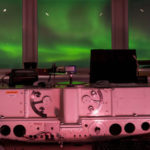
NEWS STORY: Ozone hole 30th anniversary
11 May, 2015
30th Anniversary of the Discovery of Ozone Hole This week British Antarctic Survey (BAS) commemorates the 30th anniversary of one of its most important scientific discoveries that affected the world …
Airborne Meteorology
Airborne instrument capability

NEWS STORY: New training course
30 April, 2015
NERC Advanced Training Short Course A Skills Framework for Delivering Safe and Effective Fieldwork in the Polar Regions Course date: 26 August – 8 September 2015 Deadline for applications: 4pm, …
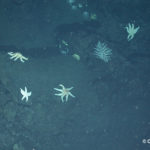
NEWS STORY: New starfish identified
29 April, 2015
First new family of starfish discovered in hydrothermal vents A new family of deep-sea starfish has been discovered living in the warm waters around a hydrothermal vent in the East …
Space Weather and Atmosphere team
Exploring the unknown, predicting the future
Geology and Geophysics team
Exploring the unknown
Mapping and GIS team
Providing geospatial information support to BAS science and operations programmes
Ecosystems team
Understanding the present, predicting the future
Palaeo Environments, Ice Sheets and Climate Change team
Understanding past change in ice sheets, oceans and global climate
Polar Oceans team
Understanding the present, exploring the unknown
Research Stations & Field Planning team
Our ambition Is to support the UK’s polar research effort through effective and efficient operation and management of research stations and deep-field locations in the Antarctic, the subantarctic and in …
Atmosphere, Ice and Climate team
Predicting the future
Biodiversity, Evolution and Adaptation team
Understanding the present
Communications team
Communicating excellence with impact
Environment Office team
The Environment Office coordinates and monitors environmental activities on BAS stations and ships and at its headquarters in Cambridge to ensure minimum environmental impact. Our responsibilities Developing and implementing BAS …
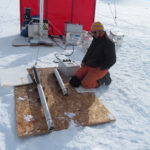
NEWS STORY: BAS at recruitment exhibition
17 April, 2015
British Antarctic Survey takes part in the National Engineering & Construction Recruitment Exhibition 2015 British Antarctic Survey (BAS) is recruiting for engineers and construction workers at this year’s National Engineering …
SAOZ
SAOZ measures sunlight scattered from the overhead sky in a way that allows us to calculate how much of the atmospheric gases ozone and nitrogen dioxide the light has passed through …
Dobson Spectrophotometer at Halley
The instrument that led to the discovery of ozone depletion over Antarctica
Microwave radiometer
The microwave radiometer enables us to gain a better understanding of the chemistry and physics of the polar middle atmosphere, 35–90km above the ground, and how it affects climate. For example, …
Riometer
The riometer at Halley measures the radiowave noise at 30MHz coming from the Galaxy. Typically there is a gentle variation of the noise during each day as the Earth turns …
Magnetometers
Search coil magnetometer Several kinds of natural waves in the ultra-low-frequency (ULF) range are generated in Earth’s space environment (the magnetosphere, bounded by Earth’s magnetic field as it extends into …
Halley VLF receiver
The Halley VLF receiver listens to very-low frequency radio waves as part of a network of receivers located all over the polar regions. The data gathered by this network is used by …
Optical caboose
Bomem The Bomem has been operating at Halley periodically since 2002. It’s a spectrometer: an instrument that splits light into its component colours. It is designed to look specifically at …
Halley weather balloons
At Halley, balloon launches take place every day at 11am. A device called a radiosonde hangs beneath the helium-filled balloon and measures temperature, pressure and humidity. From GPS we can …
Halley radars
Studying winds, waves, and tides in the upper atmosphere across the polar regions.
Met instruments
Met tower Meteorological scientists at Halley have been measuring the weather in great detail and with ever more sophisticated gadgets since the station first opened over 50 years ago. Instruments …
Optical hut
Rothera weather balloons
Rothera VLF receiver
Met Tower
Rothera ARIES Dome
Rothera Research Station ARIES Dome
Rothera radars
MF Radar Info to be added Skiymet Radar Info to be added
New Bransfield House
Offices, social and recreational faclilities
Rothera runway
The runway at Rothera is 900 metres long (2,950 ft) and is made of crushed rock. To the west of the runway lies the aircraft hangar, which houses the Dash-7 and three Twin …
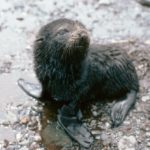
NEWS STORY: Antarctic fur seals monitored
1 April, 2015
New study tracks feeding behaviour of Antarctic fur seals in winter During the Antarctic Summer female fur seals feed in the waters around their breeding breaches. In winter, when their …
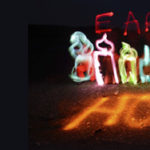
NEWS STORY: Research stations mark Earth Hour
26 March, 2015
WWF’s Earth Hour is a global annual event where hundreds of millions of people switch off their lights for one hour to show they care about the planet.
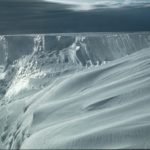
NEWS STORY: Melting rates accelerate
26 March, 2015
New research shows volume loss from Antarctic ice shelves is accelerating New research published today in the journal Science Express (Thursday 26 March) describes how the ice shelves around Antarctica …
Twin Otter aircraft
The Twin Otter is a high-wing, twin-engine, turbo-prop aircraft. They are used all over the world and are known for their rugged construction, reliability and short take-off and landing performance. …
Dash-7 aircraft
The De Havilland Canada Dash-7 (DHC-7) is a key element of our aircraft capability. This four-engined aircraft with a worldwide reputation for reliability, economy and performance made its first flight …
Clean Air Sector Laboratory (CASLab)
Specialised observatory with a suite of instruments to measure the air and snow chemistry around Halley.
Bonner Laboratory and dive facility
Supporting near-shore marine biology
RRS James Clark Ross
One of the world’s most advanced polar research vessels
RRS Ernest Shackleton
Used mainly for transporting staff and cargo to research stations. On charter when not in Antarctica
Sky-Blu Field Station
Supporting deep-field science missions
Fossil Bluff Field Station
Refuelling and meteorology facility to support deep-field science parties
Signy Research Station
Signy Research Station is one of Britain’s smallest stations, and is only occupied in summer. The island’s abundant wildlife and greenery make it an ideal outdoor laboratory. Research at Signy …
NEWS STORY: Columns widespread in Southern Ocean
5 March, 2015
Oceanographers discover ‘Taylor columns’ are widespread in Southern Ocean according to new research published recently in the Journal of Geophysical Research Lead author Professor Mike Meredith, a Senior Oceanographer at …
Read more on NEWS STORY: Columns widespread in Southern Ocean
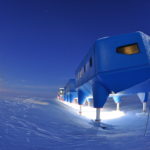
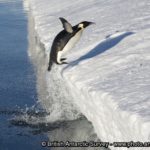
NEWS STORY: Penguin colonies once limited
2 March, 2015
Survival of the fittest – genetics reveals where emperor penguins survived the last ice age During the last ice age, when much of the Antarctic coastline was uninhabitable due to …
NEWS STORY: Monument for Antarctic personnel
26 February, 2015
The Antarctic Monument remembers Britons lost in Antarctica A monument dedicated to Britons who lost their lives in the service of science in Antarctica was unveiled on the waterfront at …
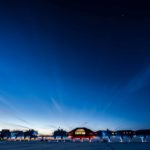
NEWS STORY: Data recovered in Antarctica
11 February, 2015
BAS recovers American scientific data in Antarctica Staff from the British Antarctic Survey have recovered crucial scientific data from a giant helium balloon which came down in west Antarctica. The …
Halley VI Research Station
Halley VI Research Station, Brunt Ice Shelf, Antarctica
King Edward Point Research Station
King Edward Point is primarily a marine and fisheries research station. Owned by the Government of South Georgia and the South Sandwich Islands (GSGSSI) and operated by British Antarctic Survey …
Bird Island Research Station
Bird Island Research Station is an important centre for research into bird and seal biology. Lying off the north-west tip of South Georgia, Bird Island is one of the richest …
Rothera Research Station
The largest British Antarctic facility is a centre for biological research and a hub for supporting deep-field science.
NEWS STORY: Christmas in Antarctica
19 December, 2014
British Antarctic Survey staff prepare to celebrate Christmas far away from home As you make the last preparations for the festive period, spare a thought for those who will be …

NEWS STORY: Satellites spot seabird poo!
11 December, 2014
Seabird poo has unique spectral signature visible from satellite images Scientists have discovered that penguin and seabird poo (guano) from colonies around the Antarctic Peninsula has a unique spectral signature …
NEWS STORY: Commemorating Antarctica Day
1 December, 2014
Antarctica Day 2014: 55 years since the signing of the Antarctic Treaty Today, 1 December, is Antarctica Day and people across the globe are celebrating! The Day was inaugurated in …
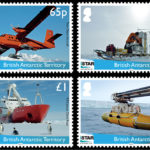
NEWS STORY: Glacier project on stamps
25 November, 2014
Stamp of approval for iSTAR The iSTAR programme, which is looking at the stability of Pine Island Glacier in Antarctica, is featured in a new set of British Antarctic Territory …
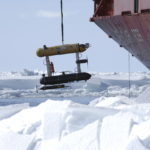
PRESS RELEASE: Mapping the ice from below
24 November, 2014
Underwater robot sheds new light on Antarctic sea ice The first detailed, high-resolution 3-D maps of Antarctic sea ice have been developed using an underwater robot. Scientists from the UK, …
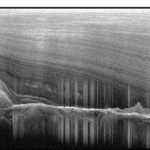
NEWS STORY: Mountains frozen in time
19 November, 2014
Antarctic “ghost mountains” preserved by ice sheet A new study reveals how the rugged ridgelines of East Antarctica’s ancient and mysterious ‘ghost mountains’ have been preserved for millions of years …
NEWS STORY: New iSTAR season starts
11 November, 2014
Scientists head to Pine Island Glacier for new research season A team of twelve scientists and support staff has arrived on Pine Island Glacier in West Antarctica in the second …
NEWS STORY: BAS to host workshop
13 October, 2014
British Antarctic Survey hosts Chemical Air-Snow-Sea Ice Interaction workshop in Cambridge More than 60 scientists from over 15 countries are attending a workshop in Cambridge this week (13-15 October) to …
NEWS STORY: Dick Laws
9 October, 2014
Tribute to former Director of British Antarctic Survey It is with great sadness the British Antarctic Survey reports that Dick Laws died on Monday 6 October 2014 aged 88. He …
NEWS STORY: New maps show unseen world
25 September, 2014
New maps of the polar regions reveal unseen world beneath the ice and highlight dramatic decline in Arctic sea ice cover New maps of the sub-ice features in Antarctica and …
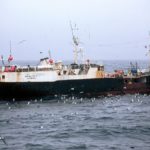
NEWS STORY: Patagonian toothfish fishery
16 September, 2014
South Georgia Patagonian toothfish fishery recertified with flying colours Following its five-yearly Marine Stewardship Council (MSC) assessment, the South Georgia Patagonian toothfish longline fishery has, for the third time, been …

NEWS STORY: World Ozone Day
16 September, 2014
Today, 16 September, is the International Day for the Preservation of the Ozone Layer. The date commemorates the signing of the Montreal Protocol, which sought to reduce atmospheric levels of …
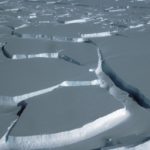
NEWS STORY: Ice shelf break up explained
12 September, 2014
Antarctic Team Discovers Mechanism for Massive Ice Shelf Collapse New research has found that the cataclysmic break-up of a large floating ice shelf in the early 2000’s was primarily the …
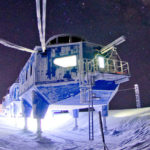
NEWS STORY: Signs of ozone recovery
11 September, 2014
First signs of ozone layer recovery The ozone layer is showing the first signs of future recovery thanks to international action against ozone depleting substances, say the United Nations Environment …
NEWS STORY: Sea levels rising faster in Antarctica
1 September, 2014
Antarctic sea-level rising faster than global rate A new study of satellite data from the last 19 years reveals that fresh water from melting glaciers has caused the sea-level around …
Read more on NEWS STORY: Sea levels rising faster in Antarctica
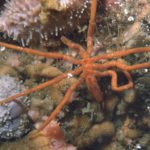
PRESS RELEASE: New marine life atlas
25 August, 2014
New Atlas of Southern Ocean marine life A new atlas, providing the most thorough audit of marine life in the Southern Ocean, is published this week by the Scientific Committee …
NEWS STORY: Priorities for Antarctic science
13 August, 2014
In April 2014, the Scientific Committee on Antarctic Research (SCAR) brought together scientists and policy-makers from 22 countries to agree future Antarctic research priorities. Through discussions, debate and voting, the …
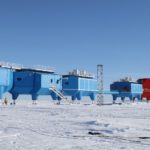
NEWS STORY: Power-down update
12 August, 2014
UPDATE Power-down at British Antarctic Survey Halley Research Station The 13 members of staff at Halley Research Station continue to remain safe and well following the power-down incident on 30 …
NEWS STORY: Power-down at Research Station
6 August, 2014
Power-down at British Antarctic Survey Halley Research Station – Statement British Antarctic Survey (BAS) is dealing with a serious operational incident at its Halley Research Station. On Wednesday 30 July …
PRESS RELEASE: Penguin trends analysed
6 August, 2014
Risks to penguin populations analysed A major study of all penguin species suggests the birds are at continuing risk from habitat degradation. Writing in the journal, Conservation Biology, a group …
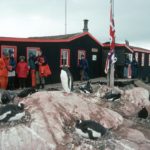
NEWS STORY: Penguin Post Office
24 July, 2014
The Penguin Post Office, Bransfield House (Base A), is a little bit of Britain in Antarctica. Inside the British Base, run by the United Kingdom Antarctic Heritage Trust (UKAHT), the …
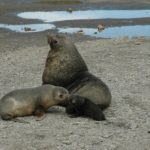
PRESS RELEASE: Fur seal genetics and climate change
23 July, 2014
Genetic study shows major impact of climate change on Antarctic fur seals Genetic analysis of Antarctic fur seals, alongside decades of in-depth monitoring,* has provided unique insights into the effect …
Read more on PRESS RELEASE: Fur seal genetics and climate change
NEWS STORY: Antarctic Science Strategy
16 July, 2014
Government publishes UK Antarctic Science Strategy A framework document ‘UK Science in Antarctica 2014-2020‘ is published today (Wednesday 16 July). Prepared by the UK National Committee for Antarctic Research on …
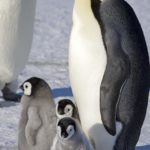
NEWS STORY: Emperor Penguins’ adaptation skills
24 June, 2014
New research using satellite images reveals that emperor penguins are more willing to relocate than previously thought A new study led by the University of Minnesota offers new insights on …
Read more on NEWS STORY: Emperor Penguins’ adaptation skills
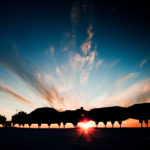
NEWS STORY: Midwinter’s Day in Antarctica
20 June, 2014
Midwinter’s Day celebrations take place at Antarctic Research Stations Staff at the British Antarctic Survey are celebrating Midwinter’s Day in Antarctica. In a tradition which began in the days of …
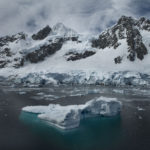
NEWS STORY: Icebergs leave their mark
16 June, 2014
Climate related iceberg activity has massively altered life on the seabed Researchers from the British Antarctic Survey have found evidence that climate change has fundamentally altered the way that life …
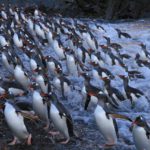
NEWS STORY: Ancestral penguins studied
12 June, 2014
Rise and fall of prehistoric penguin populations charted The British Antarctic Survey has been involved in a study of how penguin populations have changed over the last 30,000 years. This …
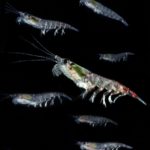
NEWS STORY: Bridging the gap in the krill debate
9 June, 2014
Event: Understanding the objectives for krill fishing and conservation in the Scotia Sea and the Antarctic Peninsula Region Convened by the British Antarctic Survey, ICED and WWF WWF’s Living Planet …
Read more on NEWS STORY: Bridging the gap in the krill debate
NEWS STORY: Southern Ocean dynamics
2 June, 2014
The Southern Ocean: new insights into circulation, carbon and climate A special issue of the Philosophical Transactions of the Royal Society A has been published today (Monday 2 June) which …
NEWS STORY: Changes in upper atmosphere
23 May, 2014
Earth’s magnetic field is important for climate change at high altitudes New research, published this week, has provided scientists with greater insight into the climatic changes happening in the upper …
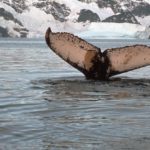
PRESS RELEASE: New whale subspecies
21 May, 2014
Humpback whale subspecies revealed by genetic study A new genetic study has revealed that populations of humpback whales in the oceans of the North Pacific, North Atlantic and Southern Hemisphere …
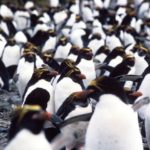
PRESS RELEASE: Penguins monitored with tags
21 May, 2014
Electronic tags provide 10 years worth of penguin data A team of scientists, led by researchers from the British Antarctic Survey, has used tiny electronic tags to study the decline …
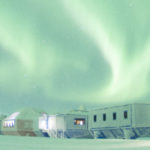
NEWS STORY: Design award for Halley VI
16 May, 2014
Halley VI honoured for outstanding design and construction It’s been quite a week for Halley VI, picking up numerous Architizer A+ awards in New York and winning two more at …