
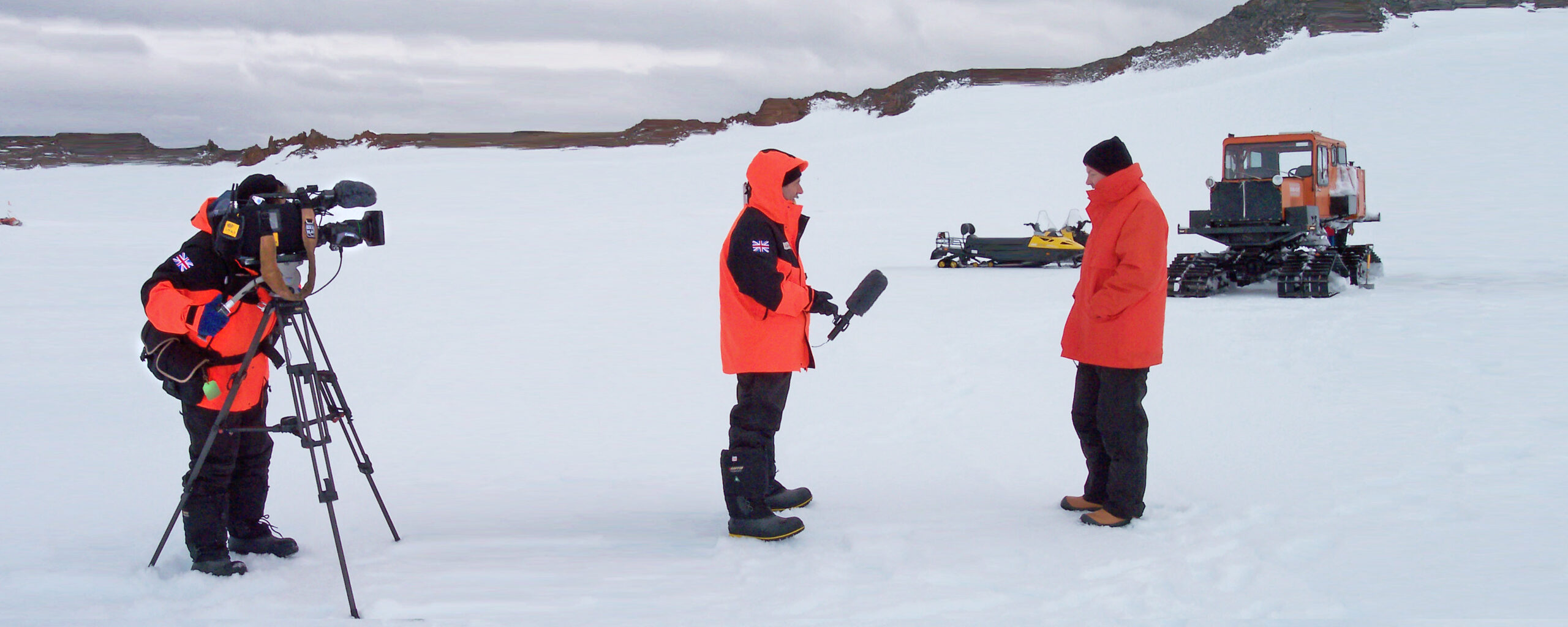
British Antarctic Survey is committed to making polar science accessible through quality media partnerships.
We welcome journalists who share our dedication to accurate, engaging science communication to visit our research stations in Antarctica and the Arctic.
Where you can visit
- Antarctic stations: Rothera, Signy, Bird Island, and Halley
- Arctic station: Ny-Ålesund
- RRS Sir David Attenborough: The UK’s polar research ship
- Cambridge Headquarters: Facilities and laboratories
Who can apply
- Experienced media professionals with proven track records
- Journalists who have a firm commitment in writing from editors or broadcasters to publish or broadcast their proposed work
- Teams focused on science communication
- Content creators with a substantial audience or credible pathway for content distribution
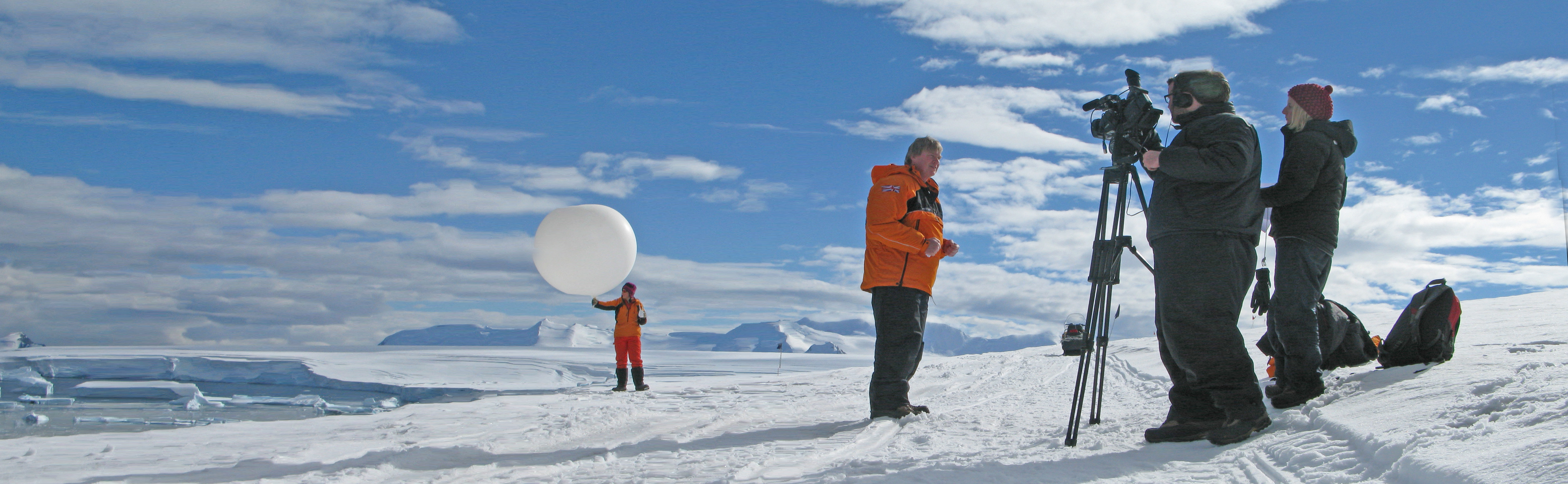
What we look for
- Large audiences: Priority given to UK and international publications/broadcasters
- Science focus: Understanding of polar research and science, and its relevance to society
- Quality proposals: Clear story ideas and target audience, well–defined plans and measurable impact
Application process
Journalists are selected through a competitive application process.
Interested journalists should contact the BAS Press Office to express interest and discuss your proposal. Please include your publication commitment, team information and technical requirements. You will then receive a formal application form.
Current opportunities
Applications for the 26/27 season have now closed. Please keep an eye on this page for future opportunities.
Expedition on RRS Sir David Attenborough, December 2026 – January 2027
Applications for this opportunity have now closed. We welcomed expressions of interest from media and content creators to join the UK’s polar research ship. The journey will include a mixture of science and logistics work, as well as visiting King Edward Point and Bird Island Research Stations.