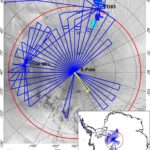
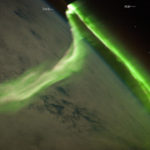
The Super Dual Auroral Radar Network (SuperDARN) has been operating as an international co-operative organisation for over 20 years, and has proved to be one of the most successful tools …
Category: Science
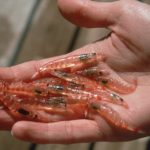
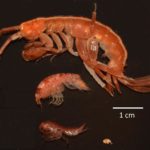
Krill’s influence on CO2 and global climate
18 October, 2019
A new study involving British Antarctic Survey researchers highlights the influence of krill (Euphausia superba) on atmospheric carbon levels. It is published in the journal Nature Communications today (18th October …
Stranded whales detected from space
17 October, 2019
A new technique for analysing satellite images may help scientists detect and count stranded whales from space. Researchers tested a new detection method using Very High Resolution (VHR) satellite images …
Study recommends special protection of emperor penguins
9 October, 2019
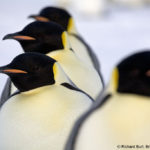
In a new study published this week (Wednesday 9 October) in the journal Biological Conservation, an international team of researchers recommends the need for additional measures to protect and conserve …
Read more on Study recommends special protection of emperor penguins
Ship is named with royal ceremony
26 September, 2019
The UK’s new polar research ship is formally named the RRS Sir David Attenborough today [Thursday 26 September] by the Duke and Duchess of Cambridge. In their first engagement of …
MOSAiC Blog: Last preparations in Tromsø
18 September, 2019 Markus Frey
The BAS SSAASI-CLIM team arrived in Tromsø a few days ago to set up equipment onboard of RV Polarstern. On Friday 20 Sep 2019 the German ice breaker will embark …
Warming up the Antarctic: Harder than you think
29 July, 2019 Melody Clark
Professor Melody Clark, Project Leader, discusses the trials and tribulations of undertaking research in Antarctica. Her latest paper published in Nature Communications shows that rising sea temperatures of just 1-2 …
Read more on Warming up the Antarctic: Harder than you think
Machine Learning for Environmental Sciences
21 July, 2019 Rachel Furner
Rachel Furner is a PhD student at British Antarctic Survey, which has recently opened up its new AI Lab, that aims to foster the application of various machine learning (and …
Tracking Guillemots with Project LOMVIA
11 July, 2019 Anne-Sophie Bonnet-Lebrun
The Project LOMVIA team continue their work tracking guillemots of the remote cliff of Látrabjarg, Iceland. Post-doctoral researcher Dr Anne-Sophie Bonnet-Lebrun explains more. Tagging and tracking seabirds Our fieldwork is …
Discovery of rare lava lake on remote sub-Antarctic island
3 July, 2019
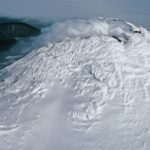
A team of scientists has discovered a rare lava lake on a remote and inaccessible sub-Antarctic island. This volcano in the South Sandwich Islands is only the 8th to be identified worldwide to have a persistent lava lake.
Read more on Discovery of rare lava lake on remote sub-Antarctic island
Space weather causes radiation damage to satellites
1 July, 2019
The use of electric propulsion for raising satellites into geostationary orbit can result in significant solar cell degradation according to a new study. The extended journey results in greater exposure …
Read more on Space weather causes radiation damage to satellites
Tracking seabird species in Iceland
27 June, 2019 Norman Ratcliffe
After the initial reconnaissance expedition in 2018, this June Project LOMVIA – part of the NERC Changing Arctic Ocean Programme begins in earnest (read more about last year’s work here). …
Marine life recovery following the dinosaurs’ extinction
19 June, 2019
A new study shows how marine life around Antarctica returned after the extinction event that wiped out the dinosaurs. A team led by British Antarctic Survey studied just under 3000 …
Read more on Marine life recovery following the dinosaurs’ extinction
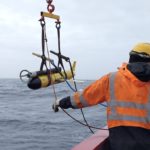
Boaty McBoatface sheds light on warming ocean abyss
18 June, 2019
The debut mission involving the autonomous submarine Autosub Long Range – affectionately known as Boaty McBoatface – has for the first time shed light on a key process linking increasing …
Read more on Boaty McBoatface sheds light on warming ocean abyss
Antarctic species in the face of a changing ocean
17 June, 2019
A new study reveals how marine life around Antarctica will fare in an ocean which has declining levels of oxygen. Writing in the journal Philosophical Transactions of the Royal Society …
Read more on Antarctic species in the face of a changing ocean
Fishing hotspots show where sub-Antarctic seabirds at risk
22 May, 2019
A new study highlights that sub-Antarctic seabirds are most at risk from unsustainable fishing during the southern hemisphere winter and in the south Atlantic and Southwest Indian Oceans. The link …
Read more on Fishing hotspots show where sub-Antarctic seabirds at risk
Seal and penguin poo is major driver of Antarctic terrestrial biodiversity
13 May, 2019
A new study by BAS scientists and collaborators in the Netherlands shows that seal and penguin poo is key to Antarctic biodiversity on land. By studying concentrations of nitrogen-rich guano …
Read more on Seal and penguin poo is major driver of Antarctic terrestrial biodiversity
“Catastrophic” breeding failure at one of world’s largest emperor penguin colonies
25 April, 2019
Researchers at British Antarctic Survey have discovered “catastrophic” breeding failure at one of world’s largest emperor penguin colonies.
Read more on “Catastrophic” breeding failure at one of world’s largest emperor penguin colonies
Scientists to study methane emissions in North Sea
23 April, 2019
Scientists embark on a three-week flying campaign today (23 April) to study methane emissions from gas fields in the southern North Sea. Using specialised scientific equipment, on board one of …
Read more on Scientists to study methane emissions in North Sea
New mission for 1.5 million year climate record
9 April, 2019
This week a team of European researchers announces its plans for an ambitious mission to find the oldest ice on Earth (9 April 2019). Antarctica’s ice has the potential to …
Read more on New mission for 1.5 million year climate record
Antarctic snowfall dominated by a few extreme snowstorms
25 March, 2019
A new study reveals the importance of a small number of intense storms around Antarctica in controlling the amount of snow falling across the continent.
Read more on Antarctic snowfall dominated by a few extreme snowstorms
Scientists map ‘deepest’ parts of Southern Ocean
22 March, 2019
A team of researchers led by British Antarctic Survey has for the first time mapped the deepest part of the South Sandwich Trench in the Southern Ocean. This part of …
Read more on Scientists map ‘deepest’ parts of Southern Ocean
“Core on deck” – Analysis begins
18 March, 2019 Claus-Dieter Hillenbrand
Dr Claus-Dieter Hillenbrand tells us more about what happens once a sediment core has been recovered from the seafloor.
Studying methane emissions in Bolivia
12 March, 2019 James France
Dr James France has just completed a week-long flying campaign using one of the BAS Twin Otters fitted with scientific instrumentation. Find out more about his experience.
Marine research expedition sets sail for the South Atlantic
12 March, 2019
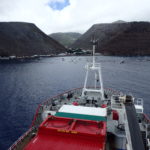
A team of scientists set sail this week (12 March) for the remote South Atlantic islands of Tristan da Cunha and St Helena. This mission is part of BAS’ commitment …
Read more on Marine research expedition sets sail for the South Atlantic
Expedition to Larsen C ice shelf thwarted by sea ice
11 March, 2019
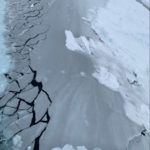
Sea-ice conditions have prevented the Research Icebreaker Polarstern from reaching the Larsen Ice Shelf and the calving areas of iceberg A68.
Read more on Expedition to Larsen C ice shelf thwarted by sea ice
Study shows melting ice sheets will disrupt climate
7 February, 2019
Water entering the oceans from melting ice sheets could cause extreme weather and a change in ocean circulation not currently accounted for in global climate policies, a new study published …
Read more on Study shows melting ice sheets will disrupt climate
Parents help offspring adapt to climate change
30 January, 2019
Some parents in the animal kingdom can prepare their young for environmental change, helping them cope better in new conditions, a paper published today in Nature Scientific Reports reveals. Scientists …
International research expedition heads to West Antarctica
28 January, 2019
An international team of scientists is travelling to the Amundsen Sea – one of the most vulnerable sectors of the Antarctic Ice Sheet – to answer vital scientific questions about …
Read more on International research expedition heads to West Antarctica
Scientists drill to record depths in West Antarctica
24 January, 2019
A team of scientists and engineers has for the first time successfully drilled over two kilometres through the ice sheet in West Antarctica using hot water. This research will help …
Read more on Scientists drill to record depths in West Antarctica
Antarctic krill population contracts southward as polar oceans warm
21 January, 2019
The population of Antarctic krill, the favourite food of many whales, penguins, fish and seals, shifted southward during a recent period of warming in their key habitat, new research shows. …
Read more on Antarctic krill population contracts southward as polar oceans warm
New funding uses seabirds as sentinels of South Atlantic
21 January, 2019
British Antarctic Survey scientist Professor Richard Phillips has been awarded funding to use newly developed radar-detecting tags to track the interactions between wandering albatrosses and fishing vessels in the South …
Read more on New funding uses seabirds as sentinels of South Atlantic
New study looks at risk to Antarctic marine life in future
17 January, 2019
A new study of the animals living in polar oceans reveals which are most at risk from climate change. The study is published today (17 January) in Frontiers in Marine …
Read more on New study looks at risk to Antarctic marine life in future
FEATURED PAPER: Himalayan winds
16 January, 2019
Around one billion people depend on water resources originating from the Hindu-Kush Karakoram Himalayan region, attributable to both rainfall and melting of snow and ice. The wind in the valleys …
Scientists complete remote ice core drilling mission
10 January, 2019
A team of scientists and engineers from British Antarctic Survey and the University of Cambridge has successfully drilled over 650 metres in to an Antarctic ice cap to obtain an …
Read more on Scientists complete remote ice core drilling mission
Opportunities for Antarctic research – Apply now
9 January, 2019
Applications to carry out small-scale research projects in the Antarctic in the 2019/20 season are invited from UK-based researchers. The Collaborative Antarctic Science Scheme (CASS) provides fieldwork opportunities for scientists …
Read more on Opportunities for Antarctic research – Apply now
The impact of ‘alien’ species in Antarctica
19 December, 2018
Of the known non-native or ‘alien’ species found in Antarctica, a non-biting species of midge currently presents one of the highest risks to terrestrial ecosystems, researchers have found. The preliminary …
Funding to assess shipping emissions and climate hazards
13 December, 2018
British Antarctic Survey (BAS) scientists have been awarded funding to enable them to assess the impact of emissions from shipping and to quantify and manage the risk of climate hazards. …
Read more on Funding to assess shipping emissions and climate hazards
Blog: A research cruise and my gateway to Antarctica
12 December, 2018 Nadescha Zwerschke
ICEBERGS2 – a research cruise and my gateway to Antarctica Nadescha Zwerschke is a marine biologist travelling on the RRS James Clark Ross to Antarctica I’ve only recently started my …
Read more on Blog: A research cruise and my gateway to Antarctica
Increased snowfall in Antarctica buffers sea-level rise
10 December, 2018
A new study of snowfall across Antarctica provides vital information in the study of future sea-level rise. A team of scientists from NASA and British Antarctic Survey (BAS), describes how …
Read more on Increased snowfall in Antarctica buffers sea-level rise
Seabird populations on Antarctic Peninsula unexpected
5 December, 2018
Results of a new study on Antarctic seabirds shows a larger percentage of their populations inhabit important nesting sites around Ryder Bay, close to British Antarctic Survey’s Rothera Station than …
Read more on Seabird populations on Antarctic Peninsula unexpected
Ambitious UK-U.S. Antarctic research mission begins
19 November, 2018
A team of UK and U.S. polar scientists are about to embark on one of the largest joint Antarctic missions for more than 70 years. It’s the first field season …
Read more on Ambitious UK-U.S. Antarctic research mission begins
Discovery of high geothermal heat at South Pole
14 November, 2018
Scientists have discovered an area near the South Pole where the base of the Antarctic Ice Sheet is melting unexpectedly quickly. Using radar to look through three km of ice, …
Read more on Discovery of high geothermal heat at South Pole
Ice sheets growing from the base
7 November, 2018
Fresh water freezing onto the bottom of the Greenland and Antarctic Ice Sheets leads to the formation of spectacular plume-shaped features, according to new research published today (7th November) in …
Watching whales from space
1 November, 2018
Scientists have used detailed high-resolution satellite images provided by Maxar Technologies’ DigitalGlobe, to detect, count and describe four different species of whales. Reported this week in the journal Marine Mammal …
New Antarctic field season begins
30 October, 2018
Science and support teams from British Antarctic Survey (BAS) are gearing up for the start of the Antarctic summer field season. A major focus for the season is the West …
Monitoring penguins in the South Atlantic
25 October, 2018 Norman Ratcliffe
Norman Ratcliffe, a seabird biologist at British Antarctic Survey (BAS), studies the biology of seabirds and how this is impacted by climate change. Read this blog to find out about …
Scientists join policy makers to discuss conservation
22 October, 2018
BAS marine researchers join nearly 300 international delegates at the annual meeting of the Convention on the Conservation or Antarctic Marine Living Resources (CCAMLR) beginning in Hobart today. For the …
Read more on Scientists join policy makers to discuss conservation
Funding success for British Antarctic Survey
12 October, 2018
New funding stream for sustainable observation and unique BAS British Antarctic Survey (BAS) scientific capabilities
Measuring glaciers in the Himalayan mountains
11 October, 2018
Technology pioneered in Antarctica could soon be providing much-needed data on the amount of ice in the glaciers of High Mountain Asia thanks to an ingenious helicopter-mounted, low-frequency radar developed …
Study of penguin colonies at Antarctic island shows decline
11 October, 2018
Results from a 21-year study into the breeding success of gentoo penguins at a well-known tourist site in Antarctica, reveal a 25% reduction in breeding pairs and a decrease of …
Read more on Study of penguin colonies at Antarctic island shows decline
Fur seals in the Falklands – Part 1
9 October, 2018 Kayleigh Jones
Kayleigh Jones, a seal biologist at British Antarctic Survey, travelled to the Falkland Islands to spend 6 weeks studying South American fur seals. Read on to find out about her …
Increase in plastics reaching remote South Atlantic Islands
8 October, 2018
The amount of plastic washing up onto the shores of remote South Atlantic islands is 10 times greater than it was a decade ago, according to new research published today …
Read more on Increase in plastics reaching remote South Atlantic Islands
Challenger Medal award
13 September, 2018
The prestigious Challenger Medal for excellence in marine science has been awarded to British Antarctic Survey (BAS) oceanographer Professor Mike Meredith. Presented every two years by the Challenger Society – …
BAS wins National Capability Funding
12 September, 2018
The British Antarctic Survey has been awarded National Capability funds for polar science which will strengthen UK national security, resilience, economic growth and societal benefit
BAS scientist joins research ship ‘drifting’ past North Pole
29 August, 2018
UK scientists will join what could be the largest-scale Arctic research expedition ever planned when the German research ship, RV Polarstern, is deliberately lodged into sea ice to drift past …
Read more on BAS scientist joins research ship ‘drifting’ past North Pole
Melt-rate of West Antarctic Ice Sheet highly sensitive to changes in ocean temperatures
13 August, 2018
Melting of ice shelves in West Antarctica speeds up and slows down in response to changes in deep ocean temperature, and is far more variable than previously thought, according to …
Read more on Melt-rate of West Antarctic Ice Sheet highly sensitive to changes in ocean temperatures
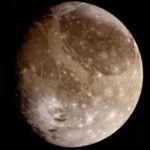
Million fold increase in the power of waves near Jupiter’s moon Ganymede
8 August, 2018
Understanding of how Jupiter’s magnetic field interacts with its moons and with intense particle radiation.
Read more on Million fold increase in the power of waves near Jupiter’s moon Ganymede
New magnetic anomaly map helps unveil Antarctica
17 July, 2018
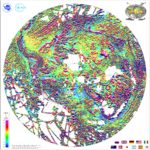
The most comprehensive magnetic map of Antarctica ever produced is published this week (15 July 2018). The new map – which includes 3.5 million line-kilometres of magnetic anomaly data collected …
Read more on New magnetic anomaly map helps unveil Antarctica
Science meetings on conservation of Southern Ocean
2 July, 2018
Science meetings of the Commission for the Conservation of Antarctic Marine Living Resources (CCAMLR) take place over the next two weeks (starting 2 July 2018) at the Cambridge Headquarters of …
Read more on Science meetings on conservation of Southern Ocean
SuperDARN (Super Dual Auroral Radar Network) Halley Radar
FEATURED PAPER: Sea-ice loss impacts Northern Hemisphere
20 June, 2018
This study, led by scientists from the British Antarctic Survey, suggests that sea-ice loss in different regions of the Arctic, and of different amounts, leads to different effects on surface …
Read more on FEATURED PAPER: Sea-ice loss impacts Northern Hemisphere
New maps show why glacier ice front suddenly shrank
15 June, 2018
Pine Island Glacier in West Antarctica is one of the fastest-flowing glaciers in Antarctica. Over the last eleven years, four major icebergs have broken off from its floating ice shelf. …
Read more on New maps show why glacier ice front suddenly shrank
New insight into an enigmatic Antarctic apex predator
5 June, 2018
Scientists from British Antarctic Survey (BAS) have, for the first time, tracked the lives of leopard seals as they migrate around Antarctica. The team followed these formidable predators as they …
Read more on New insight into an enigmatic Antarctic apex predator
Fungi respire millennium-old carbon from Antarctic soil
30 May, 2018
Fungi in Antarctic soils release carbon that is more than a thousand years old, a team led by scientists at the British Antarctic Survey (BAS) has found. This discovery sheds light on how carbon is released into the atmosphere as polar regions warm.
Read more on Fungi respire millennium-old carbon from Antarctic soil
Subglacial valleys and mountain ranges discovered near South Pole
24 May, 2018
Revealing Antarctica’s hidden world
Read more on Subglacial valleys and mountain ranges discovered near South Pole
European wind energy generation potential in a 1.5˚C world
17 May, 2018
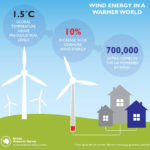
The UK and large parts of northern Europe could become windier if global temperatures reach 1.5˚C above pre-industrial levels, according to a new study. This has implications for wind energy …
Read more on European wind energy generation potential in a 1.5˚C world
Special issue on how oceans are changing
14 May, 2018
The seas around the Antarctic Peninsula are biologically extremely rich, but are climatically sensitive, having experienced some of the fastest warming globally in recent decades. A special issue of the …
“Hairdryer winds” cause ice melt during Antarctic winter
3 May, 2018
A new study involving scientists from British Antarctic Survey (BAS) suggests for the first time that warm winds are creating large surface melting of ice shelves in Antarctica during the …
Read more on “Hairdryer winds” cause ice melt during Antarctic winter
Prestigious international award for oceanographer
30 April, 2018
Professor Mike Meredith wins prize
Read more on Prestigious international award for oceanographer
ISLAND SCIENCE: Living in Harmony
24 April, 2018 Victoria Warwick-Evans
Four people, two tents, a lot of smelly penguins and boil-in-the-bag army rations. That pretty much sums up life at Harmony Point, Nelson Island, South Shetland Islands during January and …
New study reveals increased snowfall in Antarctica over last two centuries
9 April, 2018
The first comprehensive study of snowfall across Antarctica provides vital information in the study of future sea-level rise. Presenting this week (Monday 9 April 2018) at the European Geosciences Union …
Read more on New study reveals increased snowfall in Antarctica over last two centuries
Warming oceans could put seabirds out of sync with prey
4 April, 2018
Seabirds may struggle to find food for their chicks as they are unable to shift their breeding seasons as the climate warms, a new study suggests. Rising sea temperatures in …
Read more on Warming oceans could put seabirds out of sync with prey
SCIENCE AT SEA: Setting off for the Scotia Sea
15 March, 2018 Zoe Roseby
Zoë Roseby is a member of the science team from British Antarctic Survey (BAS) currently aboard the RRS Discovery. Read on to discover what the team will be investigating in …
Brachiopods resilient to past environmental change
14 March, 2018
A new study concludes that a seafloor dwelling marine invertebrate is more resilient to environmental change than expected. The paper, led by researchers at British Antarctic Survey, is published today …
Read more on Brachiopods resilient to past environmental change
STATION SCIENCE: Higher predator monitoring
5 March, 2018 Kieran Love
Kieran Love tells us what it is like to be the Zoological Field Assistant at King Edward Point Research Station (KEP) on South Georgia. So, what does being a zoological …
Research mission to Larsen C Ice Shelf thwarted by sea ice
2 March, 2018
Heavy sea ice conditions have thwarted a science mission from reaching the Larsen C Ice Shelf in Antarctica from which a large iceberg broke off in July 2017. A team …
Read more on Research mission to Larsen C Ice Shelf thwarted by sea ice
SCIENCE IN THE SEA: The adventure begins
22 February, 2018 Rowan Whittle
British Antarctic Survey (BAS) palaeobiologist Dr Rowan Whittle is a member of the Larsen C Benthos research cruise onboard the RRS James Clark Ross. Rowan’s primary role is to assist …
FEATURED PAPER: Record temperature at Signy
19 February, 2018
On 30th January 1982, a record high temperature of +19.8°C was measured at Signy Research Station – a record for any station south of 60°S. In this paper, we examined …
SCIENCE IN THE SEA: Studying Southern Right Whales
13 February, 2018 Layla Batchellier
Find out what the South Georgia Right Whale Expedition team have been up to during their first few weeks sailing in the waters around South Georgia. Firstly, Susannah Calderan tells …
Read more on SCIENCE IN THE SEA: Studying Southern Right Whales
First expedition to newly exposed Antarctic ecosystem
12 February, 2018
A team of scientists, led by British Antarctic Survey (BAS), heads to Antarctica this week (14 February) to investigate a mysterious marine ecosystem that’s been hidden beneath an Antarctic ice …
Read more on First expedition to newly exposed Antarctic ecosystem
Celebrate International Day of Women and Girls in Science 2018
11 February, 2018 Zoe Waring
To celebrate International Day of Women and Girls in Science (11th February), Zoe Waring, the Marine Assistant at Rothera Research Station, has written a blog about her work at British …
Read more on Celebrate International Day of Women and Girls in Science 2018
SCIENCE IN THE SEA: Rolling, rolling, rolling
7 February, 2018 Jennifer Jackson
Whale ecologist Dr Jennifer Jackson, who is leading the first expedition to ‘health-check’ southern right whales since whaling stopped in the 1970s, describes how she and the team prepared for …
Sea butterflies repair shell damage from ocean acidification
25 January, 2018
A new study of tiny marine snails called sea butterflies shows the great lengths these animals go to repair damage caused by ocean acidification. The paper, led by researchers at …
Read more on Sea butterflies repair shell damage from ocean acidification
Life in the slow lane
19 January, 2018
A new study from British Antarctic Survey shows how five common Antarctic marine invertebrates (animals without a backbone) use less energy to feed, grow and reproduce than their temperate and …
Lanternfish reveal how ocean warming impacts the twilight zone
12 January, 2018
A new study from the British Antarctic Survey shows how lanternfish, small bioluminescent fish, are likely to respond to the warming of the Southern Ocean. Lanternfish are one of the …
Read more on Lanternfish reveal how ocean warming impacts the twilight zone
Expedition to ‘health-check’ Southern Right Whales
10 January, 2018
An international team of researchers, led by British Antarctic Survey (BAS), travels to the sub-Antarctic island of South Georgia this month (January) to carry out the first scientific whale survey …
Read more on Expedition to ‘health-check’ Southern Right Whales
New Year Honours for British Antarctic Survey scientist
5 January, 2018
Our congratulations go to Dr Phil Trathan who has been made an Officer of the Order of the British Empire (OBE) for services to Southern Ocean science and conservation. Dr …
Read more on New Year Honours for British Antarctic Survey scientist
SCIENCE IN THE SEA – Part 4: Sea ice and science
28 December, 2017 Ryan Scott
Following the glider deployments our next destination was Rothera, the UK’s biggest Antarctic research station on Adelaide Island. Good progress was made until we hit the sea ice – 120 …
Read more on SCIENCE IN THE SEA – Part 4: Sea ice and science
SCIENCE IN THE SEA – Part 3: Gliders galore!
20 December, 2017 Ryan Scott
It was finally time to deploy the gliders and I couldn’t be more excited! Autonomous vehicles are regarded as the future of oceanography, and I feel extremely lucky to be …
SCIENCE ON THE ICE – Part 2: Setting up camp at Little Dome C
18 December, 2017 Robert Mulvaney
This Antarctic season BAS scientist Dr Robert Mulvaney is taking part in the ongoing hunt for the oldest ice record Beyond Epica. Using a variety of different techniques, he and …
Read more on SCIENCE ON THE ICE – Part 2: Setting up camp at Little Dome C
ISOL-ICE Lab Blog: Visiting IGE in Grenoble
15 December, 2017 Markus Frey
A new blog from the ISOL-ICE project team describes recent progress in the lab. Read the team’s earlier blog here. Holly Winton and Lisa Hauge have completed now with great success their …
Krill behaviour takes carbon to the ocean depths
15 December, 2017
A new study shows that Antarctic krill behave in a way that could accelerate the transport of atmospheric carbon to the deep ocean. Antarctic krill form some of the highest …
Read more on Krill behaviour takes carbon to the ocean depths
SCIENCE IN THE SEA – Part 2: Busy biologists!
12 December, 2017 Ryan Scott
First thing I learn as I begin my trip aboard the RRS James Clark Ross is that, scientist on research cruises need to be able to adapt quickly! Within two …
Tiny ice losses at Antarctica’s fringes can accelerate ice loss far away
11 December, 2017
A thinning of small areas of floating ice at Antarctica’s coast can accelerate the movement of ice grounded on rocks hundreds of kilometres away, a new study involving scientists from …
Read more on Tiny ice losses at Antarctica’s fringes can accelerate ice loss far away
Collaborative Antarctic Science Scheme – Applications invited
4 December, 2017
Applications are invited for the Collaborative Antarctic Science Scheme (CASS) for Antarctic fieldwork in the 2018/19 field season. The closing date is 5th March 2018. CASS provides opportunities for UK-based …
Read more on Collaborative Antarctic Science Scheme – Applications invited