NERC Doctoral Landscape Awards (DLA)
Discover more about PhD opportunities with British Antarctic Survey.
There are currently over 100 PhD students associated with our organisation and nearly half of these students work full time at our offices and labs in Cambridge. Students have full access to our state of the art research facilities and some have the opportunity to carry out research in the polar regions. We strongly encourage the pursuit of interdisciplinary projects, and there is the opportunity to work with teams at the forefront of global change and exploration science in both polar regions.
From 2014-2024 our studentships were funded through NERC Doctoral Training Partnerships (DTPs) and Centres for Doctoral Training (CDTs). In 2025, DTPs and CDTs were replaced by NERC Doctoral Landscape Awards (DLAs) and Doctoral Focal Awards (DFAs).
We are delighted our partnerships continue into the new era of DLAs, namely ARIES, CREATES, GW4+ Doctoral Training Landscape Partnership (DLTP), Iapetus and IGNITE. We are also partners with the new DFA – Net Zero for Polar Science (NZPS).
BAS projects or supervisor research areas within our DLA partnerships for 2026 will be advertised in the autumn. Each partner has a separate application process, which is often through the university at which the project is linked. Please read and follow the instructions carefully before applying to ensure your application can be fully considered. More information can be found on each of the DLAs’ websites.
Exceptionally, we may have opportunities funded through other sources. These projects will be advertised below as and when they are available. In all other cases, we are only able to accept students through our DLA partnerships.
If you would like to know more about applying for a PhD, here are some short videos on Preparing your application, Tips on meeting your potential supervisor and Preparing for a PhD interview and presentation
INSPIRE DTP also have some Top Tips and Student Testimonies for prospective students for more insight into PhDs
Equality, Diversity & Inclusion – We are fully committed to the UKRI EDI principles and policies. We strive to recruit and support a diverse and inclusive cohort of students.
Eligibility: UK students will be eligible for a full NERC studentship. More information is available in the UKRI Training Grant Guide. A full studentship will include the cost of fees, stipend, and research funding allowance. DLAs may have funding for only a very limited number of international students.
Closing date for applications: 23:59 GMT Wednesday 7th January 2026.
How to apply: Enquiries in the first instance should be made to the BAS supervisor. To apply, please follow the instructions on the ARIES website.
Supervisors: Kate Hendry (Lead) (BAS), Karen Heywood (UEA)
Supervisors: Floortje van den Heuvel (Lead) (BAS), Mark Fitzsimons (Plymouth)
Closing date for applications: 23:59 GMT Wednesday 7th January 2026.
How to apply: Browse the list of topics and supervisors to find those that particularly interest you. Finalised project titles are not listed as the intention is that you express interest in a topic and develop the final project with your supervisory team in the first term of your studies. You are strongly advised to contact prospective supervisors before applying, to further explore your mutual interests and get additional advice and information. Further information on how to apply can be found on the CREATES website.
Closing date for applications: 23:59 GMT Thursday 8th January 2026
How to apply: In the first instance please contact the BAS supervisor if you have any questions about the research topic or your suitability for the project you are interested in. If you wish to submit an application, please take the time to read the GW4+ guidance and information carefully that you will be asked to complete.
GW4+ will be hosting an Applicants Webinar on Friday 7th December. Please register your interest here and they will send you a link to join.
Supervisors: Xin Yang (Lead) (BAS), Daniel Partridge (Bristol)
Supervisors: Rowan Whittle (Lead) (BAS), Daniela Schmidt (Bristol)
Supervisors: Dr Aishwaryaprajna (Lead) (Exeter), Max Thomas (BAS)
Closing date for applications: 12:00 (Noon) Monday 5th January 2026
How to apply: In the first instance please contact the BAS supervisor if you have any questions about the research project. Full guidance on how to submit an application can be found on the Iapetus website.
Supervisors: Kate Hendry (Lead),(BAS), Graeme MacGilchrist (St Andrews)
Supervisors: Clara Manno (Lead) (BAS), Erin McClymont (Durham)
Supervisors: Jaimie Cleeland (Lead) (BAS), Will Reid (Newcastle)
Supervisors: Hua Lu (Lead) (BAS), Chris Stokes (Durham)
Supervisors: Andrew Orr (Lead) (BAS), James Baldini (Durham)
Supervisors: Kelly Hogan (Lead) (BAS), Colm O’Cofaigh (Durham)
Closing date for applications: Thursday 8th January 2026
How to apply: In the first instance please contact the BAS supervisor if you have any questions about the research project. Full guidance on how to submit an application can be found on the IGNITE website
Supervisors: Andrew Meijers (Lead) (BAS), Alessandro Silvano (Southampton)
Supervisors: Emma Young (Lead) (BAS), Bieito Fernandez Castro (Southampton)
Supervisors: Michael Haigh (Lead) (BAS), Alessandro Silvano (Southampton)
Closing date for applications: 17:00 GMT Wednesday 7th January 2026
How to apply: In the first instance please contact the BAS supervisor if you have any questions about the research project. Full guidance on how to submit an application can be found on the NZPS website.
Supervisors: Andrew Orr (Lead) (BAS), Leanne Wake (Northumbria)
Supervisors: Oliver Marsh (BAS) (Lead), Jan de Rydt (Northumbria)
Supervisors: Tracey Dornan (Lead) (BAS), Peter M Aktinson (Lancaster)
Supervisors: Ashley Bennison (Lead) (BAS), Vicky Boult (Reading)
Supervisors: Xin Yang (Lead) (BAS), Ken Carslaw (Leeds)
Supervisors: Floortje Van Den Heuvel (Lead) (BAS), Mark Tarn (Leeds)
Discover more about PhD opportunities with British Antarctic Survey.
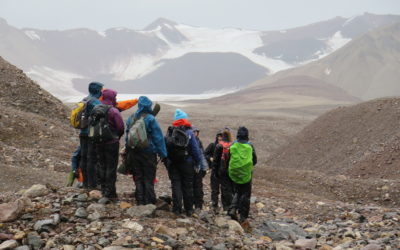
Find out more about our 8-day training course focussing on working safely and effectively in the polar regions. Deadline 13th March 2020.
Science careers video clips