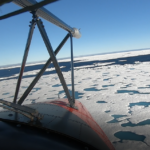
Arctic Summer-time Cyclones
The Arctic Summer-time Cyclone Project is a joint project of scientists from the University of Reading, University of East Anglia and the British Antarctic Survey with expertise in atmospheric dynamics, …
The Arctic Summer-time Cyclone Project is a joint project of scientists from the University of Reading, University of East Anglia and the British Antarctic Survey with expertise in atmospheric dynamics, …

The Southern Ocean is one of the most important and poorly understood components of the global carbon cycle that profoundly shapes Earth’s climate. It is the primary hot spot for …
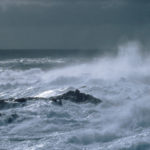
Investigating the twilight zone The four-year COMICS project, is led by the National Oceanography Centre, is a collaboration between the British Antarctic Survey and the universities of Queen Mary London, …
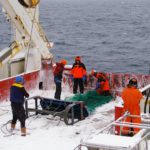
A new research platform to put UK scientists at the forefront of polar science

The cause of the variability in atmospheric CO2 over glacial-interglacial timescales has been a puzzle since its discovery in the early 1980s. It is widely believed to be related to …
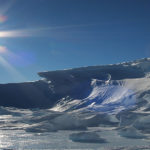
Understanding the contribution that polar ice sheets make to global sea-level rise is recognised internationally as urgent. The mission of this five-year project is to capture new observations and data …
1 January, 1998
1 January, 1993
1 January, 1991
23 January, 2024
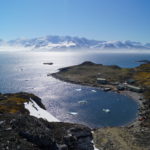
Scientists at British Antarctic Survey have found that the number of warm weather events in the South Orkney Islands have significantly increased in frequency over the last 75 years. Using …

8 February, 2022
New research papers from the one-year MOSAiC expedition to study the Arctic have yielded new understanding about the region. Hundreds of international researchers are currently analysing observations from the MOSAiC …
18 June, 2019
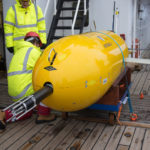
The debut mission involving the autonomous submarine Autosub Long Range – affectionately known as Boaty McBoatface – has for the first time shed light on a key process linking increasing …
29 August, 2018
UK scientists will join what could be the largest-scale Arctic research expedition ever planned when the German research ship, RV Polarstern, is deliberately lodged into sea ice to drift past …


17 February, 2017
Local weather plays an important part in the retreat of the ice shelves in West Antarctica, according to new research published in the journal Nature Communications today (Friday 17 February). …
26 July, 2016
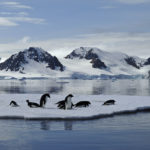
An international team of scientists have used air bubbles in polar ice from pre-industrial times to measure the sensitivity of the Earth’s land biosphere to changes in temperature.
14 July, 2016
A new study has found for the first time that ocean warming is the primary cause of retreat of glaciers on the Antarctic Peninsula. The Peninsula is one of the largest current contributors to sea-level rise and this new finding will enable researchers to make better predictions of ice loss from this region.