Crowdsourcing campaign
Part of Albatrosses from Space
We need your help! Become one of our ‘albatross detectives’ by spending as little as thirty minutes searching for albatrosses in thousands of satellite images taken from space while they are nesting.
How to get involved
All you need is access to a computer or tablet and an internet connection to take part. Mobile phones will not work as a larger screen is needed.
Visit https://geohive.maxar.com/yellowjacket/login, create an account and then go through the buttons tutorial. You can then start searching through the satellite imagery straight away. Your task is to tag each albatross you can find in each image. For help and further instructions, click on the “?” button on the top right hand side after you finish the buttons tutorial.
This task is ideal for adults, high school and university students. The minimum recommended age for participating in the activity without adult supervision is 10 years old. All participants under the age of 13 must have parental consent to use the platform.
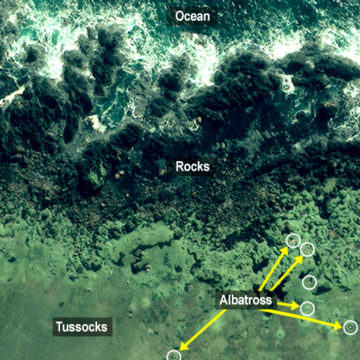
Why use satellites to count albatross?
Our collective actions add up to something powerful, and we want to involve over 1,000 people this year to help search for albatross using satellite images. The information gathered will be crucial to our conservation efforts.
Satellites in space are continuously capturing images of Earth. Using these high-resolution images, we will be able to count Wandering Albatross, and then apply correction factors to estimate their total population.
Remote surveys by satellite offer an alternative to visiting islands or counting birds in photographs taken from boats or planes. The crowd counts will be used to develop automated detection methods to facilitate future surveys at reduced effort and cost.
If you have a question about albatrosses, their life styles or habitats, the Albatross from Space project, Contact Us.
How else can you get involved?
Here are a few other ways you can extend a helping hand to albatrosses:
- Ensure your fish comes from sustainable fisheries. Check out the Monterey Bay Aquarium Seafood Watch list (also an app), and look for eco-labels to find out which seafoods are environmentally sustainable.
- Recycle plastic. Much of the plastic pollution at sea comes from the land. Join a beach clean-up program and dispose of your litter responsibly to help reduce the impact of plastics in the marine environment.
- Read a children’s book. Visit the ACAP website for a list of children’s books with a conservation message.
- Visit a nesting colony virtually. Watch the Cornell Lab’s live streaming Albatross Bird Cam.
Contributors and funders
Contributors
The Albatrosses from Space project is an international collaboration involving BAS, RSPB, and other stakeholders. The RSPB are partners on the project and host the Albatross Task Force, a global network aimed at the conservation of albatrosses around the world. Further information about the project can be found at the Albatrosses from Space website.
Funders
The Albatrosses From Space citizen science campaign is funded by Darwin Plus, also known as the Overseas Territories Environment and Climate Fund. Since 2012, Darwin Plus has awarded over £32 million to more than 162 environmental projects in the UK overseas Territories.