As marine heatwaves dominate the UK, wildfires rage across Europe, and a heatwave hits the Antarctic Peninsula, Antarctic experts come together to share their latest findings and plans for future collaboration.
More than 40 British Antarctic Survey (BAS) scientists and staff are attending the SCAR Open Science Conference in Oslo this week, showcasing the breadth of UK Antarctic research and taking prominent roles in shaping the future of polar science.
The biennial conference, organised by the Scientific Committee on Antarctic Research (SCAR), brings together researchers, policymakers, data specialists and Antarctic operators from around the world to share the latest research and discuss the challenges facing the polar regions.
BAS is making a major contribution to this year’s conference, with delegates involved in 21 oral presentations, including keynote talks, 17 poster presentations, 17 sessions and 14 workshops. BAS colleagues are also contributing to 23 business meetings by chairing or through presentations, alongside numerous meetings and activities focused on the future of Antarctic science, data legacy and operations.
The scale of BAS participation reflects the organisation’s long-standing leadership within the national and international Antarctic research community.
Among the BAS researchers presenting is glaciologist Emma Pearce, who will deliver a keynote talk, From ice cores to ice quakes. Her presentation brings together ice-core, seismic, radar and other observations from the Brunt Ice Shelf to investigate the processes driving ice shelf change and fracture propagation.
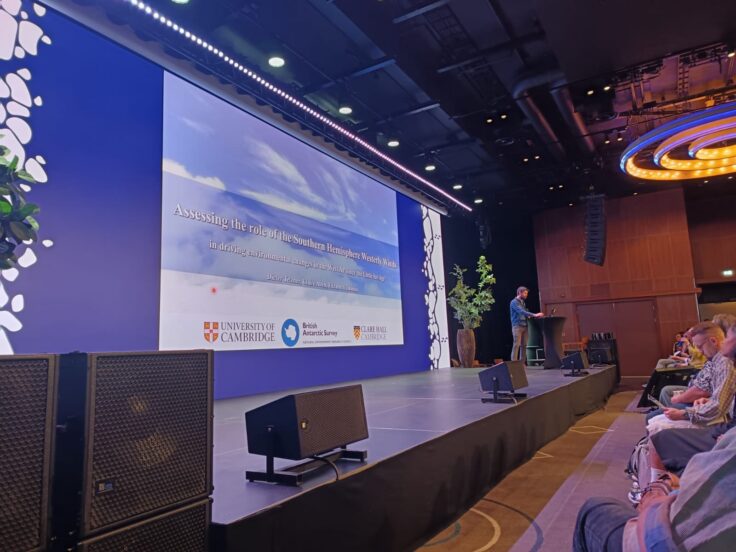
Daniel Richards will present new modelling work examining how cracks form and grow within Antarctic ice shelves and ultimately lead to iceberg calving. His research aims to improve understanding of a process responsible for around half of Antarctica’s ice loss each year and its implications for future sea-level rise.
Birgit Rogalla will present research into how atmospheric and ocean changes could affect the Amundsen Sea and West Antarctic ice shelves over the coming century. Her modelling suggests continued warming of the Amundsen Sea, with changes in the Ross Gyre potentially increasing the transport of heat towards the ice shelf and accelerating melt.
Rachel Diamond is investigating the future of Antarctic snowfall using a new UK Earth system model with water-tracing capabilities. Her research examines where the moisture contributing to Antarctic snowfall comes from and how those sources could change as the climate warms, helping to understand how snowfall could offset ice loss and influence future sea-level rise.
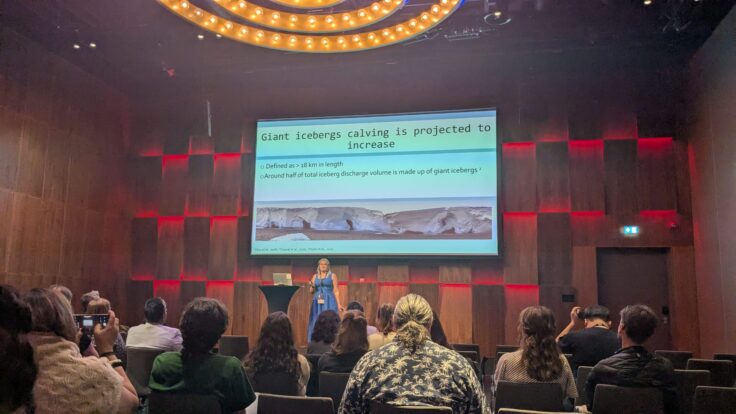
Laura Taylor will present research into the wider role of icebergs in the Southern Ocean. Her work shows how giant icebergs can influence regional biogeochemical cycling and highlights that different icebergs can have very different effects on the ocean and climate system.
Researchers from BAS’s Paleoclimate, Ice Sheets and Climate Change (PICC) team are also contributing to discussions on Antarctica’s past and future. Rob Larter is leading a session on the past, present and future of Antarctic marine grounded basins and presenting research into the relationship between seabed slopes and grounding-zone retreat. Jo Johnson is co-leading a session on reconstructing past Antarctic ice-sheet dynamics, while Dominic Hodgson is presenting research on the history and evolution of the West Antarctic Ice Sheet and the Amundsen Sea region. Claus-Dieter Hillenbrand is presenting research examining changes in the West Antarctic Ice Sheet and the marine environment, while James Smith and Joe Metcalfe are also presenting research on the history and evolution of the West Antarctic Ice Sheet and Amundsen Sea region.
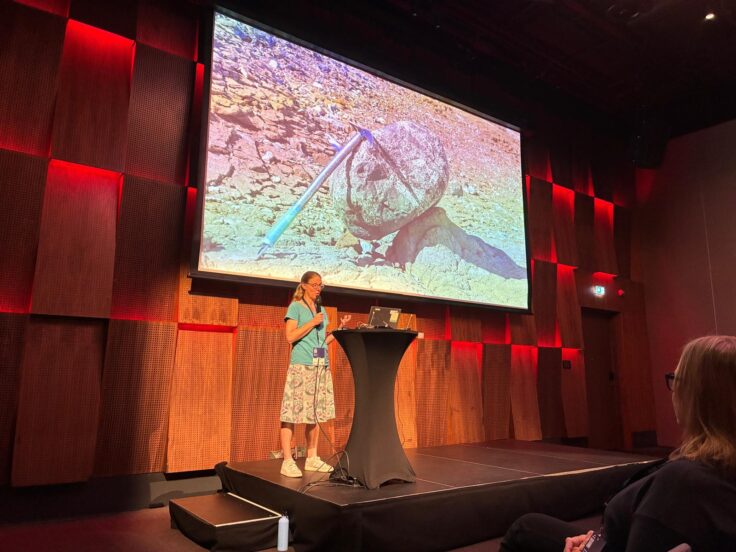
The conference will also highlight BAS research into Antarctic ecosystems and environmental change. Nan Wu will present modelling research into how microplastics can affect the ability of krill, a tiny shrimp-like crustacean, to export carbon in the Southern Ocean. She will also co-chair a session examining plastic pollution in Antarctica and the Southern Ocean and contribute to the SCAR Expert Group on Plastic in Polar Environments.
Marine biologist Jaimie Cleeland will present research combining gentoo penguin tracking with simultaneous surveys of krill, helping to understand links between predator behaviour and the availability of key Antarctic prey. Kate Owen will present related research examining the effects of avian influenza on Antarctic fur seals, contributing to understanding emerging pressures on Antarctic wildlife.
BAS is also helping shape the strategic direction of international Antarctic research through major SCAR programmes. Huw Griffiths, lead proponent of the proposed SCAR Scientific Research Programme C-CAGE – Changes in Circumpolar Antarctic Gradients in Ecosystems, will convene sessions examining environmental drivers, human impacts and climate change in Antarctic ecosystems.
The Space Weather team are represented by Andrew Kavanagh, who is presenting work on the BAS Space Weather Observatory and exploring future collaborations around space weather research and the fifth International Polar Year. Ingrid Cnossen will present research on atmospheric processes and north–south asymmetries, while also contributing to the AGATA programme and discussions around future international atmospheric research.
The Atmosphere and Climate Change team are also making a broad contribution. Caroline Holmes will present research on Antarctic sea-ice change and near-term climate impacts, alongside leading and contributing to cross-disciplinary discussions. Gaelle Veyssiere will describe her work on solar warming and the influence of snow and sea-ice thickness on heat input to the Southern Ocean.
Evelyn Workman will present observations of aerosol size and composition from a coastal Antarctic site and co-convene a workshop on multidisciplinary Southern Ocean methane research. Freya Squires will present long-term atmospheric CO₂ observations showing seasonal carbon uptake by the Southern Ocean and participate in InSync activities.
Markus Frey will present research around sea ice, aerosols and clouds in the Weddell Sea, alongside work supporting planning for the fifth International Polar Year. He will also convene a side meeting on aerosols, clouds and radiation.
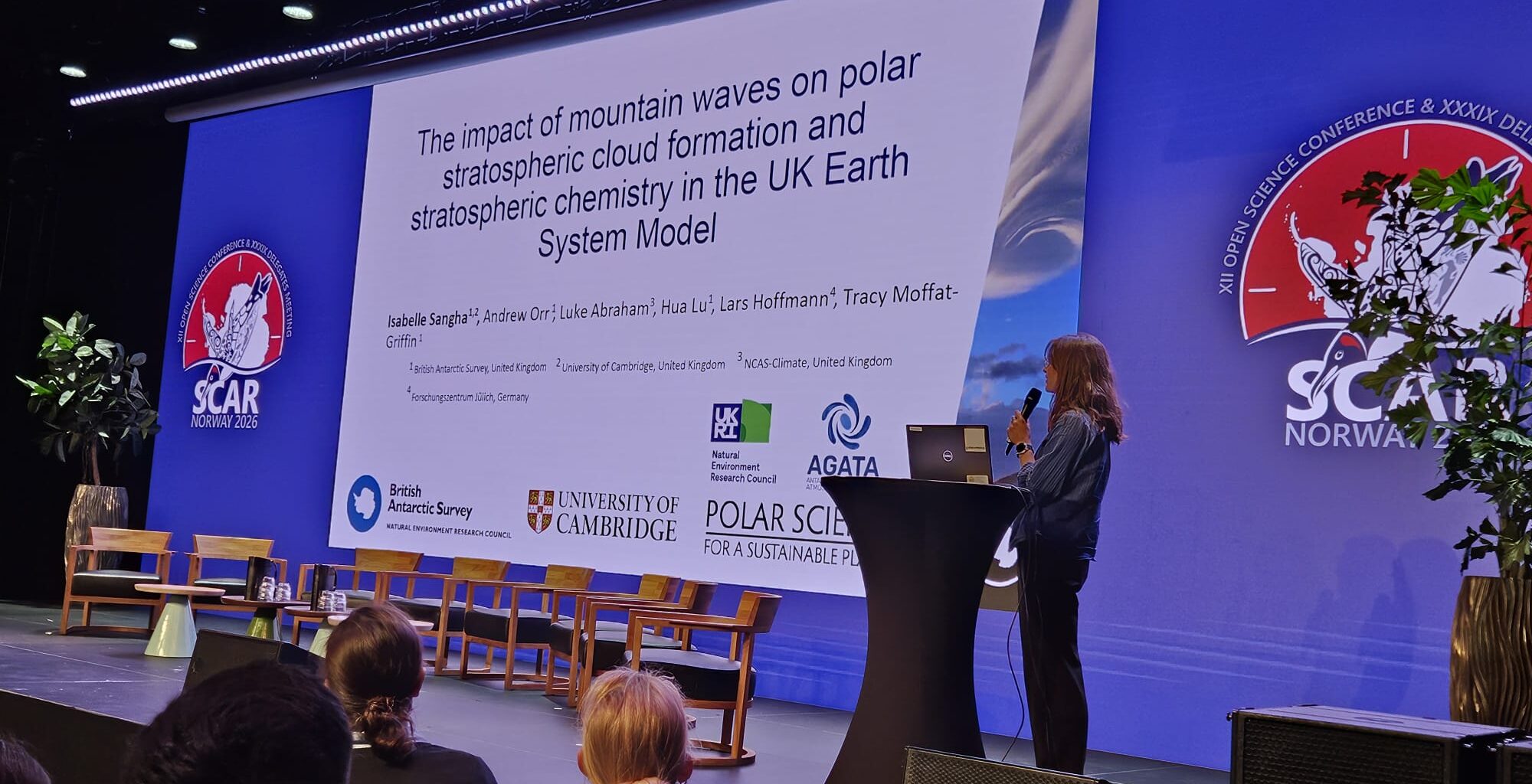
Tracy Moffat-Griffin will present research into high-latitude gravity waves and their response to the polar vortex. Floor van den Heuvel will present airborne observations of Antarctic clouds collected around Rothera during the Southern Ocean Clouds project. Tom Bracegirdle will present new research into Antarctic atmospheric circulation, focusing on the characteristics, model performance and response of Antarctic wind extremes.
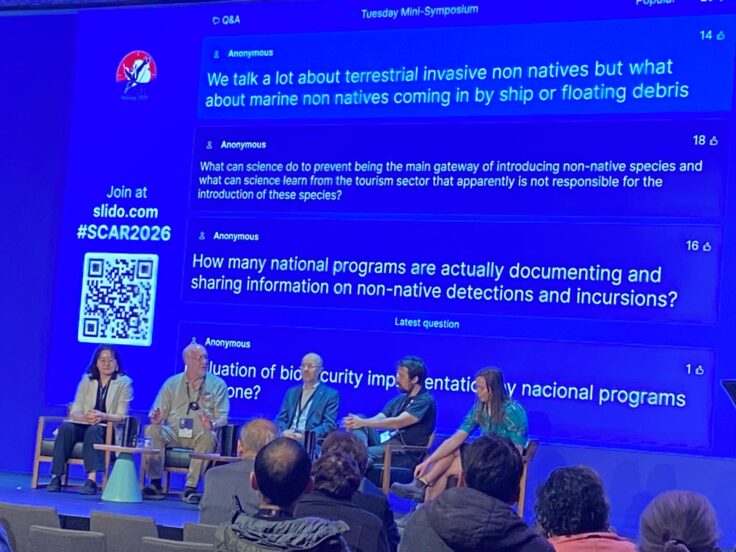
BAS staff are also contributing through workshops, expert groups, business meetings and discussions spanning science-to-policy, innovation, commercialisation, societal impact and the decarbonisation of Antarctic operations. Pilvi Saarikoski, from the BAS Innovation team, is contributing to discussions on science to policy, Net Zero operations, societal impact, innovation and community-building.
BAS Director of Science Petra Heil is attending. She said:
“The SCAR Open Science Conference provides an opportunity not only to share the latest Antarctic science, but also to build the collaborations and to set research priorities that will shape the next generation of polar research and secure transformational outcomes for science and beyond.
“With more than 40 BAS staff participating and colleagues taking leadership roles across scientific sessions, workshops, expert groups and strategic meetings, BAS is playing a significant part in driving that conversation in Oslo.”
Together, the contributions demonstrate the breadth of BAS’ role in the international Antarctic community, from fundamental research into ice sheets, oceans, atmosphere and ecosystems to environmental stewardship, decarbonisation, innovation and the development of future international research programmes.
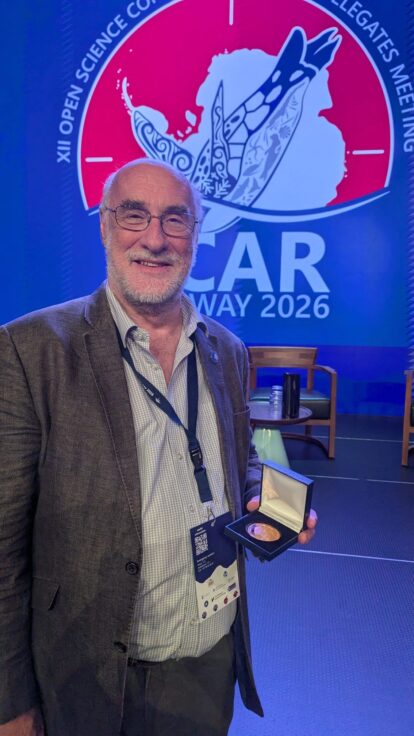
Few have contributed to this community as much as Professor Pete Convey, who this year won the 2026 SCAR Medal for Excellence in Antarctic Research. This medal is awarded to the top Antarctic scientist globally, as nominated by peers, in recognition of significant Antarctic research contributions. In his almost 40-year career, Pete has authored over 750 publications with over 45,000 citations, and some of his most impactful work has fundamentally changed the way we understand Antarctic ecosystems.
Reflecting on the award, Pete said:
“I am so honoured, proud, and more than surprised to have been awarded this SCAR medal, and deeply grateful to my nominators. The medal represents the culmination of an almost 40-year career at BAS and in polar science – a career made possible by the exceptional colleagues and friends who I work with all over the world, and the incredible opportunities I have gained from the SCAR community who embody open engagement and collaboration.”