
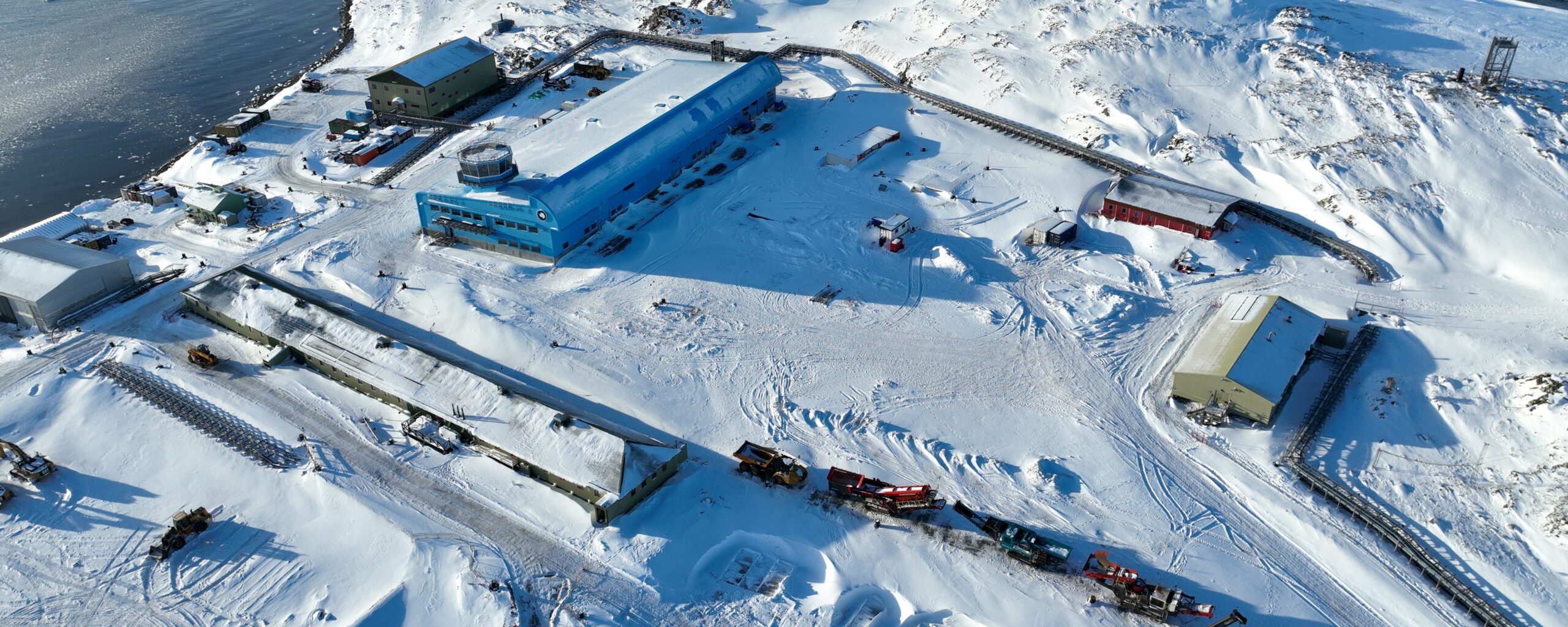
As the 2026/27 Antarctic season gets underway, the British Antarctic Survey (BAS) is pressing ahead with its ambitious infrastructure modernisation programme at Rothera Research Station, one of the most demanding engineering and construction environments on earth.
Discovery Building proves its worth over winter
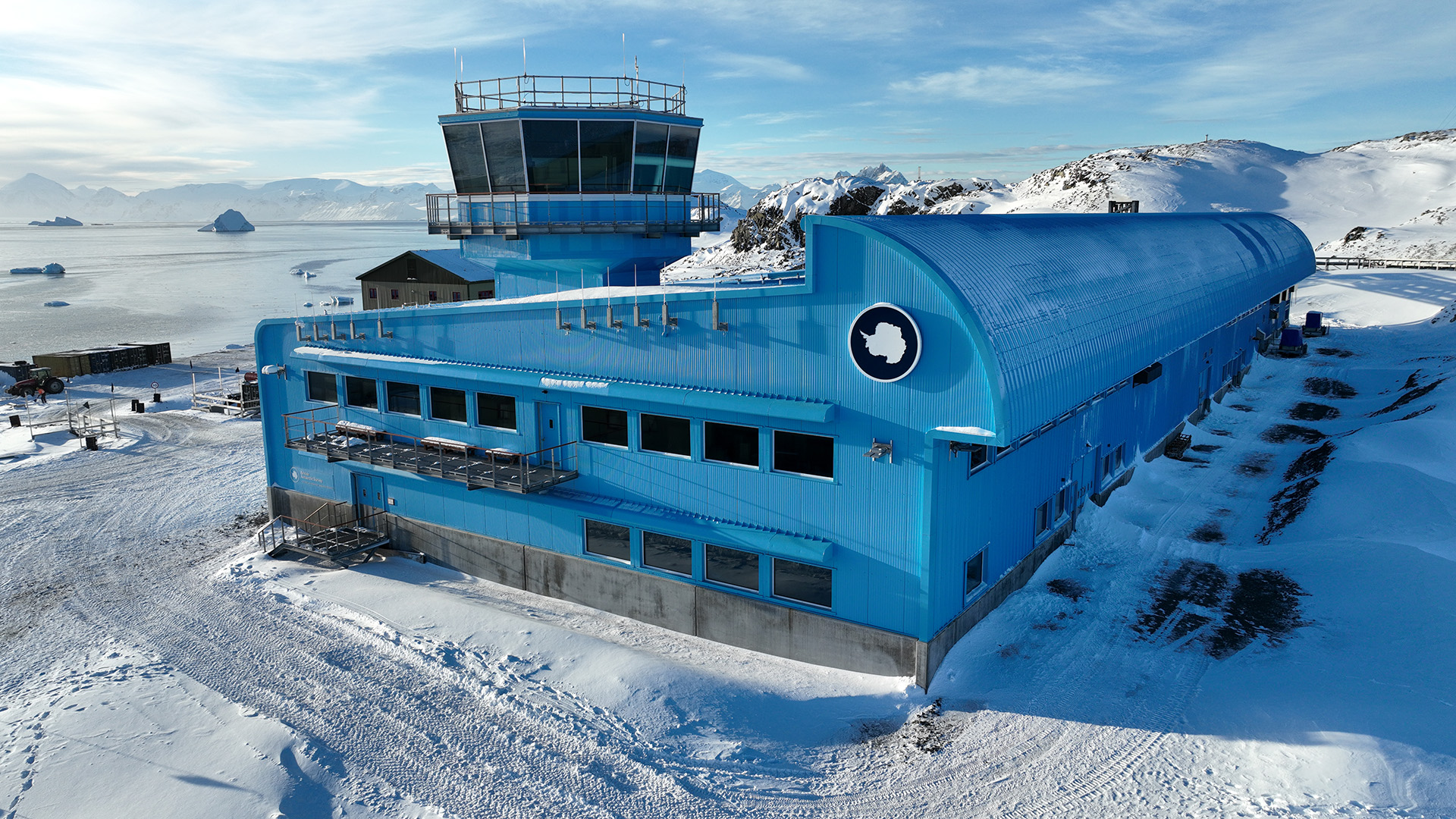
The Discovery Building at Rothera Research Station, Antarctica. Commissioned by NERC-UKRI
Teams who spent the long polar winter at Rothera have been the first to experience the benefits of the new Discovery Building, the UK’s largest ever construction project undertaken in Antarctica.
At the heart of BAS’s science and logistics operations on station, the building has transformed daily life for staff working through one of the planet’s harshest seasons, bringing comfort and better collaboration as well as energy efficiency, streamlined logistics and modern site-wide services.
As the Antarctic summer begins, teams are completing the remaining snagging and finishing works on the roof, internal decoration and mechanical and electrical systems. Engineering work includes improving the heat capture from the CHP units, better ventilation, upgraded door mechanisms and enhancing the fire-mist system.
Elen Jones, Programme Director at BAS said: “We’re continuing to invest in the infrastructure Antarctica needs to support world-leading science and resilient operations in a more sustainable way”.
David Brand, Senior Project Manager for the Rothera Modernisation project said: “The experience of our wintering team shows just how valuable the Discovery Building is during the most challenging months of the year. It’s comfortable, convenient and allows the teams to work more efficiently.”
Jerry Gillham, Rothera Winter Station Leader, who spent his first winter working from the new building, added: “The new Discovery Building brings us together more for sharing ideas and coming up with solutions. A warm workspace with modern amenities makes a real difference to morale and wellbeing. We feel more like one unit, able to work together on projects and exchange skills in ways we couldn’t before.”
A season of parallel projects
The Discovery Building is just one part of an ambitious £670m investment from UK Government, commissioned by Natural Environment Research Council (NERC), led by BAS to keep the UK at the forefront of polar science and logistics. This season sees three further projects advance in parallel; each tackle distinct engineering challenges.
Resurfacing the UK’s most southerly wharf
Maintaining a working wharf at the bottom of the world is no small feat. This season, BAS will resurface Rothera’s wharf to maintain a safe, reliable facility capable of withstanding the harshest conditions. With a busy season to come of people, equipment and supplies arriving at the station, a stable and durable wharf is essential to everything this programme, science and logistics deliver.
Laying the groundwork for a modern hangar
Work also begins this season on redeveloping Rothera’s aircraft hangar, starting with preparatory groundwork designed to minimise disruption to construction and air operations in future seasons. This includes building a new access road and relocating runway lighting infrastructure, setting the stage for the major construction and engineering to come.
Engineering the station’s renewable future
Behind the scenes, design development for Rothera’s renewable energy transition is progressing, with teams in Cambridge working closely with station staff, technical specialists and project partners to finalise plans ahead of construction.
Powering Rothera sustainably
The main installation phase of the renewable energy project is scheduled to begin in the 2027/28 season. Part of a network of Antarctic operators sharing expertise and experience of renewable energy in the polar regions, BAS will be installing building mounted photovoltaic solar panels, a battery energy storage system and a smart grid, ensuring excess renewable energy is stored and used as efficiently as possible. Teams will initially strengthen and reclad existing structures before installing the PV panels.
Bringing the renewable energy and hangar redevelopment projects together in the 2027/28 season will allow BAS to take a more integrated approach to construction planning and logistics, making the most effective use of resources, equipment and shipping windows available during the short Antarctic construction season.
Engineering under extreme constraints
An unfolding programme of major infrastructure work in Antarctica tests engineering and project management in equal measure. Extreme weather, isolation, narrow shipping windows and complex logistics all shape how work is planned, while every project must be carefully timed around a busy programme of scientific research and station operations to ensure minimal disruption.
Built for the science it supports
To ensure science remains the ultimate purpose behind every piece of piping and solar panel. Alongside its operational role, Rothera hosts world-leading research spanning climate, oceans and biodiversity. This season includes the second field campaign of the POLOMINTS programme, investigating how underwater waves generated by glacier calving influence ocean mixing, marine ecosystems and climate processes.
Scientists at the station are also continuing one of Antarctica’s longest-running ocean monitoring programmes and launching new drone-based studies of humpback whales, deepening understanding of environmental change in one of the world’s most climate-sensitive regions.
BAS’s programme of modernisation exists to make this possible, giving Rothera the facilities, infrastructure and resilience the station needs to remain a centre for world-class polar science.