
More than 40 organisations from 15 countries across Europe, North America and Asia are joining forces in a major new initiative to strengthen how the rapidly changing Arctic is observed, understood and monitored.
The four-year, €8.5 million EU Horizon Europe project Beyond Arctic PASSION meets for the first time at British Antarctic Survey in Cambridge this week (27-29 October). The project will bring together scientists, Indigenous Peoples’ organisations, local communities, governments, data services and operational organisations to build a more coordinated and accessible Arctic Observing System for the environment.
The initiative comes as the Arctic experiences rapid environmental and societal change, increasing demand for reliable observations and trusted information to support communities, policymakers, researchers and industry.

“The need for improved Arctic observations has never been greater,” said Dr Michael Karcher, co-lead of Beyond Arctic PASSION at the Alfred Wegener Institute in Germany.
“As the Arctic warms nearly four times faster than the global average, reliable observations and trusted information are essential for understanding change and ensuring that communities, policymakers, academia and industry have the knowledge they need to respond.”
Dr Jeremy Wilkinson, co-lead of the project at the British Antarctic Survey, said no single organisation or country could address the challenge alone.
“By bringing together scientific expertise, Indigenous Knowledge and local knowledge from across the Arctic and elsewhere, Beyond Arctic PASSION will help create a more coordinated, trusted, accessible and equitable observing system that supports decision-making, adaptation and sustainable development.”
For decades, scientists, Indigenous Peoples, local communities and governments have worked to develop a more coordinated Arctic Observing System connecting people, knowledge and technology.
But observations remain spread across national borders, research infrastructures, data platforms and different knowledge systems. This fragmentation can make it difficult to find, access and combine information needed to understand interconnected environmental and societal changes.
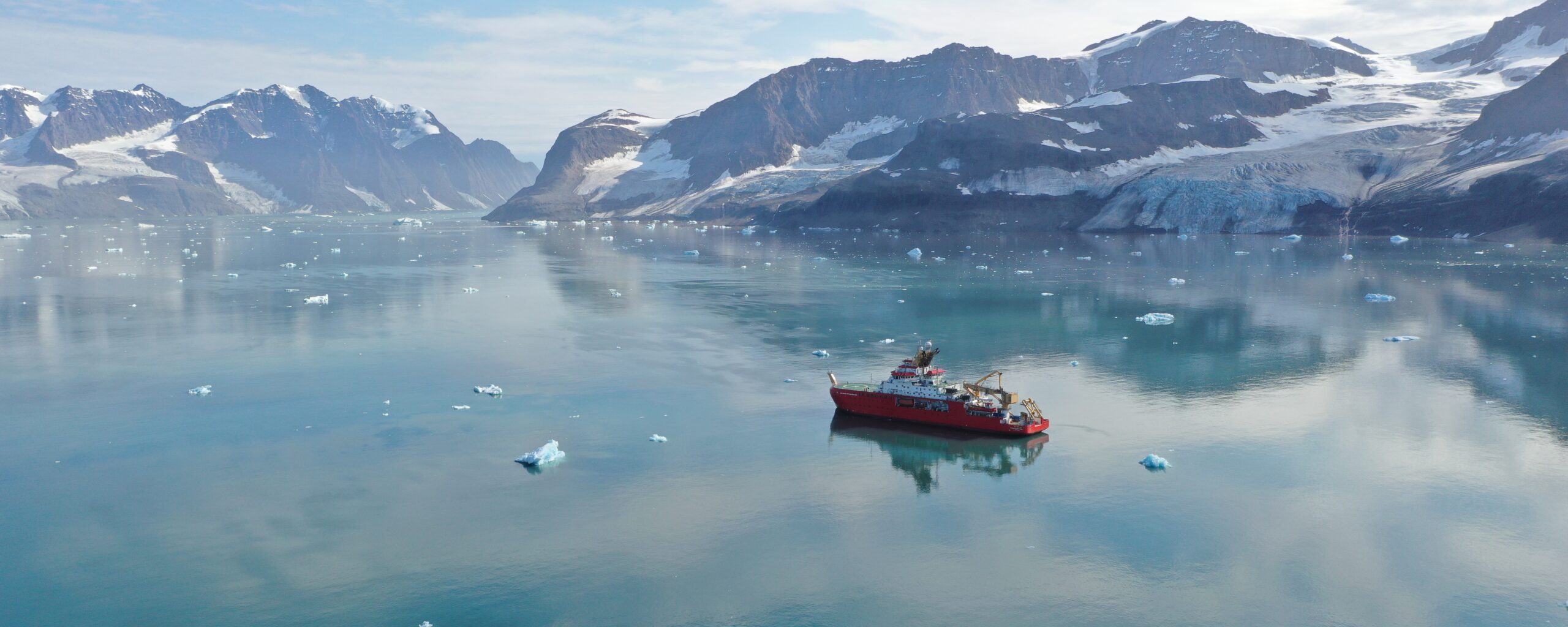
Beyond Arctic PASSION aims to address this challenge by connecting observations from satellites, research vessels and automated monitoring systems with Indigenous-led and community-based observing programmes.

The project will strengthen coordination between these different sources of information, helping create a more accessible and trusted body of Arctic knowledge for those who use it.
Its partners include universities and national research institutes alongside Indigenous Peoples’ organisations, operational data services, local and regional authorities and organisations working on science communication, policy, gender and inclusion, and early-career research.
A central focus of Beyond Arctic PASSION will be making Arctic information easier to discover, access and use.
Through improved coordination, data sharing and co-production of knowledge, the project will seek to ensure that Arctic observations are better aligned with the needs of the people and organisations using them.
The project builds on work undertaken through previous major Arctic observing initiatives, including Arctic PASSION and INTAROS, bringing together their achievements as part of a longer-term effort to establish a sustained and operational Arctic Observing System of Systems.
The consortium includes the European Polar Board, SIOS Svalbard Integrated Arctic Earth Observing System, the International Network for Terrestrial Research and Monitoring, the Arctic Monitoring and Assessment Programme Secretariat, Saami Council, Inuit Circumpolar Council-Greenland, Inuit Circumpolar Council-Canada, the Association of Polar Early Career Scientists, Arctic Mayors’ Forum and Women of the Arctic.
Partners also include the European Commission’s Joint Research Centre, GRID-Arendal, Mercator Ocean, PANGAEA, Seascape Belgium and O.A.SYS, as well as universities and research institutes across Canada, Denmark, Finland, France, Germany, Greenland, Italy, Norway, Poland, the UK, Japan, South Korea and the United States.
Six Arctic States are represented in the consortium, alongside Indigenous Peoples’ organisations and partners from countries with long-standing Arctic research programmes.
The project is coordinated by the British Antarctic Survey and jointly led by Dr Michael Karcher of the Alfred Wegener Institute and Dr Jeremy Wilkinson of the British Antarctic Survey.
Beyond Arctic PASSION is funded by the European Union, Horizon Europe Funding Programme for research and innovation under grant agreement No. 101295797.