
Physiologist Adaptations Lead IMP 2
BAS Science Strategy Executive Group, Biodiversity, Evolution and Adaptation team

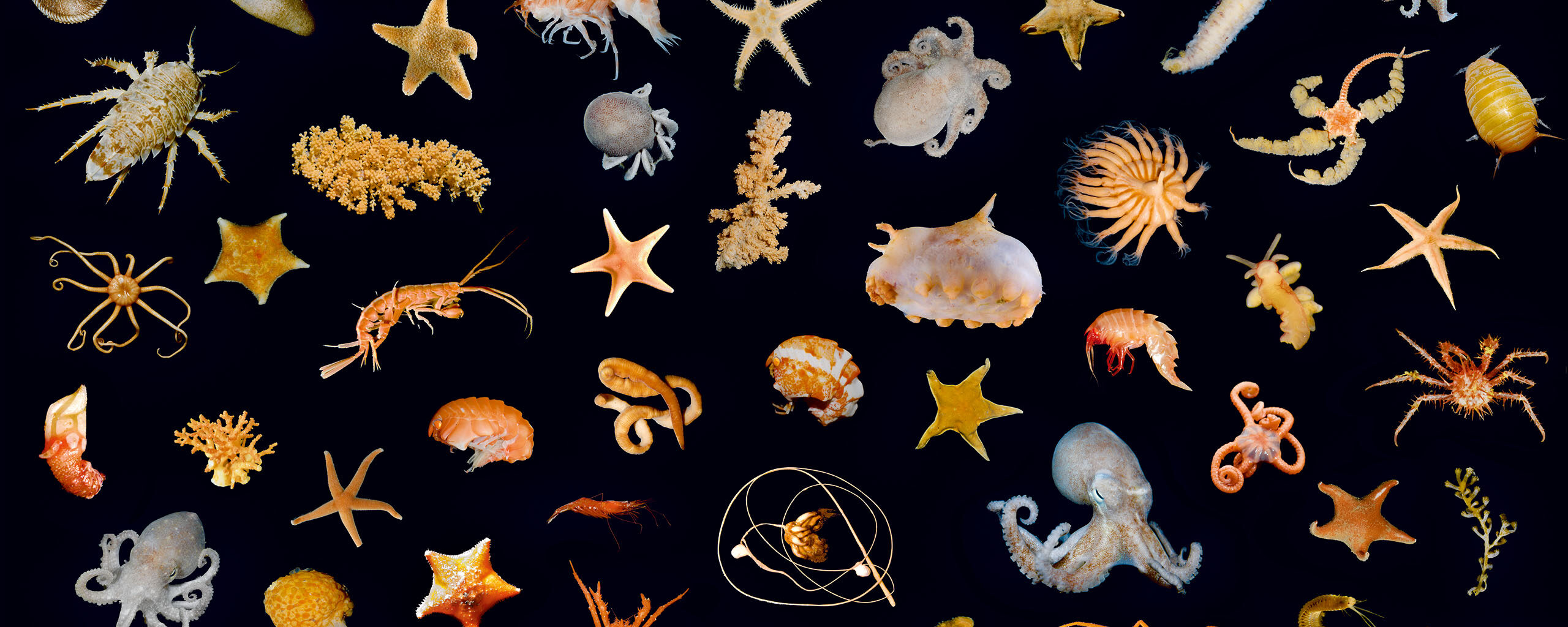
We study how life survives and thrives in polar and other extreme environments.
Our team explores biodiversity and how past, present, and future environmental change affects it on land and in the ocean.
We use molecular and morphological methods alongside lab and field experimental studies, and fieldwork campaigns to study polar organisms. Our PhD and postdoctoral programmes train the next generation of polar biologists.
We investigate how many species live at the poles, map where they live, study how ecosystems function, and assess the impacts of human activity on polar life.
By understanding the current distributions and genetics of animals, plants, and microbes, we learn about past environmental conditions and predict how life will respond to current and future changes.
We investigate the genetic, physiological, and ecological traits that allow species to survive in extreme environments.
We study how these specialised traits might help or hinder polar organisms as the climate warms.
We contribute to international biodiversity data initiatives including:
Our team also contributes to:
Steering groups
Antarctic Terrestrial and Nearshore Observing System (ANTOS)
Intergovernmental Panels on Climate Change and Biodiversity and Ecosystem Services (IPCC and IPBES)
Scientific Committee on Antarctic Research (SCAR) development council
United Nations Environment Programme World Conservation Monitoring Centre (UNEP-WCMC)
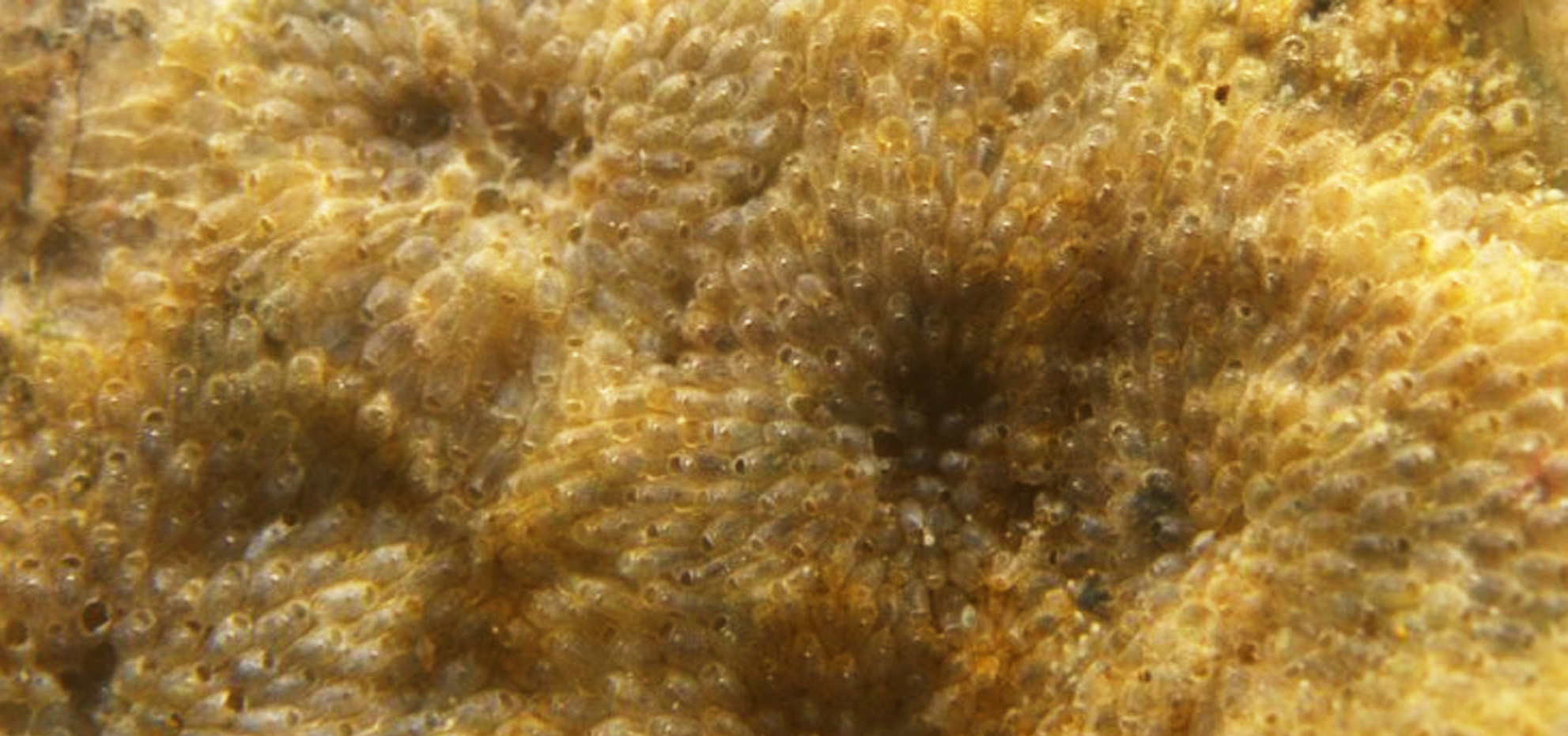
The heated settlement panels project tested how marine life responded to warmer oceans. The focus was on the waters of the Antarctic Peninsula, one of the fastest-warming regions on Earth
Physiologist Adaptations Lead IMP 2
BAS Science Strategy Executive Group, Biodiversity, Evolution and Adaptation team

Marine Ecologist IMP 3
Genetics Leader IMP 3
Terrestrail Ecologist IMP 3
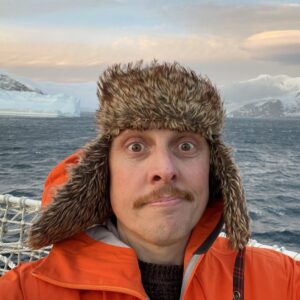
Marine Biogeographer
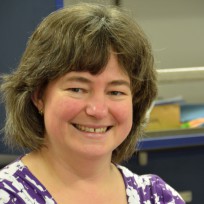
Senior Biodiversity Biologist
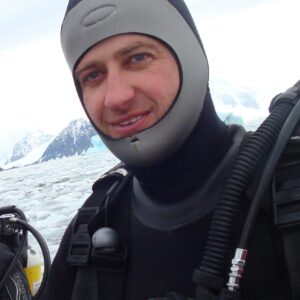
Ecophysiologist
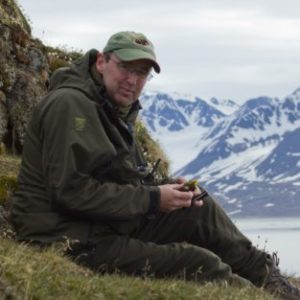
Terrestrail Ecologist
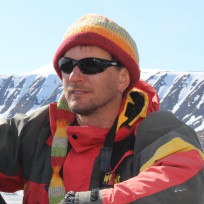
Geneticist
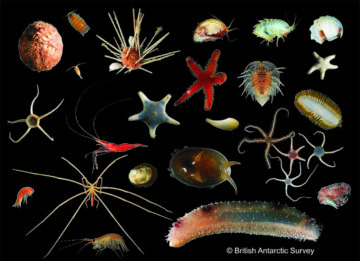
The Larsen-C Benthos project studied benthic biodiversity on the seabed exposed by the 2017 calving of the Larsen-C Ice Shelf.
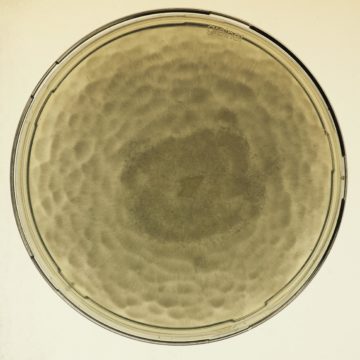
This project investigated whether Mortierella, a cold-tolerant Antarctic soil fungus, could replace banned chemical pesticides in controlling weevil larvae that damage UK soft fruit and forestry crops.
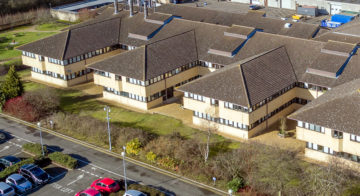
The key objective is to identify and implement management techniques which will as far as possible be sympathetic to wildlife and encourage native species, in order to sustain and enhance biodiversity at BAS Cambridge.
Understanding how the external skeleton changes in response to environmental pressures is helping us predict how a major part of the marine ecosystem (molluscs make up 23% of all marine species) will fare under climate change.
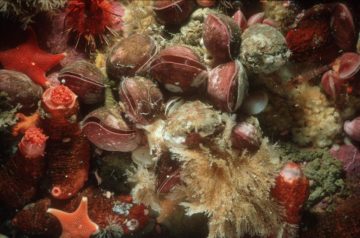
Reproductive capacity and success of marine animals
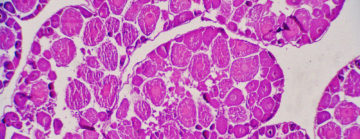
Dynamic Live Cell Imaging investigated how Antarctic marine organisms, particularly fish, function at temperatures below 0°C
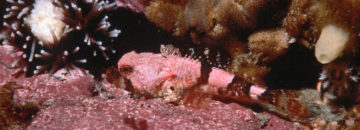
Since Near-shore Marine Biology was moved to Rothera in 1997, we have been conducting biological long-term monitoring in both the marine and terrestrial environments. These represent some of the longest continuous datasets in the Southern Ocean.
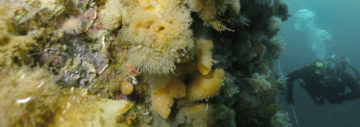
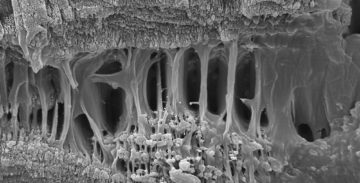
Cold Skeletons investigates how extreme cold affects skeleton formation in Antarctic marine animals.
Baseline study to monitor how marine biodiversity will respond to climate change
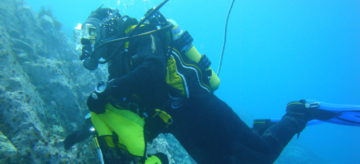
SO-AntEco was a British Antarctic Survey (BAS) led expedition undertaken in conjunction with an international team of scientists from the Scientific Committee for Antarctic Research (SCAR) AntEco research programme.

The heated settlement panels project tested how marine life responded to warmer oceans. The focus was on the waters of the Antarctic Peninsula, one of the fastest-warming regions on Earth
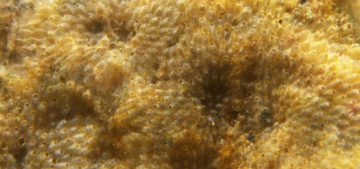
EMBRC is a group of leading European marine research centres, which is also known as a distributed Research Infrastructure. It provides access to European coastal seas and the endemic fauna, with the addition of Antarctica via BAS.
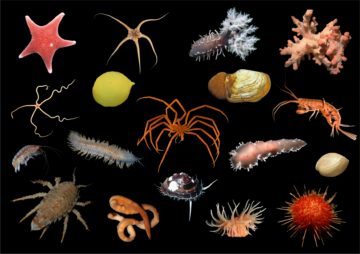
AIMS gathers baseline scientific data on Ascension Island’s globally important marine wildlife and fisheries to help the island government manage and conserve its marine resources.
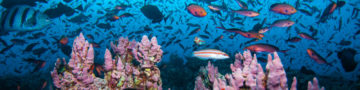
CACHE-ITN pushed forward our understanding of calcium production in warmer more acidic marine environments.
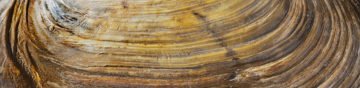
Svalbard Integrated Earth Observing System (SIOS) is an international infrastructure project. There are 26 partners from Europe and Asia involved. The essential objective is to establish better coordinated services for the International Research community with respect to access, data and knowledge management, logistics and training.
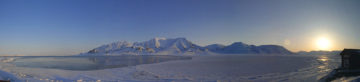
The ASCCC Project investigates, quantifies and understands the role of polar and subpolar seabeds in the carbon cycle, particularly in response to climate change.
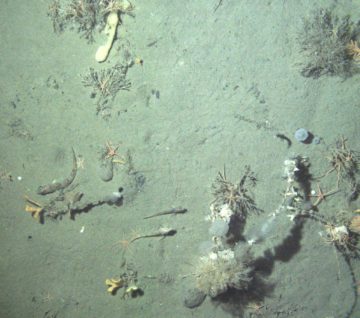
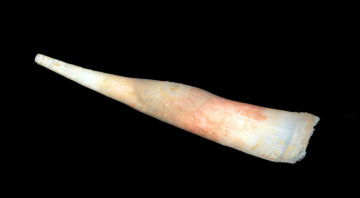
A new species of tusk shell, a burrowing marine mollusc, has been discovered in deep, North Atlantic waters by scientists from British Antarctic Survey and the Senckenberg Society for Nature Research.
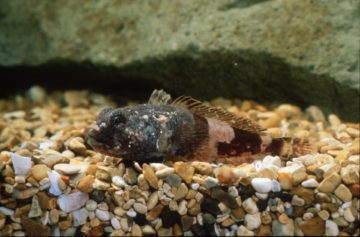
Cambridge researchers are set to explore the uncharted depths of life in the extreme cold, with findings that could reshape our understanding of biology and pave the way for future scientific breakthroughs.
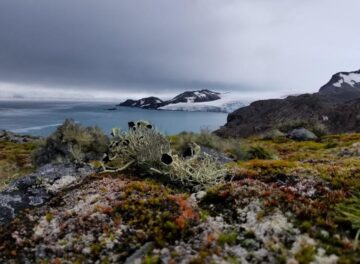
The first continent-wide mapping study of plant life across Antarctica reveals growth in previously uncharted areas, and is set to inform conservation measures across the region.
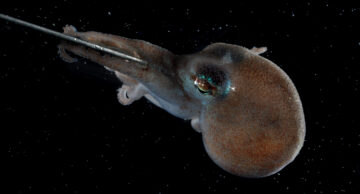
Scientists, including from British Antarctic Survey, have used octopus DNA to discover that the West Antarctic Ice Sheet (WAIS) likely collapsed during the Last Interglacial period around 120,000 years ago – when the global temperatures were similar to today.
How do you spot an invader you can’t see in a harsh and unforgiving environment? A team of international scientists are looking for new methods to defend the frozen continent […]
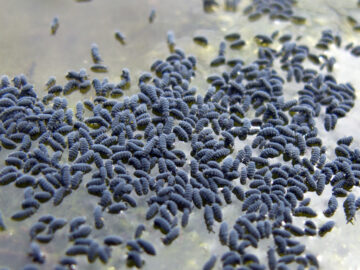
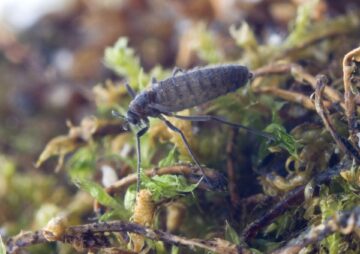
A tiny flightless midge which has colonised Antarctica’s Signy Island is driving fundamental changes to the island’s soil ecosystem. Research by experts at the British Antarctic Survey (BAS) in collaboration […]
Climate, biodiversity, and societal challenges are intrinsically linked and yet are usually viewed in isolation. A new review study, published in the journal Science this week (21st April 2023), focusses […]
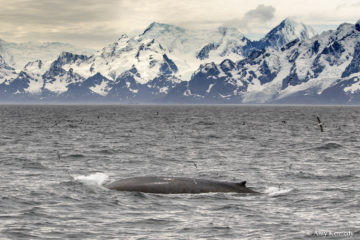
Global warming and ocean acidification are threatening marine organisms, such as corals, bryozoans, molluscs, sea urchins or crustaceans, that build their skeletons and shells with calcium carbonate (chalk) according to […]
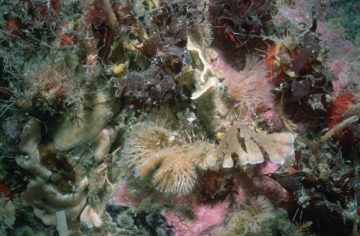
The amazing survival strategies of polar marine creatures might help to explain how the first animals on Earth could have evolved earlier than the oldest fossils suggest according to new […]
Three British Antarctic Survey (BAS) staff have been awarded the Polar Medal. The announcement was published last week (Friday 28 January) in the London Gazette. Melody Clark is a molecular […]
Marine life hitching a ride on ocean-crossing ships poses a threat to Antarctica’s pristine ecosystems, with the potential for invasive species to arrive from almost anywhere across the globe, say […]
Far beneath the ice shelves of the Antarctic, there is more marine life than expected, finds a recent study in the journal Current Biology, published this week (20 December 2021). […]
New research by scientists at British Antarctic Survey and Bielefeld University explains how the chaotic formation of genetic islands can occur in marine molluscs. Usually, the individuals of a population […]
A workshop report published today (10 June) by 50 of the world’s leading biodiversity and climate experts states that unprecedented changes in climate and biodiversity, driven by human activities, have […]
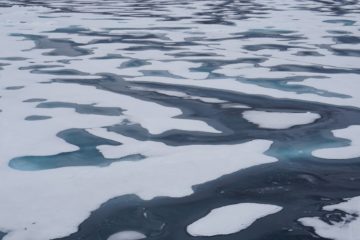
Far underneath the ice shelves of the Antarctic, there’s more life than expected, finds a recent study in the journal Frontiers in Marine Science, published this week (15 February 2021). […]
Today is International Day of Women and Girls in Science (11 February), a celebration of women and girls in science led by UNESCO and UN-Women. “International Day of Women and […]
A British Antarctic Survey (BAS) scientist departs Germany today (8 January 2021) onboard the research vessel SONNE to study the diversity of marine organisms in the Atlantic deep sea. Dr […]
New study of plastics in the Antarctic Peninsula, South Georgia and the Sandwich Islands
Please join us in congratulating Dr Huw Griffiths, Marine Biogeographer at British Antarctic Survey, who has been awarded the Scientific Committee on Antarctic Research (SCAR) Medal for Education and Communication. […]
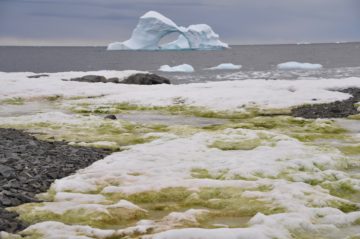
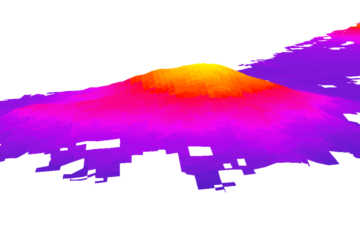
Scientists have created the first ever large-scale map of microscopic algae as they bloomed across the surface of snow along the Antarctic Peninsula coast. Results indicate that this ‘green snow’ is […]
An underwater mountain double the height of the UK’s Ben Nevis has been added to a global map of the seafloor during a research cruise to investigate the marine environment […]
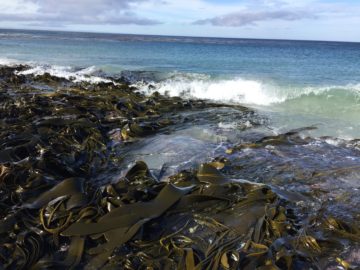
Large brown seaweed can bring invasive species to Antarctica, according to research published today (31 January 2020) in the journal Scientific Reports. The new study describes the first scientific evidence […]
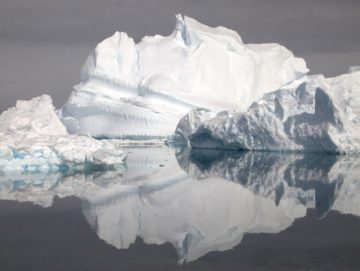
Two studies published in a special issue of the journal Science Advances this week (27 November 2019) highlight the fragility of the Antarctic and its ecosystems in the lead up […]
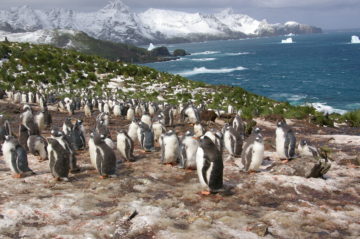
A new study by BAS scientists and collaborators in the Netherlands shows that seal and penguin poo is key to Antarctic biodiversity on land. By studying concentrations of nitrogen-rich guano […]
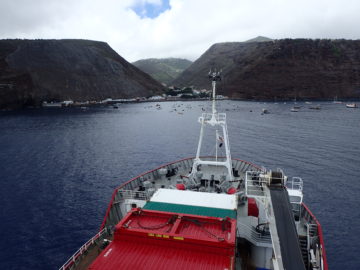
A team of scientists set sail this week (12 March) for the remote South Atlantic islands of Tristan da Cunha and St Helena. This mission is part of BAS’ commitment […]
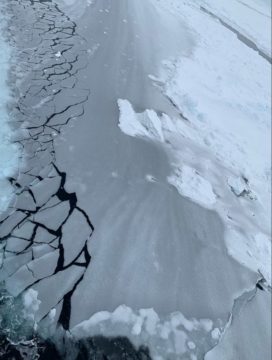
Sea-ice conditions have prevented the Research Icebreaker Polarstern from reaching the Larsen Ice Shelf and the calving areas of iceberg A68.
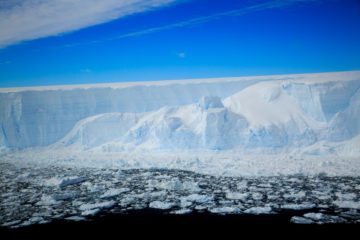
An international team of scientists heads to Antarctica this week (4 February 2019) to investigate a mysterious marine ecosystem that’s been hidden beneath an Antarctic ice shelf for up to […]
Some parents in the animal kingdom can prepare their young for environmental change, helping them cope better in new conditions, a paper published today in Nature Scientific Reports reveals. Scientists […]
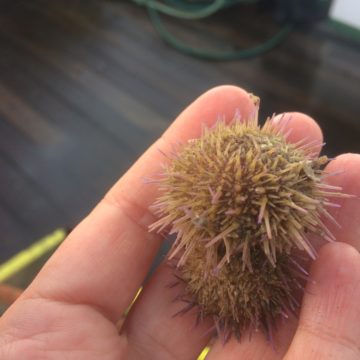
A new study of the animals living in polar oceans reveals which are most at risk from climate change. The study is published today (17 January) in Frontiers in Marine […]
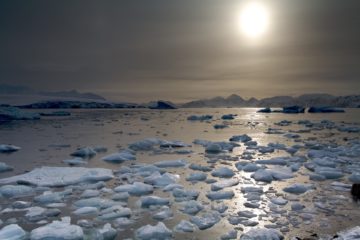
Of the known non-native or ‘alien’ species found in Antarctica, a non-biting species of midge currently presents one of the highest risks to terrestrial ecosystems, researchers have found. The preliminary […]

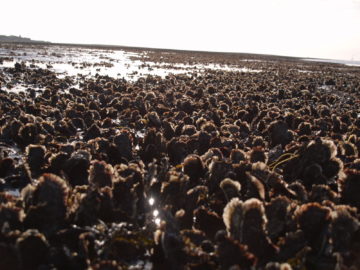
The presence of invasive oysters can support an endangered native oyster species in certain situations, a team led by a British Antarctic Survey scientist has found. The result was a […]
The amount of plastic washing up onto the shores of remote South Atlantic islands is 10 times greater than it was a decade ago, according to new research published today […]
Report published July 2018
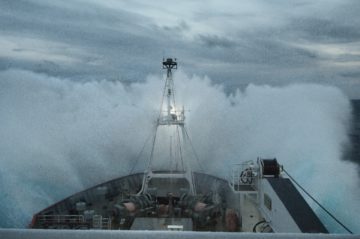
Fungi in Antarctic soils release carbon that is more than a thousand years old, a team led by scientists at the British Antarctic Survey (BAS) has found. This discovery sheds light on how carbon is released into the atmosphere as polar regions warm.
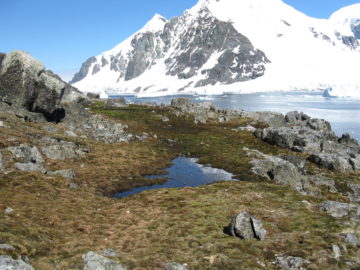
A new study concludes that a seafloor dwelling marine invertebrate is more resilient to environmental change than expected. The paper, led by researchers at British Antarctic Survey, is published today […]
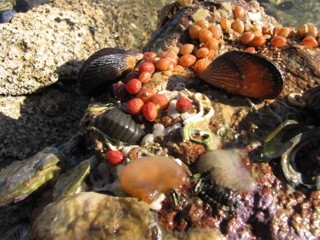
The UK government is committed to the long-term protection of over four million km2 of the world oceans which fall within the UK’s Overseas Territories. Prioritising which parts of the […]
Temperature, salinity and food supply are key influences on the shape of common blue mussels (Mytilus spp.), reveals a new study involving scientists from British Antarctic Survey. The research is […]

A team of scientists, led by British Antarctic Survey (BAS), heads to Antarctica this week (14 February) to investigate a mysterious marine ecosystem that’s been hidden beneath an Antarctic ice […]
A new study from British Antarctic Survey shows how five common Antarctic marine invertebrates (animals without a backbone) use less energy to feed, grow and reproduce than their temperate and […]
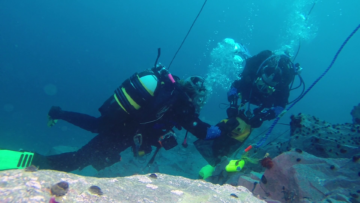
A team of scientists, led by British Antarctic Survey (BAS), is planning an urgent mission to investigate a mysterious marine ecosystem that’s been hidden beneath an Antarctic ice shelf for […]
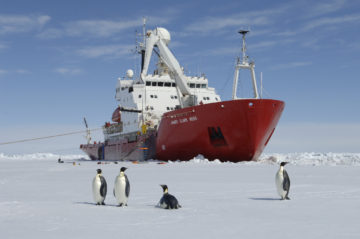
For nearly 50 years, researchers have been stumped as to why sea shells from warm tropical waters are comparatively larger than their cold water relatives. New research, led by the […]
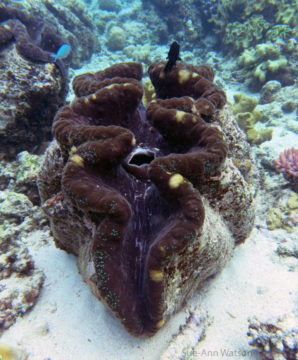
An international agreement is now in place to give special protection to the area of ocean left exposed when one of the largest icebergs ever recorded broke free from the […]
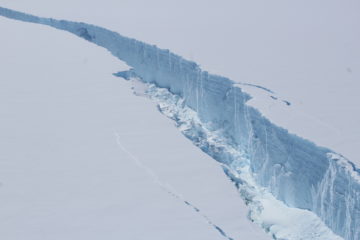
A new study of the marine invertebrates living in the seas around Antarctica reveals there will be more ‘losers’ than ‘winners’ over the next century as the Antarctic seafloor warms. […]
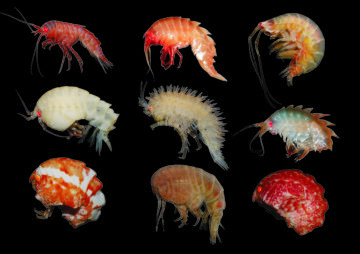
A team of scientists has discovered that a 1°C rise in local sea temperature has massive impacts on an Antarctic marine community. These new results are published this week (31 […]
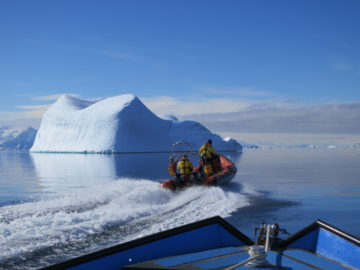
A new study on mosses found in the polar regions reveals when and how often they have migrated across the Equator. Mosses are the dominant flora in Antarctica, yet little is known of […]
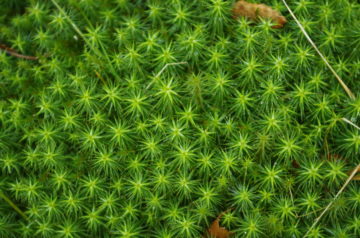
One of the best-known impacts of climate change is the loss of sea ice in the Arctic, but also in parts of the Antarctic: the poles are increasingly turning from […]
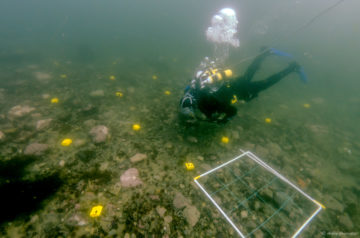
The levels of microplastic particles accumulating in the Antarctic are much worse than expected, a team of experts has warned. The continent is considered to be a pristine wilderness compared […]
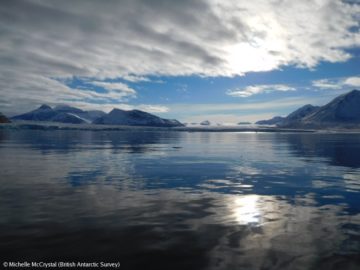
An international study involving scientists from British Antarctic Survey (BAS) has debunked the popular view that Antarctica and the Southern Ocean are in a much better environmental shape than the […]
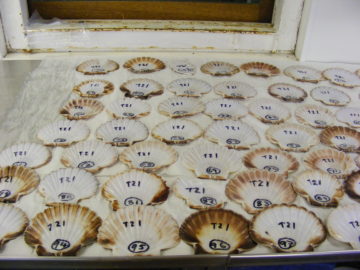
A new study describing how shellfish create their shells in response to their environment is published today (Wednesday 8 February) in the journal Royal Society Open Science. The shells of […]
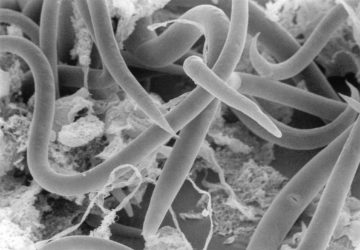
The first molecular study of an organism able to survive intracellular freezing (freezing within its cells) is published this week by British Antarctic Survey (BAS), in collaboration with researchers from […]
When divers laid a grid of 225 markers on the seabed it started one of the longest marine disturbance experiments anywhere in the world. Surveyed and replaced annually, they show […]
A new study on how molluscs build their shells in the sub-zero waters of Antarctica is published today (Friday 11 November) in the journal Scientific Reports. A team of European […]
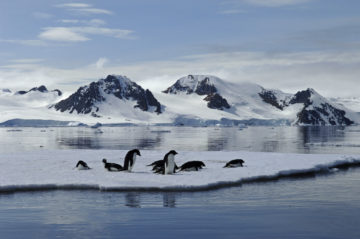
New blog from ecologist Jes Bartlett who’s heading to spend the summer working at Signy Island Research station. Here she talks about preparing cargo in her blog: The Cargo Deadline […]
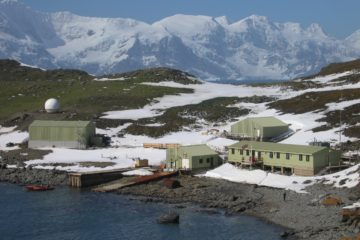
A new marine biodiversity study in one of the largest Marine Protected Areas in the world reveals the impact of environmental change on subantarctic seabed animals and answers big questions […]
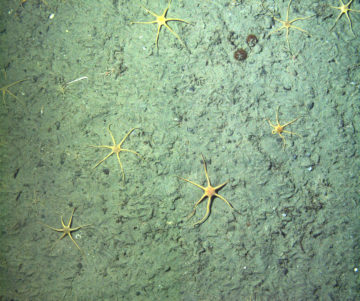
New technologies and techniques used in a scientific study of the shells of oysters, mussels, clams and scallops reveal clues about how these commercially valuable species may fare in a changing world, and how discarded shells from the aquaculture industry could benefit the environment.
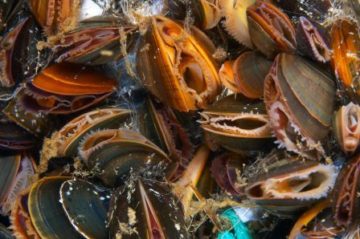
This paper shows that, contrary to long-held ideas, the intensity of competition (density of direct, physical spatial contests) differs little with latitude. However, the severity of competition (contests with a […]
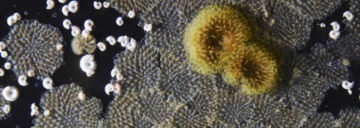
New research highlights differences between the tropics and the poles Rivalry between species is common the world over as animals fight for territory and resources such as food. But, according […]
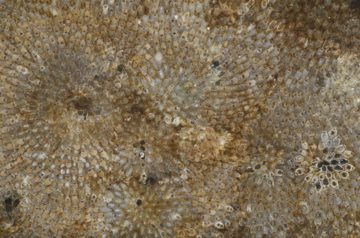
16 PhD students and Early Career Researchers have a unique opportunity to gain practical skills for working safely and effectively in the polar regions.
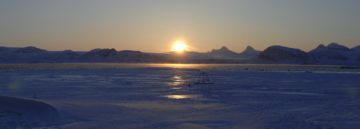
New season tackles ambitious science and logistical challenges The British Antarctic Survey (BAS) 2015/16 field season is underway with dozens of scientists and support staff – together with planes and tonnes […]
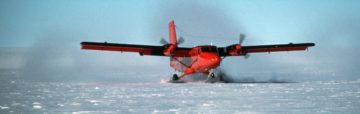
A new study by an international team of scientists, including from British Antarctic Survey (BAS), has analysed the effects on seabed communities of glacial retreat. Writing in Science Advances this […]
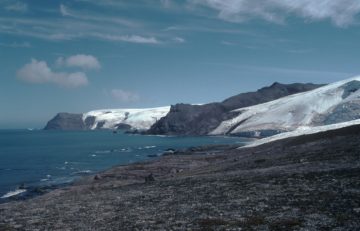
Warmer temperatures stimulate diversity of soil fungi Remote and covered by ice for much of the year the Antarctic Peninsula is home to hidden and dynamic communities of microbes that […]
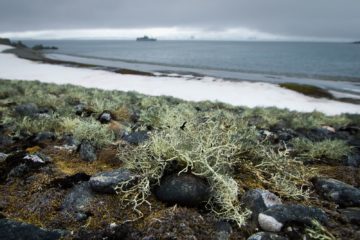
Antarctica more diverse and biologically rich than previously thought The team of scientists, led by Monash University, along with colleagues from the British Antarctic Survey, University of Waikato in New […]
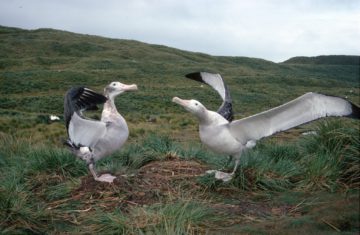
Antarctic life – highly diverse, unusually structured A new assessment by scientists, published in Nature this week, suggests Antarctica is a more diverse and biologically rich region than previously thought. […]
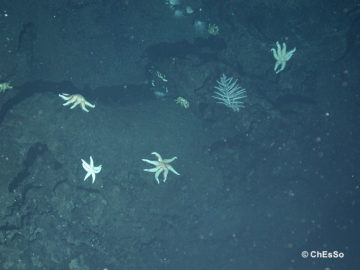
First new family of starfish discovered in hydrothermal vents A new family of deep-sea starfish has been discovered living in the warm waters around a hydrothermal vent in the East […]
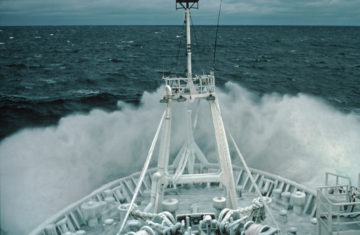
Ocean acidification changes balance of biofouling communities A new study of marine organisms that make up the ‘biofouling community’ — tiny creatures that attach themselves to ships’ hulls and rocks […]
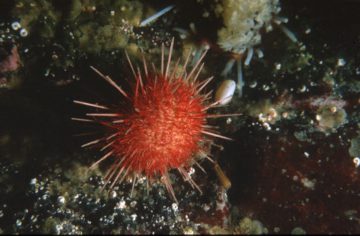
Sea urchins from Antarctica show adaptation to ocean acidification A study of sea urchins from the Antarctic Peninsula has revealed an ability to adapt to changing conditions such as rising […]
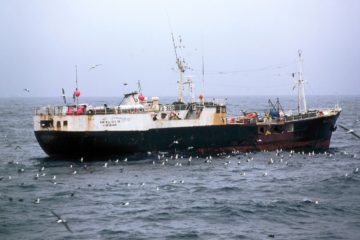
South Georgia Patagonian toothfish fishery recertified with flying colours Following its five-yearly Marine Stewardship Council (MSC) assessment, the South Georgia Patagonian toothfish longline fishery has, for the third time, been […]
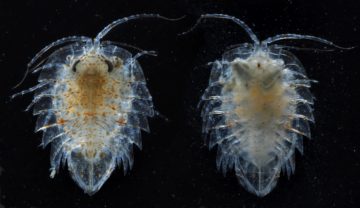
Chance discovery could be unique to whale bone habitat A new species of bug, similar in appearance to the common woodlouse, has been found plastered all over a whale carcass […]

Lessons from a remote Antarctic island on the vulnerability of ecosystems Scientists have carried out new research that could change the way we think about the vulnerability of ecosystems. Published […]
New research suggests that life survived past ice ages with the help of volcanoes. An international collaboration, including scientists from the British Antarctic Survey, has found new evidence that the […]
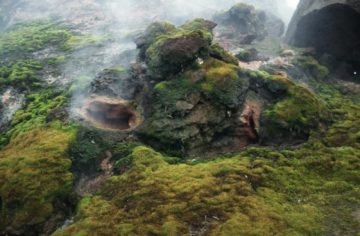
BAS takes the lead in ambitious science programme to aid fishing industry and monitor effects of climate change on Europe’s shellfish The supply of shellfish we buy at the supermarket […]
New species recovered from Amundsen Sea More than thirty new, and, as yet unclassified, species of marine life were discovered during a science expedition to the Amundsen Sea off Pine […]
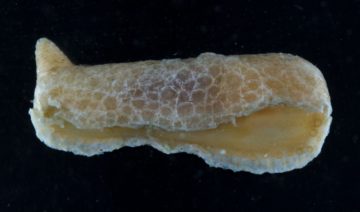
Research on the dynamics of food webs The dynamics of food webs, networks of who-eats-whom interactions, are being highlighted in the August report of International Innovation, an open access European […]
Moss growth in Antarctica linked to climate change Increases in temperature on the Antarctic Peninsula during the latter part of the 20th century were accompanied by an acceleration in moss […]
Warming Antarctic seas likely to impact on krill habitats Antarctic krill are usually less than 6 cm in length but their size belies the major role they play in sustaining […]
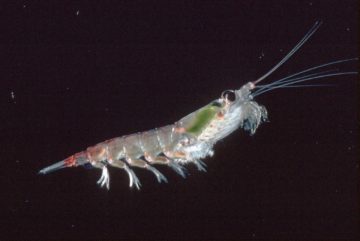
Antarctic lake mission called off In the early hours of Christmas Day (Tuesday 25 December 2012) Professor Martin Siegert, Principal Investigator of the Subglacial Lake Ellsworth experiment, confirmed that the […]
New study helps predict impact of ocean acidification on shellfish An international study to understand and predict the likely impact of ocean acidification on shellfish and other marine organisms living […]
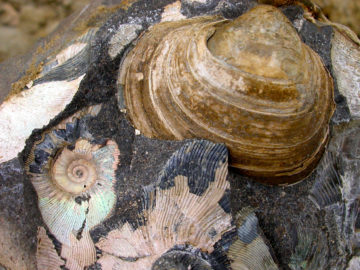
Antarctic albatross displays shift in breeding habits A new study of the wandering albatross – one of the largest birds on Earth – has shown that some of the birds […]
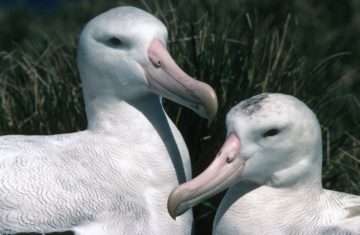
Communities of species previously unknown to science have been discovered on the seafloor near Antarctica, clustered in the hot, dark environment surrounding hydrothermal vents. The discoveries, made by teams led […]
New research shows how much food is needed by seabirds An international group of scientists has shown that many seabirds begin to suffer when the food available for them in […]
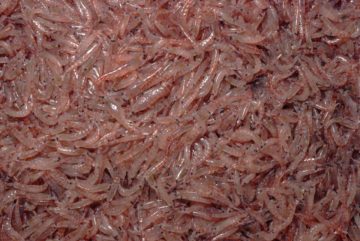
Marine animals suggest evidence for a trans-Antarctic seaway A tiny marine filter-feeder, that anchors itself to the sea bed, offers new clues to scientists studying the stability of the West […]
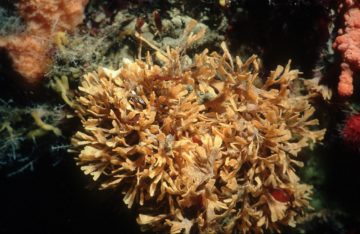
Understanding global climate change through new breakthroughs in Polar research The latest findings from research on Antarctica’s rich marine life are presented this week at the American Association for the […]
Antarctica glacier retreat creates new carbon dioxide store Large blooms of tiny marine plants called phytoplankton are flourishing in areas of open water left exposed by the recent and rapid […]
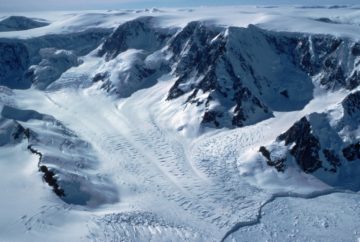
Albatross camera reveals fascinating feeding interaction with killer whale Scientists from British Antarctic Survey, National Institute of Polar Research (NIPR), Tokyo, and Hokkaido University, Japan, have recorded the first observations […]
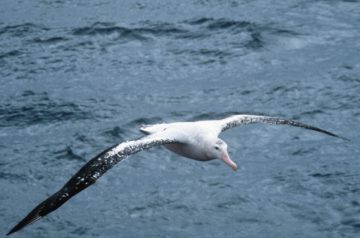
First comprehensive inventory of life in Antarctica The first comprehensive “inventory” of sea and land animals around a group of Antarctic islands reveals a region that is rich in biodiversity […]
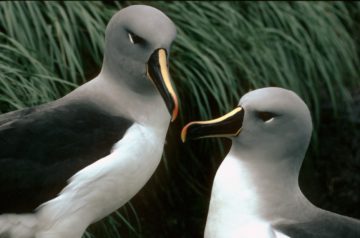
New visualisation of South Georgia A new visualisation tool for exploring the subantarctic islands of South Georgia is unveiled today (22 October 2008). The South Georgia Geographic Information System (SGGIS) […]
New research into how biodiversity is generated and maintained in the seas surrounding hostile Polar Regions is reported in this month?s Proceedings of the Royal Society (Biological Sciences). British Antarctic […]
Working in Antarctica often means making the best out of what you got. For the Rothera 2022 wintering team, this meant spending a winter without diving, which had to be […]
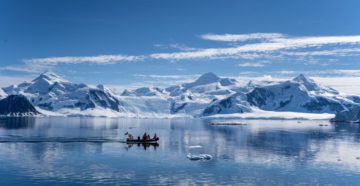
Huw Griffiths works in the Biodiversity Team at British Antarctic Survey. As he completes fieldwork in the Canadian Arctic with colleagues Cath Waller (University of Hull) and Steve Roberts (BAS), […]
Today, 11 February, is International Day of Women and Girls in Science, a global initiative led by UNESCO and UN-Women. To celebrate, we have asked some of our female staff […]
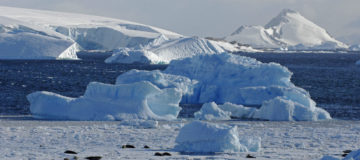
In the latest of the Centre for Environment, Fisheries and Aquaculture Science (CEFAS) blog series on the Global Ocean Wildlife Analysis Network, we hear from Simon Morley, British Antarctic Survey (BAS) […]
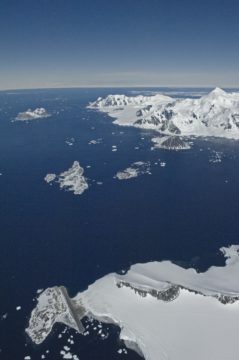
This week at Climate Exp0, Dr David Barnes, benthic marine Ecologist at British Antarctic Survey, has discussed the potential for mitigating climate change through nature-based solutions, including sharing collaborative research […]
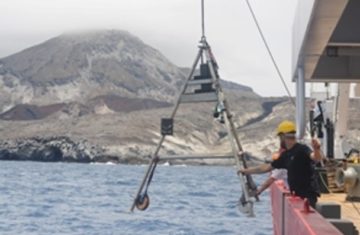
Nadia Frontier is the new Marine Biologist at Rothera Research Station. In her latest blog, Nadia takes us through safety training, wildlife sightings, and what it takes to dive successfully […]
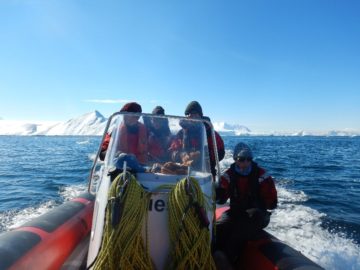
Nadia Frontier is the new marine biologist at Rothera Research Station. In her blog below, Nadia takes us through arriving at Rothera, first impressions of the station, and Christmas celebrations! […]
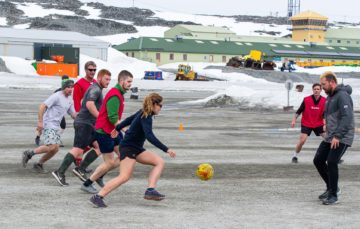
British Antarctic Survey biodiversity biologist Dr Katrin Linse is onboard German ship RV Sonne conducting a research expedition to map biodiversity in the Atlantic deep sea. In this blog, Katrin […]
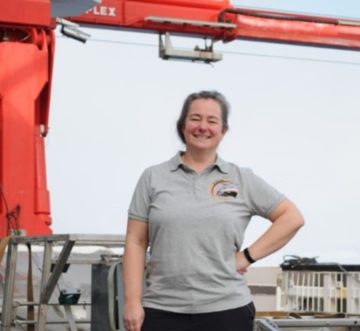
Episode 6: Underwater Blue carbon capture, cold water gigantism, iceberg scouring, algal blooms…this episode covers a lot of ground! Rothera Field Guide Rob Taylor speaks with Aurelia Reichardt, Nadescha Zwerschke […]
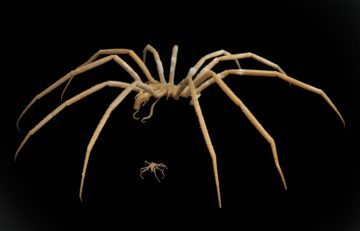
BAS marine biogeographer Dr Huw Griffiths talks about the importance of diverse role models. He is hopeful that existing and future polar scientists will see that being yourself and being different are no barrier to working in the most extreme environments on Earth, and can be a real asset as a scientist.
Professor Melody Clark, Project Leader, discusses the trials and tribulations of undertaking research in Antarctica. Her latest paper published in Nature Communications shows that rising sea temperatures of just 1-2 […]
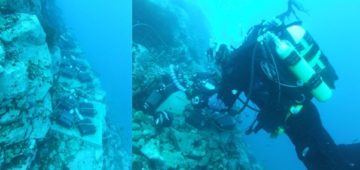
Nadescha Zwerschke is a marine biologist, who was travelling on the RRS James Clark Ross (JCR) as part of the ICEBERGS 2 cruise in December 2018. Having left Burdwood Bank […]
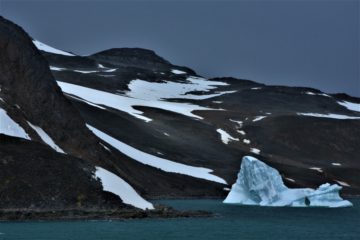
ICEBERGS2 – a research cruise and my gateway to Antarctica Nadescha Zwerschke is a marine biologist travelling on the RRS James Clark Ross to Antarctica I’ve only recently started my […]
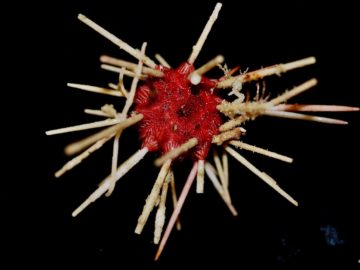
Zoe Waring, the Rothera Marine Assistant provides us with an account of the recent Ocean Sampling Day at Rothera. Since 2012, the Rothera Marine Assistant has been collecting samples for World […]
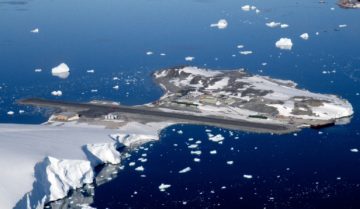
I recently spent four-and-a-bit weeks aboard the German blue water research ship RV Meteor along with Oli Hogg, my PhD student. We took part in the “Methane South Georgia” research […]
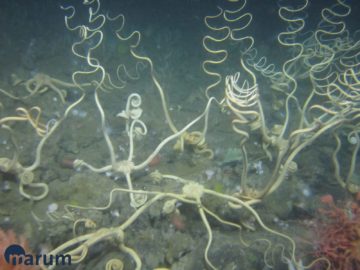
New blog from ecologist Jes Bartlett who will be spending the Austral summer working at Signy Island Research station. Here she describes her pre-deployment training. Shortly after the sigh of […]
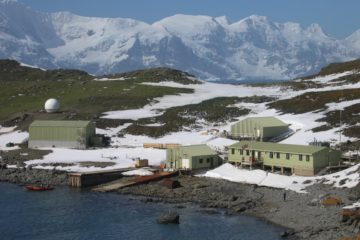
Dr Melody Clark gets excited about sea snails as part of an innovative research programme to investigate how Antarctica’s animals will adapt to life in a warmer world. Penguins or […]
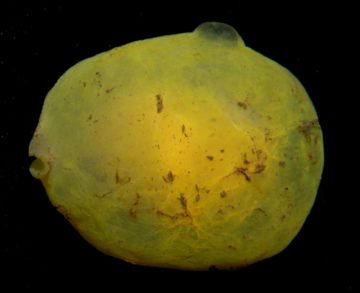
Last week was UK Science Week, and we asked schools and anyone else who had burning questions about the Antarctic deep sea to send them to us here on the […]
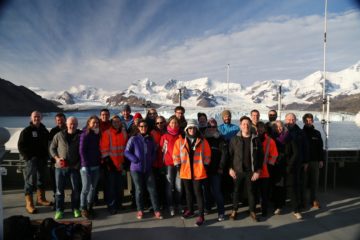
Lost in a Sea of Biology! Dr Laura Robinson is interested in documenting and understanding the processes that govern climate on time scales ranging from the modern day back through hundreds of […]
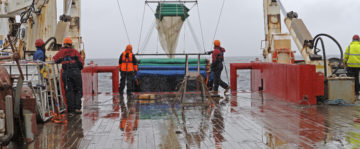
New ‘buoy’ at sea Oliver Ashford – a PhD student from Oxford University – is the youngest member of the SO-AntEco research cruise onboard the RRS James Clark Ross. He’s working with […]
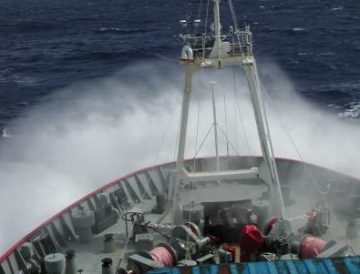
Find out about NERC Research Fellow Dr Sian Henley’s preparations for her fifth visit to Rothera Research Station and what she looks forward to onboard the RRS James Clark Ross.
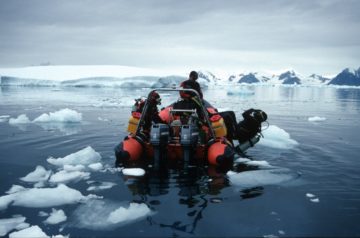
Seymour (Marambio) Island, Antarctica has one of the most expanded onshore Cretaceous–Paleogene sedimentary successions in the world. The deposition of the López de Bertodano Formation (~70–65.6 Ma) covered a time of […]