Aerogroup Gravity

Our airborne science and technology services and facilities contribute to a National Capability programme that is supported by the UK Government and NERC.
Scientific community access to Antarctic and Arctic infrastructure is coordinated and managed by BAS through the Collaborative Antarctic Science Scheme and opportunities for polar fieldwork for NERC-funded scientists. We encourage you to contact us as soon as possible to discuss your project requirements. Scientific instruments, sensors and equipment that will be deployed on Twin Otter aircraft require time for installation and certification. Depending on the instrumentation to be fitted it may be necessary that integration, installation and testing cost are paid.
BAS will deliver an airborne geophysical capability deployed on low-cost piloted and autonomous aircraft. This instrument suite includes gravimeter, magnetometers and ice-penetrating radar, which can be flown with LIDAR in support. The suite has been widely employed on NERC and other grants. Details here
BAS will deliver an instrumented aircraft with suite of atmospheric instruments and scientific expertise ready-to-support grants, collaborations, and strategic programmes.
Aerogroup Gravity
BAS uses aerial photography taken with this camera for topographic, geological and vegetation mapping, interpreting satellite imagery and counting populations of penguins and seals.
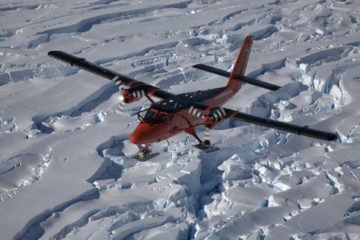
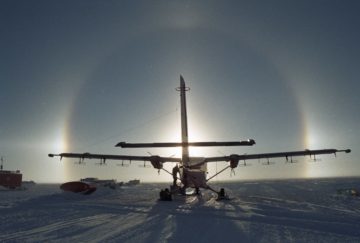
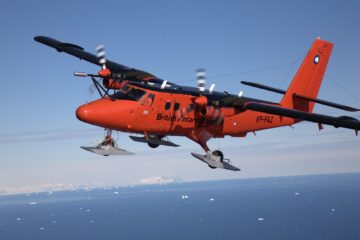
Two of the four BAS Twin Otters are equipped with a full remote sensing capability, providing scientists with data on land, ice and sea.
The International Thwaites Glacier Collaboration unites global scientists to study Antarctica’s most vulnerable glacier, predict sea-level rise, and inform climate action worldwide.
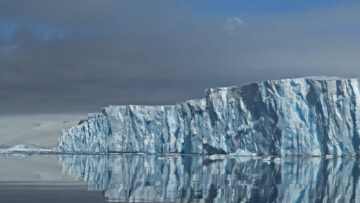
British Antarctic Survey is monitoring glaciological changes on the Brunt Ice Shelf, home to Halley Research Station.
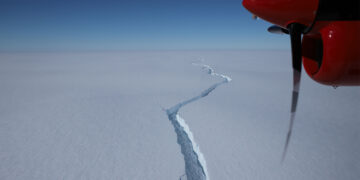
The overarching goal of the project is to determine the role of sea-ice surface properties in Arctic cyclone dynamics and to characterise the interaction of Arctic cyclones with the summer-time Arctic environment.
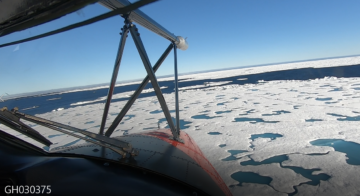
BEAMISH drilled through over 2 km of ice on Rutford Ice Stream to discover when the West Antarctic Ice Sheet last collapsed and how water and soft sediments beneath it help the ice flow towards the sea.
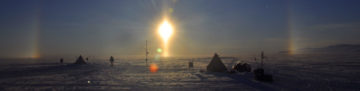
This project investigated the stability of Antarctica’s Filchner Ice Shelf to produce sea-level projections using hot water drilling, ocean measurements beneath the ice shelf, sediment coring, radar surveys and autonomous submersibles.
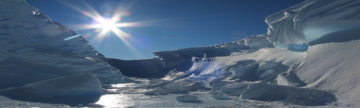
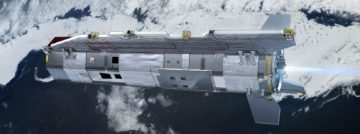
GOCE+Antarctica- Dynamic Antarctic Lithosphere uses GOCE satellite gravity gradient data, GPS data and innovative 3D modelling to study the Antarctic lithosphere and its influence on the overlying ice sheets, including the process of glacio-isostatic adjustment (GIA).
Polar Expertise – Supporting Development
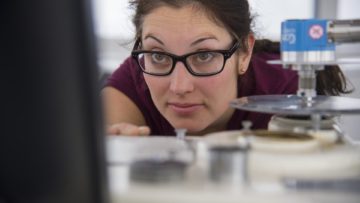
PRESCIENT supports long-term, strategically important measurements and capabilities for the wider science community.
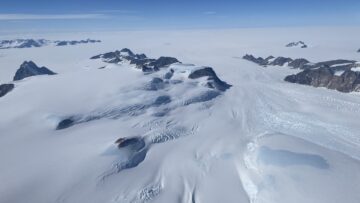
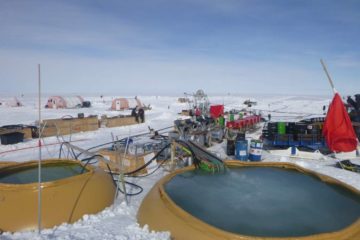
In January 2019 a science and engineering team drilled over two kilometres through the ice sheet in West Antarctica using hot water. It was the first time they had done this […]
Wrapping up I have started several of my blog posts saying I am writing in various odd/unusual/uncomfortable locations…the back of a Twin Otter, or in a mountain tent high on […]
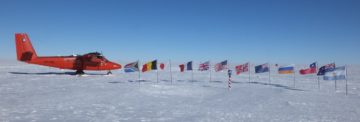
Culture shock Just over two weeks ago I was writing this blog hunched up in a mountain tent, having not washed for a week, and with the company of just […]
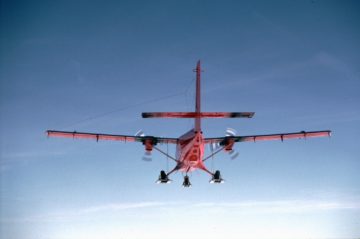
One week on from departing Rothera into the field and the first leg of the PolarGAP survey at FD83 is almost over, I get to sit back, relax a bit […]
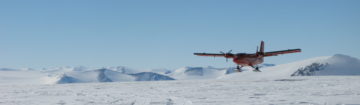
The altimeter in the front of the Twin Otter aircraft is showing 8500 ft as we cruise due south from Rothera research station for the next leg in our PolarGAP […]

Tom Jordan is part of the PolarGAP project, an ambitious international collaboration which will use airborne geophysics to explore one of the last known frontiers on our planet – the […]
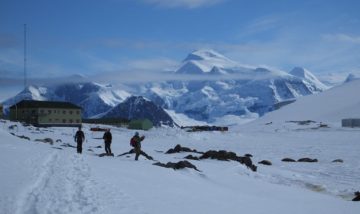
A project looking at how clouds affect climate change in Antarctica starts its second year of field research this month. The Southern Ocean Clouds (SOC) project, which is part of the CloudSense programme, will carry out research on the RRS Sir David Attenborough and at Rothera Research Station in Antarctica.
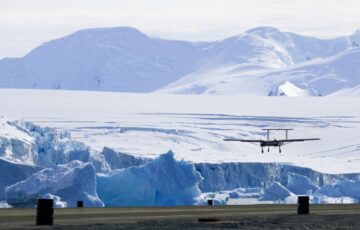
A team testing the Windracers ULTRA drone in Antarctica has shared the first video footage of the aircraft flying autonomously over British Antarctic Survey’s (BAS) Rothera Research Station and its nearby islands.
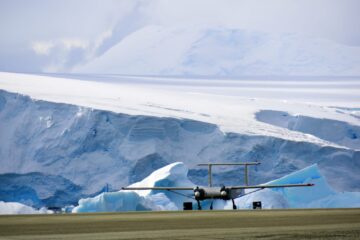
A team have arrived at Rothera Research Station, ready to start testing the new Windracers ULTRA autonomous drone in Antarctica. If successful, the new drone platform could represent a major addition to British Antarctic Survey’s scientific capability on the frozen continent.
The ground beneath Antarctica’s most vulnerable glacier has been mapped for the first time, helping scientists to better understand how it is being affected by climate change. Analysis of the […]
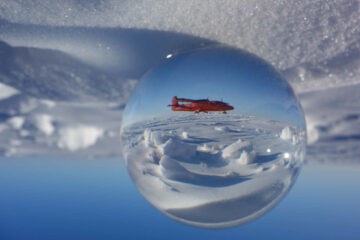
A team of scientists are currently conducting a major experiment over the Southern Ocean that will help to improve climate modelling. The Southern Ocean Clouds project team are performing several […]
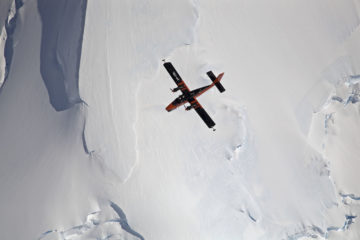
Next generation fixed-wing drones, capable of operating autonomously beyond the standard visual line of sight, are creating datasets of major wildlife populations around South Georgia for long-term monitoring to aid […]
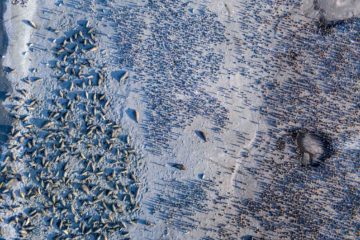
For the first time, an international team of scientists has used satellite magnetic data from ESA’s Swarm mission, together with aeromagnetic data, to help reveal the mysteries of the geology […]
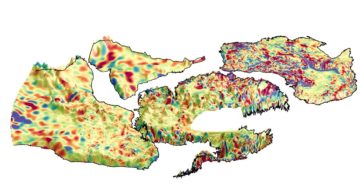
Scientists embark on a three-week flying campaign today (23 April) to study methane emissions from gas fields in the southern North Sea. Using specialised scientific equipment, on board one of […]
Unveiling key geological features of the Earth’s lithosphere
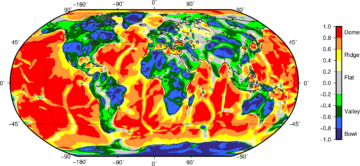
Revealing Antarctica’s hidden world
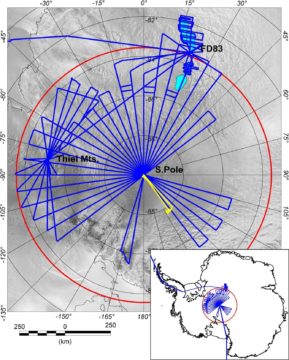
The British Antarctic Survey Air Unit have been awarded the Johnston Memorial Trophy for 2017 by The Honourable Company of Air Pilots. This is a considerable acknowledgement of the regard held […]
As spring returns to the southern hemisphere British Antarctic Survey (BAS) has started another research season which will take them over land, sea and ice in search of answers to […]
ODA funds – expertise to address major challenges facing the developing world