Science Leader
BAS Science Strategy Executive Group, Space Weather and Atmosphere team

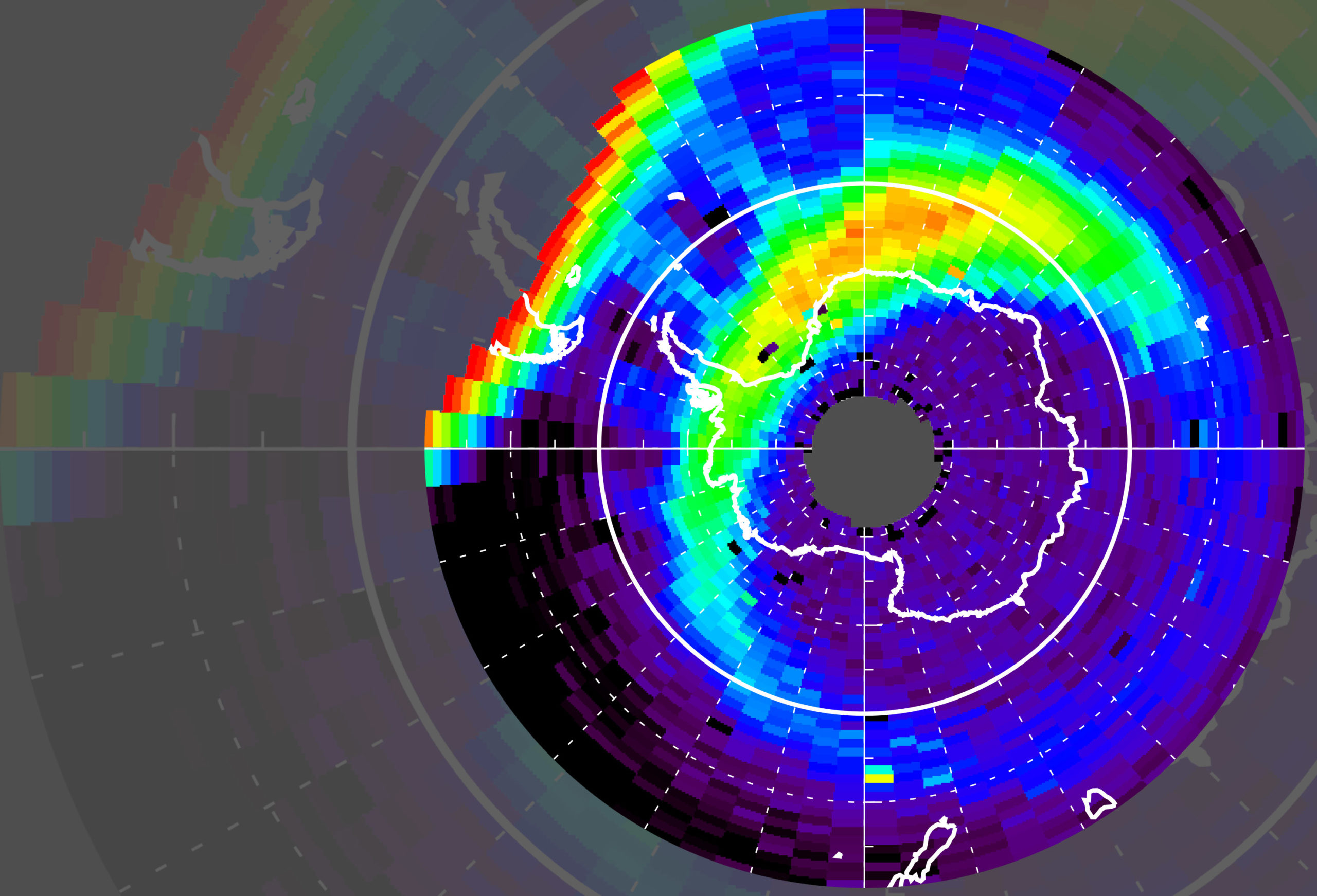
The goal of the space weather and atmosphere team is to understand space weather and how it impacts critical infrastructures, including satellites and electrical power grids.
Our research informs government and the aerospace and insurance sectors, helping them mitigate the effects of severe space weather.
Our team’s work encompasses:
Our three major areas of research are:
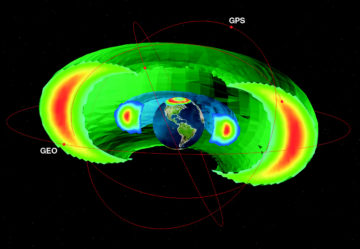
We simulate and predict the natural hazard to satellites from changes in radiation levels in near-Earth space, and develop realistic worst-case scenarios.
Our research results are used to assess which satellite orbits are most at risk, to provide real-time radiation hazard forecasts for satellite operators, and to develop better mitigation guidelines.
We measure, analyse, and simulate the short-term heating and upward expansion of the polar upper atmosphere due to electrical currents created by space weather. This process, known as Joule heating, is the largest uncertainty in predicting the orbit of satellites and space debris to avoid catastrophic collisions.
We also model changes in the upper atmosphere from the lower atmosphere, such as the long-term effect of increased levels of CO2 and its impact on satellites and space debris.
These results help improve satellite collision avoidance measures and the long-term sustainability of satellite services.
We measure and analyse the space weather causes of unwanted geomagnetically induced currents in electrical power grids.
Our results are used to improve real-time GIC forecasting in the UK and New Zealand and develop mitigation plans for electrical power grid operators.
Our Space Weather Observatory uses a range of instruments in Antarctica and beyond to measure space weather and its impacts. Continuous long-term operations allow us to capture data on the rarest and most damaging space weather events.
Our data is made available to thousands of researchers worldwide through seven international instrument networks.
We have developed the BAS Radiation Belt Model (BAS-RBM) to simulate and predict the space radiation environment for satellites. The model is equivalent to a general circulation model in atmospheric science; and was developed in-house from first-principles knowledge of charged particle and electromagnetic wave processes.
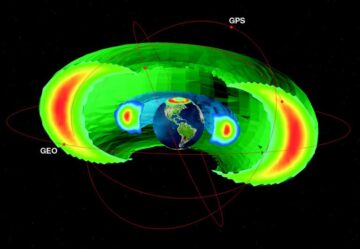
We also have expertise in the use of open-source models of the whole or upper atmosphere to simulate the effects of space weather and climate change on these regions and the resulting effects on satellite drag.
We train the next generation of scientists via NERC’s doctoral training partnerships (DTP), such as Cambridge University’s Earth System Science and Southampton University’s INSPIRE programme.
We also run short-term undergraduate student projects with the University of Cambridge.
Collaboration is core to BAS. The Space Weather and Atmosphere team lead or participates in numerous international scientific endeavours, such as:
We advise government departments, such as the Cabinet Office, through our leadership of the Space Environment Impacts Expert Group (SEIEG).
We play an active role in STEM education for schools and the public.
Science Leader
BAS Science Strategy Executive Group, Space Weather and Atmosphere team

Space Weather Researcher

Atmospheric Physicist IMP 3

Independent Research Fellow

Radiation Belt Modeller
Science Leader IMP 1
BAS Science Strategy Executive Group, Space Weather and Atmosphere team, Leadership teams, BAS Executive team

Middle Atmosphere Vertical Coupling Analys

Space Weather Research Scientist

Radiation Belt Modeller

Radiation Belt Scientist 4

Space Weather Scientist

Space Weather Scientist
Space Weather Analyst

Post Doctoral Researcher Ionospheric Scientist
Space Weather and Atmosphere team, Atmosphere, Ice and Climate team
PDRA/Assessing Ionospheric Variability
Concern at government level in the UK is such that severe space weather was added to the UK’s National Risk Register of Civil Emergencies.
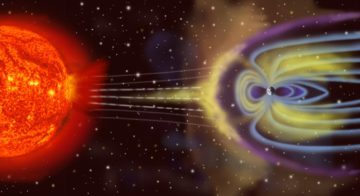
Using meteorological statistical techniques, THeMES aimed to improve satellite trajectory predictions and identify which orbital paths face the greatest risk from space weather disturbances.
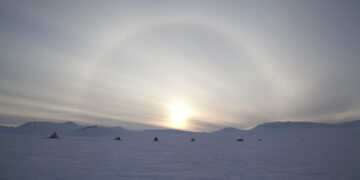
Rad-Sat is a NERC Highlight Topic that brings together a consortium of scientists from 5 different UK research groups, stakeholders from the space industry and a network of international collaborators.
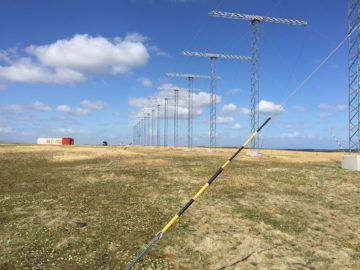
The Super Dual Auroral Radar Network (SuperDARN) has been operating as an international co-operative organisation for over 25 years, and has proved to be one of the most successful tools for studying dynamical processes in the Earth’s magnetosphere, ionosphere, and neutral atmosphere.
The objective of this project was to investigate whether magnetic reconnection in the space environment has a characteristic scale in space and time by characterising statistically the spatial and temporal structure of the footprint of reconnection as observed in the Earth’s ionosphere.
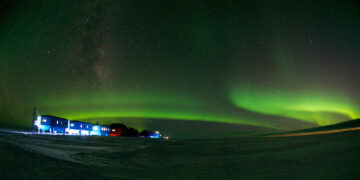
Quantifying the Effect of the Upper Atmospheric Electric Potential on Lower Atmospheric Temperature and Pressure.
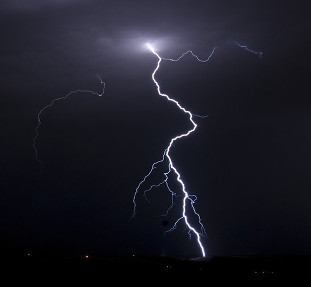
Access data from the Low Power Magnetometer (LPM) network
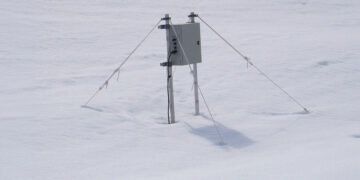
The UK EISCAT support group (UKESG) is a collaboration between the British Antarctic Survey and the Rutherford Appleton Laboratory, funded via the National Centre for Atmospheric Science (NCAS).
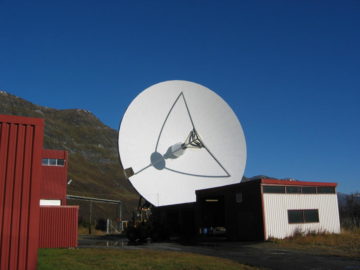
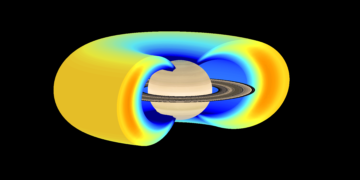
This project explored the radiation belts of the Earth, Jupiter and Saturn to help set new research goals for future spacecraft missions to the planets and develop computer models that will be of direct use to the space insurance, satellite construction and satellite service industries.
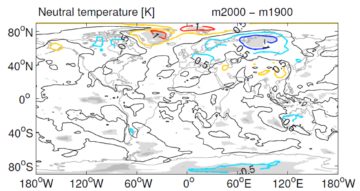
The effects of long-term changes in the Earths magnetic field on the atmosphere understanding the past predicting the future.
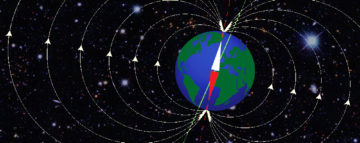
For centuries people have used magnetic compasses to guide them on their way and explore new territories. This has led scientists to embark on their own journeys of discovery about […]
The objective of QEPPA is to work out the amount of charged particles that hit our atmosphere during space weather events in order to improve how our models represent this effect on our atmosphere and climate.
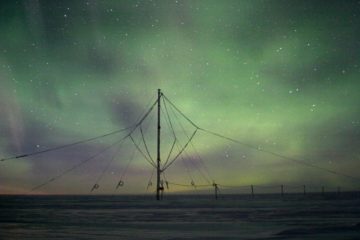
SPACESTORM is a collaborative project to model space weather events and find ways to mitigate their effects on satellites.
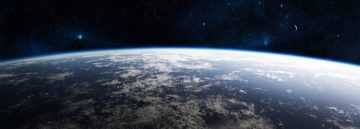
Whole Atmosphere Climate Change project investigated how human-driven climate change in the lower atmosphere affects upper atmosphere conditions up to 500 km altitude.
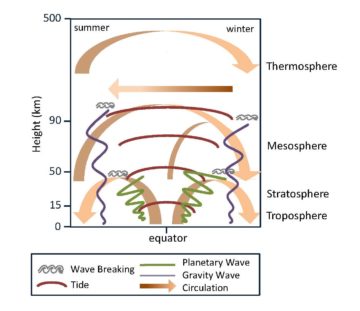
SWIGS investigated how space weather drives geomagnetically induced currents in power grids, pipelines, and railways.
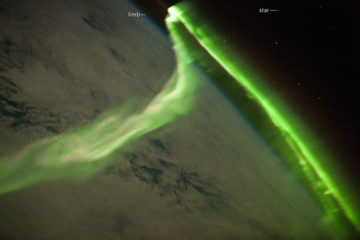
DRIIVE researches how polar ionosphere changes affect satellite orbits, communications, and space weather forecasts.
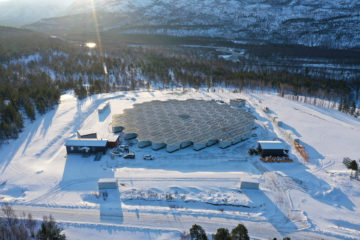
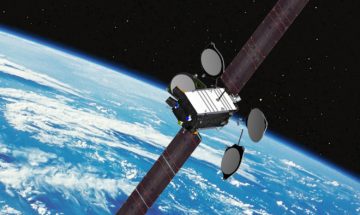
The Sat-Risk project, led by the British Antarctic Survey (BAS), has the goal of ‘developing a real-time system to forecast radiation exposure to satellites for a range of different orbits, and quantify the risk of damage or degradation‘.
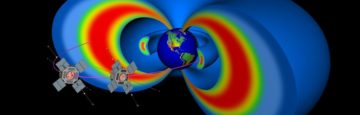
In the SORBS project we are studying how changes in the outer boundary of the geomagnetic field lead to rapid changes in the radiation belts closer to Earth.
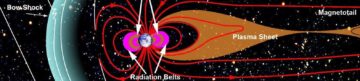
RADBELT-DA applies data assimilation techniques to improve radiation belt forecasts to protect satellites from space weather damage and service disruption.
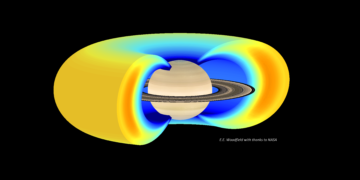
PlanetBelt3 will be looking at the radiation belts of Saturn in this project, to include important newly recognised transport processes.
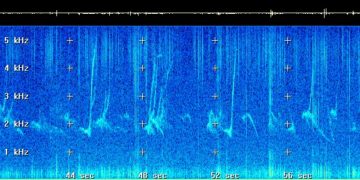
Sounds of Space uses a Very Low Frequency receiver to pick up radio waves made by our planet and investigate the science of space weather storms, to help understand potential space weather impacts on the climate system, and for lightning detection.
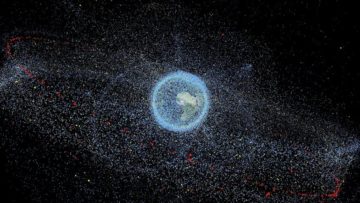
Joule Heating investigated how space weather affects the upper atmosphere’s ability to slow down orbiting satellite debris.
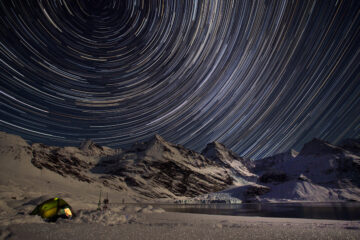
SWIMMR-T generated accurate and actionable nowcasts and forecasts of the thermosphere to reduced uncertainty estimates of the orbital characteristics of satellites and debris.

SWESNET from British Antarctic Survey provides a forecast of high energy electrons in the Earth’s radiation belts which can cause damage to satellites on orbit. These forecasts are used by satellite operators to take mitigating action.
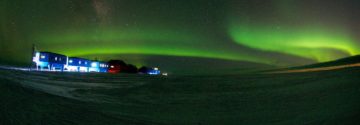
PADIE (Pitch-Angle Diffusion of Ions and Electrons) is a computational model developed at BAS that calculates how electromagnetic waves affect charged particles in radiation belts.
HOTRAY is a ray tracing computer code designed to trace the path of electromagnetic waves in a hot magnetised plasma. HOTRAY has been used to understand the generation and propagation of plasma waves at the Earth, Jupiter, Saturn and laboratory plasmas.
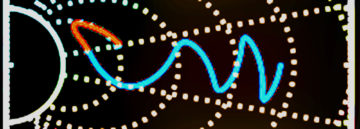
BAS-RBM simulates changes in the high-energy electrons trapped around Earth to help protect satellites, improve forecasting of space weather, and understand radiation belts at Jupiter and Saturn.
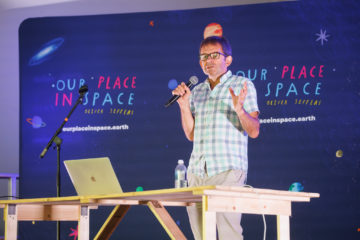
The Royal Astronomical Society (RAS) has awarded the 2025 Chapman Medal to Dr Nigel Meredith for his world leading and transformative research on plasma waves in magnetospheric physics.
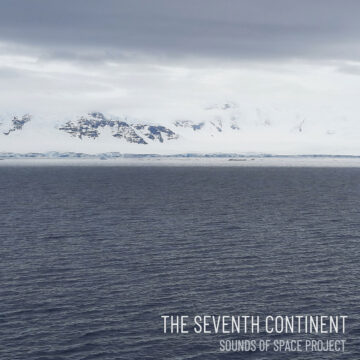
Today marks the release of The Seventh Continent, a new album from the international Sounds of Space Project that offers a unique aural journey to Antarctica.
An international team of scientists, including a researcher from British Antarctic Survey (BAS) has, for the first time, successfully measured a planet-wide electric field thought to be as fundamental to Earth as its gravity and magnetic fields.
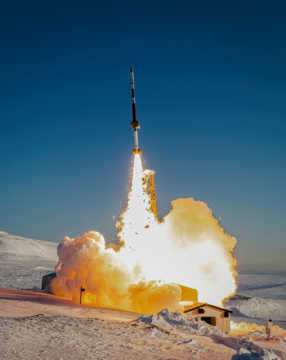
Extreme space weather threatens vital satellites orbiting the Earth, including the Global Navigation Satellite Systems (GNSS) which pass through the heart of the outer radiation belt. New research led by […]
A new album inspired by the sounds of radio waves produced by a geomagnetic storm has been released. St Swithin’s Day Storm is a collaboration with Steven Anderson, known as […]
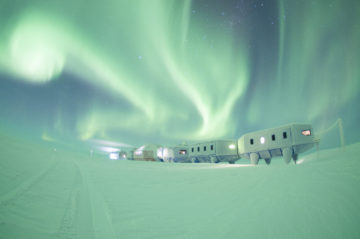
A new album transporting listeners on a journey to the Sun and inspired by ‘sounds’ captured in space and on the ground shows the magic created when science and the […]
Satellites face greater chances of collision with space debris as a result of reduced density in the upper atmosphere. Increasing levels of CO2 in the Earth’s atmosphere will result in […]
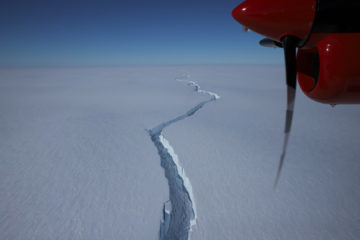
Scientists have deployed a network of seismometers onto Antarctica’s Brunt Ice Shelf in an experiment that will test the instrument’s ability to operate on icy moons in the Solar System. […]
The Royal Astronomical Society has awarded the 2022 Gold Medal for Geophysics to Professor Richard B Horne for his outstanding contributions to our understanding of the physics underlying space weather. […]
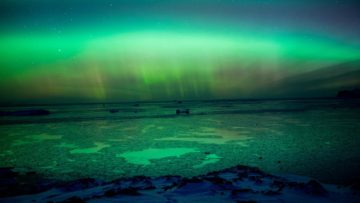
A new project to improve scientists understanding of the impact of space weather and climate change on the atmosphere starts this month (January 2022). A team from British Antarctic Survey, […]
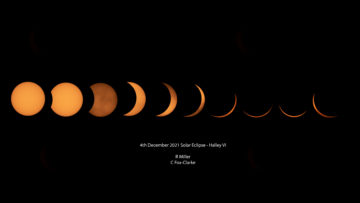
A rare total solar eclipse in Antarctica this weekend (Saturday 4 December) is giving researchers a unique opportunity to learn more about how solar eclipses affect space weather. The next […]
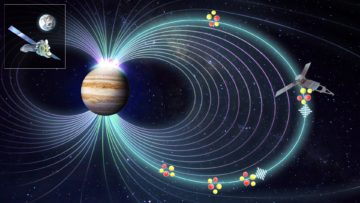
The 40-year-old mystery of what causes Jupiter’s X-ray auroras has been solved. For the first time, scientists have seen the entire mechanism at work – and it could be a […]
Celestial Incantations – New album release from Sounds of Space Project New album Celestial Incantations is released today by the international Sounds of Space Project, comprising of Dr Nigel Meredith […]
We are delighted to announce that today (6 May 2021) Professor Dame Jane Francis, Director of British Antarctic Survey, and Professor Richard Horne, Head of Space Weather and Atmosphere team, […]
The award recognises Professor Horne’s unique ability to combine basic and applied research to develop useful space weather products.
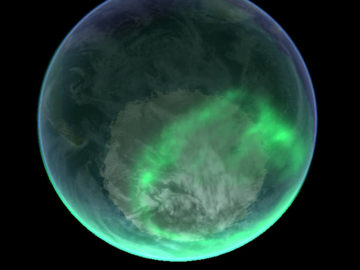
Space weather research at British Antarctic Survey (BAS) receives a funding boost of around £2M today (Saturday 27 June) from the SWIMMR (Space Weather Instrumentation, Measurement, Modelling and Risk) programme. […]
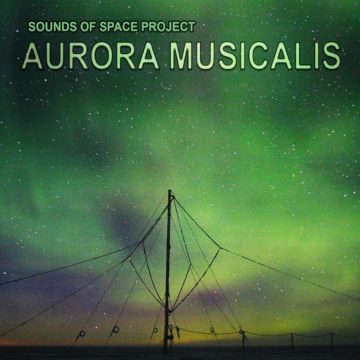
A new album with the unique ‘sounds of space’ recorded from Antarctica is released free today (6 May 2020). Aurora Musicalis contains the natural radio ‘sounds’ of our planet, recorded […]
British Antarctic Survey is pleased to announce the Appleton Prize 2020 has been awarded to Professor Richard Horne, Head of the Space Weather and Atmosphere science team at British Antarctic […]
A ‘great’ space weather super-storm large enough to cause significant disruption to our electronic and networked systems occurred on average once in every 25 years. The results are published today […]
A team of international researchers, including Professor Richard Horne from British Antarctic Survey, has been awarded best research study from the journal Risk Analysis for 2019. The study, led by […]
Space weather research gets a boost this week with a £20m fund announced by the UK Prime Minister. Space weather, such as flares or winds from the Sun’s surface or […]
The use of electric propulsion for raising satellites into geostationary orbit can result in significant solar cell degradation according to a new study. The extended journey results in greater exposure […]
British Antarctic Survey space weather scientist, Dr Mark Clilverd, has been awarded a prestigious award from the Royal Astronomical Society (RAS) in their 2019 Awards. The award recognises Mark as […]
Amazing, natural, ‘sounds of space’, have been incorporated into the new exploration gameplay in Elite Dangerous
A team of international scientists from BAS, University of Iowa and GFZ German Research Centre for Geosciences has discovered a new method to explain how radiation belts are formed around […]
Satellites are more likely to be at risk from high-speed solar wind than a major geomagnetic storm according to a new UK-US study published this week in the Journal Space […]
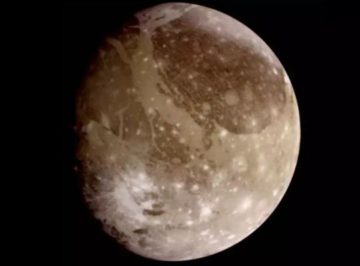
Understanding of how Jupiter’s magnetic field interacts with its moons and with intense particle radiation.
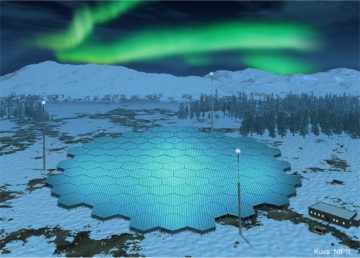
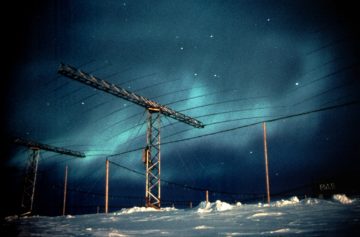
The most advanced space weather radar in the world is to be built in the Arctic by an international partnership including the UK, thanks to new investment, including in the […]
The daily U.S. economic cost from solar storm-induced electricity blackouts could total more than $40 billion, with more than half the loss occurring outside the blackout zone, says new study. […]
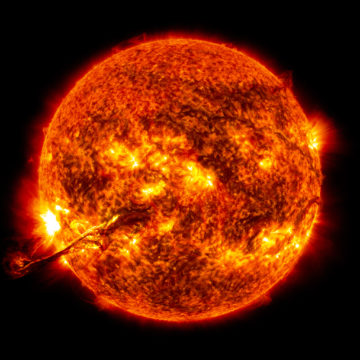
Dr Mervyn Freeman, Senior Space Weather Researcher at British Antarctic Survey, has been awarded the prestigious Chapman Medal in Geophysics by the Royal Astronomical Society (RAS). The medal recognises his […]
Energetic electrons are an important space weather hazard. In this paper we apply extreme value analysis to 16 years of operational satellite data from the NOAA Polar Operational Environmental Satellites […]
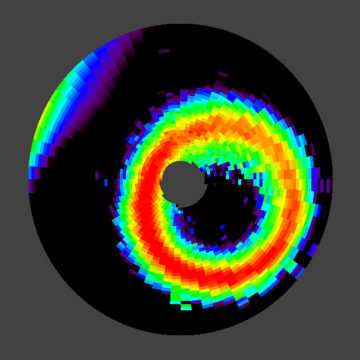
New season tackles ambitious science and logistical challenges The British Antarctic Survey (BAS) 2015/16 field season is underway with dozens of scientists and support staff – together with planes and tonnes […]
FREE event: ‘Discover Antarctica’ at British Geological Survey Open Day, Saturday 27 June, 10am-4pm Staff from British Antarctic Survey (BAS) will showcase its work at this year’s British Geological Survey […]
NERC Research Experience Placement 2015 A Research Experience Placement supported by EnvEast DTP and funded by the Natural Environment Research Council (NERC) is available at British Antarctic Survey (BAS) this […]

Study of electrons in space could help weather forecasting Researchers have discovered a formerly undetected impact of space weather on the polar atmosphere, which may explain some previously unexplained variations […]
Earth’s magnetic field is important for climate change at high altitudes New research, published this week, has provided scientists with greater insight into the climatic changes happening in the upper […]
Space weather forecasting system used by satellite operators Weather forecasting is a tricky enough job on Earth, but doing it for the outer atmosphere and beyond is even more problematic. […]
British Antarctic Survey scientists involved in NASA ‘space weather’ mission WASHINGTON — NASA’s Radiation Belt Storm Probes (RBSP), the first twin-spacecraft mission designed to explore the Earth’s radiation belts, launched […]
Major EU-funded space weather initiative launched and managed in UK A major EU-funded initiative to improve ‘space weather’ forecasting will hold its inaugural meeting in the UK on Tuesday 29 […]
New space research settles years of scientific debate New space research published this week (Thursday 21 October) in the journal Nature, has settled decades of scientific debate. Researchers from the […]
We speak to a British Antarctic Survey Scientist on becoming a Fellow of the Royal Society… Professor Richard Horne FRS is the former Head of Space Weather at the British […]
“I feel like I’m home” says BBC weather forecaster Peter Gibbs as he sets foot on the Brunt Ice Shelf. It’s an emotional moment for him; the last time he […]