Climate Code
This collaborative project is born from exploring novel ways of visualising environmental data and telling the climate change story. Read more about the project and the science behind it through the project page.


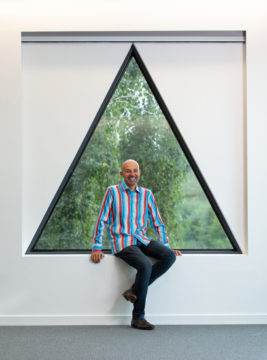
Beatrix is Director of Innovation and Impact at BAS. Her passion is to ensure that excellent research has benefit for society beyond academia, and addresses the burning issues of our time. Her remit includes innovation that underpins decarbonisation of polar operations and beyond, making most effective, collaborative use of data for evidence-based decision making, and use of inclusive, creative, interdisciplinary and entrepreneurial approaches to effect change.
She studied Biochemistry in Germany and then moved to Cambridge, where she obtained her MPhil and PhD in photosynthesis research. After a decade in fundamental research she moved into technology transfer and co-design of applicable R&D, with an emphasis on socio-economic impact and entrepreneurship. At BAS, she leads the Innovation Directorate with seven teams, chairs the Net Zero Carbon Strategy Group, and is a member of the Executive, Management and Science Strategy Teams. She is Diversity Champion for BAS Directorate and co-chairs the Diversity in UK Polar Science Steering Group.
Her work has driven the development of the AURORA Innovation Centre at BAS which includes excellent conference and meeting facilities, exhibition areas and an open-plan Collaboration Space. AURORA fosters excellent research and entrepreneurial activity in the areas of climate change, environmental stewardship and technologies for challenging environments, addressing issues of global importance and helping society adapt to a changing world.
Schlarb-Ridley BG and Parker B (2013) A UK Roadmap for Algal Technologies. Commissioned by the Technology Strategy Board Algal Bioenergy Special Interest Group; available at https://connect.innovateuk.org/documents/3312976/3726818/AB_SIG+Roadmap.pdf
Schlarb-Ridley BG (2011) Algal Research in the UK: A Scoping Study. Commissioned by the Biotechnology and Biological Sciences Research Council; available at: http://www.bbsrc.ac.uk/documents/algal-scoping-study-report-pdf/
Ridley CJA, Parker BM, Norman L, Schlarb-Ridley B, Dennis R, Jamieson AE, Clark D, Skill SC, Smith AG, Davey MP (2018) Growth of microalgae using nitrate-rich brine wash from the water industry. Algal Research 33, 91-98.
Gwynn-Jones D, Dunne H, Donisson I, Robson P, Sanfratello GM, Schlarb-Ridley B, Hughes K, Convey P (2018) Can the optimisation of pop-up agriculture in remote communities help feed the world? Global Food Security 18, 35-43.
Worrall JAR, Schlarb-Ridley BG, Reda T, Marcaida MJ, Moorlen RJ, Wastl J, Hirst J, Bendall DS, Luisi BF, Howe CJ (2007) Modulation of haem redox potential in the cytochrome c family. Journal of the American Chemical Society 129, 9468-9475.
Chaudhari A, Mahfouz M, Fialho AM, Yamada T, Granja AT, Zhu Y, Hashimoto W, Schlarb-Ridley B, Cho W, Das Gupta TK, Chakrabarty AM (2007) Cupredoxin-cancer interrelationship: azurin binding with EphB2, interference in EphB2 tyrosine phosphorylation, and inhibition of cancer growth. Biochemistry 46, 1799-1810.
Marcaida MJ, Schlarb-Ridley BG, Worrall JAR, Wastl J, Evans TJ, Bendall DS, Luisi BF, Howe CJ (2006) Structure of Cytochrome c6A, a novel dithio-cytochrome of Arabidopsis thaliana, and its reactivity with plastocyanin: implications for function. Journal of Molecular Biology 360, 968-977.
Hiraoka Y, Granja TA, Fialho, AM, Schlarb-Ridley BG, Das Gupta TK, Chakrabarty AM, Yamada T (2005) Human cytochrome c enters murine J774 cells and causes G1 and G2/M cell cycle arrest and induction of apoptosis. Biochemical and Biophysical Research Communications 338, 1284-1290.
Schlarb-Ridley BG, Mi H, Teale WD, Meyer VS, Howe CJ, Bendall DS (2005) Implications of the effects of viscosity, macromolecular crowding, and temperature for the transient interaction between cytochrome f and plastocyanin from the cyanobacterium Phormidium laminosum. Biochemistry 44, 6232-6238.
Hart SE, Schlarb-Ridley BG, Delon C, Bendall DS, Howe CJ (2003) Role of charges on cytochrome f from the cyanobacterium Phormidium laminosum in its interaction with plastocyanin. Biochemistry 42, 4829-4836.
Schlarb-Ridley BG, Bendall DS, Howe CJ (2003) Relation between interface properties and kinetics of electron transfer in the interaction of cytochrome f and plastocyanin from plants and the cyanobacterium Phormidium laminosum. Biochemistry 42, 4057-4063.
Schlarb-Ridley BG, Navarro JA, Spencer M, Bendall DS, Hervas M, Howe CJ, De la Rosa MA (2002) Role of electrostatics in the interaction between plastocyanin and photosystem I of the cyanobacterium Phormidium laminosum. European Journal of Biochemistry 269, 5893-5902.
Schlarb-Ridley BG, Bendall DS, Howe CJ (2002) Role of electrostatics in the interaction between cytochrome f and plastocyanin of the cyanobacterium Phormidium laminosum. Biochemistry 41, 3279-3285.
Crowley PB, Otting G, Schlarb-Ridley BG, Canters GW, Ubbink M (2001) Hydrophobic interactions in a cyanobacterial plastocyanin-cytochrome f complex. Journal of the American Chemical Society 123, 10444-10453.
Ponamarev MV, Schlarb BG, Howe CJ, Carrell CJ, Smith JL, Bendall DS, Cramer WA (2000) Tryptophan-heme -electrostatic interactions in cytochrome f of oxygenic photosynthesis. Biochemistry 39, 5971-5976.
Schlarb BG, Wagner MJ, Vijgenboom E, Ubbink M, Bendall DS, Howe CJ (1999) Expression of plastocyanin and cytochrome f of the cyanobacterium Phormidium laminosum in Escherichia coli and Paracoccus denitrificans and the role of leader peptides. Gene 234, 275-283.
Carrell CJ, Schlarb BG, Bendall DS, Howe CJ, Cramer WA, Smith JL (1999) Structure of the soluble domain of cytochrome f from the cyanobacterium Phormidium laminosum. Biochemistry 38, 9590-9599.Schlarb-Ridley BG, Nimmo RH, Purton S, Bendall DS, Howe CJ (2006) Cytochrome c6A is a funnel for thiol oxidation in the thylakoid lumen. FEBS Letters 580, 2166-2169.
This collaborative project is born from exploring novel ways of visualising environmental data and telling the climate change story. Read more about the project and the science behind it through the project page.
A series of events and activities to raise awareness of opportunities in UK Polar Science

Our strategy and work streams to meet Net Zero goals
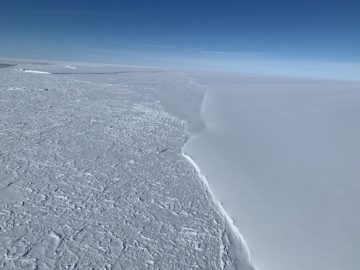
Realising the benefits of the Antarctic Infrastructure Modernisation programme.
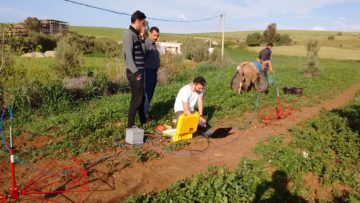
ApRES and groundwater investigated whether a technique developed to measure the basal meltrate of ice shelves can be used to monitor groundwater in arid and semi-arid regions.
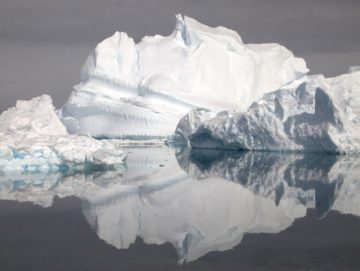
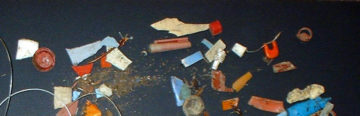
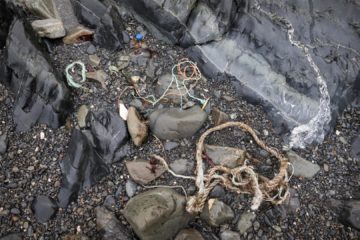
This project investigated plastic pollution across Arctic and Antarctic environments. Scientists collected water, ice, and sediment samples to quantify macro and microplastic pollution, track its sources, and assess its impact on polar wildlife.
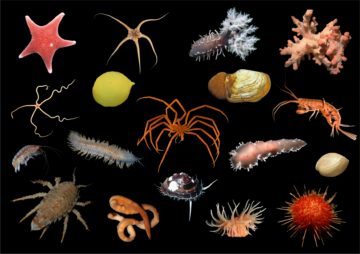
In this collaboration with the Natural History Museum (NHM) and the University of Liverpool, we have developed novel methods for using existing data to contribute to marine conservation and fisheries […]

This project investigated whether Mortierella, a cold-tolerant Antarctic soil fungus, could replace banned chemical pesticides in controlling weevil larvae that damage UK soft fruit and forestry crops.
EMBRC is a group of leading European marine research centres, which is also known as a distributed Research Infrastructure. It provides access to European coastal seas and the endemic fauna, with the addition of Antarctica via BAS.

BLOG. Director of Innovation and Impact aims to enhance innovation culture through diversity and inclusion.
Over 120 scientists and operational professionals working for British Antarctic Survey have received a new qualification to help the polar research institute reach net zero carbon emissions by 2040.
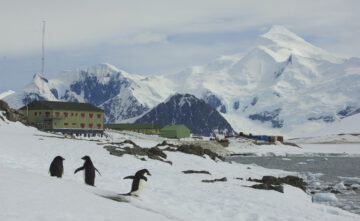
British Antarctic Survey (BAS), an institute of the Natural Environment Research Council (NERC), is one of the first public sector organisations to be recognised by the Carbon Trust for its […]
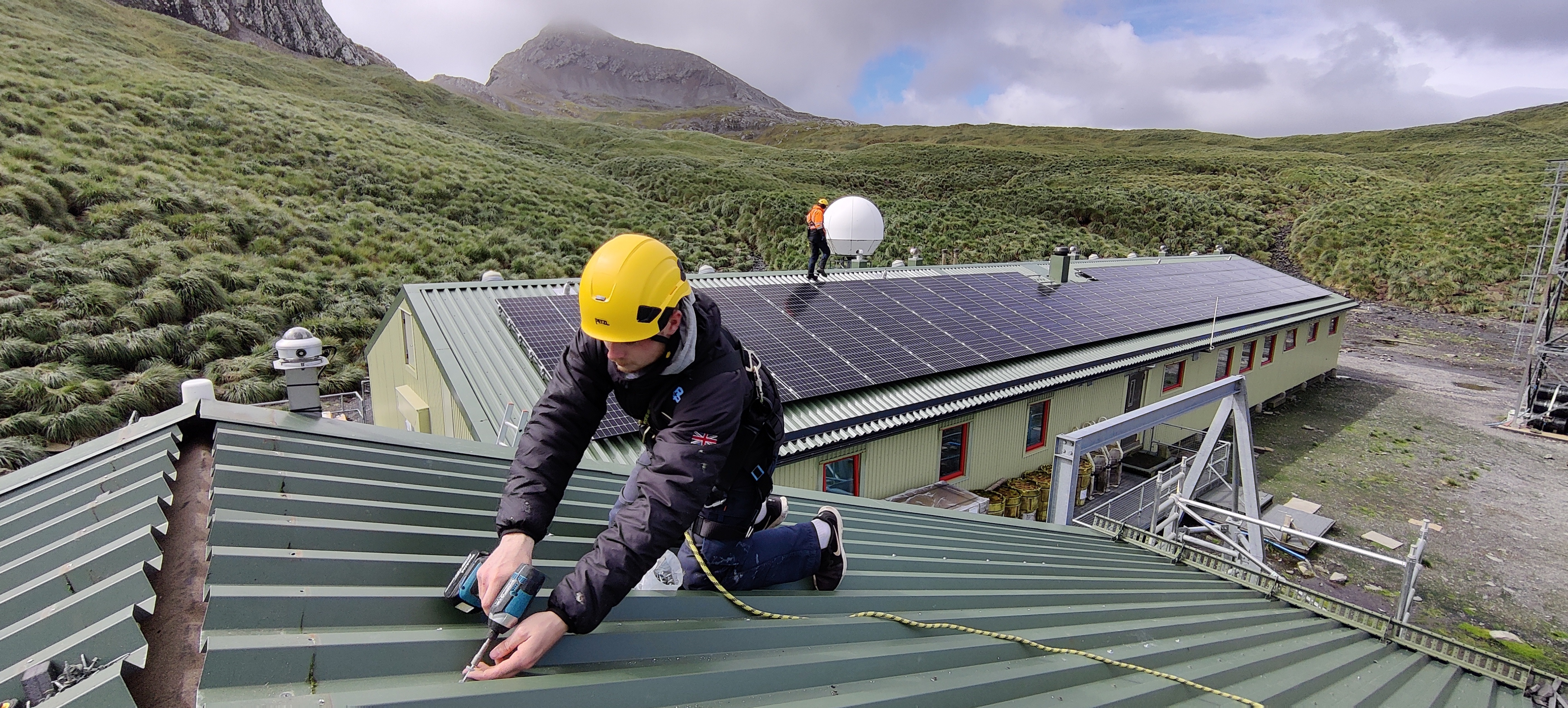
We are pleased to be hosting the next UK Arctic Science Conference will be hosted by the British Antarctic Survey in Cambridge, 11 – 13 September 2023.
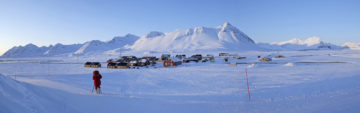
The first observations from the Diversity in UK Polar Science Initiative (DiPSI) describes the efforts required to create a more inclusive workplace in UK polar science. The editorial is published […]
The Climate Code shirt will be showcased as part of an engagement event at the Grand Arcade with Cambridge Science Centre. Bring your family along and design your own climate change shirt!
A report outlining the importance of Intentionally Inclusive Spaces in science, technology, engineering and mathematics (STEM) through a case study of the Polar Horizons 2021 programme is published this month […]
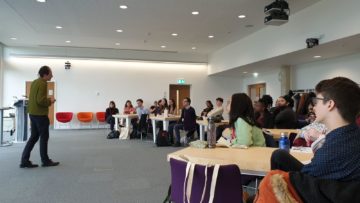
A dramatic art installation symbolising our warming climate will be launched at the Cambridge Cleantech annual conference on 20 October as the city’s innovators and scientists gather together to brainstorm […]
Join us for this Knowledge Snack session to explore what Digital Twins are, and what applications they can have both in infrastructure management and in finding new ways of capturing and understanding the environment.
Join us for this Knowledge Snack session on “The challenge of decarbonising energy systems in remote areas”, co-hosted by BAS Innovation team and the DTE+ Network.
As Assistant Dean of Diversity and Inclusion at Colorado State university and an Atmospheric Scientist, Dr Melissa Burt talks of her different roles in science and diversity #BlackHistoryMonth #WomeninSTEM #BAMEinSTEM

People, Plastics and our Planet offers the unique opportunity for early career researchers and entrepreneurial individuals from the business community to come together to develop and test ideas around solving the challenges posed by plastics in our environment.
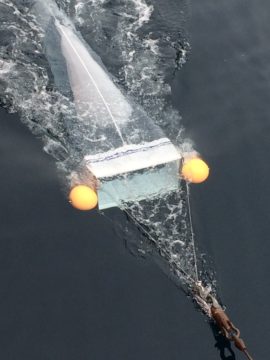
Join former BAS scientist and musician Steve Garrett online for his latest collaborative performance linking science and music.
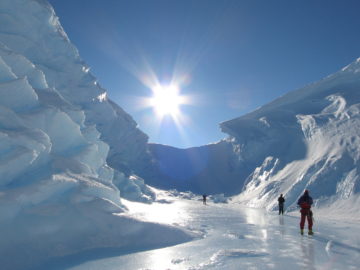
SAVE THE DATE: ‘Satuccino’ is a specially designed space industry networking event for space technology and satellite application sector experts to engage with the Satellite Applications Catapult and its partners. In ‘Extra Shot’ events, this networking is extended to include partner venues via a Skype link-up to the event at the Satellite Applications Catapult HQ in Harwell, to enable a wider audience to benefit. On 5 February, Aurora Innovation Centre at BAS is bringing in local speakers and linking up with the main Catapult in Harwell.
BAS Director of Innovation Beatrix Schlarb-Ridley will be giving a key note talk titled “How we can work together for a 1.5c future” at the annual Cleantech Futures conference on the 10th of July.
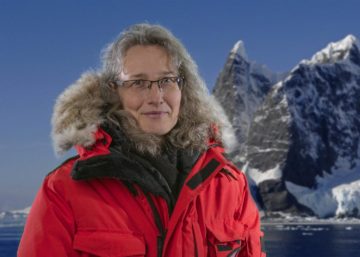
Waste management is a challenge that we can definitively no longer ignore. Join us to see how waste management and recovery can become an integrated part of our economy. Discover some of today’s solutions to Reuse, Recycle or Reduce and how those can be adopted as best practices by all.
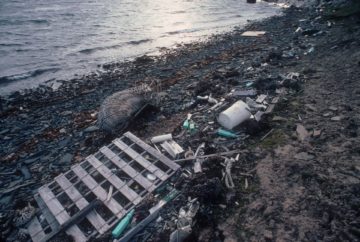
People, Plastics and the Planet is an international workshop to tackle the global plastic waste problem taking place at British Antarctic Survey’s Aurora Innovation Centre from 18th – 21st September 2018. Organised by BAS, Cambridge University and Value in Enterprise offers the unique opportunity for scientists and entrepreneurs to spend four days developing and testing ideas to address challenges posed by plastics in our environment.
We hire out our state-of-the-art conference and meeting facilities and exhibition spaces.
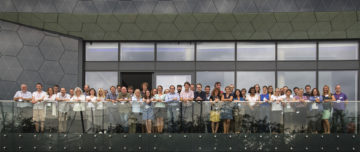
The Aurora Collaboration Space at British Antarctic Survey is a coworking space for members who share our passion for the environment.
The new Aurora Innovation Centre that will support cross-discipline research to tackle environmental challenges and increase the real-world benefit of polar research was officially opened today (Friday 21 July) by […]
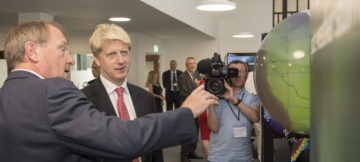
The Aurora Innovation Centre offers a space and support services for interdisciplinary collaboration to tackle environmental challenges and increase real-world benefit of polar research.

Tender for the construction and fit of a new Innovation Centre at British Antarctic Survey, Cambridge