Director of Polar Scientific Innovation and Impact
BAS Science Strategy Executive Group, Information Services team, Leadership teams, UK Polar Data Centre team, BAS Executive team

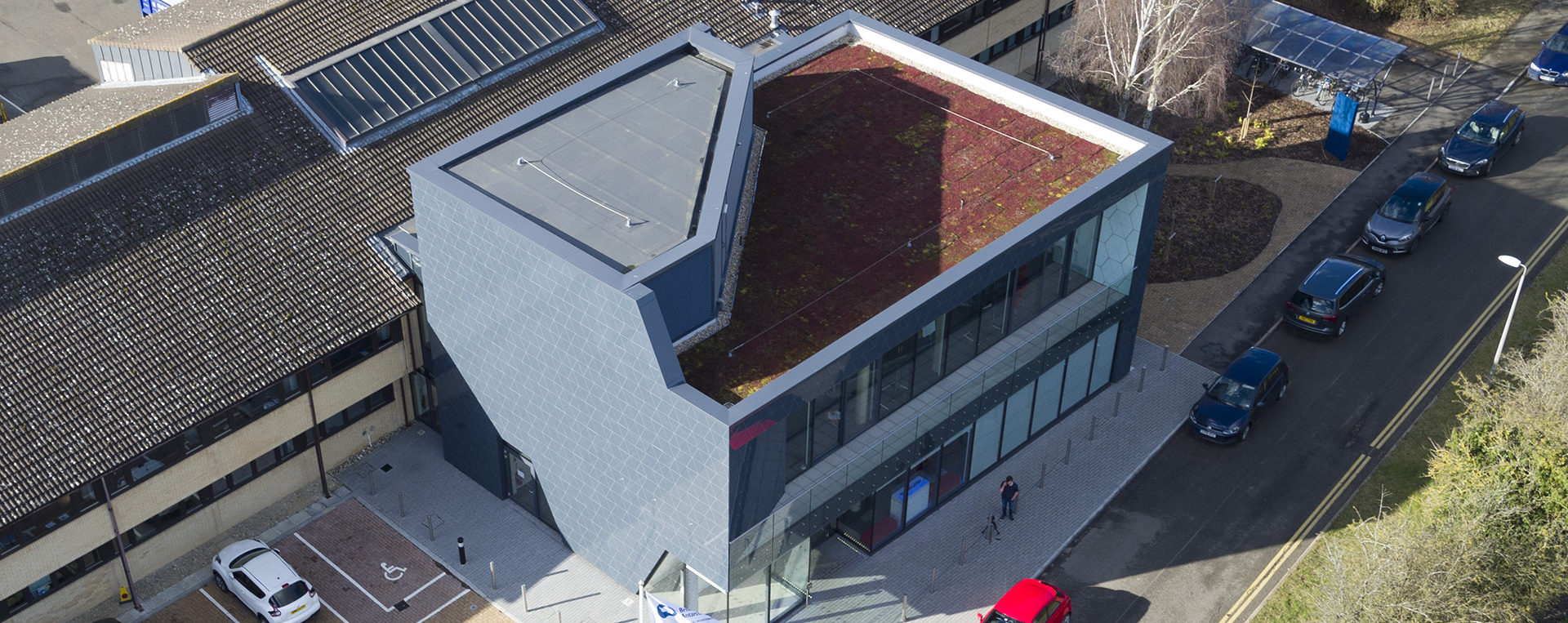
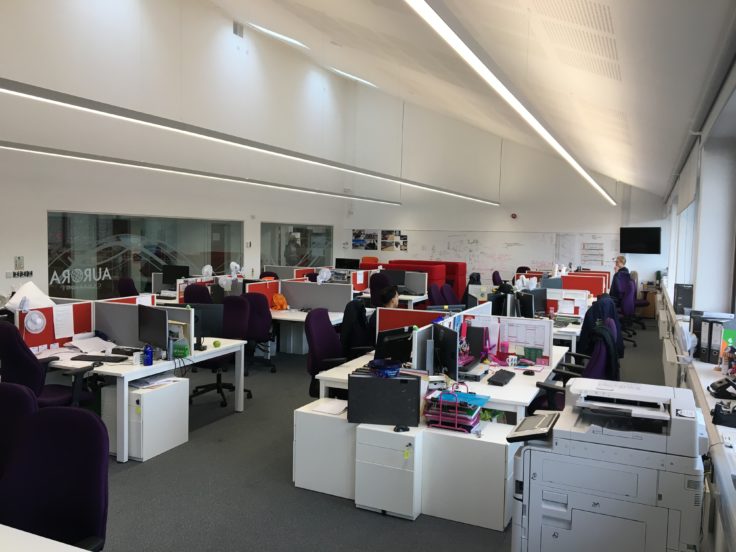
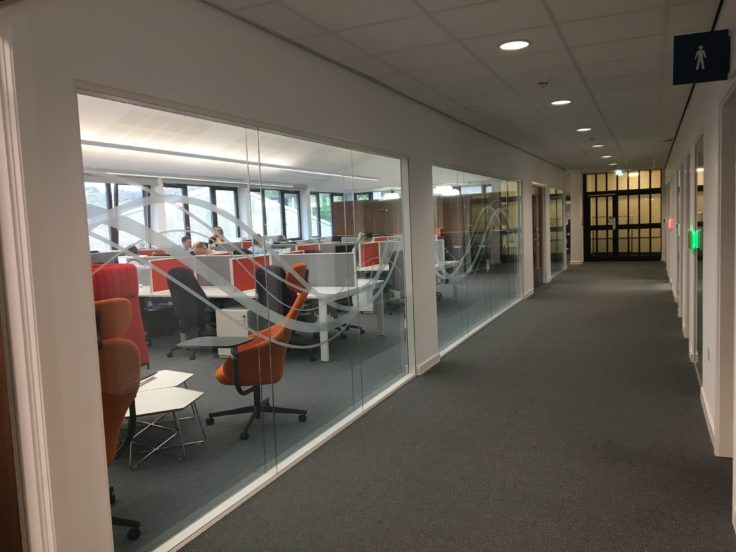
Possibly ‘the best kept secret in Cambridge’, the Aurora Collaboration Space at British Antarctic Survey is a coworking space for members who share our passion for the environment.
Unlike most coworking spaces, the Aurora Collaboration Space is part of a fully functioning scientific research institute, home to a broad range of environmental science and world-class engineering and operations teams. The Collaboration Space is also home to our Digital Innovation team and AI Lab so members are fully immersed in our pioneering work across science, technology and engineering. Members become part of our community of collaboration, excellence and innovation.
We work with those who share our values of environmental responsibility and stewardship. Whether you are a sole trader or international corporation, membership of the Aurora Collaboration Space gives you access to our desk space, expertise and site facilities.
Part-time (desk use one day per week) – £139/month
Full-time – £250/month
Part-time membership allows the member use of a desk one day per week. Normal site access is available from 07:30 to 19:30, Monday to Friday. Please note that we are unable to provide workshop space for members.
If you are interested in becoming a member or would like more information, please introduce yourself to us by email.
Director of Polar Scientific Innovation and Impact
BAS Science Strategy Executive Group, Information Services team, Leadership teams, UK Polar Data Centre team, BAS Executive team

Polar Scientific Innovation Lead

Innovation Community Officer
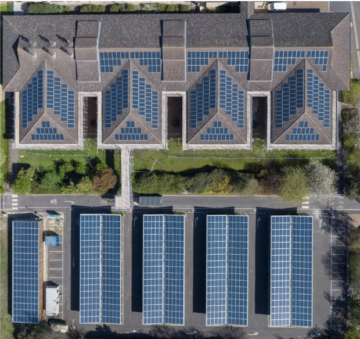
We are working on a raft of measures to reduce our carbon emissions at our Cambridge Headquarters, including installation of solar panels on the car park and roofs of buildings, and adding insulation to our Logistics building.
This collaborative project is born from exploring novel ways of visualising environmental data and telling the climate change story. Read more about the project and the science behind it through the project page.

IceNet is a deep learning system that forecasts Arctic sea ice. The system is trained on climate simulations and observational data. It outperforms state-of-the-art dynamical models, especially for extreme sea ice events.
British Antarctic Survey (BAS) has precautionary measures to limit the spread of COVID-19. Our organisation continues to function well in spite of most of our staff working from home. Science and support teams who have completed summer fieldwork are currently being repatriated to UK.