Machine Learning Research Scientist

IceNet is a deep learning system that forecasts Arctic sea ice. The system is trained on climate simulations and observational data. It currently produces daily forecasts of sea ice concentration up to two weeks ahead, and monthly-averaged forecasts up to six months ahead. IceNet outperforms state-of-the-art dynamical models, especially for extreme sea ice events.
Sea ice is a key indicator of climate change. Accurate forecasts help scientists, conservationists, and Arctic communities prepare for rapid changes in ice conditions.
Improved forecasting supports wildlife protection, shipping safety, and long-term climate research.
IceNet uses machine learning to extend the accuracy and range of sea ice forecasts:
The project aims to:
IceNet is led by British Antarctic Survey and the Alan Turing Institute. It involves an international team of scientists and AI researchers.
The project aims to:
Machine Learning Research Scientist

Machine Learning Research Scientist
Artificial Intelligence (AI) Lab, BAS Science Strategy Executive Group

Research Software Engineer

AI Team Lead

PhD Student
Tom Andersson, a data scientist at British Antarctic Survey Artificial Intelligence (AI) Lab, shares the latest predictions from a new Arctic sea ice forecasting AI tool as this year’s Arctic […]
A new AI (artificial intelligence) tool is set to enable scientists to more accurately forecast Arctic sea ice conditions months into the future. The improved predictions could underpin new early-warning […]

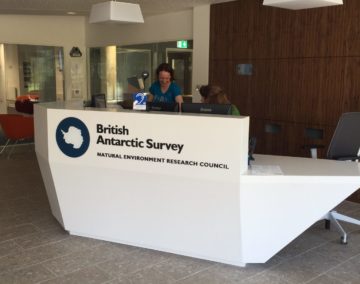
The Aurora Collaboration Space at British Antarctic Survey is a coworking space for members who share our passion for the environment.

The Aurora Innovation Centre offers a space and support services for interdisciplinary collaboration to tackle environmental challenges and increase real-world benefit of polar research.

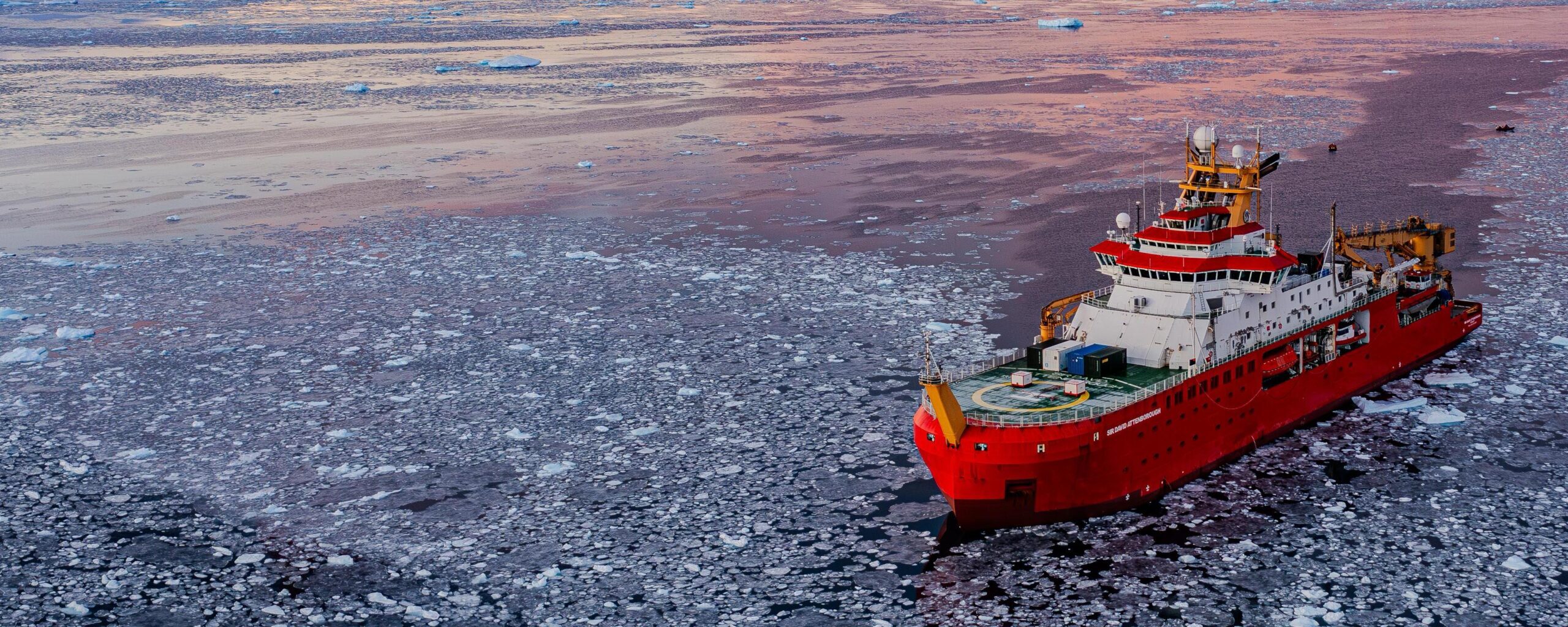
RRS Sir David Attenborough has enhanced satellite communications and data processing and storage systems to meet the increasing requirement for data-intensive operations.