
The strongest El Niño on record is building in the tropical Pacific, around 8,000 kilometres from Antarctica. BAS scientists Dr Tom Bracegirdle and Dr Pierre Dutrieux explain how it reaches the far south, what it could mean for the continent’s ice and why understanding these changes is important to the UK.
When Dr Tom Bracegirdle was a boy, he had a weather station in his garden. He loved watching the weather change, trying to understand what might happen next.
Today, he’s a climate scientist at British Antarctic Survey (BAS), studying some of the most complicated weather patterns on the planet and right now, there’s plenty to keep him occupied.

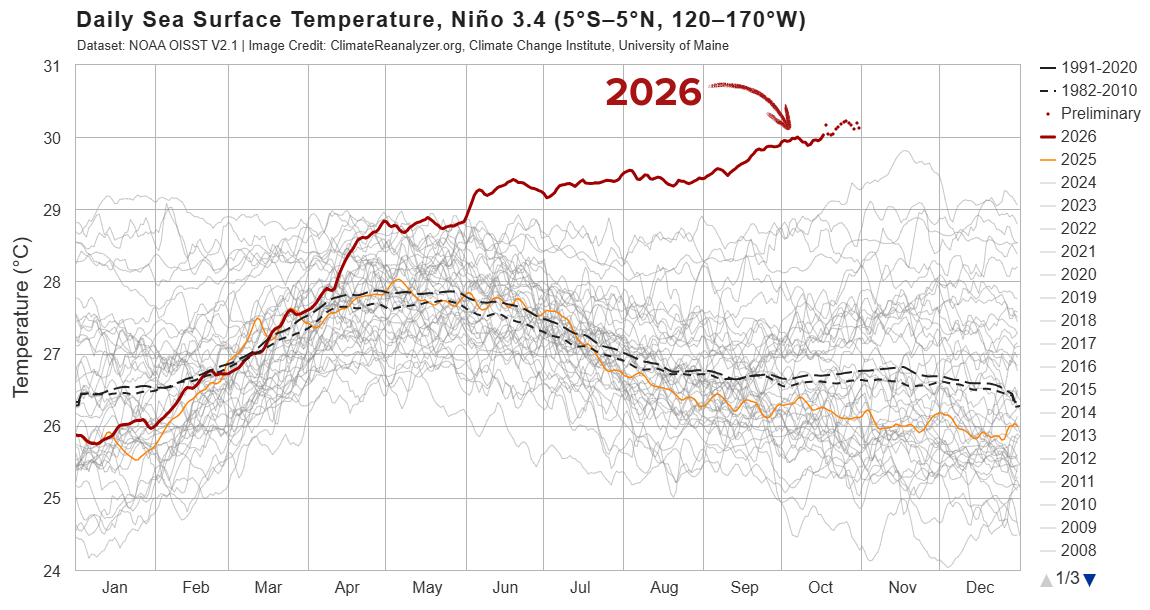
Thousands of kilometres away, in the tropical Pacific, an exceptionally powerful El Niño is gathering strength. In September, the Met Office confirmed it had already broken previous records for ocean temperatures in the central equatorial Pacific, with forecasts suggesting it could strengthen further before the end of 2026.
El Niño is known for bringing floods to some parts of the world and drought to others. But its influence reaches much further, all the way to Antarctica.
For Tom and his colleagues, the timing is particularly interesting. Antarctic sea ice has fallen to exceptionally low levels in recent years and scientists are trying to understand how this powerful natural climate event might affect an already warming continent.
“The sea ice is more vulnerable,” says Tom. “The system is warmer and it’s being hit by a very strong El Niño. That combination could lead to effects we’ve never seen before.”
What exactly is El Niño?
The name comes from fishermen on the coast of Peru. In the 19th century they noticed that a warm current sometimes arrived around Christmas and drove away the fish. They called it El Niño, Spanish for ‘the little boy’, after the baby Jesus, because of the festive timing.
El Niño is a period when the Pacific Ocean near the equator gets much warmer than usual. It occurs roughly every two to seven years, usually lasting nine to 12 months, although some events last longer.
To see why it happens, picture the Pacific as a giant bath. Normally, strong trade winds blow along the equator from east to west. They push warm surface water towards one end of the bath, near Indonesia and Australia. Cooler water rises at the other end, off South America.
But sometimes, those winds weaken. The warm water sloshes back east across the Pacific. The warmer sea heats the air above it, bringing more cloud and heavy rain. That can weaken the winds even further, allowing more warm water to spread east. The ocean and atmosphere reinforce each other, helping El Niño develop.
“You’re effectively shifting a huge engine of atmospheric circulation hundreds or even thousands of kilometres across the Pacific,” says Dr Pierre Dutrieux, who studies oceans and ice at BAS.
El Niño has a sister, La Niña (“the little girl”). During La Niña, the trade winds blow harder than usual and the eastern Pacific becomes cooler. The two tend to alternate, but there’s no fixed timetable and scientists are still working out exactly what causes one phase to develop into another.
Ripples across the planet
How can warm water near the equator change the weather at the bottom of the world?
“It’s a bit like dropping a large stone into a pond. You get a ripple effect that spreads across the globe,” Dr Tom Bracegirdle tells us.
The ripples are in the air, not the water. They are huge waves in the atmosphere, each about 4,000 kilometres from crest to crest. On a weather map, they show up as big patches of unusually high and low air pressure. These waves spread out across the globe, with one major route taking them south across the Pacific towards West Antarctica.
As these waves reach West Antarctica, they affect a huge weather system called the Amundsen Sea Low. This vast area of low pressure sits off the coast and steers the winds over much of the continent. During El Niño, it usually weakens.
When this low pressure system weakens, it changes the winds around Antarctica. Less mild air flows south towards the Antarctic Peninsula, while further west, less freezing air blows out from the continent. These changes also affect the sea ice, allowing it to survive longer in some places while reducing it elsewhere. Around parts of the Antarctic Peninsula, this often means cooler conditions and more sea ice than usual. Further west, where less freezing air reaches the ocean, sea ice tends to decrease.
So El Niño does not just make Antarctica warmer. It rearranges the weather.
There’s another surprise. El Niño’s influence on Antarctica is often strongest a few months before the event reaches its peak in the Pacific.
“If anything, we would expect the impacts on Antarctica to be particularly strong around now,” says Tom.
A record-breaker
This year’s El Niño is already exceptional. In September, the Met Office confirmed that sea temperatures in the central equatorial Pacific had exceeded those recorded during previous events and forecasters expect it to peak towards the end of the year.
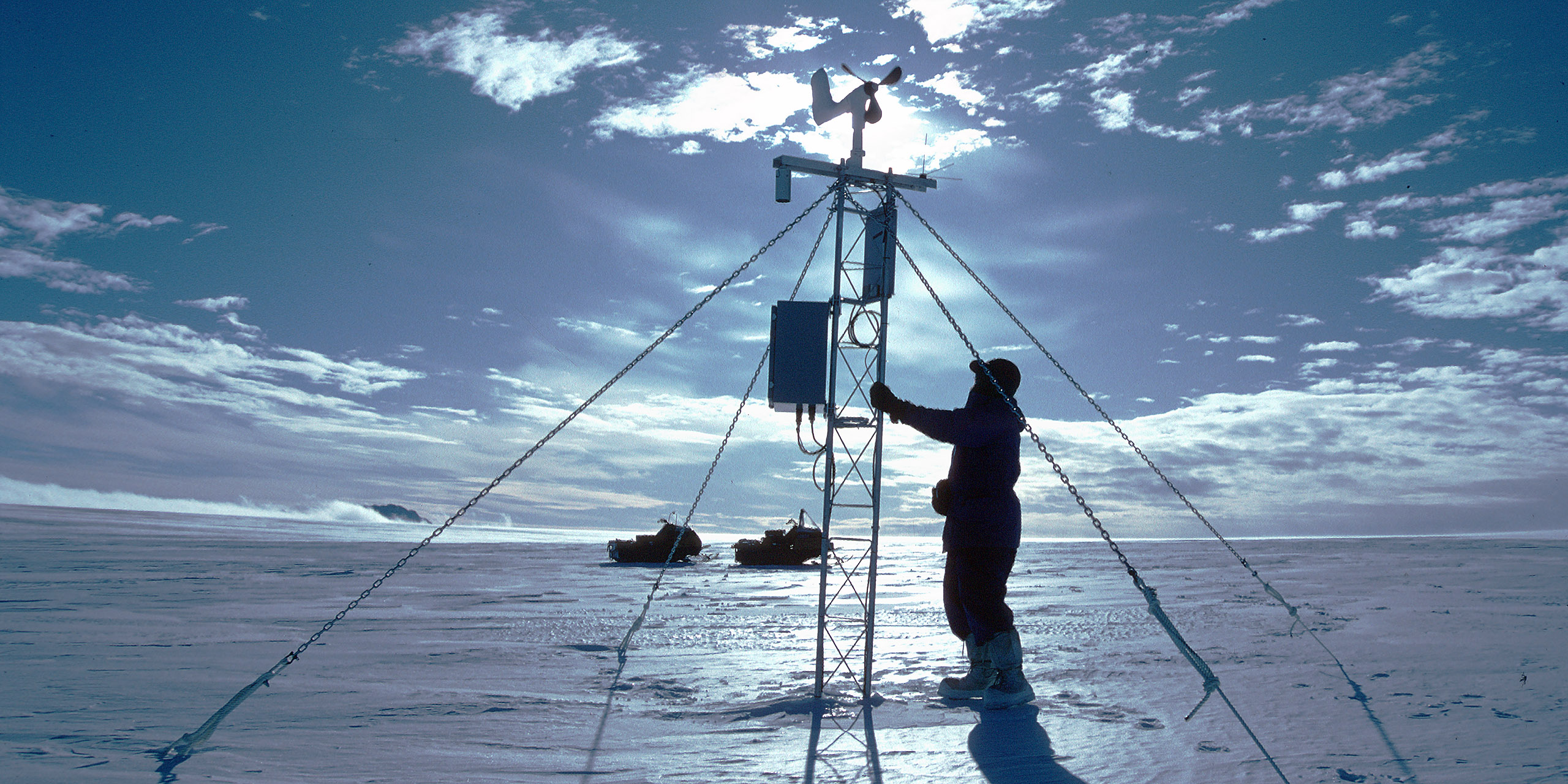
Antarctica is feeling it. In September, Tom and his colleagues observed unusually high atmospheric pressure over the Amundsen Sea, consistent with the weakening of the low-pressure system expected during El Niño. Temperatures were higher than usual around the Ross Sea, with reduced sea ice in parts of that region. Much of the Antarctic Peninsula and Weddell Sea experienced cooler conditions and more sea ice.
“The strength of the atmospheric pressure anomalies we’ve seen in September is quite striking,” says Tom.

But Tom is careful not to jump to conclusions. El Niño makes certain weather patterns more likely, but that doesn’t mean every unusual event in Antarctica can be blamed on it. Scientists need more evidence to understand exactly what’s happening.
What concerns him most is that Antarctica is already changing. While Arctic sea ice has been shrinking for decades, Antarctica followed a different pattern. For years, its sea ice fluctuated without a clear long-term decline. Then, in 2016, things began to change. Sea ice levels dropped sharply, reaching record lows in 2023 – and the worrying trend has continued. This Antarctic winter, sea ice reached its third-smallest maximum since satellite records began in the late 1970s. By early October 2026, it was shrinking so quickly that it had fallen to record-low levels for that time of year.
Against this backdrop, a powerful El Niño could affect Antarctica in ways scientists haven’t seen before.
What about Antarctica’s wildlife?
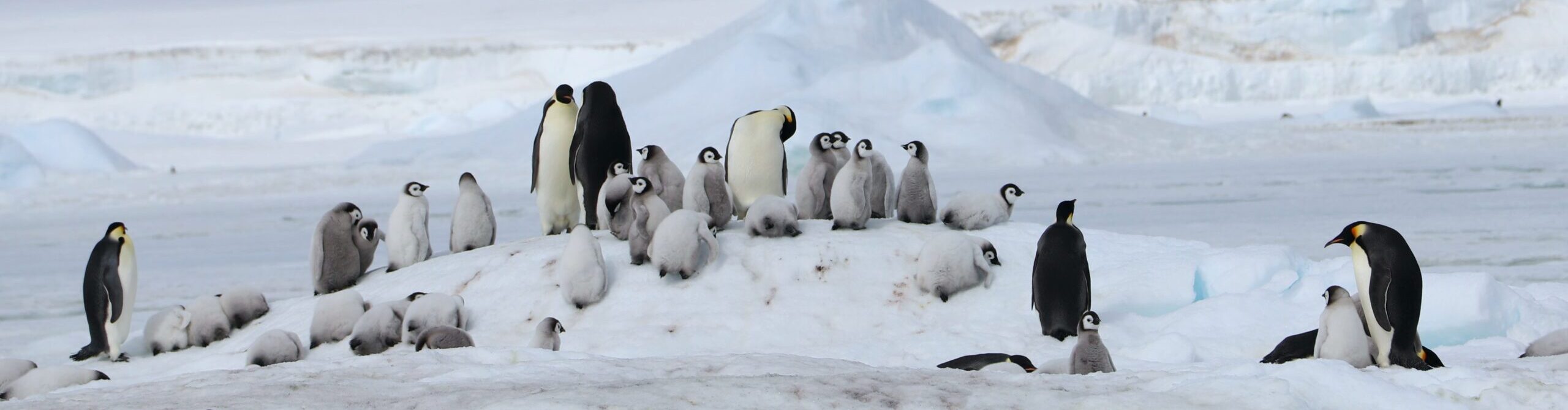
For animals living around Antarctica, changes in sea ice can have serious consequences. Emperor penguins, for example, need stable sea ice to raise their chicks. At Halley Bay, near BAS’s Halley Research Station, almost no chicks survived for three years running between 2016 and 2018 after the sea ice broke up too early.
BAS scientists found that the problems began during a period of unusually stormy weather around the powerful 2015–16 El Niño. While they cannot say El Niño caused the ice to break up, the research shows just how vulnerable penguins can be to changes in the weather.
“Penguins are remarkably hardy animals,” Tom notes. “They’ve evolved to live under a whole range of conditions and they’re very well adapted to natural climate variations. But can they still cope with climate variations in a new climate state? We are already seeing concerning signs that the answer is no.”
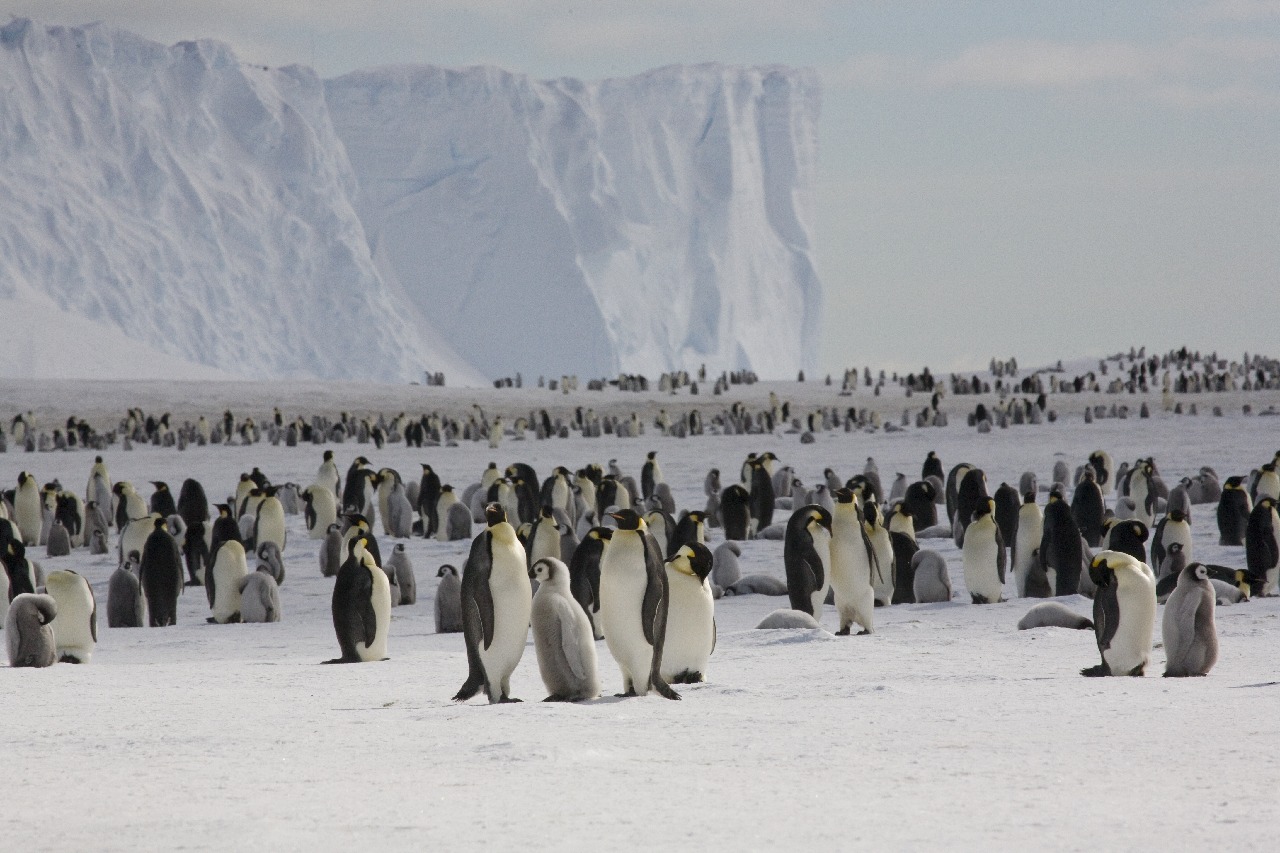
Recent BAS research backs up his concern. A satellite study found that emperor penguin numbers may have fallen by 22% over 15 years in one part of Antarctica, highlighting the growing pressures these birds face as their sea-ice habitat becomes less reliable.
The effects can also reach further down the food chain. BAS research has shown that changes in ocean temperatures and sea ice associated with El Niño can affect the availability of krill, a vital food source for penguins, seals and whales.
Exactly how individual El Niño events affect Antarctic ecosystems is something researchers are still trying to unpack.
Melting from below
While Tom studies the atmosphere above Antarctica, his colleague Dr Pierre Dutrieux is interested in what happens far below the surface.
Pierre has loved the ocean since childhood. He started out studying engineering, but his fascination with how the sea works eventually led him into ocean physics.
When the opportunity came to study for a PhD in Hawaii, it was too good to turn down. Hawaii has an excellent reputation for ocean research and for Pierre, a keen surfer, the beaches were a rather nice bonus. Not a bad place to spend a few years studying the sea.
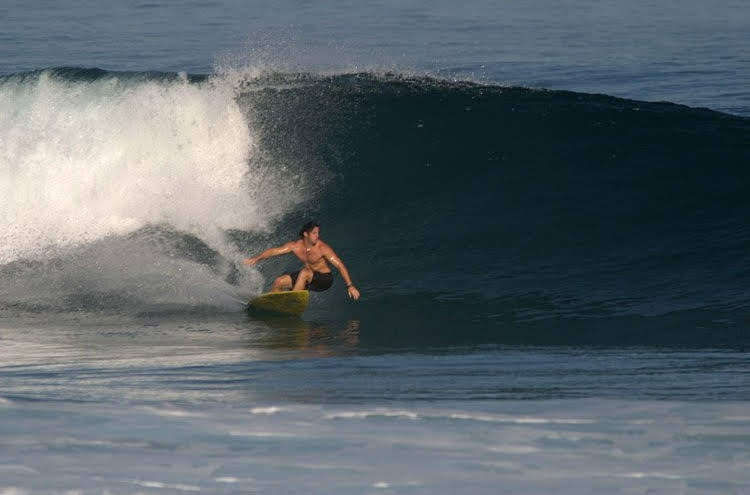
After more than 20 years studying the ocean, including over 15 years investigating how it interacts with Antarctic ice, Pierre now focuses on some of West Antarctica’s most vulnerable glaciers. The connection with his early research in the tropical Pacific has never entirely disappeared.
His focus is the Amundsen Sea, home to Thwaites and Pine Island glaciers. Together with their neighbours, these glaciers have accounted for around a tenth of global sea-level rise in recent decades.
Relatively warm water from the deep Southern Ocean can travel towards the Antarctic coast, following channels in the seabed carved by glaciers long ago. When this water reaches the floating ice shelves extending from glaciers, it melts them from underneath. These ice shelves act as a brake on the glaciers behind them. As they become thinner, they provide less resistance, allowing ice from the land to flow more quickly into the sea. That’s important because melting floating ice does not directly raise sea levels, but losing more ice from land does.
Pierre wants to know whether El Niño changes the ocean currents that carry warm water towards these glaciers.
“We know that relatively warm ocean water is reaching the glaciers there,” he tells us. “So the question is whether changes in atmospheric circulation associated with El Niño alter the ocean currents in a way that brings more warm water towards the glaciers.”
And there is an intriguing clue from Antarctica’s past.
Could El Niño have helped trigger glacier retreat?
Scientists believe that major glaciers in West Antarctica, including Thwaites and Pine Island, began their current retreat around the 1940s.
A BAS-led study published in 2017 used mud drilled from the seabed beneath the Pine Island ice shelf. The layers showed that the glacier began to lift off a ridge on the seafloor around 1945. That followed a burst of warmth tied to a powerful El Niño in the early 1940s. Later work found that Thwaites began to retreat at about the same time. Conditions cooled again in the following decades. The glaciers did not recover. Once warm water had found its way under the ice, the retreat kept going.
Could the two be connected? Pierre thinks it’s possible. Unusual winds may have changed ocean currents, allowing more warm water to reach the glaciers and melt their floating ice shelves from below. But there were other unusual weather patterns during those years, so scientists can’t be certain what triggered the retreat.
And the mystery doesn’t end there. Pierre’s own research suggests El Niño could increase the flow of warm water towards Antarctic glaciers. Yet some computer models point to a different explanation: La Niña, El Niño’s cooler counterpart, which may strengthen the deeper currents after a delay.
So, which is right? It may be that both processes play a part. The trouble is that scientists have very little information to work with.
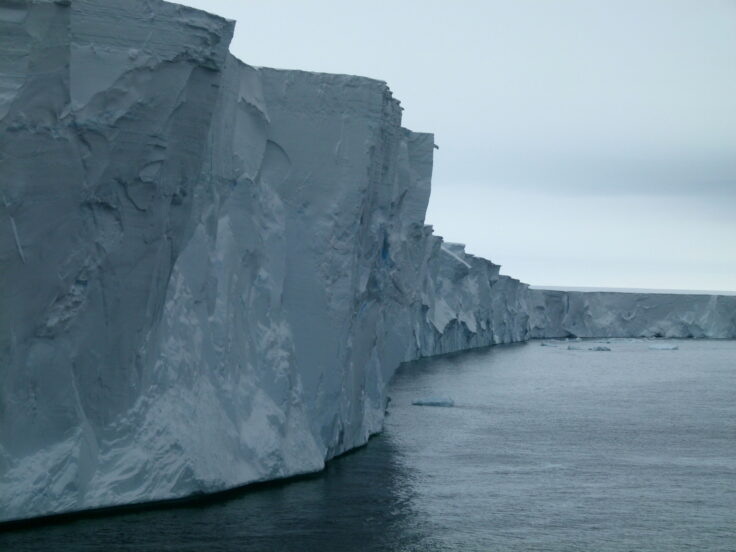
BAS and its international partners have been recording ocean conditions continuously in the Amundsen Sea since 2009. That’s an impressive achievement in such a remote location, but it covers only a handful of strong El Niño events. More measurements are needed to find out what really happens beneath the ice and whether the same patterns repeat. That’s where Pierre’s next Antarctic expedition comes in.
The underwater robots searching for clues
Finding out what happens in the Amundsen Sea is no easy task. Pierre has spent around a year of his life in Antarctica, spread across roughly six expeditions. But even for experienced scientists, collecting measurements beneath the ice is difficult.
Traditionally, researchers have relied on ships to lower instruments into the ocean. BAS and its partners also have equipment anchored to the seabed, recording temperatures and currents even when no scientists are around. There is one rather large occupational hazard: icebergs. If one catches the line holding the instruments, it can damage or destroy the equipment.
Now, Pierre and his colleagues are using small underwater robots to help fill the gaps. Known as autonomous profiling floats, they drift with the currents, rising and sinking through the water to collect measurements. When they reach the surface, they send their findings back to scientists by satellite. There’s a catch, of course. The robots can’t communicate through sea ice, so scientists have to be careful where they send them.
BAS now has around three years of observations from these floats, revealing parts of the ocean that were previously difficult to measure. Pierre is preparing to return to Antarctica during the coming field season to retrieve more data. He hopes it will help answer some of the questions surrounding this year’s El Niño.
Why should people in the UK care?
It might seem a long way from the Amundsen Sea to the UK’s coastline, but the fate of Antarctica’s glaciers has consequences for people all around the world.
The Met Office says El Niño makes a wetter, stormier autumn and early winter more likely here. Later in the winter, it can raise the chance of cold snaps. Forecasters also expect it to help make 2027 one of the hottest years on record worldwide.
There are longer-term concerns too. West Antarctica holds enough ice to raise global sea levels by several metres if it were lost entirely. That isn’t expected to happen this century, but the glaciers Pierre studies are already losing ice, contributing to rising seas. That might seem a distant concern until you think about what even a small rise in sea level means. A higher sea gives every storm a head start.

“A storm that might previously have caused serious damage once every ten years could become a much more frequent event,” says Pierre.
For the UK, an island nation, that means greater pressure on sea defences, ports, homes and transport links near the coast. And the risks are even greater for countries with fewer resources to protect themselves.
The Southern Ocean also plays an important role in regulating our climate. It soaks up a large share of the extra heat and carbon dioxide that people add to the air, which slows down global warming.
“If that whole system is pushed out of balance, it’s a major concern,” says Dr Tom Bracegirdle.
Pierre knows that understanding how the world works allows us to make better decisions about its future.
“These processes have consequences for the UK and the wider world,” he says. “We’re working to understand them and reduce the uncertainty about what will happen.”
What happens next?
Over the coming months, Tom and his colleagues will continue watching Antarctica’s changing weather, using satellite observations, advanced climate models and new technology, including artificial intelligence.
Meanwhile, Pierre’s team will be gathering more information from the ocean, looking for changes in the warm currents that reach West Antarctica’s glaciers.
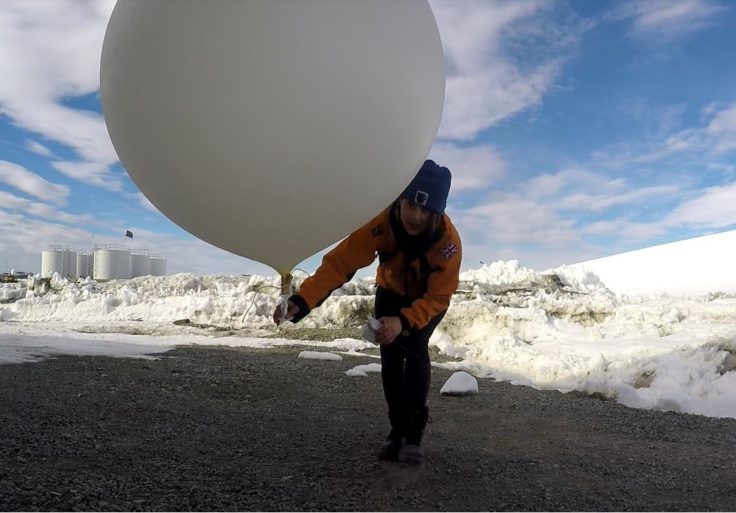
From 2027, BAS will also take part in Antarctica InSync, an international research initiative bringing scientists together for the first time to take measurements all around the continent at the same time, building the fullest picture yet of how Antarctica works. Bringing together expertise in the atmosphere, oceans, ice and ecosystems is central to BAS’s approach. Understanding what is happening in one part of Antarctica often depends on understanding changes elsewhere.
There is no certainty that this El Niño will cause major new changes to Antarctic glaciers or wildlife. Its effects will depend on how atmospheric conditions develop, how long they last and how the ocean responds. But it offers scientists an important opportunity to learn more about a climate system that is changing rapidly.
For Tom, who began watching the weather from his childhood garden, the questions have become much bigger over the years. And for Pierre, who began his career studying tropical waters in Hawaii, the Pacific continues to provide clues about what might happen at the other end of the planet.
As this powerful El Niño unfolds, the measurements arriving from Antarctica could help answer a question that matters well beyond the frozen continent: how will its ice, oceans and wildlife respond to shifting climate patterns in an increasingly warm world?