
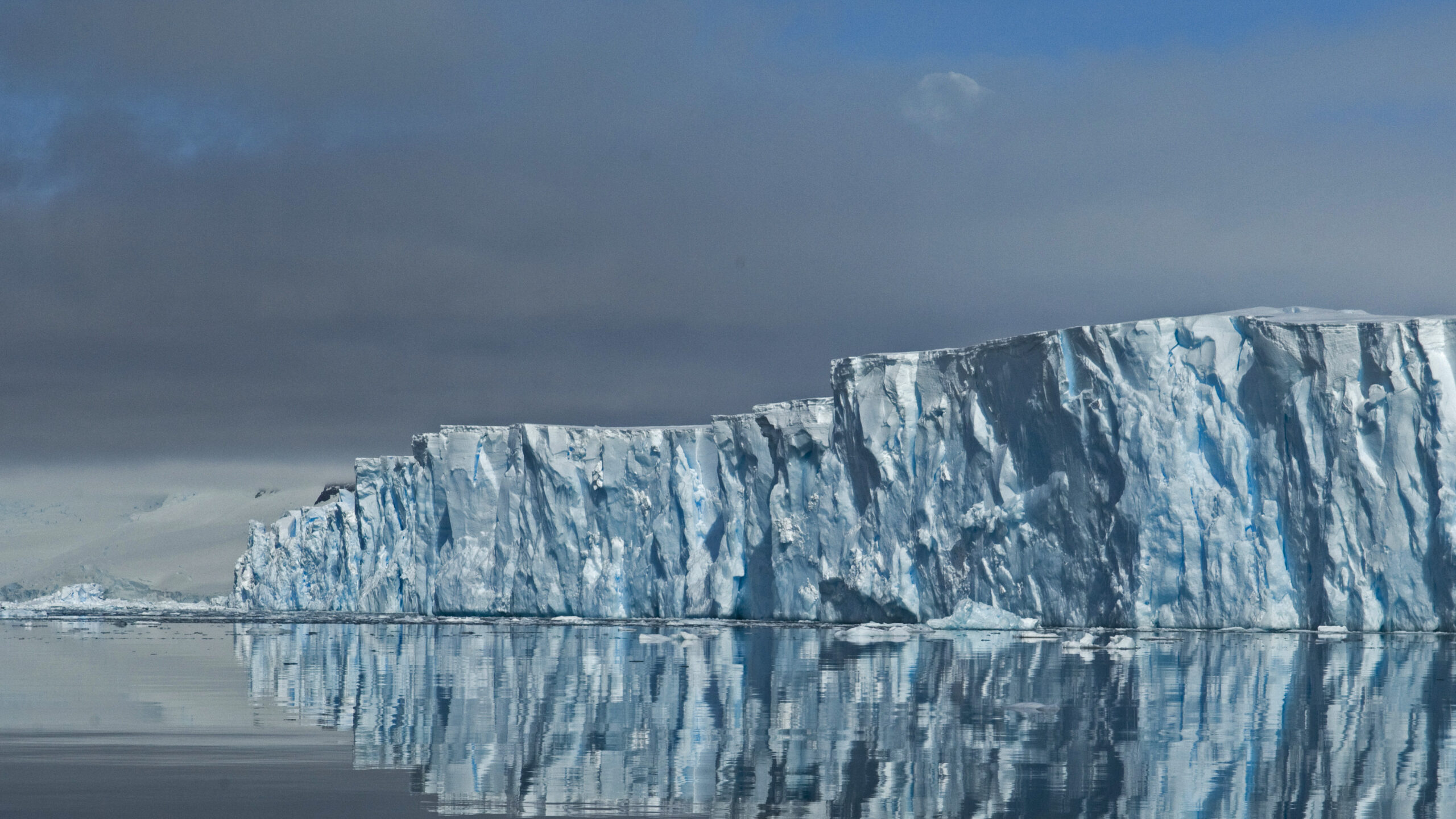
New research led by British Antarctic Survey (BAS) has found that Thwaites Glacier in West Antarctica will continue losing ice for at least the next 150 years, even under the most extreme ocean cooling conditions imaginable – prompting new calls for policymakers to take action and prepare for sea-level rise.
The West Antarctic Ice Sheet is one of the fastest-changing areas of our planet, holding enough ice to raise global sea levels by around five metres. Thwaites Glacier and its neighbour Pine Island Glacier are currently the largest contributors to ice loss from this area of Antarctica. The ice loss is caused by the ocean melting the glaciers’ floating ice shelves, leading to thinning and retreat of the glacier further inland.
Scientists are racing to understand how these glaciers will behave under future ocean warming conditions, and to identify the factors that could cause long-lasting changes. To investigate, they ran a bold modelling experiment. They completely switched off the melting effects of the ocean beneath both glaciers in three independent computer models and looked at what happened in simulations lasting 150 years.
Published in Geophysical Research Letters, the results revealed a striking difference between the two glaciers.
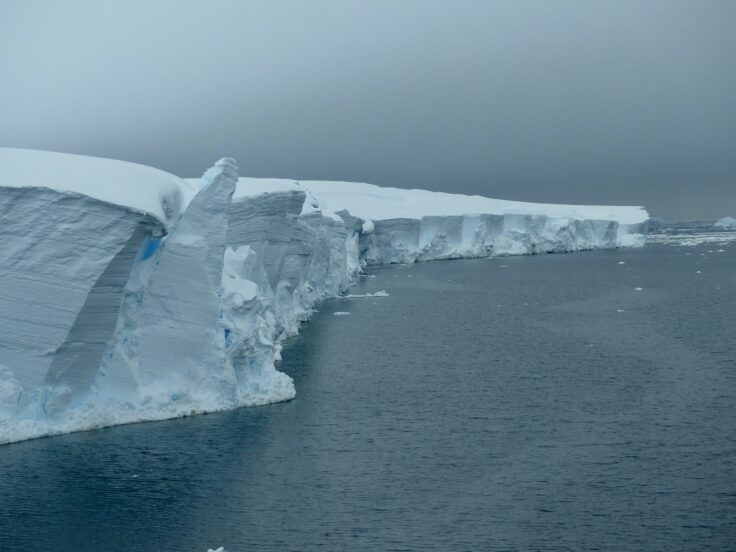
Pine Island Glacier responded as scientists might have expected: without any ocean melting, it thickened and began advancing back towards the position it held in the first half of the 20th century.
Thwaites Glacier, however, continued to lose ice throughout the entire 150-year simulation period, even without any ocean melting. The rate of ice loss slowed down over time as the glacier thinned.
Dr Rosie Williams, a glaciologist at BAS and lead author of the paper, explained:
“These results show that past changes in ocean-driven melting have now committed us to unavoidable future ice loss from Thwaites Glacier. This ice loss cannot be undone or prevented by simply cooling the ocean.”
The zero-melting scenario would never occur in the real world, because the presence of any seawater below glacier ice causes some melting. Under this illustrative experiment, both glaciers might have been expected to gain ice and grow; however, these results show that past changes have driven Thwaites into a state that continues to lose ice.
Speaking about the impact of the results, Dr Williams explained:
“Records show that the retreat of these glaciers started in the 1940s, and since then the evidence points to the gradually warming ocean as a major factor driving ice loss. These simulations show that we’re still seeing the consequences of past change play out on Thwaites Glacier.
Of course, in real life there is no way to turn off the melting effect of the ocean. So, on top of the committed change we found here, we expect to see continued ocean-driven melting – as well as a further increase in ocean temperatures over the coming century.
While the study shows that Thwaites Glacier is locked into shrinking in response to past events, the scientists emphasise that present warm ocean temperatures and the projected impact of future greenhouse-gas emissions are making things worse for the remaining ice.
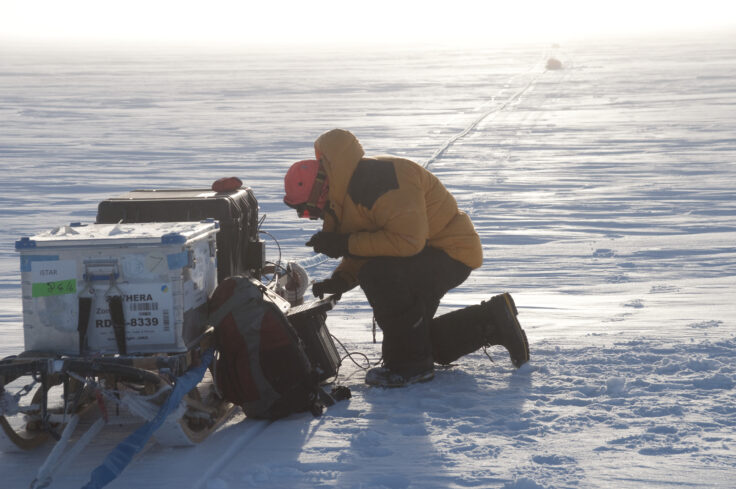
Co-author Professor Paul Holland, an ocean modeller at BAS, said:
“These simulations show that historical melting of Thwaites Glacier has committed future generations to the challenges of sea-level rise. This ice loss will be further exacerbated if we do not reduce and ideally reverse our emissions of greenhouse gases. We don’t yet know if Antarctica’s other major glaciers are moving into a state of committed change.
We urgently need to take action to modify the human activities that are driving changes in ocean melting of these glaciers.”
These findings about Thwaites Glacier sit within a wider body of research about the impact of warming ocean waters, and the long-lasting consequences of our ongoing emissions of greenhouse gases on the stability of the West Antarctic Ice Sheet. The 2025 summary of the findings of the International Thwaites Glacier Collaboration, which was co-led by BAS, is available here.
‘Mass loss from Thwaites Glacier continues even without ocean melting’ by Rosie Williams, Matt Trevers, Sainan Sun, Paul Holland, David T. Bett, Robert Arthern, and Alexander T. Bradley is published in Geophysical Research Letters, DOI: https://doi.org/10.1029/2026GL122843