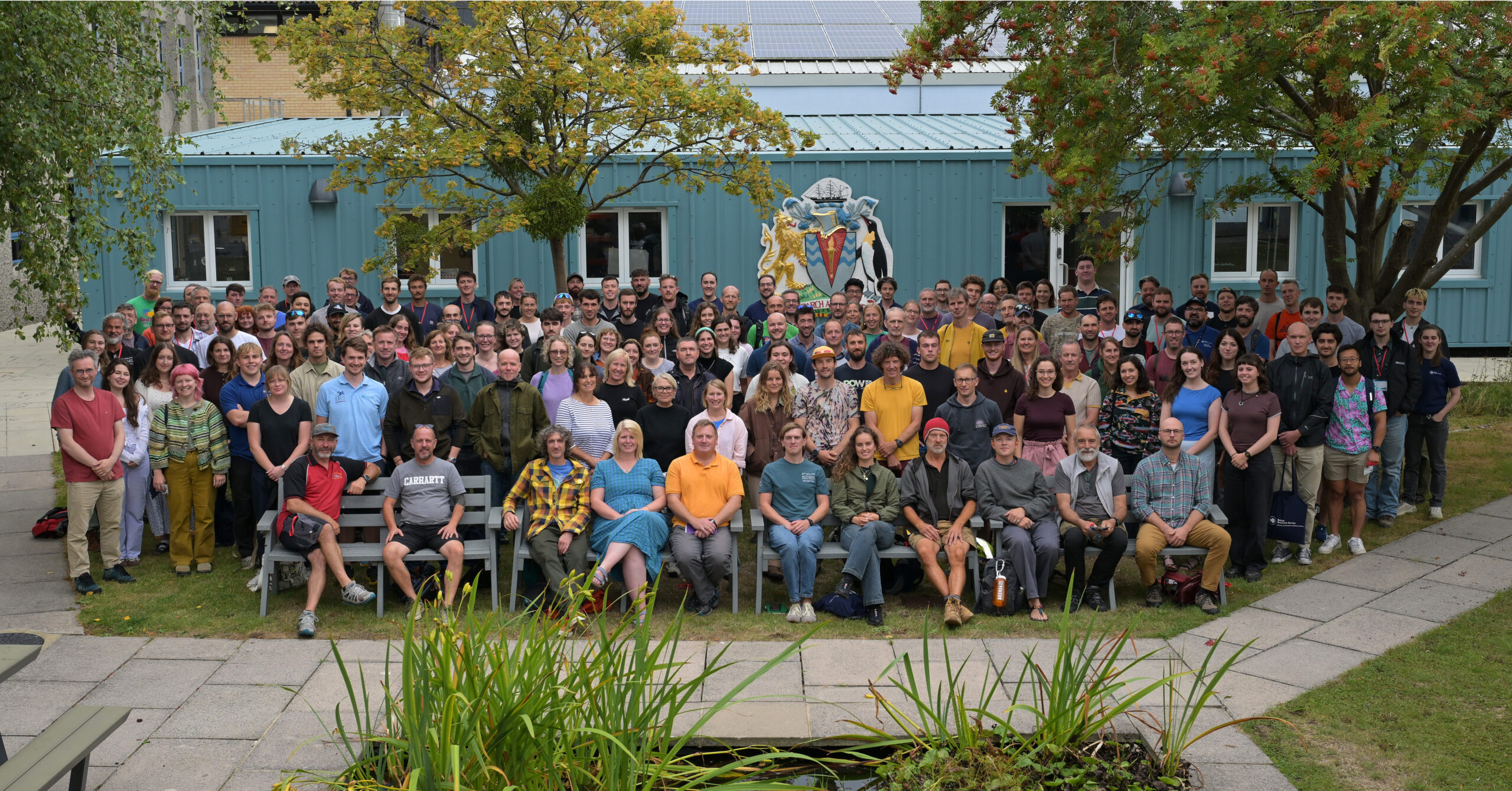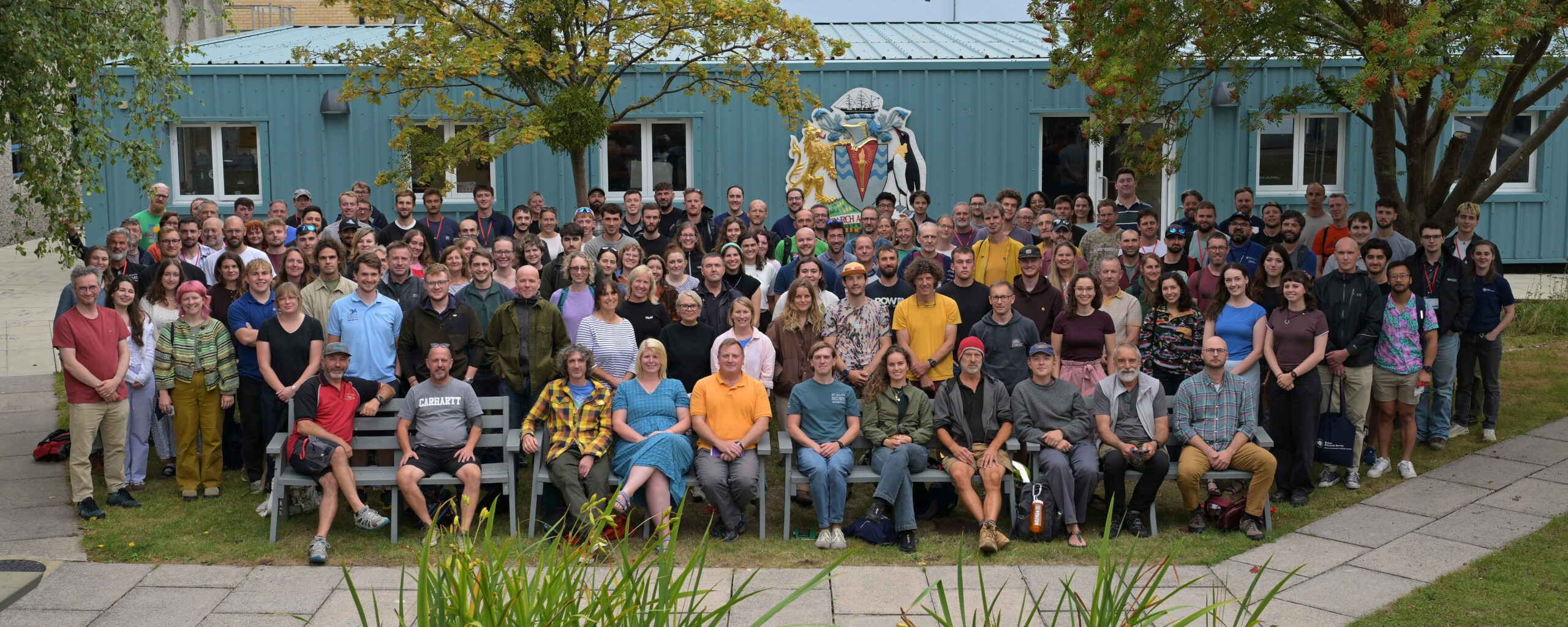
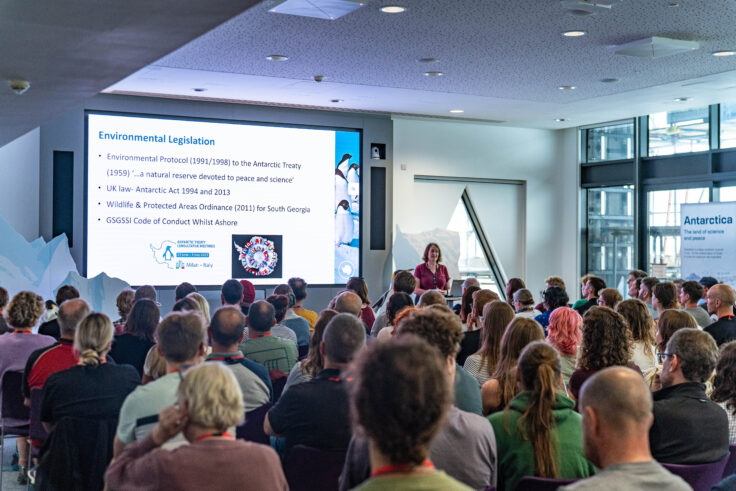
Every September, more than a hundred people gather at British Antarctic Survey (BAS) headquarters in Cambridge before travelling to the bottom of the world. They are there for Pre-Deployment Training (PDT): two weeks of preparation for the jobs, emergencies, practicalities and peculiarities of living and working thousands of miles from home. This is how an Antarctic season actually begins.
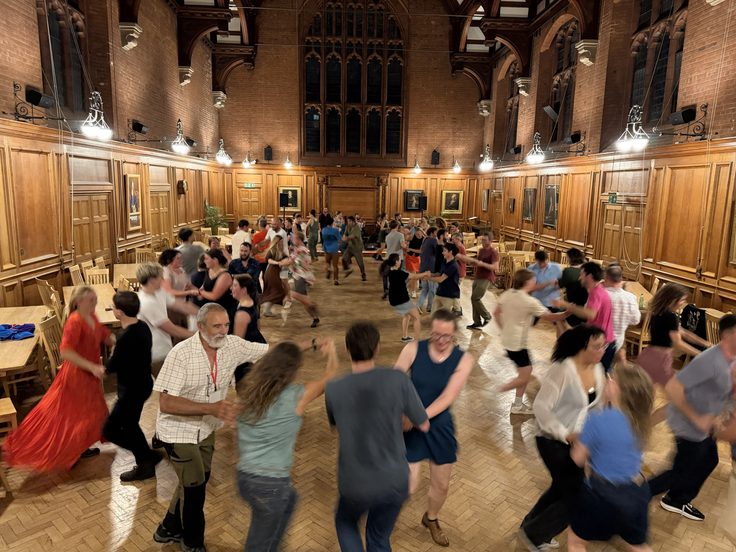
Towards the end of Pre-Deployment Training at British Antarctic Survey (BAS), a large room in Cambridge fills with people preparing to dance a ceilidh.
Within weeks, some of them will be living at Antarctic research stations. Others will be crossing the Southern Ocean, working on construction projects or heading into the deep field. One will spend up to 10 hours a day driving a vehicle at little more than walking pace, towing 40 tonnes of supplies across the ice. Another will be responsible for feeding a station from stores ordered months earlier. A Station Leader in the room could, in the right circumstances, find themselves exercising the powers of a magistrate.
For now, they are learning the steps.
The dancers include scientists, chefs, mechanics, doctors, engineers, tradespeople, field guides, project managers and the people who will lead BAS research stations. Some are returning for their fifth, sixth or eighth Antarctic season. Others have spent years wondering whether they would ever get the chance to go.
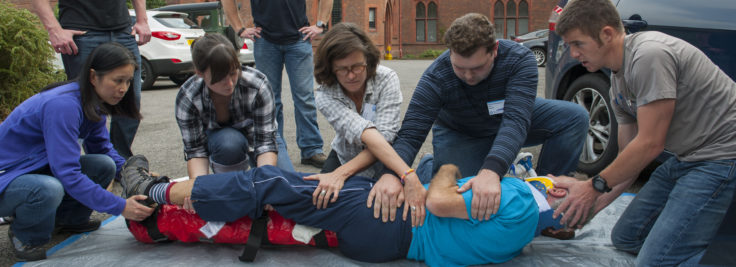
The ceilidh is the social finale to two weeks of Pre-Deployment Training, better known at BAS as PDT. First aid and sea survival are on the programme, along with field skills, station briefings, environmental responsibilities, health and safety and training for emergencies that everyone hopes will never happen.
Preparing for Antarctica also involves questions that are harder to cover in a training manual.
What will you miss from home? What should you take with you? What happens when work finishes and your colleagues are still the people sitting opposite you at dinner? What do you do with a free evening when the nearest pub, shop or cinema is thousands of miles away?
People pack books, instruments, games and half-finished projects. One recent season at Rothera Research Station developed a club around a unicycle someone had brought south. This year, incoming Rothera Station Leader Nick Wolstenholme plans to use some of his spare time to learn Urdu.
Learning to do-si-do may not appear in any polar survival manual, but bringing a large group of future Antarctic colleagues onto a dance floor turns out to be a useful way of getting people talking.
Going south starts in Cambridge
Michaela Boak, Deployment Support Coordinator, is one of the people responsible for bringing PDT together. She has heard almost every pre-deployment question imaginable.
People want to know what their bedrooms will look like, how much luggage they can take, whether there will be Wi-Fi, what they will eat and what happens if they get ill. Those staying away for longer ask about keeping in touch with partners and families, hobbies, laundry and the thousand small practicalities that become more pressing when there is no easy way to buy something you have forgotten.
PDT usually runs over two weeks. The first brings people together for sessions on BAS science and operations, safety, the environment, biosecurity and wellbeing. The second moves into more practical territory, including bespoke first-aid training and sea survival. Those staying through the Antarctic winter receive further preparation in teamworking, field skills and search and rescue.
PDT also gives people something a training manual cannot – time with each other before they leave.
For Station Leader Aurelia Reichardt that made a real difference on her first trip south. Aurelia joined BAS in 2017, almost straight from a marine biology degree at the University of Bremen in Germany. She remembers clearly the first time she flew into Rothera Research Station.
“You’re going to a place that you never, ever thought you would be able to go to in your life. All of a sudden this place becomes reality that you’ve only ever heard about in stories.”
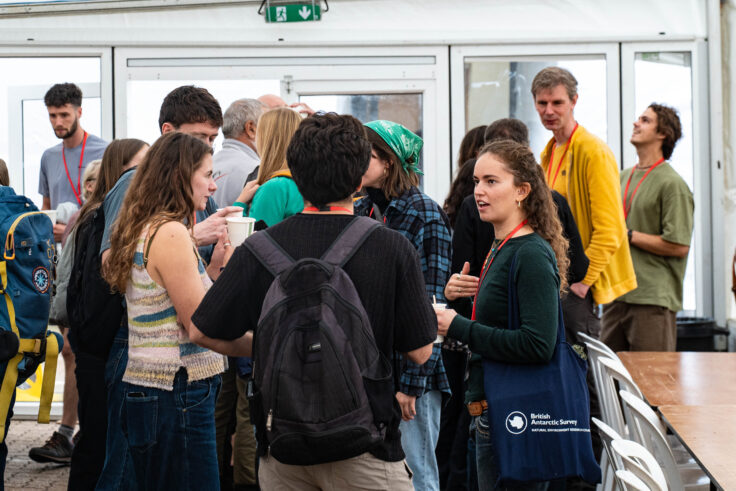
New arrivals, she says, can spend their first days with “eyes like saucers”, alternating between wonder and the dawning thought: “Oh, what have I done?” Then the familiar faces from PDT begin to appear – colleagues who arrived earlier explain how things work and the newcomer starts to find their place.
Aurelia has now completed eight Antarctic seasons. Watching somebody else arrive for the first time still gives her a lift.
“New people bring out your spark again. You see the glow in their eyes and it reminds you.”
No single route to Antarctica
Aurelia nearly never applied to BAS at all. As a marine biology student, she was on an expedition in Patagonia when a friend began applying for a BAS job. Looking over his shoulder, she spotted a vacancy for a marine biologist – and she assumed it was beyond her. It seemed like the sort of dream job that only “really, really rare special people would get”, rather than something open to “just a normal person”. Her friend persuaded her to apply.
Eight years later, she has worked as a marine biologist, managed Rothera’s marine laboratory and spent three years as Station Leader. She is now preparing for another deployment, this time leading Bird Island Research Station.
The move away from a conventional research career began when Aurelia saw how much work takes place behind the science.
At university, the scientist can appear to be the visible “tip of the iceberg”: collecting the data and publishing the paper. At Rothera, Aurelia found the rest of the iceberg. There were boat crews taking researchers to sampling sites, diving specialists supporting work underwater, engineers and mechanics keeping equipment running, logistics staff moving people and cargo and planners back in Cambridge making sure everything arrived in the right place.
“I saw this entire world of science facilitation and support. As much as I love science, the dynamic problem-solving of being an operations person really spoke to me.”
PDT is full of careers that have taken similarly unexpected turns.
Michaela Boak began with a business administration apprenticeship before moving into science support at the University of Cambridge, Department of Medical Genetics. She later joined BAS, initially in science support, before moving into operations and deployment. Her job now helps hundreds of other people make the journey she has herself made south three times.
Nick Wolstenholme, incoming Rothera Station Leader, studied theology at Durham University and considered becoming a priest. Instead, he spent around 24 years in the Army, working in logistics, explosives engineering, bomb disposal and weapons intelligence.
Adam Porteous, Project Manager for Rothera Renewable Energy, studied mechanical engineering at the University of Strathclyde, moved into nuclear engineering and decommissioning at Dounreay and later worked in the hydrogen industry. Project management, he says, was something he “fell into”.
Ciaran Back, Traverse Vehicle Mechanic, came through an apprenticeship rather than university. His working life has included repairing agricultural machinery, welding and fabrication. He has built staircases and even the odd dog kennel. Ciaran had thought about applying to BAS for around a decade but assumed other applicants would have qualifications he did not.
“I just assumed there’d be tons and tons of people interviewing and they’d all be much more qualified than I am.”
This season he will spend around 100 days in the Antarctic field. There may not be one obvious route into BAS, because there is no single type of person required to make Antarctic science happen.
Feeding a station
Olivier Hubert, BAS Catering Manager, came through another world entirely. Before Antarctica, he had worked in high-end restaurants, including Michelin-starred kitchens. It was a world of exacting standards, carefully sourced ingredients and dishes produced with precision.
Cooking at an Antarctic research station asks for many of the same professional skills, but under very different conditions. Food has to be planned months in advance and transported thousands of miles, with no possibility of replacing something quickly if it runs out. Fresh produce becomes scarce as a season goes on, while birthdays, Christmas and Midwinter still need to feel like occasions.
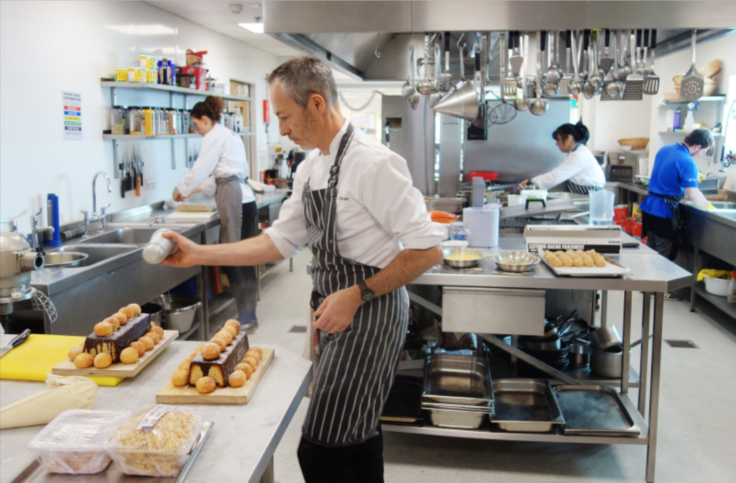
Some ingredients are more important than others. Bread flour, Olivier says, is one of them. Run out of that and “you could have a riot”.
He has now travelled south seven or eight times and oversees catering, food procurement and accommodation across BAS stations and the RRS Sir David Attenborough. Over those deployments, his idea of hospitality has broadened.
A good meal still matters, but hospitality in Antarctica is also about paying attention to people: noticing when someone has had a difficult day, making an effort for a birthday when home is thousands of miles away, or giving a team something to look forward to after a long shift. Meals are one of the few times when almost everyone on station comes together, which gives the chef a particular place in the life of the community.
“The quality of a winter can be made or unmade by the quality of the chef,” Olivier says. For him, the job is therefore as much about understanding people as it is about food. A good chef is providing food but also helping create a home for people who cannot go home.
Everybody mucks in
The boundaries between jobs become looser once people arrive south. BAS depends on specialists – scientists, engineers, chefs, doctors, mechanics, pilots and boat crews among them – but station life rarely fits neatly inside a job description, and everyone has a part to play in keeping things running.
That can mean helping to unload cargo, clearing snow, joining an emergency team or simply lending a hand elsewhere when a job needs doing. The expertise people bring with them still matters enormously, so does knowing when to step outside your usual role.
For a Station Leader such as Aurelia, that often means drawing on the knowledge of the people around her. At Rothera she had overall responsibility for safety and for coordinating the response when something went wrong, but she is clear that the job was never about having every answer herself. If there was an aviation problem, she would bring in the chief pilot. In a medical emergency, she relied on the station doctor. “You’re basically the glue” she says.
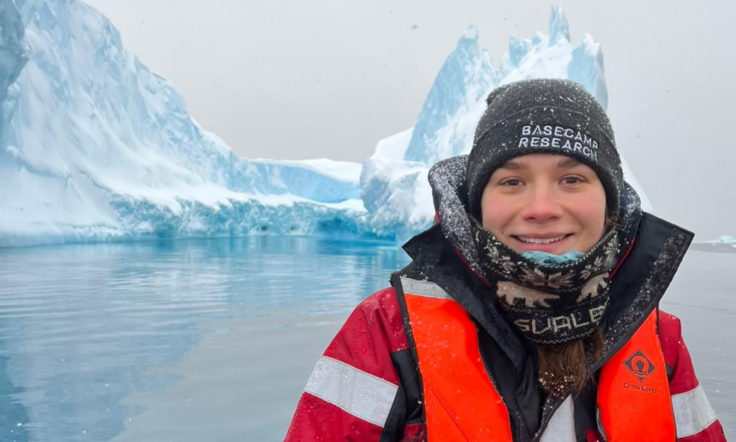
That ability to bring the right people together matters in a place where even familiar risks take on a different scale. Antarctica’s atmosphere is extremely dry, so fire is a serious concern despite all the surrounding snow and ice; teams train regularly for emergencies, while oil-spill exercises prepare them to respond quickly in an environment where fuel has to be handled with particular care. Medical problems can occasionally be serious enough for someone to be evacuated to hospital in South America.
The same mix of people shapes life away from work. Aurelia encourages newcomers to move around the dining room, talk to people outside their immediate team and take a chance on whatever is happening that week – whether that is a film night, a chess club or helping a science team with a bird count.
“The key thing is to just say yes.”
The image of the stereotypical polar explorer can make Antarctica sound like a place populated entirely by rugged outdoor enthusiasts.
There are certainly people who spend every possible moment outside, but Antarctic stations can also support thriving communities of readers, musicians, board gamers and puzzle enthusiasts. Some seasons have had groups painting Warhammer figures before settling in for games that last for days. Dungeons & Dragons has had its moments. People get together to form bands. Fancy dress is taken surprisingly seriously; Aurelia recalls an inflatable dinosaur costume around eight or nine feet tall making regular appearances.
Then there was the season someone brought a unicycle. Before long, other people were having a go and a small unicycle club had formed. “Everyone’s got a story,” Aurelia says. “Everyone’s got some way to connect.”
Antarctica’s slowest road trip
If there is one Antarctic job that benefits from ingenuity, Nick Withey, Traverse Vehicle Engineering Manager, has found it.
BAS tractor traverses take fuel, cargo and scientific equipment deep into the Antarctic interior using tracked PistenBully vehicles towing heavy sledges. The crews can be away for months at a time, living in a converted shipping container known as the caboose. Nick describes it as “a mini station… thousands of kilometres from anyone. We live in a caravan, essentially, and we all have to get along and support each other.”
A working day can mean up to 10 hours behind the wheel, travelling at little more than running pace while towing around 40 tonnes. At the end of the day, the team digs out its own camp and showers may be four or five days apart.
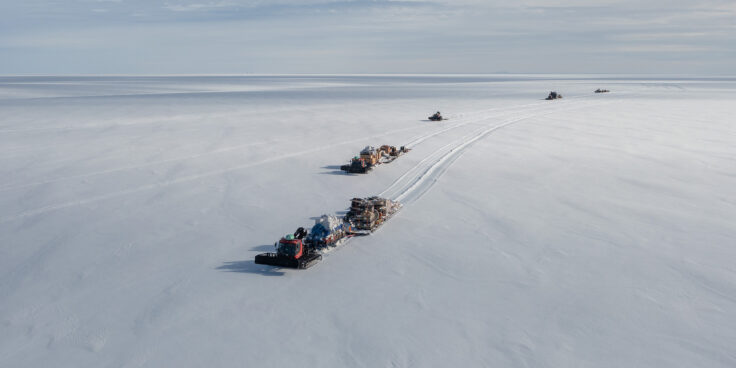
Nick describes the job as “ice road truckers”, although a road is conspicuously absent. On one journey, his team travelled more than 3,000 kilometres over roughly 100 days.
If something breaks, they fix it where they are. There is no garage to call and no breakdown truck on its way, so the vehicles carry tools and spares and the crews rely heavily on practical experience and improvisation.
Nick had plenty of both before joining BAS. After working in parks management for a local authority, he spent around a decade as an overland tour leader and mechanic, building and driving expedition trucks on routes from Cape Town to Cairo and Istanbul to Mongolia. When Covid brought that work to an end, BAS turned out to be an unexpectedly good fit.
“I learned everything on the road, with no assistance and no resources. I think that’s what BAS was really interested in.”
This season, Ciaran Back, BAS Traverse Vehicle Mechanic, will join Nick’s team for his first trip south, taking skills honed on agricultural machinery into an environment where self-reliance matters even more.
Nick’s packing advice is concise: “Whatever you pack in your bag, go in and halve it.”
For him, though, some of the most valuable preparation happens before anyone reaches the ice. PDT brings the traverse team together with the wider mix of people heading south and alongside the operational briefings there is training around first aid, mental wellbeing, relationships and the pressures of being away from family and friends. Nick rates BAS’s three-day first-aid course as among the best training he has ever done.
“It’s the greatest experience to get everybody together in one place. A great social thing to be around all these people with all this energy.”
First time south
That energy is evident among this season’s newcomers. Adam Porteous, Project Manager for Rothera Renewable Energy, will spend around six weeks at Rothera working on a programme involving solar panels, battery storage and a smart grid. His engineering background has prepared him well for the project, although the things he talks about most readily, no amount of professional experience can prepare him for.
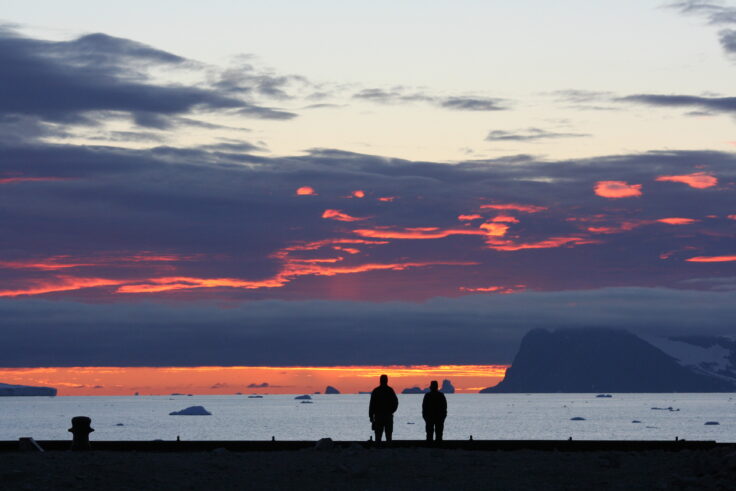
He wants to see whales, penguins and if he is lucky, an elephant seal. He is looking forward to Antarctic sunsets, the night sky and even the prospect of a rough crossing through Drake Passage. There is a sense that, alongside the work, he is trying to take in the scale of where he is going.
For Nick Wolstenholme, incoming Rothera Station Leader, the first deployment will be longer and the responsibility rather different. He will be leading a station that is busy with scientists, engineers, pilots, construction teams and support staff during the summer, then becomes a much smaller community as winter closes in.
His preparation reflects that range of responsibilities, from emergency procedures and station operations to communication, mediation and the practicalities of supporting people who may be living and working together for months.
There is one element of the role that few conventional management jobs would prepare you for. Station Leaders in British Antarctic Territory can also be appointed as magistrates, with legal powers that can include conducting marriages, registering deaths or convening a court. For Nick, it is another reminder that running an Antarctic station can involve rather more than keeping the day-to-day operation on track.
Why keep going back?
For the newcomers at PDT, the first sight of Antarctica is still ahead. For people such as Aurelia, Olivier, Nick and Michaela, going south has become a familiar part of their working lives. Each of them talks about the place differently. There is the scale of the landscape and the privilege of working somewhere so few people will ever experience, but there is also the satisfaction of solving practical problems in conditions where ingenuity and teamwork matter every day.
Most of all, they talk about the people.
PDT brings together careers that would rarely cross paths elsewhere: chefs who have worked in Michelin-starred kitchens, mechanics shaped by years on expedition trucks, scientists moving into operations, apprentices, engineers and people whose previous careers were in the Armed Forces. Within a few weeks, those different backgrounds will be mixed together on stations, ships and field teams, where the relationships formed in Cambridge start to take on a different importance.
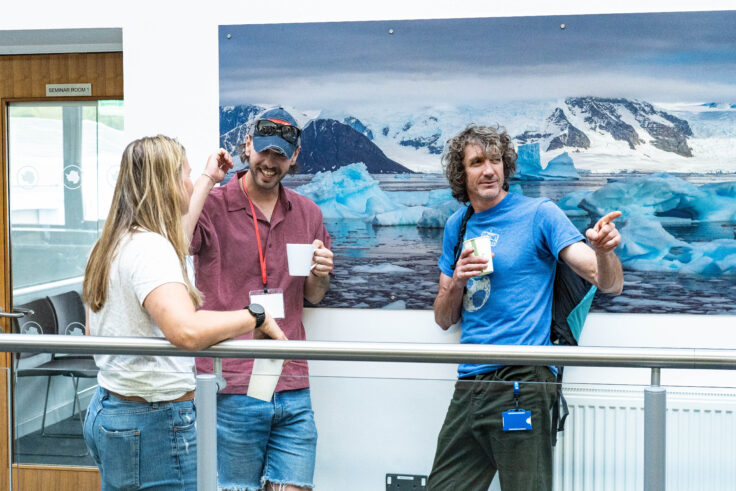
The first-timers cannot yet know which of those colleagues will become close friends, which station traditions they will adopt or which stories they will still be telling years later. They leave PDT with a better idea of the place they are heading to and of the people who will be there with them.
Soon the training rooms empty. Some people will be home again within weeks, while others will be away for many months; for winterers, the full deployment can last around 18 months.
For Adam, Ciaran and Nick, the first journey south is about to begin. Olivier has one piece of advice for them: “Open your eyes and enjoy it.”