Sea Ice Physicist

Beyond Arctic PASSION builds on the foundations laid by Arctic PASSION, INTAROS, and other flagship Arctic observing initiatives — bringing their achievements together into one sustained, inclusive, and operational Arctic Observing System of Systems.
Beyond Arctic PASSION is a four-year, €8.5 million EU Horizon Europe project Beyond Arctic PASSION meets for the first time at British Antarctic Survey in Cambridge, 27-29 October. The project will bring together scientists, Indigenous Peoples’ organisations, local communities, governments, data services and operational organisations to build a more coordinated and accessible Arctic Observing System for the environment.
The initiative comes as the Arctic experiences rapid environmental and societal change, increasing demand for reliable observations and trusted information to support communities, policymakers, researchers and industry.
Project website:
Beyond Arctic PASSION initiative comes as the Arctic experiences rapid environmental and societal change, increasing demand for reliable observations and trusted information to support communities, policymakers, researchers and industry.
Beyond Arctic PASSION accelerates a sustainable, advanced, and inclusive Arctic Observing System of Systems — combining cutting-edge science, Indigenous Knowledge, local knowledge, advanced technologies, and transparent governance. The project is structured around seven interlinked Work Packages:
WP1 Governance & long-term sustainability
WP2 A coordinated Arctic Data System
WP3 Sustainable management & decision-making
WP4 Marine & cryosphere observing systems
WP5 Data products for end users
WP6 Synthesis, dissemination & communication
WP7 Project management, exploitation & legacy WP8 Ethics requirements
Beyond Arctic PASSION builds on the foundations laid by Arctic PASSION, INTAROS, and other flagship Arctic observing initiatives — bringing their achievements together into one sustained, inclusive, and operational Arctic Observing System.
“The need for improved Arctic observations has never been greater,” said Dr Michael Karcher, co-lead of Beyond Arctic PASSION at the Alfred Wegener Institute in Germany.
“As the Arctic warms nearly four times faster than the global average, reliable observations and trusted information are essential for understanding change and ensuring that communities, policymakers, academia and industry have the knowledge they need to respond.”
Dr Jeremy Wilkinson, co-lead of the project at the British Antarctic Survey, said no single organisation or country could address the challenge alone.
“By bringing together scientific expertise, Indigenous Knowledge and local knowledge from across the Arctic and elsewhere, Beyond Arctic PASSION will help create a more coordinated, trusted, accessible and equitable observing system that supports decision-making, adaptation and sustainable development.”
For decades, scientists, Indigenous Peoples, local communities and governments have worked to develop a more coordinated Arctic Observing System connecting people, knowledge and technology.
Sea Ice Physicist

Post/Award Programme Manager
Programme Support Officer

Machine Learning Research Scientist
Polar Artificial Intelligence team, BAS Science Strategy Executive Group
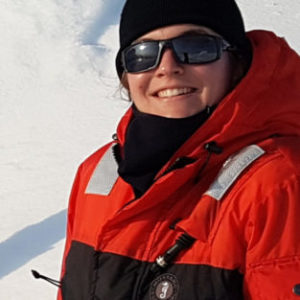
Sea Ice Physicist
People and organisations involved
European coordination bodies: European Polar Board, SIOS Svalbard Integrated Arctic Earth Observing System, INTERACT – International Network For Terrestrial Research And Monitoring (INPA)
Arctic Council Working Group: Arctic Monitoring and Assessment Programme Secretariat (AMAP)
Indigenous Peoples’ organisations: Saami Council, Inuit Circumpolar Council- Canada and Greenland
Early Career organisation: Association of Polar Early Career Scientists (APECS)
Local and regional governance: Arctic Mayors’ Forum
Gender and inclusion: Women of the Arctic
Science for policy: European Commission – Joint Research Centre
Science communication: GRID-Arendal
Private science sector: O.A.SYS – Ocean Atmosphere Systems GmbH
Data & Copernicus integration Mercator Ocean, PANGAEA (AWI), Seascape Belgium, Norwegian Meteorological Institute
Canadian Institutes: Arctic Institute of North America, University of Ottawa, Carleton University
European Institutes: