Interacting effects of sea ice and wind on Antarctic seabirds (IcESWAS)
Start date:
1 November, 2026
End date:
31 January, 2027
Tracking snow petrels and Antarctic petrels (IcESWAS; Interacting Effects of Sea ice and Wind on Antarctic Seabirds)
This fieldwork is part of the NERC-funded IcESWAS project “Interacting effects of sea ice and wind on Antarctic seabirds”, which aims to determine the impacts on petrels of changing sea-ice and wind conditions by:
(1) measuring how wind affects flight
determining which sea-ice feeding habitats petrels prefer and why
modelling how sea ice and flight costs affect breeding success, and implications for population trends.
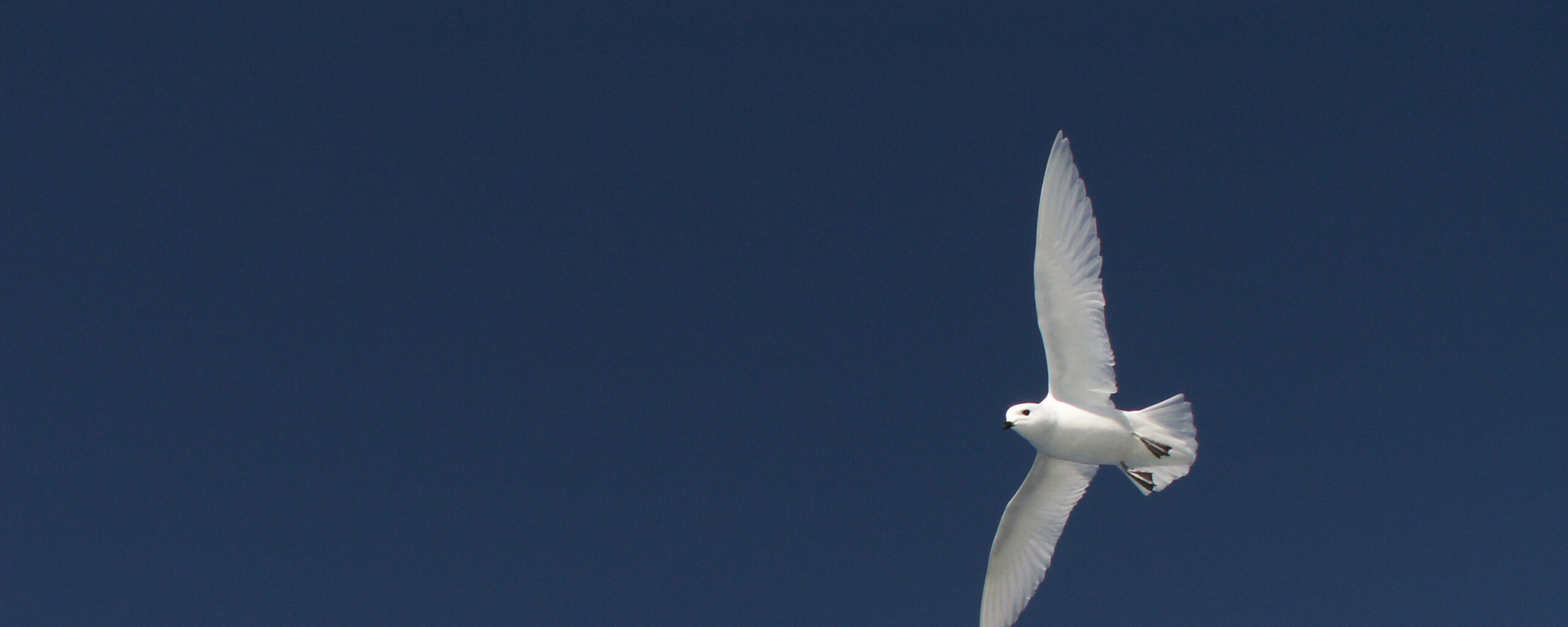
Fieldwork in 2025/26 will be carried out from Tor Research Station, a small base operated by the Norwegian Polar Institute. Tor is located on Svarthamaren nunatak, which holds one of the world’s largest colonies of Antarctic petrels as well as a large colony of snow petrels. The team will track foraging trips made by these two species during incubation and chick-rearing, when the birds are expected to travel up to 2000 km north to feed in and near areas of sea ice. To make these journeys efficiently, the birds exploit wind patterns in complex ways that we are yet to fully understand.
Tracking will involve temporarily attaching small tags to the birds which record not only where they go (via GPS) but also what they do, logging their acceleration, magnetic orientation and altitude. These data will be used along with satellite imagery to find out how petrels interact with sea ice and react to different wind conditions. The following season, similar fieldwork will be carried out at two other sites with very different sea-ice and wind conditions.