Space Weather Researcher

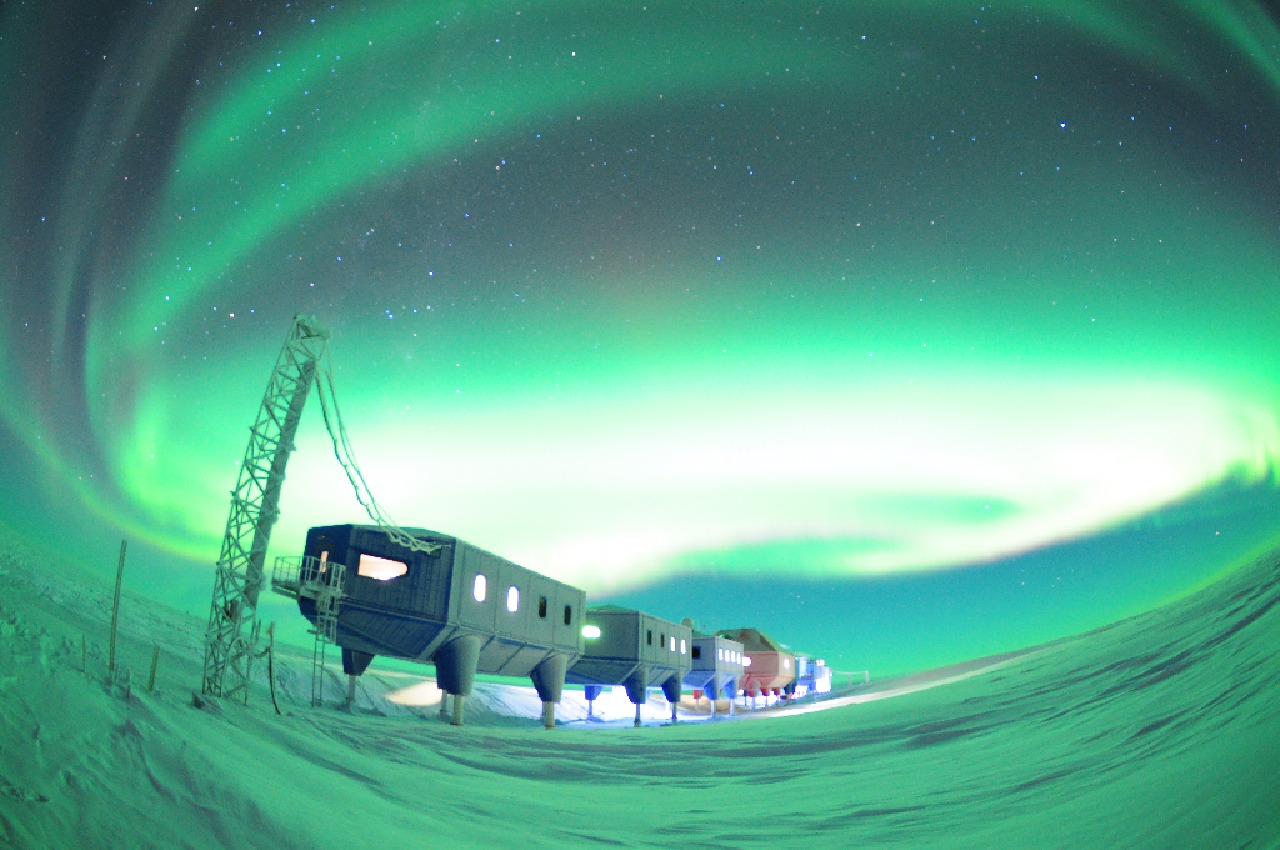
The Space Weather Observatory in Antarctica plays a crucial role in understanding the rarest, most damaging space weather events that impact on critical infrastructure such as satellites and power lines.
The Space Weather Observatory is funded as part of PRESCIENT (UK Polar Research Expertise for Science and Society).
The Sun undergoes a periodic cycle of activity ranging from solar minimum to solar maximum over an average of 11 years. Geomagnetic storms that impact society and our technology can occur at any point during the 11-year cycle though they tend to occur more frequently close to solar maximum.
SWO will deliver sustained observations of space weather parameters, through the 2025 solar maximum and the descending phase of the solar cycle, that will support numerical modelling that informs the UK Risk Register on space weather threats. Our Antarctic network will be expanded with new instruments and greater geographic range to fill previous observational gaps
Year-round observation of space weather events acquired at key sites including Halley VI, Rothera and in the deep field, to improve our understanding of the complex chain of Sun-to-Earth processes. They underpin assessment of the likely impact of severe space weather events and design of mitigation guidelines. SWO will supply high quality measurements to seven global instrument networks, levarging considerable scientific return and allow us to track the more hazardous solar maximum conditions.
SWO provides expertise and resurces. Research and mathematical modelling generated from our space weather sustained observations programme are critical for shaping industry policy thinking on resilience to natural hazards. and supporting the government Space Weather Preparedness Strategy
Data are freely available to researchers, enabling collaborative research activities to increase our understanding of the science of space weather in a world that is becoming increasingly susceptible to this natural hazard.
Our research ambition for this project is to understand how solar variations affect the Earth’s space radiation environment, upper atmosphere and climate in the Polar Regions; and to use this knowledge to inform industry and policy decision-making and provide real-time situation awareness for satellite operators. We will:
Space Weather Researcher

Atmospheric Physicist IMP 3

Science Leader
BAS Science Strategy Executive Group, Space Weather and Atmosphere team
Science Leader IMP 1
BAS Science Strategy Executive Group, Space Weather and Atmosphere team, Leadership teams, BAS Executive team

Middle Atmosphere Vertical Coupling Analys

Science Leader
BAS Science Strategy Executive Group, Atmosphere, Ice and Climate team

Radiation Belt Modeller
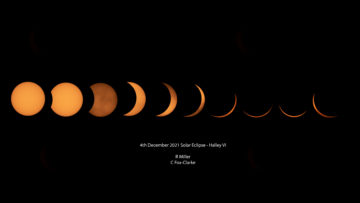
A rare total solar eclipse in Antarctica this weekend (Saturday 4 December) is giving researchers a unique opportunity to learn more about how solar eclipses affect space weather. The next […]
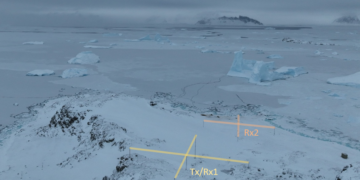
We exploit the data collected by a suite of instruments in Antarctica to study space weather events. These are spread between the research stations at Halley and Rothera along with a number of field stations.
The Super Dual Auroral Radar Network (SuperDARN) is a worldwide network of radars that studies space weather and Earth’s upper atmosphere. For over 20 years, scientists from different countries have worked together to run this network.
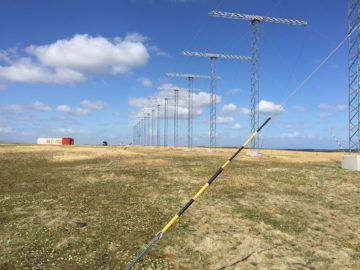
The Medium Frequency (MF) radar at Rothera Research Station measures an altitude profile of the horizontal wind in the mesosphere, between 55 and 95 km.
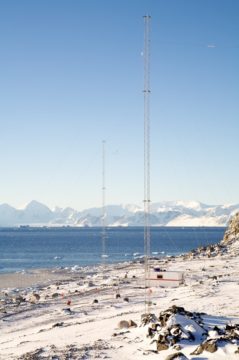
The Halley Research Station multiband riometer is a passive instrument that measures radio energy from natural astronomical sources.
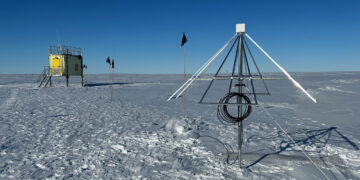
BAS operates a network of magnetometers across Antarctica that measure Earth’s magnetic field and space weather, from detecting aurora-generating waves to tracking radiation belt activity and mapping ionospheric currents that affect satellites.
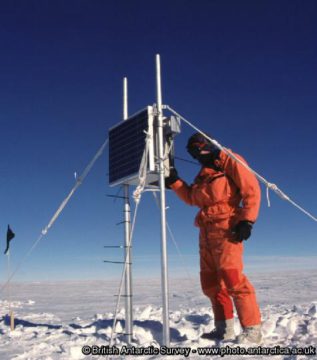
The Bomem has been operating at Halley periodically since 2002. It’s a spectrometer: an instrument that splits light into its component colours.
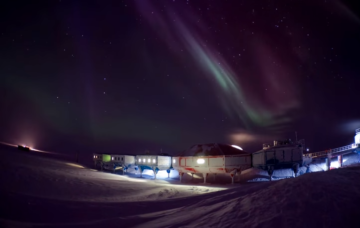
The AutoVLF system is a low-power independent instrument within the Electro-Magnetic Quiet Area (EMQA) at Halley Resarch Station.
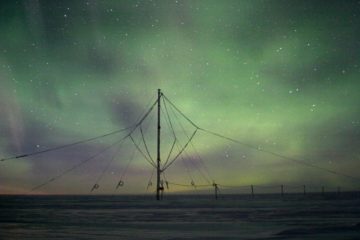
The VLF receivers listen to very-low frequency radio waves as part of a network of receivers located all over the polar regions. The data gathered by this network is used by more than 35 institutions around the world.
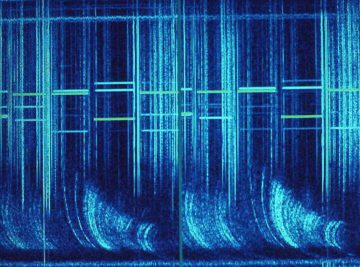
This instrument observes the spectra of OH airglow emission from ~87 km altitude.
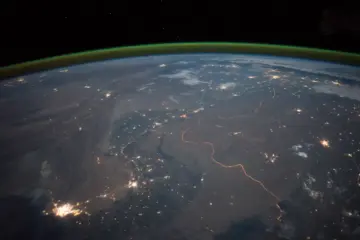
This instrument observes infrared emissions during the night and operates on a high temporal cadence.
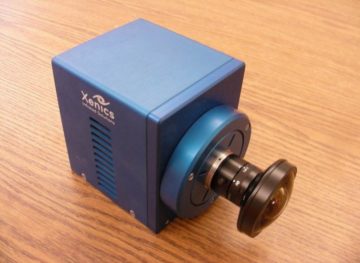
This instrument has a fish-eye lens and a filter wheel that allows it to observe different airglow emissions.