PRESCIENT
PRESCIENT supports long-term, strategically important measurements and capabilities for the wider science community.

I am Leader of the Space Weather and Atmosphere Team at the British Antarctic Survey.
In 2017, I was awarded the Chapman medal of the Royal Astronomical Society for investigations of outstanding merit in solar-terrestrial physics. My main research theme has been an holistic view of the coupled solar wind-magnetosphere-ionosphere system by the synthesis of experiment, data analysis and theory, including the development of new simple mathematical models to explain observations and resolve controversies, e.g., in ionospheric convection and substorms. I have published over 100 papers in peer-reviewed journals.
Since 2013, I have been the UK Research and Innovation (UKRI) Delegate to the European Incoherent Scatter (EISCAT) Council, responsible for the activities of the EISCAT Scientific Association. The Association is an international organisation that operates radars in Norway, Sweden, and Finland to investigate the upper atmosphere and ionosphere. Together with UK colleagues, Ian McCrea, Yulia Bogdanova, Steve Crothers (RAL Space), and Andrew Kavanagh (BAS), I oversee and support the UK’s scientific exploitation of EISCAT, including a £6M UK capital investment in the new EISCAT-3D radar, which is due to begin operations in 2022.
European Incoherent Scatter (EISCAT) Scientific Association
NERC Space Weather Impact on Ground-based Systems (SWIGS) Highlight Topic grant 2017-2021 (including 10 UK institutes and universities)
STFC Rutherford Appleton Laboratory RAL Space group
Super Dual Auroral Radar Network (SuperDARN)
University College London Mullard Space Science Laboratory
Beggan, C.D. ORCID record for Beggan, C.D.. Eastwood, J.P. ORCID record for Eastwood, J.P.. Eggington, J.W.B. ORCID record for Eggington, J.W.B.. Forsyth, C. ORCID record for Forsyth, C.. Freeman, M.P. ORCID record for Freeman, M.P.. Henley, E. ORCID record for Henley, E.. Heyns, M. ORCID record for Heyns, M.. Hübert, J. ORCID record for Hübert, J.. Jackson, D.R. ORCID record for Jackson, D.R.. LaMoury, A.T. ORCID record for LaMoury, A.T.. Richardson, G.S. ORCID record for Richardson, G.S.. Smith, A.W. ORCID record for Smith, A.W.. Thomson, A.W.P. ORCID record for Thomson, A.W.P.. (2025) Implementing an Operational Cloud‐Based Now‐ and Forecasting System for Space Weather Ground Effects in the UK.
Lao, C.J. ORCID record for Lao, C.J.. Forsyth, C. ORCID record for Forsyth, C.. Freeman, M.P. ORCID record for Freeman, M.P.. Gjerloev, J.W. ORCID record for Gjerloev, J.W.. (2025) Separating DP1 and DP2 Current Pattern Contributions to Substorm‐Like Intensifications in SML.
Lao, C.J. Forsyth, C. Freeman, Mervyn ORCID record for Freeman, Mervyn. Smith, A.W. Mooney, M.K. (2024) On the Association of Substorm Identification Methods.
Chisham, G. ORCID record for Chisham, G.. Freeman, M. P. ORCID record for Freeman, M. P.. (2024) The spatial variation of large- and meso-scale plasma vorticity statistics in the high-latitude ionosphere and implications for ionospheric plasma flow models.
Parker, William E. Freeman, Mervyn ORCID record for Freeman, Mervyn. Chisham, Gareth ORCID record for Chisham, Gareth. Kavanagh, Andrew John ORCID record for Kavanagh, Andrew John. Siew, Peng Mun. Rodriguez-Fernandez, Victor. Linares, Richard. (2024) Influences of Space Weather Forecasting Uncertainty on Satellite Conjunction Assessment.
Coyle, S.E. Baker, J.B.H. Chakraborty, S. Hartinger, M. D. Freeman, M.P. ORCID record for Freeman, M.P.. Clauer, C.R. Xu, Z. Weimer, D.R. (2023) Substorms and Solar Eclipses: A Mutual Information Based Study.
Coxon, J.C. Chisham, G. ORCID record for Chisham, G.. Freeman, M.P. ORCID record for Freeman, M.P.. Forsyth, C. Walach, M-T. Murphy, K.R. Vines, S.K. Anderson, B.J. Smith, A.W. Fogg, A.R. (2023) Extreme Birkeland Currents Are More Likely During Geomagnetic Storms on the Dayside of the Earth.
Chisham, G. ORCID record for Chisham, G.. Freeman, M.P. ORCID record for Freeman, M.P.. (2023) Separating contributions to plasma vorticity in the high-latitude ionosphere from large-scale convection and meso-scale turbulence.
Carter, J.A. Dunlop, M. Forsyth, C. Oksavik, K. Donovon, E. Kavanagh, A. ORCID record for Kavanagh, A.. Milan, S.E. Sergienko, T. Fear, R.C. Sibeck, D.G. Connors, M. Yeoman, T. Tan, X. Taylor, M.G.G.T. McWilliams, K. Gjerloev, J. Barnes, R. Billet, D.D. Chisham, G. ORCID record for Chisham, G.. Dimmock, A. Freeman, M.P. ORCID record for Freeman, M.P.. Han, D.-S. Hartinger, M.D. Hsieh, S.-Y.W. Hu, Z.-J. James, M.K. Juusola, L. Kauristie, K. Kronberg, E.A. Lester, M. Manuel, J. Matzka, J. McCrea, I. Miyoshi, Y. Rae, J. Ren, L. Sigernes, F. Spanswick, E. Sterne, K. Steuwer, A. Sun, T. Walach, M.-T. Walsh, B. Wang, C. Weygand, J. Wild, J. Yan, J. Zhang, J. Zhang, Q.-H. (2023) Ground-based and additional science support for SMILE.
Lam, M.M. ORCID record for Lam, M.M.. Shore, R.M. ORCID record for Shore, R.M.. Chisham, G. ORCID record for Chisham, G.. Freeman, M.P. ORCID record for Freeman, M.P.. Grocott, A. Walach, M.-T. Orr, L. (2023) A Model of High Latitude Ionospheric Convection Derived From SuperDARN EOF Model Data.
Coyle, S.E. Hartinger, M.D. Clauer, C.R. Baker, J.B.H. Cnossen, I. ORCID record for Cnossen, I.. Freeman, M.P. ORCID record for Freeman, M.P.. Weygand, J.M. (2023) The 2021 Antarctic Total Eclipse: Ground Magnetometer and GNSS Wave Observations from the 40 Degree Magnetic Meridian.
Maffei, Stefano. Eggington, Joseph W. B. Livermore, Philip W. Mound, Jonathan E. Sanchez, Sabrina. Eastwood, Jonathan P. Freeman, Mervyn P. ORCID record for Freeman, Mervyn P.. (2023) Climatological predictions of the auroral zone locations driven by moderate and severe space weather events.
Orr, L. Grocott, A. Walach, M.‐T. Chisham, G. ORCID record for Chisham, G.. Freeman, M.P. ORCID record for Freeman, M.P.. Lam, M.M. ORCID record for Lam, M.M.. Shore, R.M. ORCID record for Shore, R.M.. (2022) A quantitative comparison of high latitude electric field models during a large geomagnetic storm.
Engebretson, Mark J. Simms, Laura E. Pilipenko, Viacheslav A. Bouayed, Lilia. Moldwin, Mark B. Weygand, James M. Hartinger, Michael D. Xu, Zhonghua. Clauer, C. Robert. Coyle, Shane. Willer, Anna N. Freeman, Mervyn P. ORCID record for Freeman, Mervyn P.. Gerrard, Andy J. (2022) Geomagnetic disturbances that cause GICs: investigating their interhemispheric conjugacy and control by IMF orientation..
Daggitt, Thomas A. ORCID record for Daggitt, Thomas A.. Horne, Richard B. ORCID record for Horne, Richard B.. Glauert, Sarah A. ORCID record for Glauert, Sarah A.. Del Zanna, Giulio. Freeman, Mervyn P. ORCID record for Freeman, Mervyn P.. (2022) Variations in Observations of Geosynchronous Magnetopause and Last Closed Drift Shell Crossings with Magnetic Local Time.
Smith, A.W. Rodger, C.J. Manus, D.H. Mac. Forsyth, C. Rae, I.J. Freeman, M.P. ORCID record for Freeman, M.P.. Clilverd, M.A. ORCID record for Clilverd, M.A.. Petersen, T. Dalzell, M. (2022) The correspondence between sudden commencements and geomagnetically induced currents: Insights from New Zealand.
Coxon, John C. Chisham, Gareth ORCID record for Chisham, Gareth. Freeman, Mervyn P. ORCID record for Freeman, Mervyn P.. Anderson, Brian J. Fear, Robert C. (2022) Distributions of Birkeland current density observed by AMPERE are heavy‐tailed or long‐tailed.
Bentley, Mike. Siegert, Martin. Jones, Anna ORCID record for Jones, Anna. Meredith, Michael ORCID record for Meredith, Michael. Hendry, Katharine. Arthur, Jennifer. Brooks, Ian. Convey, Peter ORCID record for Convey, Peter. Dodds, Klaus. Freeman, Mervyn ORCID record for Freeman, Mervyn. Hughes, Kevin A. ORCID record for Hughes, Kevin A.. Johnston, Nadine M. ORCID record for Johnston, Nadine M.. Marschalek, Jim. Nichols, Keir. Plaschkes, Charlotte. Rhodes, Rachael. Taylor, Michelle L. (2021) The future of UK Antarctic science: Strategic priorities, essential needs and opportunities for international leadership.
Chisham, G. ORCID record for Chisham, G.. Freeman, M.P. ORCID record for Freeman, M.P.. (2021) A statistical model of vorticity in the polar ionosphere and implications for extreme values.
Desai, R.T. Freeman, M.P. ORCID record for Freeman, M.P.. Eastwood, J.P. Eggington, J.W.B. Archer, M.O. Shprits, Y.Y. Meredith, N.P. ORCID record for Meredith, N.P.. Staples, F.A. Rae, I.J. Hietala, H. Mejnertsen, L. Chittenden, J.P. Horne, R.B. ORCID record for Horne, R.B.. (2021) Interplanetary shock‐induced magnetopause motion: Comparison between theory and global magnetohydrodynamic simulations.
Shore, R.M. ORCID record for Shore, R.M.. Freeman, M.P. ORCID record for Freeman, M.P.. Chisham, G. ORCID record for Chisham, G.. (2021) Data‐driven basis functions for SuperDARN ionospheric plasma flow characterisation and prediction.
Smith, A.W. Forsyth, C. Rae, I.J. Rodger, C.J. Freeman, M.P. ORCID record for Freeman, M.P.. (2021) The impact of sudden commencements on ground magnetic field variability: Immediate and delayed consequences.
Dimmock, A.P. Welling, D.T. Rosenqvist, L. Forsyth, C. Freeman, M.P. ORCID record for Freeman, M.P.. Rae, I.J. Viljanen, A. Vandegriff, E. Boynton, R.J. Balikhin, M.A. Yordanova, E. (2021) Modeling the geomagnetic response to the September 2017 space weather event over Fennoscandia using the Space Weather Modeling Framework: Studying the impacts of spatial resolution.
Clilverd, Mark ORCID record for Clilverd, Mark. Rodger, Craig J. Freeman, Mervyn P. ORCID record for Freeman, Mervyn P.. Brundell, James B. Mac Manus, Daniel H. Dalzell, Michael. Clarke, Ellen. Thomson, Alan W.P. Richardson, Gemma S. MacLeod, Finlay. Frame, Ian. (2021) Geomagnetically induced currents during the 07-08 September 2017 disturbed period: a global perspective.
Smith, A.W. Rae, I.J. Forsyth, C. Oliveira, D.M. Freeman, M.P. ORCID record for Freeman, M.P.. Jackson, D.R. (2020) Probabilistic forecasts of storm sudden commencements from interplanetary shocks using machine learning.
Engebretson, Mark J. Kirkevold, Kathryn R. Steinmetz, Erik S. Pilipenko, Viacheslav A. Moldwin, Mark B. McCuen, Brett A. Clauer, C. R. Hartinger, Michael D. Coyle, Shane. Opgenoorth, Hermann. Schillings, Audrey. Willer, Anna N. Edwards, Thom R. Boteler, David H. Gerrard, Andy J. Freeman, Mervyn P. ORCID record for Freeman, Mervyn P.. Rose, Michael C. (2020) Interhemispheric comparisons of large nighttime magnetic perturbation events relevant to GICs.
Smith, A.W. Freeman, M.P. ORCID record for Freeman, M.P.. Rae, I.J. Forsyth, C. (2019) The influence of sudden commencements on the rate of change of the surface horizontal magnetic field in the United Kingdom.
Freeman, Mervyn ORCID record for Freeman, Mervyn. Lam, Mai Mai. (2019) Regional, seasonal, and inter-annual variations of Antarctic and sub-Antarctic temperature anomalies related to the Mansurov effect.
Sandhu, J.K. Rae, I.J. Freeman, M.P. ORCID record for Freeman, M.P.. Gkioulidou, M. Forsyth, C. Reeves, G.D. Murphy, K.R. Walach, M.-T. (2019) Substorm ‐ Ring Current Coupling: A comparison of isolated and compound substorms.
Shore, R.M. ORCID record for Shore, R.M.. Freeman, M.P. ORCID record for Freeman, M.P.. Coxon, J.C. Thomas, E.G. Gjerloev, J.W. Olsen, N. (2019) Spatial variation in the responses of the surface external and induced magnetic field to the solar wind.
Coxon, John C. Shore, Robert M. ORCID record for Shore, Robert M.. Freeman, Mervyn P. ORCID record for Freeman, Mervyn P.. Fear, Robert C. Browett, Stephen D. Smith, Andrew W. Whiter, Daniel K. Anderson, Brian J. (2019) Timescales of Birkeland Currents driven by the IMF.
Freeman, Mervyn P. ORCID record for Freeman, Mervyn P.. Forsyth, Colin. Rae, I. Jonathan. (2019) The influence of substorms on extreme rates of change of the surface horizontal magnetic field in the United Kingdom.
Shore, Robert ORCID record for Shore, Robert. Freeman, Mervyn ORCID record for Freeman, Mervyn. Gjerloev, Jesper. (2019) Interplanetary magnetic field control of polar ionospheric equivalent current system modes.
Lam, Mai Mai ORCID record for Lam, Mai Mai. Freeman, Mervyn P. ORCID record for Freeman, Mervyn P.. Jackman, C.M. Rae, I.J. Kalmoni, N.M.E. Sandhu, J.K. Forsyth, C. (2019) How well can we estimate Pedersen conductance from the THEMIS white-light all-sky cameras?.
Lockwood, Mike. Bentley, Sarah N. Owens, Mathew J. Barnard, Luke A. Scott, Chris J. Watt, Clare E. Allanson, Oliver. Freeman, Mervyn P. ORCID record for Freeman, Mervyn P.. (2019) The development of a space climatology: 2. The distribution of power input into the magnetosphere on a 3‐hourly timescale.
Lockwood, Mike. Bentley, Sarah N. Owens, Mathew J. Barnard, Luke A. Scott, Chris J. Watt, Clare E. Allanson, Oliver. Freeman, Mervyn P. ORCID record for Freeman, Mervyn P.. (2018) The development of a space climatology: 3. Models of the evolution of distributions of space weather variables with timescale.
Sandhu, J.K. Rae, I.J. Freeman, Mervyn P. ORCID record for Freeman, Mervyn P.. Forsyth, C. Gkioulidou, M. Reeves, G.D. Spence, H.E. Jackman, C.M. Lam, M.M. (2018) Energization of the ring current by substorms.
Coxon, John C. Freeman, Mervyn P. ORCID record for Freeman, Mervyn P.. Jackman, Caitriona M. Forsyth, Colin. Rae, I. Jonathan. Fear, Robert C. (2018) Tailward propagation of magnetic energy density variations With respect to substorm onset times.
Forsyth, C. Shortt, M. Coxon, J.C. Rae, I.J. Freeman, M.. ORCID record for Freeman, M... Kalmoni, N.M.E. Jackman, C.M. Anderson, B.J. Milan, S.E. Burrell, A.G. (2018) Seasonal and temporal variations of field-aligned currents and ground magnetic deflections during substorms.
Shore, R.M. ORCID record for Shore, R.M.. Freeman, M.P. ORCID record for Freeman, M.P.. Gjerloev, J.W. (2017) An empirical orthogonal function reanalysis of the northern polar external and induced magnetic field during solar cycle 23.
Farrugia, C.J. Freeman, Mervyn P. ORCID record for Freeman, Mervyn P.. Burlaga, L.F. (2017) Magnetic cloud passage at Earth and associated substorm activity.
Cowley, S.W.H. Morelli, J.P. Freeman, M.P. ORCID record for Freeman, M.P.. Lockwood, M. Smith, M.F. (2017) Excitation and decay of flows in the magnetosphere-ionosphere system due to magnetic reconnection at the dayside magnetopause and in the geomagnetic tail.
Morelli, J.P. Bunting, R.J. Cowley, S.W.H. Farrugia, C.J. Freeman, M.P. ORCID record for Freeman, M.P.. Friis-Christensen, E. Jones, G.O.L. Lester, M. Lewis, R.V. Luhr, H. Orr, D. Pinnock, M. Reeves, G.D. Williams, P.J.S. Yeoman, T.K. (2017) Plasma flow bursts in the nightside auroral zone ionosphere and their relation to geomagnetic activity.
Lam, Mai Mai ORCID record for Lam, Mai Mai. Freeman, Mervyn P. ORCID record for Freeman, Mervyn P.. Chisham, Gareth ORCID record for Chisham, Gareth. (2017) IMF-driven change to the Antarctic tropospheric temperature due to the global atmospheric electric circuit.
Yeoman, T.K. Freeman, Mervyn P. ORCID record for Freeman, Mervyn P.. Reeves, G.D. Lester, M. Orr, D. (2017) A comparison of midlatitude Pi 2 pulsations and geostationary orbit particle injections as substorm indicators.
Shore, R.M. ORCID record for Shore, R.M.. Freeman, M.P. ORCID record for Freeman, M.P.. Wild, J.A. Gjerloev, J.W. (2017) A high-resolution model of the external and induced magnetic field at the Earth’s surface in the northern hemisphere.
Fox, N. J. Lockwood, M. Cowley, S. W. H. Freeman, M. P. ORCID record for Freeman, M. P.. Friis-Christensen, E. Milling, D. K. Pinnock, M. Reeves, G. D. (2017) EISCAT observations of unusual flows in the morning sector associated with weak substorm activity.
Morelli, J. P. Bunting, R. J. Cowley, S. W. H. Farrugia, C. J. Freeman, M. P. ORCID record for Freeman, M. P.. Friis-Christensen, E. Jones, G. O. L. Lester, M. Lewis, R. V. Lühr, H. Orr, D. Pinnock, M. Reeves, G. D. Williams, P. J. S. Yeoman, T. K. (2017) Radar observations of auroral zone flows during a multiple-onset substorm.
Morrison, K. Freeman, M.P. ORCID record for Freeman, M.P.. (2017) The role of upstream ULF waves in the generation of quasi-periodic ELF-VLF emissions.
Freeman, M. P. ORCID record for Freeman, M. P.. Farrugia, C. J. (2016) A statistical study of the possible effects of solar wind variability on the recurrence rate of substorms.
Freeman, M. P. ORCID record for Freeman, M. P.. Freeman, N. C. Farrugia, C. J. (2016) A linear perturbation analysis of magnetopause motion in the Newton-Busemann limit.
Smith, A. J. Freeman, M. P. ORCID record for Freeman, M. P.. Reeves, G. D. (2016) Post midnight VLF chorus events, a substorm signature observed at the ground nearL= 4.
Forsyth, C. Rae, I. J. Murphy, K. R. Freeman, M. P. ORCID record for Freeman, M. P.. Huang, C.-L. Spence, H. E. Boyd, A. J. Coxon, J. C. Jackman, C. M. Kalmoni, N. M. E. Watt, C. E. J. (2016) What effect do substorms have on the content of the radiation belts?.
Lewis, R.V. Freeman, M.P. ORCID record for Freeman, M.P.. Rodger, A.S. Reeves, G.D. Milling, D.K. (2016) The electric field response to the growth phase and expansion phase onset of a small isolated substorm.
Forsyth, C. Rae, I. J. Coxon, J. C. Freeman, M. P. ORCID record for Freeman, M. P.. Jackman, C. M. Gjerloev, J. Fazakerley, A. N. (2016) A new technique for determining Substorm Onsets and Phases from Indices of the Electrojet (SOPHIE).
Coxon, J. C. Jackman, C. M. Freeman, M. P. ORCID record for Freeman, M. P.. Forsyth, C. Rae, I. J. (2016) Identifying the magnetotail lobes with Cluster magnetometer data.
Forsyth, C. Watt, C.E.J. Rae, I.J. Fazakerley, A.N. Kalmoni, N.M.E. Freeman, M.P. ORCID record for Freeman, M.P.. Boakes, P.D. Nakamura, R. Dandouras, I. Kistler, L.M. Jackman, C.M. Coxon, J.C. Carr, C. (2014) Increases in plasma sheet temperature with solar wind driving during substorm growth phases.
Longden, N. Chisham, G. ORCID record for Chisham, G.. Freeman, M.P. ORCID record for Freeman, M.P.. (2014) Magnetic local time variation and scaling of poleward auroral boundary dynamics.
Lam, Mai Mai ORCID record for Lam, Mai Mai. Chisham, Gareth ORCID record for Chisham, Gareth. Freeman, Mervyn ORCID record for Freeman, Mervyn. (2014) Solar-wind-driven geopotential height anomalies originate in the Antarctic lower troposphere.
Jackman, C. M. Arridge, C. S. André, N. Bagenal, F. Birn, J. Freeman, M. P. ORCID record for Freeman, M. P.. Jia, X. Kidder, A. Milan, S. E. Radioti, A. Slavin, J. A. Vogt, M. F. Volwerk, M. Walsh, A. P. (2014) Large-scale structure and dynamics of the magnetotails of Mercury, Earth, Jupiter and Saturn.
Jackman, C.M. Slavin, J. A. Kivelson, M.G. Southwood, D. J. Achilleos, N. Thomsen, M.F. DiBraccio, G. A. Eastwood, J.P. Freeman, M.P. ORCID record for Freeman, M.P.. Dougherty, M.K. Vogt, M.F. (2014) Saturn’s dynamic magnetotail: A comprehensive magnetic field and plasma survey of plasmoids and travelling compression regions, and their role in global magnetospheric dynamics.
Milan, S. E. Grocott, A. de Larquier, S. Lester, M. Yeoman, T. K. Freeman, M. P. ORCID record for Freeman, M. P.. Chisham, G. ORCID record for Chisham, G.. (2014) Traveling ionospheric disturbances in the Weddell Sea Anomaly associated with geomagnetic activity.
Lewis, R. V. Freeman, M. P. ORCID record for Freeman, M. P.. Rodger, A. S. Watanabe, M. Greenwald, R. A. (2013) The behavior of the electric field within the substorm current wedge.
Freeman, M. P. ORCID record for Freeman, M. P.. Farrugia, C. J. (2013) Magnetopause motions in a Newton-Busemann approach.
Farrugia, C. J. Scudder, J. D. Freeman, M. P. ORCID record for Freeman, M. P.. Janoo, L. Lu, G. Quinn, J. M. Arnoldy, R. L. Torbert, R. B. Burlaga, L. F. Ogilvie, K. W. Lepping, R. P. Lazarus, A. J. Steinberg, J. T. Gratton, F. T. Rostoker, G. (2013) Geoeffectiveness of three Wind magnetic clouds: A comparative study.
Dudeney, J. R. Rodger, A. S. Freeman, M. P. ORCID record for Freeman, M. P.. Pickett, J. Scudder, J. Sofko, G. Lester, M. (2013) The nightside ionospheric response to IMF by changes.
Smith, A. J. Freeman, M. P. ORCID record for Freeman, M. P.. Wickett, M. G. Cox, B. D. (2013) On the relationship between the magnetic and VLF signatures of the substorm expansion phase.
Grocott, A. Hosokawa, K. Ishida, T. Lester, M. Milan, S. E. Freeman, M. P. ORCID record for Freeman, M. P.. Sato, N. Yukimatu, A. S. (2013) Characteristics of medium-scale traveling ionospheric disturbances observed near the Antarctic Peninsula by HF radar.
Nishitani, Nozomu. Ogawa, Tadahiko. Pinnock, Mike. Freeman, Mervyn P. ORCID record for Freeman, Mervyn P.. Dudeney, John R. Villain, Jean-Paul. Baker, Kile B. Sato, Natsuo. Yamagishi, Hisao. Matsumoto, Haruhisa. (2013) A very large scale flow burst observed by the SuperDARN radars.
Freeman, M. P. ORCID record for Freeman, M. P.. Farrugia, C. J. (2013) Solar wind input between substorm onsets during and after the October 18–20, 1995, magnetic cloud.
Lam, Mai Mai ORCID record for Lam, Mai Mai. Chisham, Gareth ORCID record for Chisham, Gareth. Freeman, Mervyn P. ORCID record for Freeman, Mervyn P.. (2013) The interplanetary magnetic field influences mid-latitude surface atmospheric pressure.
Moffat-Griffin, Tracy ORCID record for Moffat-Griffin, Tracy. Lester, Mark. Freeman, Mervyn ORCID record for Freeman, Mervyn. (2013) From atmosphere to space: a new scientific frontier.
Smith, A.J. Freeman, M.P. ORCID record for Freeman, M.P.. Hunter, S. Editors: Wilson, A (2013) VLF, magnetic and Pi2 substorm signatures.
Chisham, Gareth ORCID record for Chisham, Gareth. Freeman, Mervyn P. ORCID record for Freeman, Mervyn P.. (2012) A reassessment of SuperDARN meteor echoes from the upper mesosphere and lower thermosphere.
Edwards, Andrew M. Freeman, Mervyn P. ORCID record for Freeman, Mervyn P.. Breed, Greg A. Jonsen, Ian D. (2012) Incorrect likelihood methods were used to infer scaling laws of marine predator search behaviour.
Freeman, M.P. ORCID record for Freeman, M.P.. Watkins, N.W. Riley, D.J. (2012) Power law distributions of burst duration and interburst interval in the solar wind: Turbulence or dissipative self-organized criticality?.
Freeman, M.P. ORCID record for Freeman, M.P.. Watkins, N.W. Riley, D.J. (2012) Evidence for a solar wind origin of the power law burst lifetime distribution of the AE indices.
Freeman, M.P. ORCID record for Freeman, M.P.. (2012) Effect of magnetopause leakage on the lifetime of magnetospheric cavity modes.
Watkins, N.W. Oughton, S. Freeman, M.P. ORCID record for Freeman, M.P.. (2012) What can we infer about the underlying physics from burst distributions observed in an RMHD simulation?.
Watkins, N.W. Freeman, M.P. ORCID record for Freeman, M.P.. Rhodes, C.S. Rowlands, G. (2012) Ambiguities in determination of self-affinity in the AE-index time series.
Watkins, N.W. Freeman, M.P. ORCID record for Freeman, M.P.. Chapman, S.C. Dendy, R.O. (2012) Testing the SOC hypothesis for the magnetosphere.
Kunduri, B.S.R. Baker, J.B.H. Ruohoniemi, J. M. Clausen, L.B.N. Grocott, A. Thomas, E.G. Freeman, M.P. ORCID record for Freeman, M.P.. Talaat, E.R. (2012) An examination of inter-hemispheric conjugacy in a subauroral polarization stream.
Capparelli, V. Franzke, C. Vecchio, A. Freeman, M.P. ORCID record for Freeman, M.P.. Watkins, N.W. Carbone, V. (2012) A spatiotemporal analysis of U.S. station temperature trends over the last century.
Phan, T.D. Freeman, M.P. ORCID record for Freeman, M.P.. Kistler, L.M. Klecker, B. Haerendel, G. Paschmann, G. Sonnerup, B.U.Ö. Baumjohann, W. Bavassano-Cattaneo, M.B. Carlson, C.W. DiLellis, A.M. Fornacon, K.-H. Frank, L.A. Fujimoto, M. Georgescu, E. Kokubun, S. Moebius, E. Mukai, T. Paterson, W.R. Reme, H. (2012) Evidence for an extended reconnection line at the dayside magnetopause.
Partamies, Ni. Freeman, M.P. ORCID record for Freeman, M.P.. Kauristie, K. (2012) On the winding of auroral spirals: Interhemispheric observations and Hallinan’s theory revisited.
Horne, Richard B. ORCID record for Horne, Richard B.. Freeman, Mervyn P. ORCID record for Freeman, Mervyn P.. (2012) A new code for electrostatic simulation by numerical integration of the Vlasov and Ampere equations using MacCormack’s method.
Coleman, Iain J. Chisham, Gareth ORCID record for Chisham, Gareth. Pinnock, Mike. Freeman, Mervyn P. ORCID record for Freeman, Mervyn P.. (2012) An ionospheric convection signature of antiparallel reconnection.
Freeman, M.P. ORCID record for Freeman, M.P.. (2012) A unified model of the response of ionospheric convection to changes in the interplanetary magnetic field.
Farrugia, C.J. Jordanova, V.K. Freeman, M.P. ORCID record for Freeman, M.P.. Cocheci, C.C. Arnoldy, R.L. Engebretson, M. Stauning, P. Rostoker, G. Thomsen, M.F. Reeves, G. Yumoto, K. (2012) Large-scale geomagnetic effects of May 4, 1998.
Farrugia, C.J. Burlaga, L.F. Jordanova, V.K. Freeman, M.P. ORCID record for Freeman, M.P.. Lawrence, G. Matsui, H. Cocheci, C.C. Arnoldy, R.L. Scudder, J.D. Ogilvie, K.W. Lepping, R.P. (2012) Power to the magnetosphere: May 4, 1998.
Watt, C.E.J. Horne, R.B. ORCID record for Horne, R.B.. Freeman, M.P. ORCID record for Freeman, M.P.. (2012) Ion-acoustic resistivity in plasmas with similar ion and electron temperatures.
Smith, A.J. Freeman, M.P. ORCID record for Freeman, M.P.. Hunter, S. Milling, D.K. (2012) VLF, magnetic bay, and Pi2 substorm signatures at auroral and midlatitude ground stations.
Hibbins, R.E. ORCID record for Hibbins, R.E.. Freeman, M.P. ORCID record for Freeman, M.P.. Milan, S.E. Ruohoiemi, J.M. (2012) Winds and tides in the mid-latitude Southern Hemisphere upper mesosphere recorded with the Falkland Islands SuperDARN radar.
Pinnock, M. Chisham, G. ORCID record for Chisham, G.. Coleman, I.J. Freeman, M.P. ORCID record for Freeman, M.P.. Hairston, M. Villain, J.-P. (2012) The location and rate of dayside reconnection during an interval of southward interplanetary magnetic field.
Petkaki, P. Watt, C.E.J. Horne, R.B. ORCID record for Horne, R.B.. Freeman, M.P. ORCID record for Freeman, M.P.. (2012) Anomalous resistivity in non-Maxwellian plasmas.
Coleman, Iain J. Chisham, Gareth ORCID record for Chisham, Gareth. Pinnock, Michael. Freeman, Mervyn P. ORCID record for Freeman, Mervyn P.. (2012) Reply to comment by S.M. Petrinec and S.A. Fuselier on ‘An ionospheric convection signature of antiparallel reconnection’.
Clarke, Richard W. Freeman, Mervyn P. ORCID record for Freeman, Mervyn P.. Watkins, Nicholas W. (2012) Application of computational mechanics to the analysis of natural data: an example in geomagnetism.
Chisham, G. ORCID record for Chisham, G.. Freeman, M.P. ORCID record for Freeman, M.P.. (2012) A technique for accurately determining the cusp-region polar cap boundary using SuperDARN HF radar measurements.
Rodger, A.S. Chisham, G. ORCID record for Chisham, G.. Coleman, I.J. Freeman, M.P. ORCID record for Freeman, M.P.. Pinnock, M. Editors: Newell, P.T. Onsager, T (2012) Anti-parallel reconnection at the dayside magnetopause: ionospheric signatures and implications for the low latitude boundary layer.
Freeman, M.P. ORCID record for Freeman, M.P.. Morley, S.K. ORCID record for Morley, S.K.. (2012) A minimal substorm model that explains the observed statistical distribution of times between substorms.
Freeman, M.P. ORCID record for Freeman, M.P.. Chisham, G. ORCID record for Chisham, G.. (2012) On the probability distributions of SuperDARN Doppler spectral width measurements inside and outside the cusp.
Chisham, G. ORCID record for Chisham, G.. Freeman, M.P. ORCID record for Freeman, M.P.. (2012) A statistical comparison of SuperDARN spectral width boundaries and DMSP particle precipitation boundaries in the nightside ionosphere.
Chisham, G. ORCID record for Chisham, G.. Freeman, M.P. ORCID record for Freeman, M.P.. Coleman, I.J. Pinnock, M. Hairston, M.R. Lester, M. Sofko, G. (2012) Measuring the dayside reconnection rate during an interval of due northward interplanetary magnetic field.
Chisham, G. ORCID record for Chisham, G.. Freeman, M.P. ORCID record for Freeman, M.P.. (2012) An investigation of latitudinal transitions in the SuperDARN Doppler spectral width parameter at different magnetic local times.
Grocott, A. Milan, S.E. Baker, J.B.H. Freeman, M.P. ORCID record for Freeman, M.P.. Lester, M. Yeoman, T.K. (2011) Dynamic subauroral ionospheric electric fields observed by the Falkland Islands radar during the course of a geomagnetic storm.
Hnat, B. Chapman, S.C. Rowlands, G. Watkins, N.W. Freeman, M.P. ORCID record for Freeman, M.P.. (2011) Scaling of solar wind epsilon and the AU, AL and AE indices by WIND.
Morley, S.K. Freeman, M.P. ORCID record for Freeman, M.P.. Tanskanen, E.I. (2011) A comparison of the probability distribution of observed substorm magnitude with that predicted by a minimal substorm model.
Chisham, G. ORCID record for Chisham, G.. Coleman, I.J. Freeman, M.P. ORCID record for Freeman, M.P.. Pinnock, M. Lester, M. (2011) Ionospheric signatures of split reconnection X-lines during conditions of IMF Bz < 0 and |By| ∼ |Bz|: Evidence for the antiparallel merging hypothesis.
Freeman, Mervyn P. ORCID record for Freeman, Mervyn P.. Watkins, Nicholas W. (2011) The heavens in a pile of sand.
Boakes, P.D. Milan, S.E. Abel, G.A. Freeman, M.P. ORCID record for Freeman, M.P.. Chisham, G. ORCID record for Chisham, G.. Hubert, B. (2011) A superposed epoch investigation of the relation between magnetospheric solar wind driving and substorm dynamics with geosynchronous particle injection signatures.
Freeman, Mervyn P. ORCID record for Freeman, Mervyn P.. Editors: Riffenburgh, B (2011) Magnetic storm.
Freeman, Mervyn P. ORCID record for Freeman, Mervyn P.. Editors: Riffenburgh, B (2011) Auroral substorm.
Freeman, Mervyn P. ORCID record for Freeman, Mervyn P.. Watkins, Nicholas W. Yoneki, Eiko. Crowcroft, Jon. (2011) Rhythm and randomness in human contact.
Longden, Nicola. Chisham, Gareth ORCID record for Chisham, Gareth. Freeman, Mervyn P. ORCID record for Freeman, Mervyn P.. Abel, Gary A. Sotirelis, Tom. (2010) Estimating the location of the open-closed magnetic field line boundary from auroral images.
Alfonsi, Lucilla. Kavanagh, Andrew J. Amata, Ermanno. Cilliers, Pierre. Correia, Emilia. Freeman, Mervyn ORCID record for Freeman, Mervyn. Kauristie, Kirsti. Liu, Ruiyuan. Luntama, Juha-Pekka. Mitchell, Cathryn N. Zherebtsov, G.A. (2010) Probing the high latitude ionosphere from ground-based observations: the state of current knowledge and capabilities during IPY (2007-2009).
Morley, S.K. Rouillard, A.P. Freeman, Mervyn P. ORCID record for Freeman, Mervyn P.. (2010) Recurrent substorm activity during the passage of a corotating interaction region.
Jackman, C.M. Lamy, L. Freeman, Mervyn P. ORCID record for Freeman, Mervyn P.. Zarka, P. Cecconi, B. Kurth, W.S. Cowley, S.W.H. Dougherty, M.K. (2010) On the character and distribution of lower-frequency radio emissions at Saturn and their relationship to substorm-like events.
Freeman, Mervyn P. ORCID record for Freeman, Mervyn P.. Morley, S. K. (2010) No evidence for externally triggered substorms based on superposed epoch analysis of IMF Bz.
Abel, G.A. Freeman, M.P. ORCID record for Freeman, M.P.. Chisham, G. ORCID record for Chisham, G.. (2010) IMF clock angle control of multifractality in ionospheric velocity fluctuations.
Abel, G.A. Freeman, M.P. ORCID record for Freeman, M.P.. (2010) A statistical analysis of ionospheric velocity and magnetic field power spectra at the time of pulsed ionospheric flows.
Chisham, G. ORCID record for Chisham, G.. Freeman, M.P. ORCID record for Freeman, M.P.. (2010) On the non-Gaussian nature of ionospheric vorticity.
Chisham, G. ORCID record for Chisham, G.. Freeman, M.P. ORCID record for Freeman, M.P.. Abel, G.A. Bristow, W.A. Marchaudon, A. Ruohoniemi, J.M. Sofko, G.J. (2010) Spatial distribution of average vorticity in the high-latitude ionosphere and its variation with interplanetary magnetic field direction and season.
Boakes, P.D. Milan, S.E. Abel, G.A. Freeman, M.P. ORCID record for Freeman, M.P.. Chisham, G. ORCID record for Chisham, G.. Hubert, B. (2009) A statistical study of the open magnetic flux content of the magnetosphere at the time of substorm onset.
Abel, G.A. Freeman, M.P. ORCID record for Freeman, M.P.. Chisham, G. ORCID record for Chisham, G.. Watkins, N.W. (2009) Investigating turbulent structure of ionospheric plasma velocity using the Halley SuperDARN radar.
Watkins, Nicholas W. Freeman, Mervyn P. ORCID record for Freeman, Mervyn P.. (2009) Natural complexity.
Edwards, Andrew M. Phillips, Richard A. ORCID record for Phillips, Richard A.. Watkins, Nicholas W. Freeman, Mervyn P. ORCID record for Freeman, Mervyn P.. Murphy, Eugene J, ORCID record for Murphy, Eugene J,. Afanasyev, Vsevolod. Buldyrev, Sergey V. da Luz, M. G. E. Raposo, E. P. Stanley, H. Eugene. Viswanathan, Gandhimohan M. (2009) Revisiting Lévy flight search patterns of wandering albatrosses, bumblebees and deer.
Boakes, P.D. Milan, S.E. Abel, G.A. Freeman, M.P. ORCID record for Freeman, M.P.. Chisham, G. ORCID record for Chisham, G.. Hubert, B. Sotirelis, T. (2009) On the use of IMAGE FUV for estimating the latitude of the open/closed magnetic field line boundary in the ionosphere.
Petkaki, P. Freeman, M.P. ORCID record for Freeman, M.P.. (2009) Nonlinear dependence of ion-acoustic anomalous resistivity on electron drift velocity.
Morley, S.K. Freeman, M.P. ORCID record for Freeman, M.P.. (2008) On the association between northward turnings of the interplanetary magnetic field and substorm onsets.
Chisham, G. ORCID record for Chisham, G.. Freeman, M.P. ORCID record for Freeman, M.P.. Abel, G.A. Lam, M.M. ORCID record for Lam, M.M.. Pinnock, M. Coleman, I.J. Milan, S.E. Lester, M. Bristow, W.A. Greenwald, R.A. Sofko, G.J. Villain, J.-P. (2008) Remote sensing of the spatial and temporal structure of magnetopause and magnetotail reconnection from the ionosphere.
Chisham, G. ORCID record for Chisham, G.. Freeman, M.P. ORCID record for Freeman, M.P.. Lam, M.M. ORCID record for Lam, M.M.. Abel, G.A. Sotirelis, T. Greenwald, R.A. Lester, M. (2007) A statistical comparison of SuperDARN spectral width boundaries and DMSP particle precipitation boundaries in the afternoon sector ionosphere.
Chisham, G. ORCID record for Chisham, G.. Freeman, M.P. ORCID record for Freeman, M.P.. Sotirelis, T. Greenwald, R.A. Lester, M. Villain, J.-P. (2007) A statistical comparison of SuperDARN spectral width boundaries and DMSP particle precipitation boundaries in the morning sector ionosphere.
Chisham, G. ORCID record for Chisham, G.. Freeman, M.P. ORCID record for Freeman, M.P.. Sotirelis, T. Greenwald, R.A. (2007) The accuracy of using the spectral width boundary measured in off-meridional SuperDARN HF radar beams as a proxy for the open-closed field line boundary.
Coleman, Iain J. Freeman, Mervyn P. ORCID record for Freeman, Mervyn P.. (2007) Fractal reconnection structures on the magnetopause.
Abel, G.A. Freeman, M.P. ORCID record for Freeman, M.P.. Chisham, G. ORCID record for Chisham, G.. (2007) Comment on “Location of the reconnection line for northward interplanetary magnetic field” by K. J. Trattner, S. A. Fuselier, and S. M. Petrinec.
Abel, Gary A. Freeman, Mervyn P. ORCID record for Freeman, Mervyn P.. Chisham, Gareth ORCID record for Chisham, Gareth. Watkins, Nicholas W. Editors: Shaikh, Dastgeer. Zank, Gary P (2007) Investigating the turbulent structure of ionospheric plasma velocities on open and closed magnetic field lines.
Chisham, G. ORCID record for Chisham, G.. Lester, M. Milan, S.E. Freeman, M.P. ORCID record for Freeman, M.P.. Bristow, W.A. Grocott, A. McWilliams, K.A. Ruohoniemi, J.M. Yeoman, T.K. Dyson, P.L. Greenwald, R.A. Kikuchi, T. Pinnock, M. Rash, J.P.S. Sato, N. Sofko, G.J. Villain, J.-P. Walker, A.D.M. (2007) A decade of the Super Dual Auroral Radar Network (SuperDARN): scientific achievements, new techniques and future directions.
Abel, G.A. Freeman, M.P. ORCID record for Freeman, M.P.. Chisham, G. ORCID record for Chisham, G.. (2007) Spatial structure of ionospheric convection velocities in regions of open and closed magnetic field topology.
Abel, G.A. Freeman, M.P. ORCID record for Freeman, M.P.. Smith, A.J. Reeves, G.D. (2007) Association of substorm chorus events with drift echoes.
Petkaki, P. Freeman, M.P. ORCID record for Freeman, M.P.. Walsh, A.P. (2007) Cluster observations of broadband electromagnetic waves in and around a reconnection region in the Earth’s magnetotail current sheet.
Petkaki, P. Freeman, M.P. ORCID record for Freeman, M.P.. Kirk, T. Watt, C.E.J. Horne, R.B. ORCID record for Horne, R.B.. (2007) Anomalous resistivity and the non-linear evolution of the ion-acoustic instability.
Watkins, Nicholas W. Credgington, Daniel. Hnat, Bogdan. Chapman, Sandra C. Freeman, Mervyn P. ORCID record for Freeman, Mervyn P.. Greenhough, John. (2007) Towards synthesis of solar wind and geomagnetic scaling exponents: a fractional Levy motion model.
Lam, M., Shore, R., Chisham, G., & Freeman, M. (2023). Forecast regression model of the northern Super Dual Auroral Radar Network (SuperDARN) high-latitude ionospheric plasma motion built from data interval 1997-2008 inclusive (Version 1.0) [Data set]. NERC EDS UK Polar Data Centre. https://doi.org/10.5285/22272b8e-1aa3-483b-9867-224fe02db4e8
Daggitt, T. (2022). TS05 and TS07 external magnetic field model L*, LCDS and B field data for the GOES-13, GOES-15 and HIMAWARI-8 satellites for three geomagnetic storm periods (Version 1.0) [Data set]. NERC EDS UK Polar Data Centre. https://doi.org/10.5285/346ce427-6663-45e6-b706-285bb79e41ce
Shore, R., Freeman, M., Chisham, G., Lam, M., & Breen, P. (2022). Dominant spatial and temporal patterns of horizontal ionospheric plasma velocity variation covering the northern polar region, from 1997.0 to 2009.0 – VERSION 2.0 (Version 2.0) [Data set]. NERC EDS UK Polar Data Centre. https://doi.org/10.5285/2b9f0e9f-34ec-4467-9e02-abc771070cd9
Shore, R., Freeman, M., & Chisham, G. (2021). Dominant spatial and temporal patterns of horizontal ionospheric plasma velocity variation covering the northern polar region, for the month of February 2001 (Version 1.0) [Data set]. UK Polar Data Centre, Natural Environment Research Council, UK Research & Innovation. https://doi.org/10.5285/f4245a21-dee9-46cf-85b2-114798cb7ebc
Shore, R., & Freeman, M. (2020). Dominant spatial and temporal patterns of horizontal ionospheric plasma velocity variation covering the northern polar region, for the period 1997.0 to 2009.0 (Version 1.0) [Data set]. UK Polar Data Centre, Natural Environment Research Council, UK Research & Innovation. https://doi.org/10.5285/8db4c41b-e549-45dd-bc85-386e6e0e6e07
Freeman, M., Gjerloev, J., & Shore, R. (2018). An empirical orthogonal function reanalysis of the northern polar external and induced magnetic field during solar cycle 23 – VERSION 1.0 (Version 1.0) [Data set]. NERC EDS UK Polar Data Centre. https://data.bas.ac.uk/full-record.php?id=GB/NERC/BAS/PDC/01102
Shore, R., Freeman, M., & Gjerloev, J. (2017). An empirical orthogonal function reanalysis of the northern polar external and induced magnetic field during solar cycle 23 – VERSION 2.0 (Version 1.0) [Data set]. NERC EDS UK Polar Data Centre. https://data.bas.ac.uk/full-record.php?id=GB/NERC/BAS/PDC/00935
PRESCIENT supports long-term, strategically important measurements and capabilities for the wider science community.
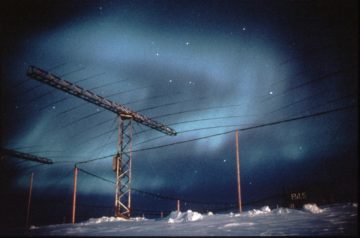
SWIGS investigated how space weather drives geomagnetically induced currents in power grids, pipelines, and railways.
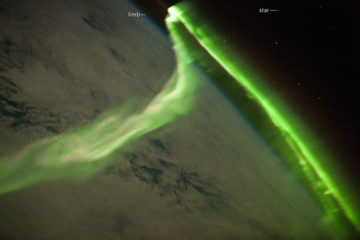
Joule Heating investigated how space weather affects the upper atmosphere’s ability to slow down orbiting satellite debris.
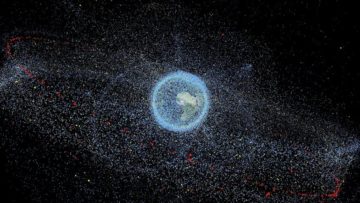
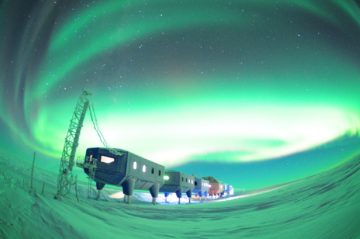
Using meteorological statistical techniques, THeMES aimed to improve satellite trajectory predictions and identify which orbital paths face the greatest risk from space weather disturbances.
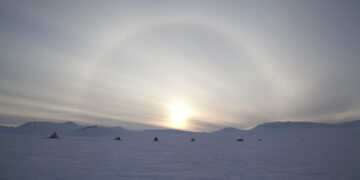
The Super Dual Auroral Radar Network (SuperDARN) has been operating as an international co-operative organisation for over 25 years, and has proved to be one of the most successful tools for studying dynamical processes in the Earth’s magnetosphere, ionosphere, and neutral atmosphere.
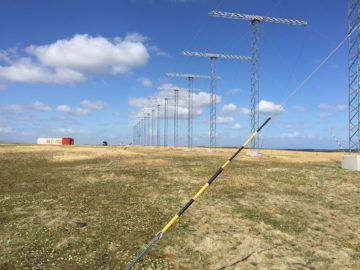
Quantifying the Effect of the Upper Atmospheric Electric Potential on Lower Atmospheric Temperature and Pressure.
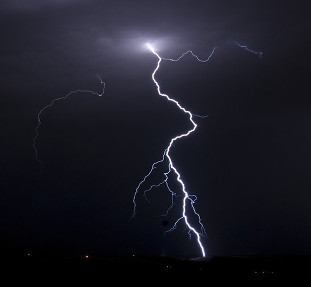
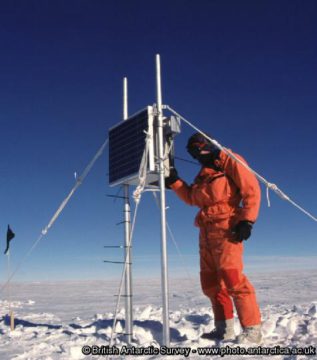
Access data from the Low Power Magnetometer (LPM) network
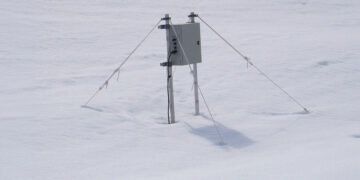
The UK EISCAT support group (UKESG) is a collaboration between the British Antarctic Survey and the Rutherford Appleton Laboratory, funded via the National Centre for Atmospheric Science (NCAS).
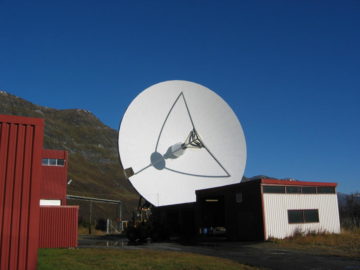
For centuries people have used magnetic compasses to guide them on their way and explore new territories. This has led scientists to embark on their own journeys of discovery about […]
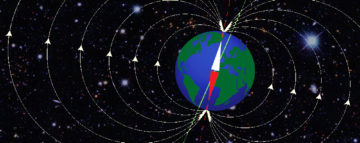
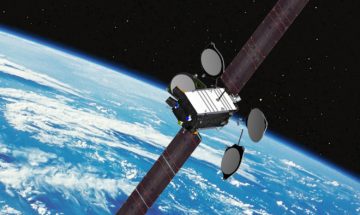
SWIMMR-T generated accurate and actionable nowcasts and forecasts of the thermosphere to reduced uncertainty estimates of the orbital characteristics of satellites and debris.

Satellites face greater chances of collision with space debris as a result of reduced density in the upper atmosphere. Increasing levels of CO2 in the Earth’s atmosphere will result in […]
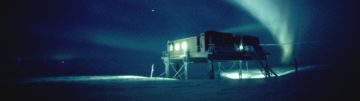
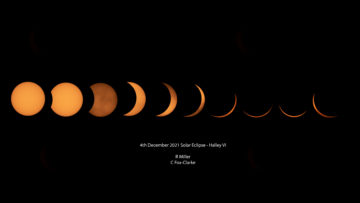
A rare total solar eclipse in Antarctica this weekend (Saturday 4 December) is giving researchers a unique opportunity to learn more about how solar eclipses affect space weather. The next […]
Space weather research at British Antarctic Survey (BAS) receives a funding boost of around £2M today (Saturday 27 June) from the SWIMMR (Space Weather Instrumentation, Measurement, Modelling and Risk) programme. […]
Dr Mervyn Freeman, Senior Space Weather Researcher at British Antarctic Survey, has been awarded the prestigious Chapman Medal in Geophysics by the Royal Astronomical Society (RAS). The medal recognises his […]
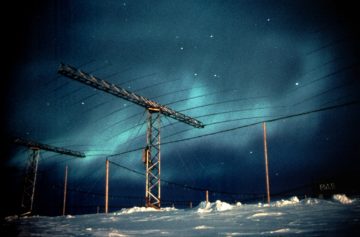
BAS operates a network of magnetometers across Antarctica that measure Earth’s magnetic field and space weather, from detecting aurora-generating waves to tracking radiation belt activity and mapping ionospheric currents that affect satellites.
Studying winds, waves, and tides in the upper atmosphere across the polar regions.