
The National Research Organisations (NRO) Group officially launches today (Thursday 9 July) at Royal Academy of Sciences, London. A first of its kind collective for the UK, the NRO brings together more than 100 leaders from government, research, academia, industry and funding organisations, marking a new chapter for the UK’s research landscape.
The event will formally introduce the NRO Group as the collective voice of more than 40 of the UK’s national science and research organisations, including the British Antarctic Survey. Together, these organisations represent a specialist national research capability dedicated to advancing science that benefits people, communities, the economy, the environment and national resilience.
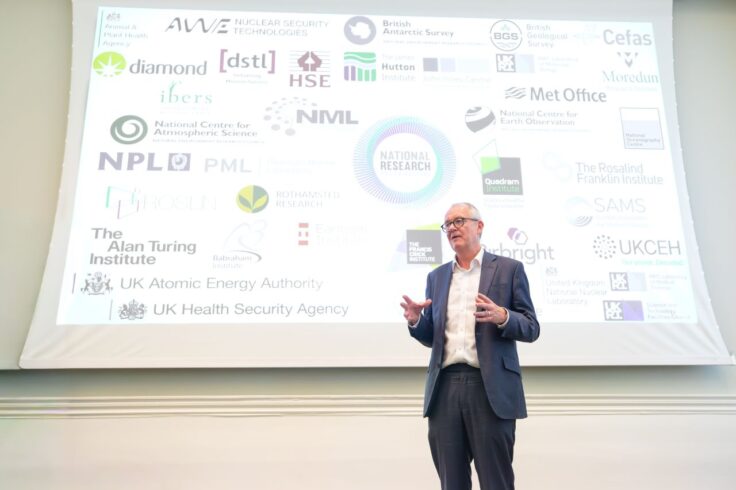
The launch will be attended by Science Minister Lord Patrick Vallance, and the Government Chief Scientific Adviser, Professor Dame Angela McLean, alongside directors of NRO member organisations and senior representatives from across the UK’s research and innovation ecosystem.
The NRO Group was established in response to growing recognition that the UK research landscape would benefit from stronger strategic alignment, clearer governance and greater visibility of the specialism and capabilities provided by national research organisations. Bringing together these organisations under a single alliance has never been more important: providing a coherent and authoritative voice on science, research policy and long-term investment.
The launch event will highlight how the NRO Group will work alongside Government, UKRI, academia and industry to support national priorities, strengthen research excellence and help deliver economic growth through science and innovation.
Science Minister Lord Patrick Vallance said:
“The UK’s strength in science and innovation depends on collaboration across our research ecosystem. National research organisations play a vital role in generating the knowledge, infrastructure and expertise that support economic growth, improve lives and help address the major challenges facing the country. I welcome the launch of the National Research Organisations Group and look forward to working with its members to maximise the impact of UK science and research.”
Professor Sir Ian Chapman, Chief Executive of UK Research and Innovation, said:
“Delivering UKRI’s mission to advance knowledge, improve lives and drive growth requires the foundational capabilities provided by national research organisations, including our Centres, Institutes, Catapults and Units. I look forward to working in partnership with the National Research Organisation group as we shape the UK’s future.”
Government Chief Scientific Adviser Professor Dame Angela McLean said:
“The launch of the National Research Organisations Group marks an important step in harnessing science advice and expert knowledge to shape better policy for everyone. By working together, these organisations will be able to provide science-based insight which underpins decisions that benefit society as a whole.”
Professor Dame Jane Francis is the Director of the British Antarctic Survey, she said:
“Membership of the National Research Organisations Group provides an invaluable opportunity to work alongside fellow research organisations on the issues that matter most to our sector. By sharing expertise, speaking with a collective voice and championing the value of research and innovation, we are better placed to address common challenges, maximise our impact and highlight the strength of UK science internationally.”
Looking ahead to 2030, the NRO Group has set out an ambitious vision to become an indispensable strategic partner across the UK’s research system. Its priorities include delivering measurable impact against Government priorities, aligning research with national needs, securing sustainable investment in research infrastructure and capability, fostering innovation and skills, and strengthening the UK’s global scientific leadership.