
Middle Atmosphere Vertical Coupling Analys

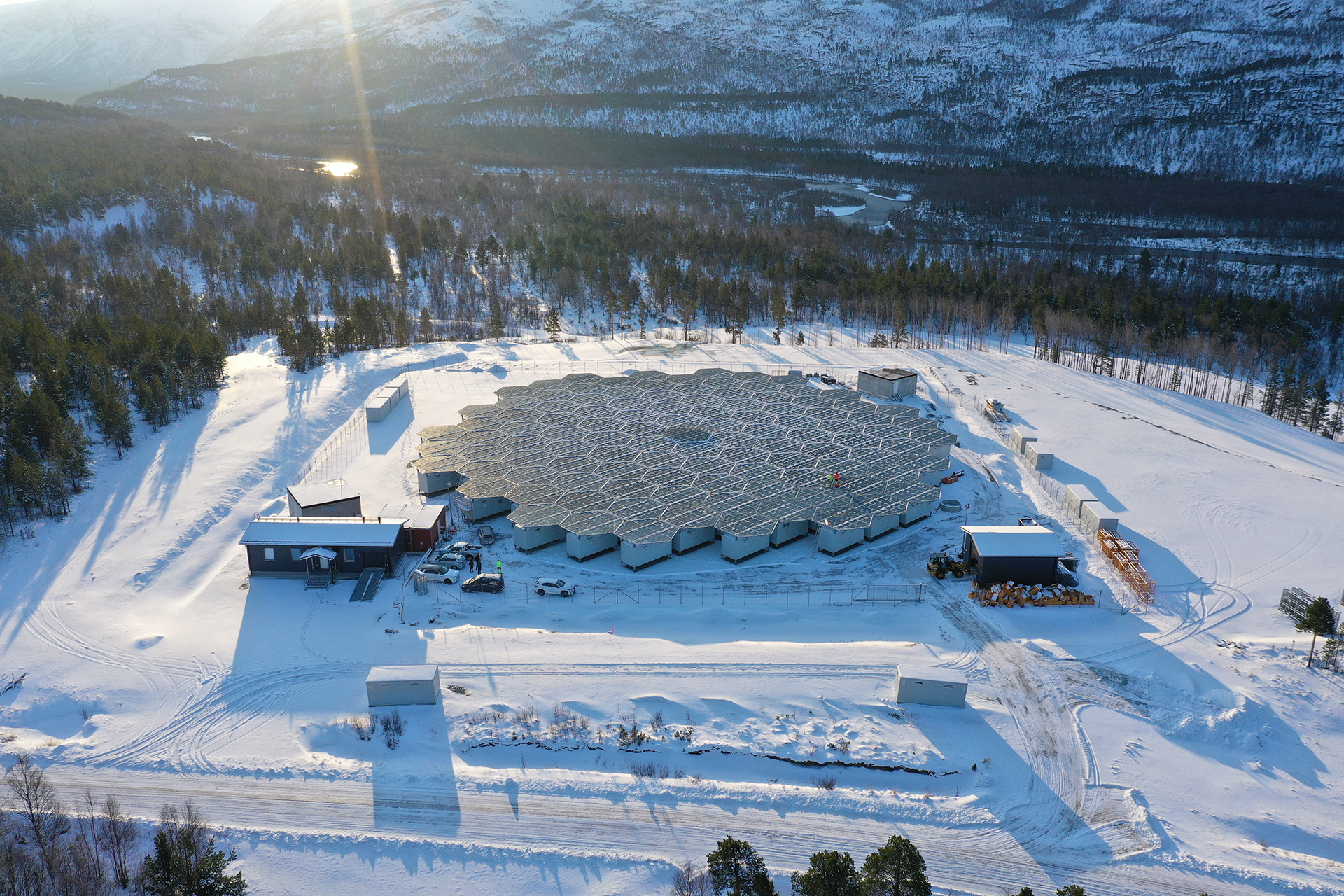
The project uses the EISCAT_3D radar to study how the ionosphere behaves. It focuses on multi-scale coupling – how processes in the atmosphere and space interact at different sizes, from a few kilometres to hundreds of kilometres.
Multi-scale coupling means changes at one scale can trigger or influence changes at much larger or smaller scales.
The project looks at how these interactions are affected by space weather and changes in the lower atmosphere. It also studies how small changes in the upper atmosphere affect the orbits of satellites and space debris.
The ionosphere is a region high above Earth where gas molecules are split into charged particles by sunlight and space particles. It links our atmosphere to space and carries electric currents.
It’s difficult to overestimate how vital the ionosphere is to all our lives. Space weather can disrupt and potentially destroy our
Although these impacts are known, we still do not fully understand how the ionosphere responds to space weather or interacts with the rest of the atmosphere. Many models use large-scale averages, missing small-scale changes that can be critical.
DRIIVE uses EISCAT_3D to:
DRIIVE is led by British Antarctic Survey and partners using the EISCAT_3D radar system.
 The principle aim of DRIIVE is to exploit the new EISCAT_3D radar to explore the ionosphere at multiple scales. We will increase our understanding of the ionosphere’s fundamental underpinning science by exploiting EISCAT_3D’s new capabilities and to by explore the hidden 3D ionosphere in order to predict its impacts on the global earth system
The work in this project is spread across several related themes, all focused on interactions at spatial scales less than ~100 km in the high latitude, coupled Mesosphere-Thermosphere-Ionosphere.
There are four key objectives that form the principle work packages of DRIIVE:
BAS scientists are involved in several of these work packages and lead two of them:
In Work Package 1 we will:
In Work Package 3 we will:
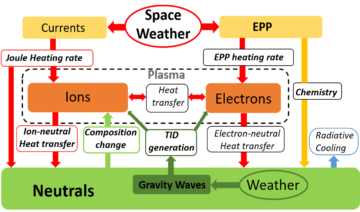
Diagram illustrating the important physical and chemical processes that contribute to the ionosphere, that DRIIVE will study
Middle Atmosphere Vertical Coupling Analys

Atmospheric Physicist IMP 3

Science Leader
BAS Science Strategy Executive Group, Atmosphere, Ice and Climate team

Independent Research Fellow