Hidden giant granite discovered beneath West Antarctic Ice Sheet
Pink granite boulders scattered across the dark volcanic peaks of the Hudson Mountains in West Antarctica, have revealed the presence of a vast buried granite body.
13 to 24 of 366 results
Pink granite boulders scattered across the dark volcanic peaks of the Hudson Mountains in West Antarctica, have revealed the presence of a vast buried granite body.
RRS Sir David Attenborough departs from Plymouth on 17 October to begin five-week voyage to Antarctica, marking the start of the new Antarctic field season.
Ancient ice from Antarctica, extracted as part of the Beyond EPICA – Oldest Ice project, captures a unique climate record spanning at least the past 1.2 million years.
Scientists meeting at The Royal Society in London this week are issuing a stark warning: dramatic and extreme changes in Antarctica are happening faster than expected, with consequences that will affect everyone on the planet.
Scientists have detected the DNA of an invasive marine species in Arctic Canada suggesting the region’s waters are no longer cold enough to be a natural barrier.
A new study has revealed that ocean tides can directly influence when massive Antarctic icebergs break off from the ice shelves surrounding the continent, a process known as calving. The research marks a major step toward accurately forecasting ice loss from the Antarctic Ice Sheet and improving projections of global sea level rise.
A consignment of ancient ice from Antarctica, extracted as part of the Beyond EPICA – Oldest Ice project, arrived at the British Antarctic Survey (BAS) in Cambridge for detailed analysis this month.
As the 2024/25 Antarctic construction season comes to a close, the British Antarctic Survey (BAS) marks a crucial milestone in the modernisation of Rothera Research Station, as the Discovery Building comes into operational use.
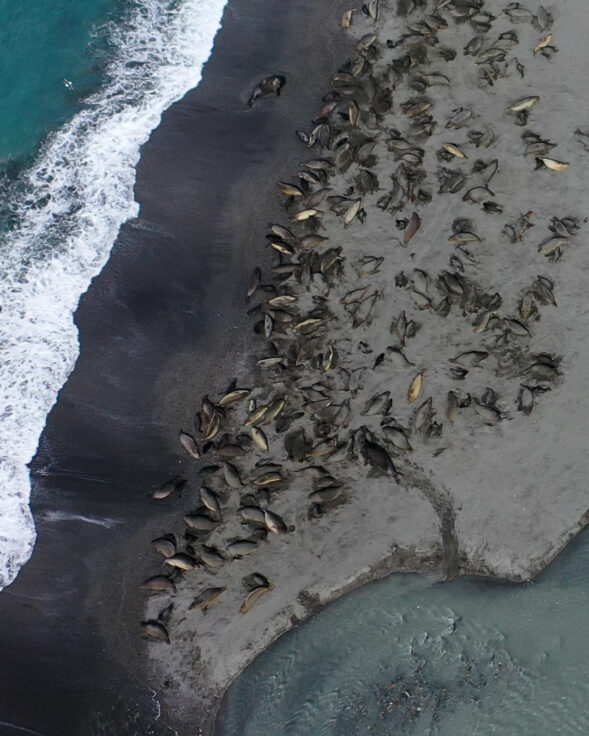
ew study reveals how Antarctic seals are responding to shifts in Antarctic sea ice and what long term changes could mean for their future survival.
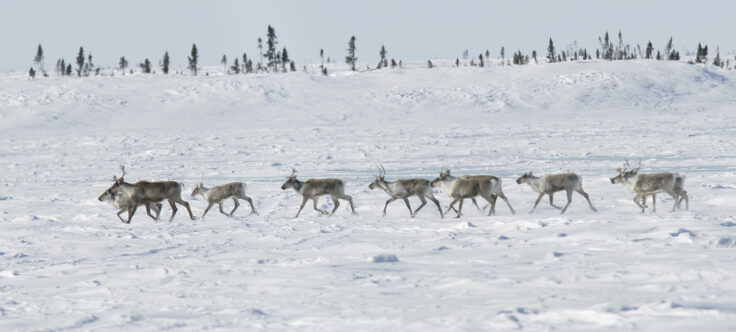
Artificial intelligence sea ice forecasting systems could help predict and protect the migration routes of endangered caribou in the Canadian Arctic, according to a new study.
The British Antarctic Survey’s (BAS) new scientific support and operations facility, the Discovery Building, is now coming into operational use at Rothera Research Station in Antarctica.
This week, the world will mark the 40th anniversary of a moment that changed the course of history: the publication in Nature of ground-breaking research that presented the discovery of the ozone hole on 16 May 1985.