
Environmental Impact Assessment
Environmental Impact Assessment (EIA) is the process of evaluating what effect a planned activity might have on the environment before it happens.
In Antarctica, this process is particularly important because the continent is one of the last pristine wilderness areas on Earth, with unique ecosystems that are extremely vulnerable to human disturbance.
Before any proposed activity takes place in Antarctica, it undergoes a thorough Environmental Impact Assessment (EIA) process. This ensures that potential impacts are identified and addressed early. There is a three-tiered EIA procedure depending on the potential level of impact:
- Preliminary Environmental Assessment (PEA): for activities proposed to have less than a minor or transitory impact
- Initial Environmental Evaluation (IEE): for activities with minor or transitory impacts that require a more detailed assessment. The UK, through BAS, has prepared numerous IEEs for a range of activities, from deep ice core drilling to modernising infrastructure
- Comprehensive environmental evaluation (CEE): for activities anticipated to have more than a minor or transitory impact. CEEs are publicly available and circulated to all Antarctic Treaty Parties for review. Significant projects like rebuilding Rothera Wharf have undergone comprehensive CEEs
The UK enforces these provisions through the Antarctic Act 1994, which legally binds us to these strict environmental protection regimes. By integrating environmental considerations into every aspect of our work, we set the standard for responsible scientific exploration in this globally significant wilderness, with unique ecosystems that are extremely vulnerable to human disturbance.
Comprehensive Environmental Evaluations (CEE)
This is the most detailed level of assessment. CEEs are required for major projects anticipated to have more than a minor or transitory impact.
For example, building major infrastructure projects such as a new research station, constructing a new crushed rock airstrip, or major rock or sediment drilling projects.
CEEs are circulated to all Antarctic Treaty parties for review and comment. All UK CEEs must be approved by the Foreign, Commonwealth and Development Office.
What it includes:
- Detailed description of the proposed activity and alternatives considered
- Full environmental baseline (what’s there now)
- Comprehensive impact predictions and mitigation measures
- Monitoring plans
- Public circulation for international review and comment
Below are all CEEs from BAS covering the last ten years
Rothera wharf reconstruction & coastal stabilisation (2018-2020)
This environmental assessment evaluated British Antarctic Survey’s wharf reconstruction and coastal stabilisation at Rothera Research Station (2018-2020). Plans included demolishing the existing wharf, constructing a new deeper facility, quarrying local rock, and reinforcing coastal embankments. Mitigation measures addressed underwater noise, blasting impacts, marine habitat loss, biosecurity, and heritage protection. Some impacts were greater than minor or transitory but considered acceptable.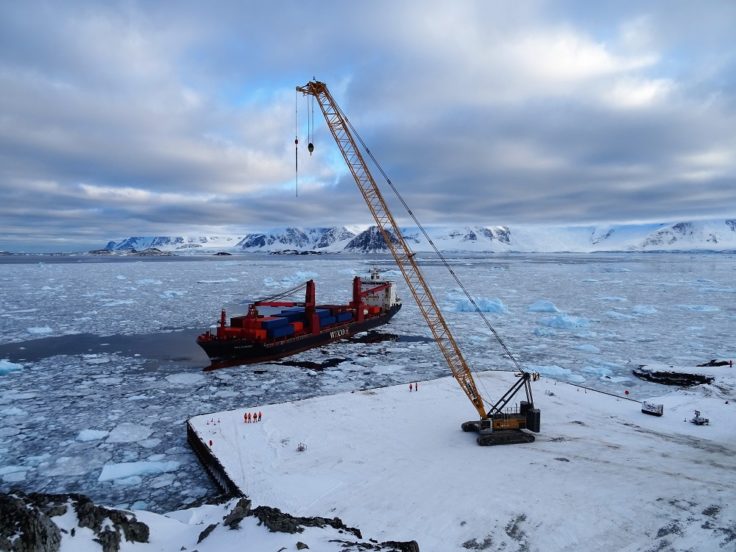
Initial Environmental Evaluations (IEE)
This as a medium-level assessment. It’s required when an activity is predicted to have minor or transitory impacts that may be temporary or limited in scope. For example, the construction of new or replacement facilities at established research stations.
All UK IEEs must be approved by the Foreign, Commonwealth and Development Office.
What it includes:
- A description of the activity
- Impact predictions and mitigation measures
- Monitoring plans
Below are all IEEs from BAS covering the last ten years
Antarctic Infrastructure Modernisation Project (2019-26)
Plans included runway maintenance, building improvements, renewable energy monitoring, and installation of new utilities. Work involved excavation, construction equipment, and material processing. Mitigation measures addressed potential impacts on wildlife, vegetation, and ice features. Overall environmental impact assessed as minor and transitory.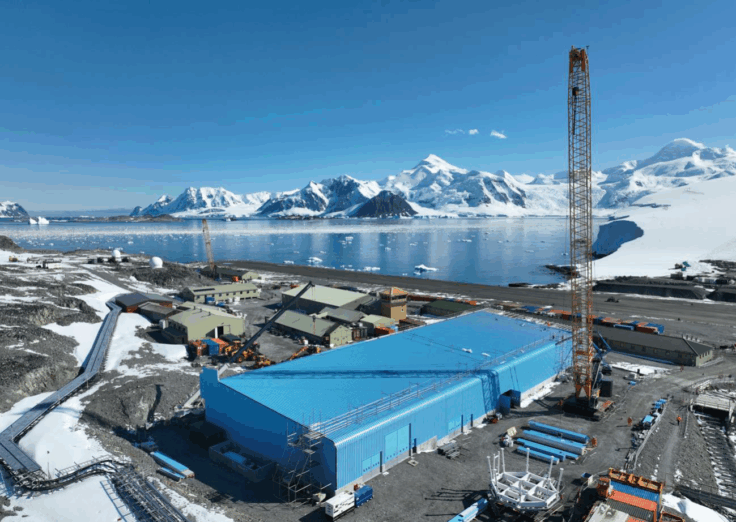
Initial Environmental Evaluation for Rothera Modernisation Phase 1 (9MB) Fothergill, C, (Sept 2019)
Download appendices – IEE Rothera Modernisation Phase 1 (24MB) Learn more about AIMP.REWIND ice core drilling project (2024-26)
Plans included geophysical surveys, deep drilling (to 600-800m), field camp operations, and firn air sampling. Mitigation measures addressed potential impacts on ice surfaces, wildlife, and wilderness values. Overall environmental impact was assessed as minor and transitory.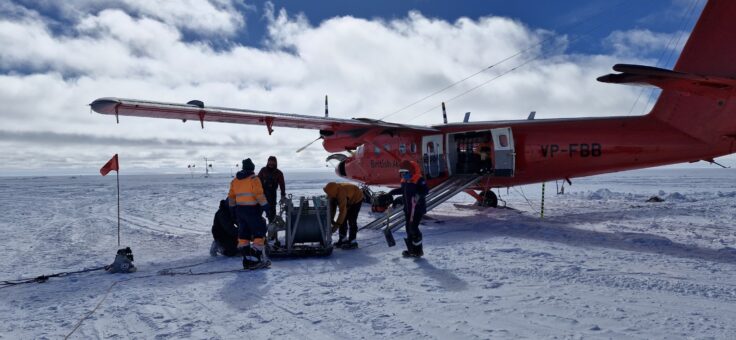
Rothera runway resurfacing (2022-23)
Plans included site investigations, condition surveys, monitoring activities, and construction of runway improvements, lighting systems, and fuel farm infrastructure. Mitigation measures addressed noise, dust, fuel spills, biosecurity, and wildlife disturbance. Overall environmental impact was assessed as minor and transitory.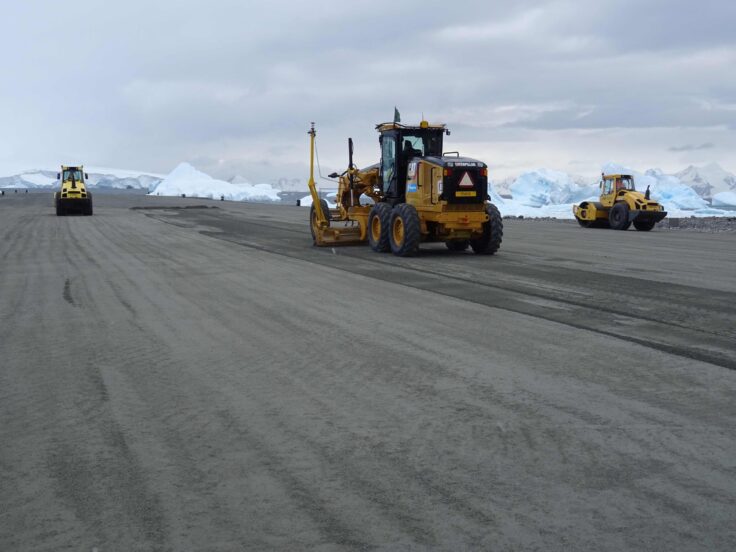
Over-snow Traverse activities (2022-27)
Plans included tractor train movements, field camps, fuel depots, and logistical support for scientific research. Mitigation measures addressed fuel spills, emissions, waste management, and wilderness impacts. Overall environmental impact was assessed as minor, with some transitory effects.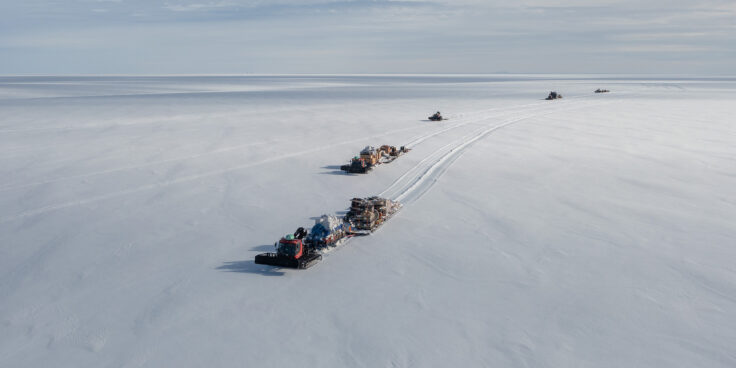
Rothera East beach hut (2021-22)
Plans included building a prefabricated atmospheric research facility, delivering materials by ship tender, and providing electrical power via cable from the station. Mitigation measures addressed biosecurity risks, wildlife disturbance, fuel spills, noise pollution, and impacts on wilderness values. Most impacts were minor or transitory, though aesthetic changes were unavoidable but acceptable.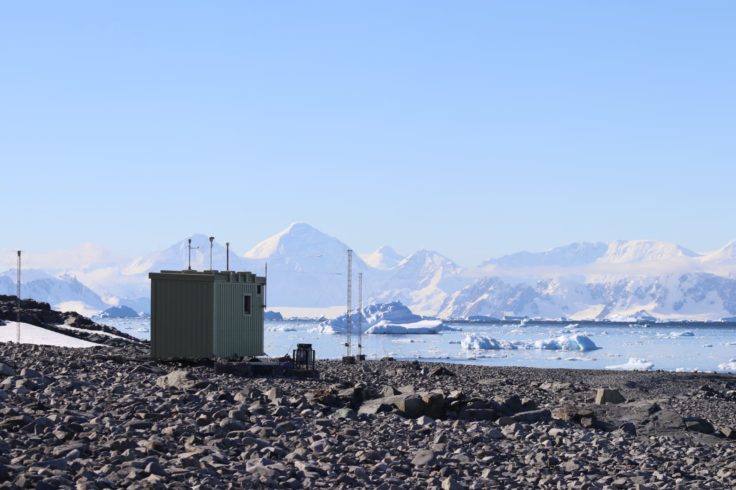
Sherman Island deep ice drilling project (2019)
Plans included drilling through 430m of ice using the RAID system to retrieve ice chippings, establishing a temporary field camp, and revisiting a previous drill site. Mitigation measures addressed atmospheric emissions, waste management, fuel spills, biosecurity risks, and wilderness impacts. Most impacts were minor or transitory, though some previous drilling fluid was unrecoverable during earlier work.
Thwaites Glacier programme (2018-26)
Activities included ice drilling, glaciological surveys, marine instrumentation, seal tagging, geological sampling, and extensive logistics support via ships, aircraft, and over-snow vehicles. Mitigation addressed fuel spills, wildlife disturbance, biosecurity, marine noise, and atmospheric emissions. Impacts assessed as minor or transitory.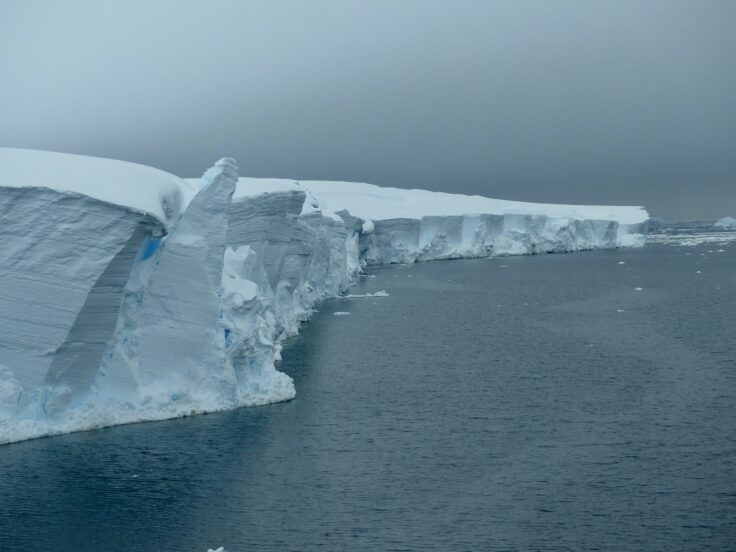
Proposed Skytrain Ice Rise, deep ice core drilling project (2018)
Activities included establishing a field camp, using electromechanical drilling with Exxsol D60 fluid, and recovering cores for analysis. Mitigation addressed drilling fluid recovery, fuel spills, waste management, biosecurity, and atmospheric emissions. Impacts assessed as minor or transitory.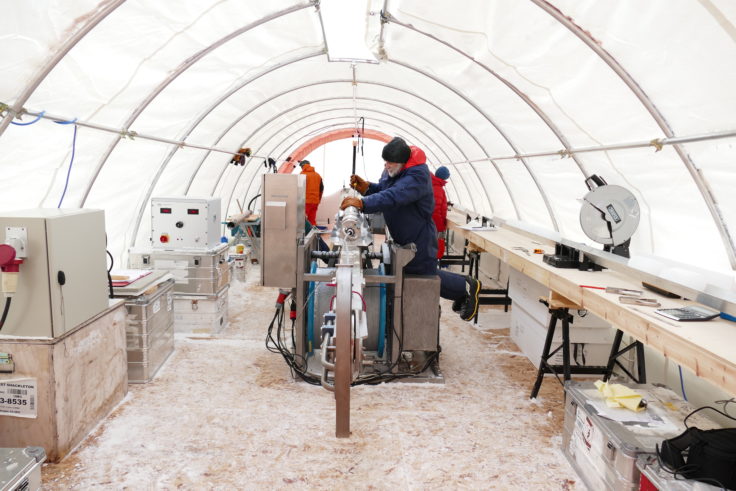
Halley relocation project (2016)
This assessment evaluated relocating Halley VI Research Station 23 kilometers upstream on Brunt Ice Shelf (2016-2018) due to growing Chasm 1 threatening the current site. Activities included module relocation, temporary camp construction, infrastructure upgrades, and site cleanup. Mitigation addressed fuel spills, waste management, biosecurity, sewage discharge, and wilderness impacts. Impacts assessed as minor or transitory.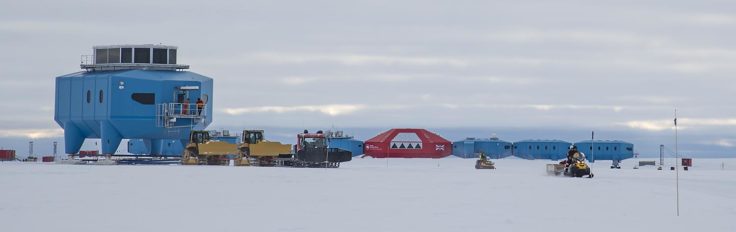
Rutford Ice Stream (2016)
This assessment evaluated drilling through Rutford Ice Stream to study ice sheet history and dynamics affecting sea level predictions. Activities included hot-water drilling four 2.2km boreholes, sediment coring, instrument deployment, seismic/radar surveys, and tractor traverse fuel delivery. Mitigation addressed fuel spills, equipment loss, subglacial contamination, waste management, and biosecurity. Impacts assessed as minor or transitory.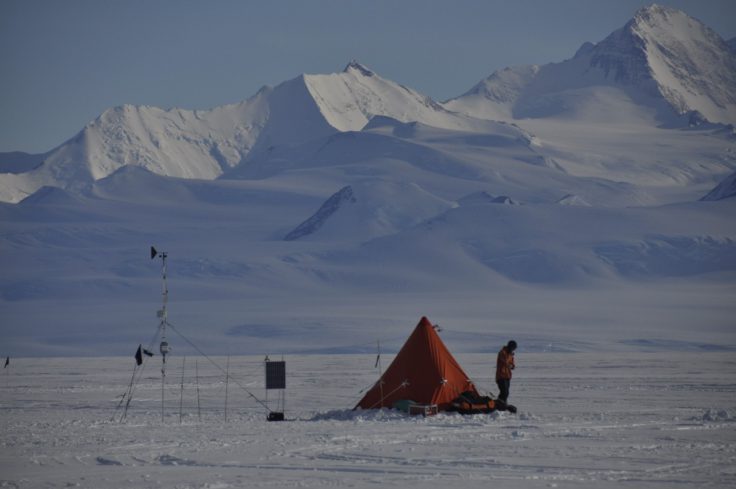
Filchner-Ronne Ice Shelf (2014-18)
This assessment evaluated hot-water drilling and oceanographic studies on Filchner-Ronne Ice Shelf (2014-2018). Activities included drilling seven boreholes, deploying ocean instruments, sediment coring, seismic/radar surveys, GPS/ApRES installations, and tractor traverse support. Mitigation addressed fuel spills, equipment loss, waste management, biosecurity, and emissions. Impacts assessed as minor or transitory.
Preliminary Environmental Assessment
This is the simplest level. If an activity will have negligible environmental effects, it can proceed with just a basic assessment showing why the impacts will be so small.
For example, routine maintenance work or continuing an established research programme.
This is the simplest level. If an activity is likely to have less than a minor or transitory impact, such as routine maintenance work or continuing an established research programme, it can proceed following a simpler assessment usually through the use of an application form.
The assessment includes:
- A description of the activity
- Impact predictions and mitigation measures
- Approval by British Antarctic Survey Environment Office