Observational Oceanographer

The project studied how the Southern Ocean regulates global climate by storing and transporting heat and carbon. Oceans absorb vast amounts of both, slowing atmospheric warming. Since the industrial revolution, they have taken up about 30% of human-produced CO2 and 93% of the extra heat in the Earth system.
The Southern Ocean is central to this process. It covers just 20% of the ocean but absorbs three-quarters of ocean heat and about half of ocean CO2. This happens because of its unique circulation. Deep waters rise to the surface, exchange heat and carbon with the atmosphere, and then sink again as new water masses.
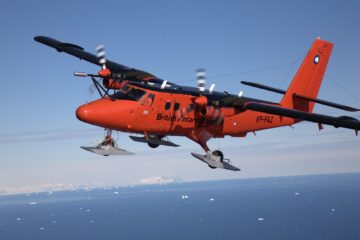
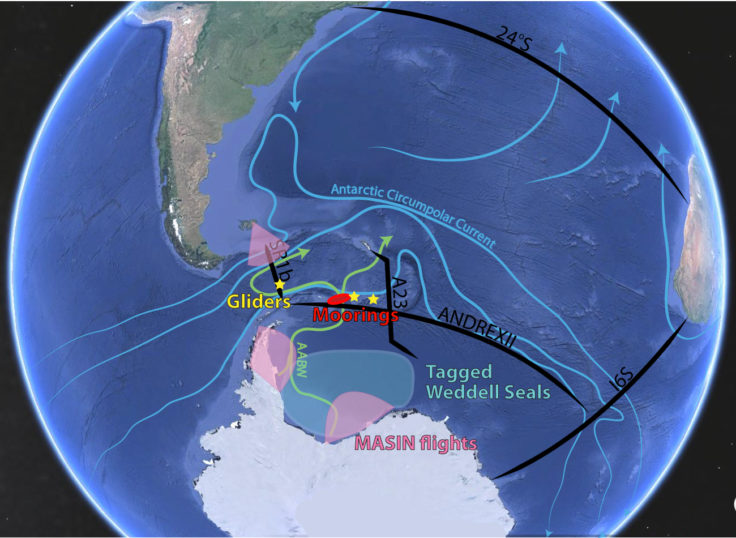
ORCHESTRA combines field data, satellite observations, and advanced models to study these mechanisms. Researchers made unique measurements using ships, autonomous vehicles, and British Antarctic Survey aircraft. They also used instrumented marine animals, deep-ocean moorings, and other innovative tools.
Understanding the Southern Ocean is vital for predicting climate change. It regulates how heat and carbon are distributed worldwide.
Without accurate measurements and models, forecasts of future climate impacts remain uncertain. ORCHESTRA helped close these gaps by tracking how heat and carbon move across the ocean surface and into the deep.
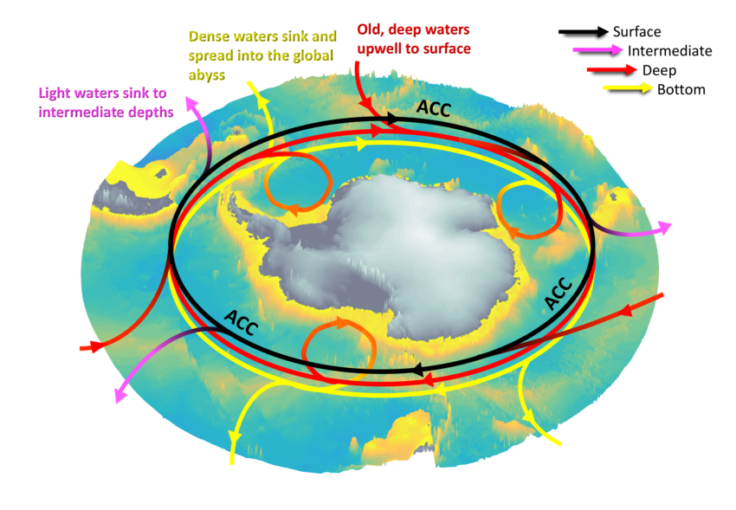
The overturning circulation in the Southern Ocean, and the lateral flows around the Antarctic continent.
The project was led by BAS.
Partners included the National Oceanography Centre, British Geological Survey, Plymouth Marine Laboratory, Centre for Polar Observation and Modelling, the Sea Mammal Research Unit at the University of St Andrews, the UK Met Office, and international collaborators.
Our programme aim was to advance our understanding of, and capability to predict, the Southern Ocean’s impact on climate change via its uptake and storage of heat and carbon.
ORCHESTRA significantly reduced current uncertainties concerning how the uptake and storage of heat and carbon by the ocean influences global climate, by conducting a series of unique fieldwork campaigns and innovative model developments. This is a leading-order challenge of great societal relevance and strategic importance to NERC, but progress is currently hampered by poor provision of data with which to improve understanding of the key processes and constrain their rates, and inadequate representation of the key dynamics in ocean and climate forecast models.
The area requiring the most urgent improvement is the Southern Ocean, where many of the controlling mechanisms and exchanges occur, and yet where data coverage is most sparse, dynamical understanding is weakest, and climate models show greatest biases and least realistic depictions of processes.
ORCHESTRA aimed to address these issues using the UK’s world-leading capability and infrastructure in ocean and high-latitude research, including major ship expeditions, autonomous vehicle deployments and research aircraft campaigns, with the data collected used to improve model schemes and validate model outputs, and with the improved capability fed through to UK climate model development.
ORCHESTRA represents the first fully-unified activity by NERC institutes to address these challenges, and will draw in national and international partners to provide community coherence, and to build a legacy in knowledge and capability that will transcend the timescale of the programme itself.
Observational Oceanographer

Head of Field Projects and Systems

Physical Oceanographer and Group Head
Science Leader/Polar Oeans

Science Leader IMP 2

Physical Oceanographer
RaTS Project Manager
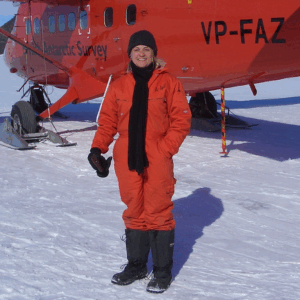
Atmospheric Scientist
Following the glider deployments our next destination was Rothera, the UK’s biggest Antarctic research station on Adelaide Island. Good progress was made until we hit the sea ice – 120 […]
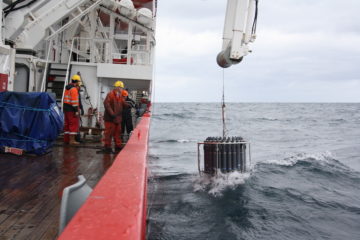
It was finally time to deploy the gliders and I couldn’t be more excited! Autonomous vehicles are regarded as the future of oceanography, and I feel extremely lucky to be […]
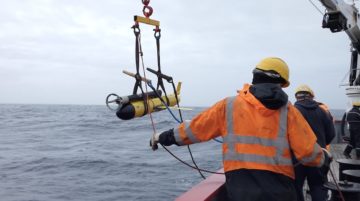
First thing I learn as I begin my trip aboard the RRS James Clark Ross is that, scientist on research cruises need to be able to adapt quickly! Within two […]
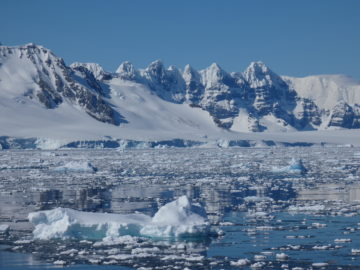
After 6 days, 9505 miles and 7 mm of beard growth, the cruise has officially started! Thursday 16th November and finally the time had come for me start my journey […]
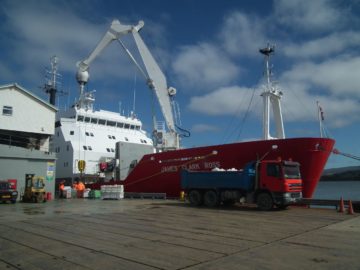
Follow ORCHESTRA project scientist Yvonne Firing’s amazing fieldwork blog from the Southern Ocean here. On the 2016/2017 Drake Passage cruise on the RRS James Clark Ross, we sail south from […]
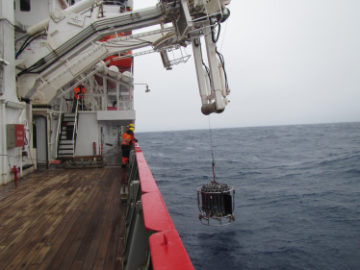
Investigating the Southern Ocean Oceanographers Dan Jones and Erik MacKie are onboard the RRS James Clark Ross carrying out a hydrographic survey in the Southern Ocean as part of a […]
A series of studies on the Southern Ocean, which encircles Antarctica, reveal how it is changing. A special issue of the Journal Proceedings of the Royal Society, led by the […]
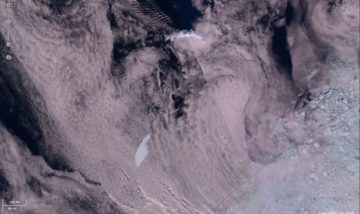
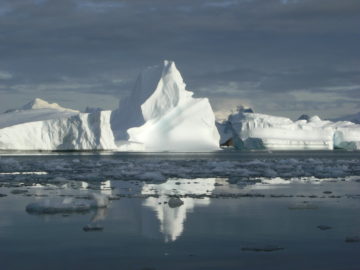
A research mission to determine the impact of the giant A-68a iceberg on one of the world’s most important ecosystems departs from Stanley in the Falkland Islands today (2 February […]
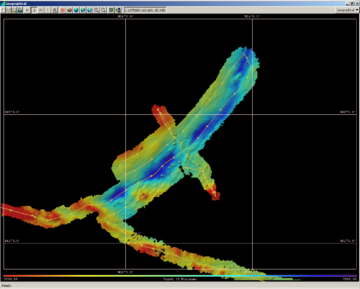
A team of researchers led by British Antarctic Survey has for the first time mapped the deepest part of the South Sandwich Trench in the Southern Ocean. This part of […]
Report published July 2018
Professor Mike Meredith wins prize
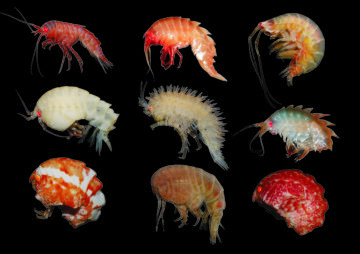
A new study of the marine invertebrates living in the seas around Antarctica reveals there will be more ‘losers’ than ‘winners’ over the next century as the Antarctic seafloor warms. […]
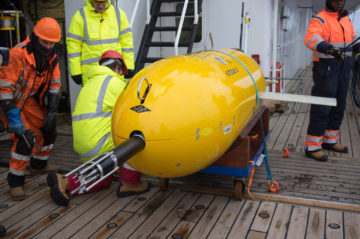
The unmanned submersible Boaty McBoatface was deployed in the Antarctic for the first time.
As spring returns to the southern hemisphere British Antarctic Survey (BAS) has started another research season which will take them over land, sea and ice in search of answers to […]
Data was managed by the BODC – The British Oceanographic Data Centre by Joana Beja De Almeida E Silva. The BODC is the designated Natural Environment Research Council (NERC) data centre responsible for the management of data sets originating from the ORCHESTRA programme.
Data submission
Information on how to submit data to BODC can be found on the data submission pages on the BODC website or can be requested to the project data manager, Joana Beja, via email to joja@bodc.ac.uk
Once data has been submitted to BODC, we will archive a copy, assign data access conditions and assemble the data set into a relational database, so that spatial and temporal links to all data within the programme and within BODC can be maintained. BODC will then take responsibility for distributing the data to programme members and the wider community. Data can be submitted directly to the project data manager, Joana Beja, via email, or copied onto a CD, DVD or Zip disk and sent by post to:
Joana Beja, British Oceanographic Data Centre, Joseph Proudman Building, 6 Brownlow Street, Liverpool, L3 5DA, United Kingdom.
FTP server transfers can be arranged where large files are to be submitted.
Data delivery
Observational data and data arising from physical samples will be downloadable through the (BODC’s) searchable interface.
Data that have been assigned a data citation (Digital Object Identifier, DOI) will be freely available to download from BODC’s Published Data Library (PDL) catalogue.
Live data from gliders may be viewed at the Marine Autonomous and Robotic Systems (MARS) group glider portal.
Near Real Time Seal tag data will be automatically submitted through a partnership between the Sea Mammal Research Unit (SMRU) and BODC, and arrangements for delayed-mode versions of the data must be agreed in advance and will result from a co-operation with the MEOP Consortium.
UK Argo float data will be available from www.ukargo.net, with all international Argo data accessible from www.argo.net via one of the two Argo Global Data Assembly Centres (GDACs).
The Centre for Environmental Data Analysis (CEDA) is the NERC designated data centre for atmospheric data, more specifically for the data sets originating from the MASIN aircrafts.
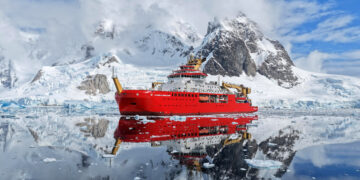
Our state-of-the-art polar science ship provides scientists access to remote and challenging marine environments across the Antarctic and Arctic. It is equipped with a suite of scientific and operational facilities for understanding oceans and their role in Earth’s ecosystem.