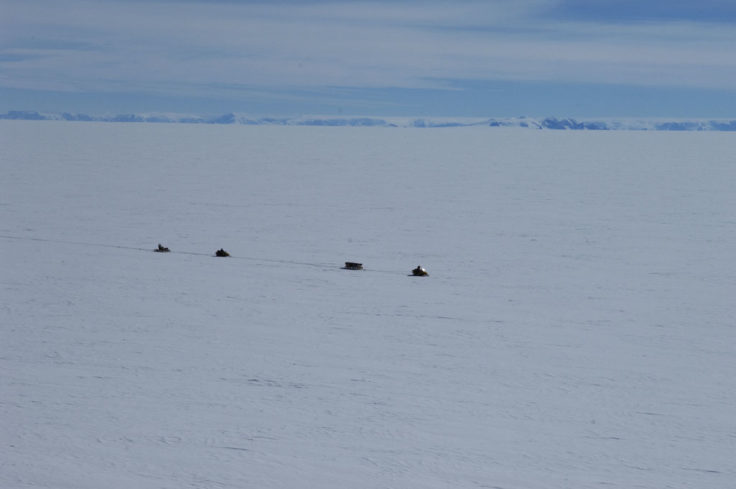
FEATURED PAPER: Wind, warm water and ice-sheet loss
Wind-driven incursions of warm, deep water forced the retreat of West Antarctic glaciers from the end of the last ice age until 7,500 years ago and since the 1940s. These […]

85 to 96 of 157 results
Wind-driven incursions of warm, deep water forced the retreat of West Antarctic glaciers from the end of the last ice age until 7,500 years ago and since the 1940s. These […]
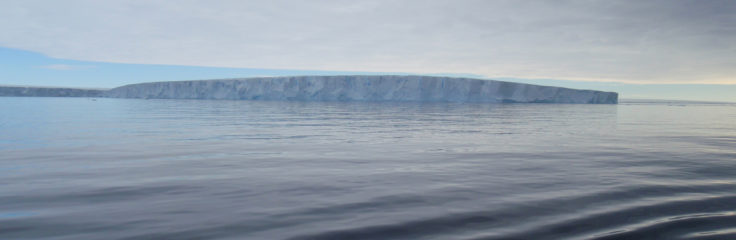
Latest satellite images reveal a new 100-square-mile iceberg emerging from Antarctica’s Pine Island Glacier. The calving event did not come as a complete surprise, but is a troubling sign with […]
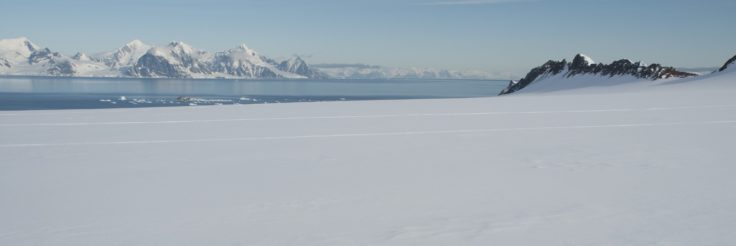
DATA AS ART visualises science data to create stunning and thought-provoking artworks, using real Antarctic data-sets that explain important and exciting science stories.

The largest remaining ice shelf on the Antarctic Peninsula lost 10% of its area when an iceberg four times the size of London broke free earlier this month. Since […]
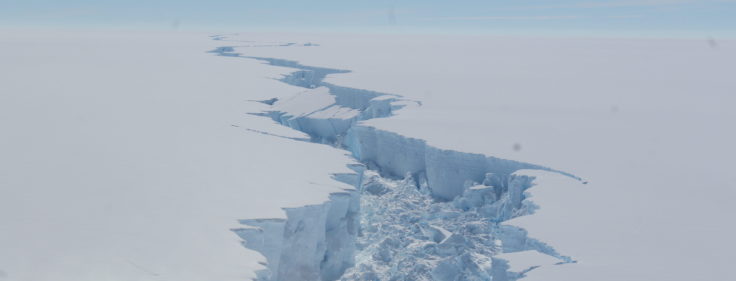
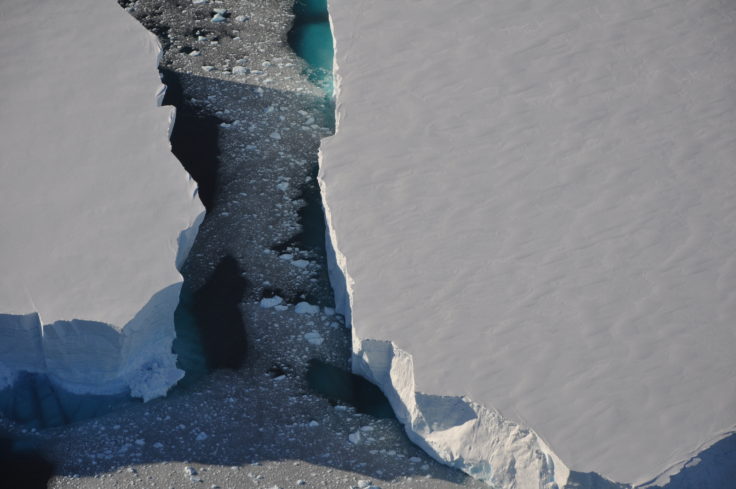
After months of ‘hanging by a thread’ a vast iceberg the size of Norfolk has finally broken off Antarctica’s Larsen C Ice Shelf. Around 30 metres of this 190m thick […]
Reporting this week (Wednesday 5 July) in the journal Nature, an international team of researchers led by British Antarctic Survey (BAS) explains that wind-driven incursions of warm water forced the […]
British Antarctic Survey is monitoring glaciological changes on the Brunt Ice Shelf, home to Halley Research Station.
SUBICE, the Sub-Antarctic – ice coring expedition, part of the international Antarctic Circumnavigation Expedition (ACE), successfully drilled several shallow ice cores, from five of the remote and globally significant sub-Antarctic islands.
A new study reveals the sub-antarctic island of South Georgia – famous for its wildlife – was covered by a massive ice cap during the last ice age. The results […]
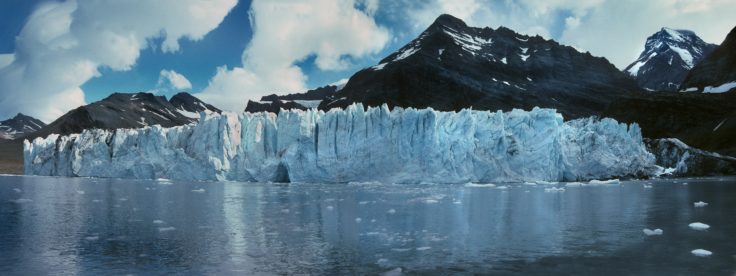
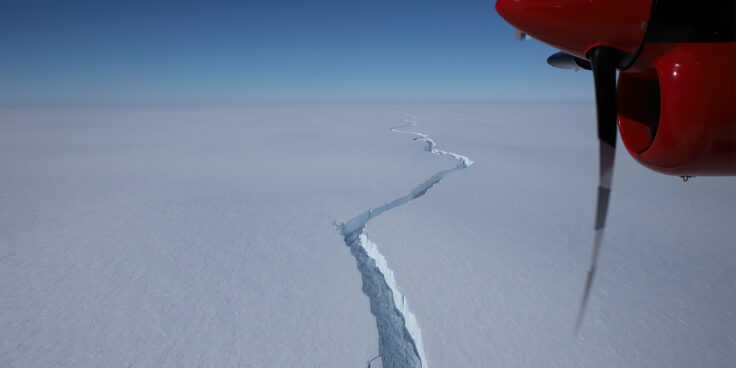
British Antarctic Survey (BAS) recently captured this video footage of a huge crack in the Larsen C Ice Shelf, on the Antarctic Peninsula. Currently a huge iceberg, roughly the size […]
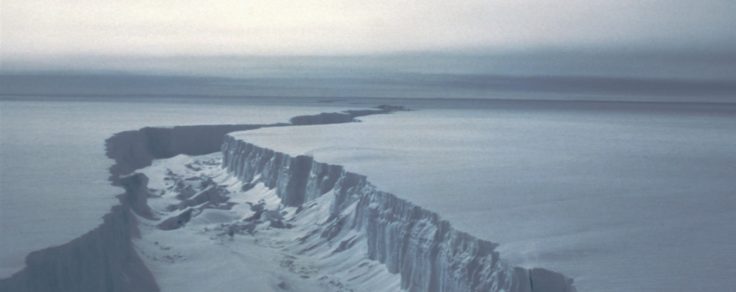
MIDAS investigates how climate warming affects the Larsen C ice shelf in Antarctica. The project studies the formation of large summer melt ponds and their influence on ice shelf structure and stability. Fieldwork, satellite observation, and computer simulations are used to understand these processes.
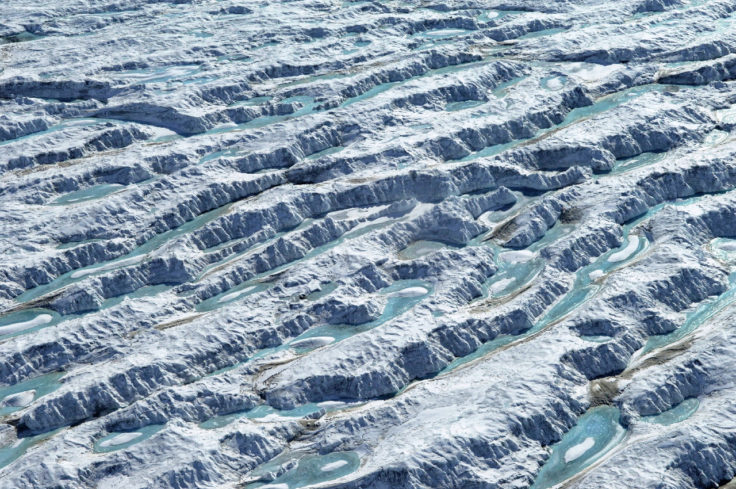
A huge iceberg, roughly the size of Norfolk, looks set to break away from the Larsen C ice shelf on the Antarctic Peninsula. Larsen C is more than twice the size […]