Science Programme Coordinator

Beyond Epica – oldest ice was a project funded by the European Union. Its goal was to drill the oldest ice that can be reached in Antarctica.
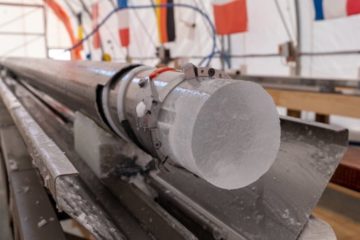
It built on the earlier EPICA project. EPICA drilled at Dome C and revealed 800,000 years of climate history. Beyond Epica looked for even older ice – up to 1.5 million years. This ice can show how greenhouse gases and climate cycles worked long ago.
Scientists use computer models to find good drilling sites. They then check these sites in the field. They measure how thick the ice is, how old it is at different depths, and whether the base of the ice is melting.
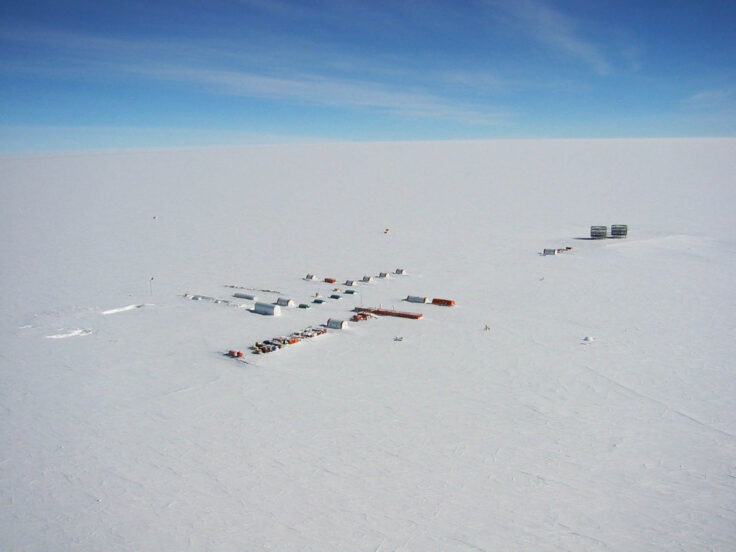
Researchers from BAS surveying sites in East Antarctica
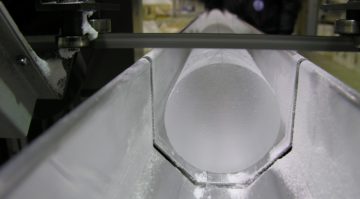
At sites near Dome C, BAS scientists used a rapid access isotope drill (RAID) to collect ice cores whilst preserving their chemical fingerprints. Radar systems called ApRES and DELORES were also used. These helped map how the ice is moving and guide where to drill.
Earth’s climate cycles changed in the past. Ice ages once came every 41,000 years, but later switched to every 100,000 years.
By studying older ice, scientists can learn why this change happened. They can also see how greenhouse gases influenced the start and end of ice ages.
This new record helped improve climate models. It will help predict future climate change. And it will explain how ice age cycles shifted over millions of years.
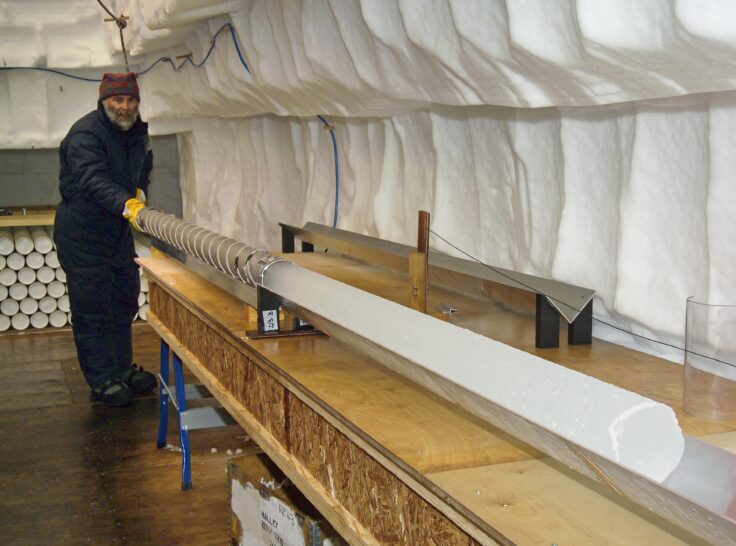
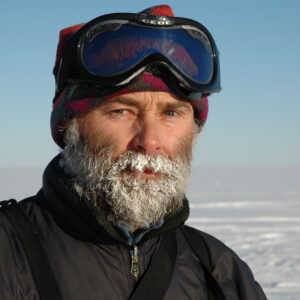
BAS Ice coring scientist Dr Robert Mulvaney
The project aimed to:
The project was run by a European team and funded by the European Union. BAS provided skills in fieldwork, drilling, and radar.
BAS ice core experts, including Robert Mulvaney, lead site surveys and drilling with RAID.
To better constrain the response of Earth’s climate system to continuing emissions, it is essential to turn to the past.
A key advance would be to understand the transition in Earth’s climate response to changes in orbital forcing during the ‘mid-Pleistocene transition’ (900 to 1200 thousand years ago) and in particular the role of greenhouse gases.
Unravelling such key linkages between the carbon cycle, ice sheets, atmosphere and ocean behaviour is vital for society to better design effective mitigation and adaptation strategies.
Only ice cores contain the unique and quantitative information about past climate forcing and atmospheric responses. But the ice providing essential evidence about past mechanisms of climate change more than 1 Ma ago required for our understanding of these changes (termed the “Oldest Ice” core), has not been found to date.
The consortium Beyond EPICA – Oldest Ice (BE-OI), formed by 14 European institutions, takes on this challenge to prepare the ground for obtaining 1.5 million year old ice from East Antarctica.
BE-OI had the objectives to:
Science Programme Coordinator
Ice Stream Modelling
Ice Chemistry Lab Technician
Whether it’s bubbles of ancient air, microscopic creatures, or the rumble of an impending ice quake – there’s more hidden in Antarctica’s vast polar desert than meets the eye. Ice […]
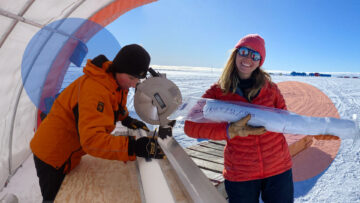
This Antarctic season BAS scientist Dr Robert Mulvaney is taking part in the ongoing hunt for the oldest ice record Beyond Epica. Using a variety of different techniques, he and […]
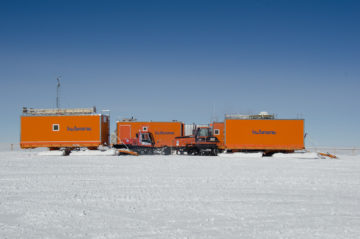
BAS glaciologist Dr Robert Mulvaney journeys deep into Antarctica where he and the team continue their search for the oldest ice record of atmosphere and climate – hopefully stretching back 1.5 million years.
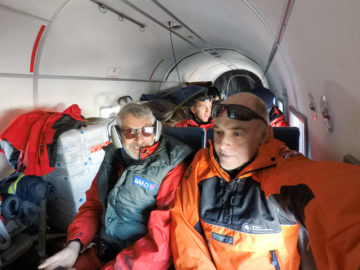
The oldest ice ever extracted from Antarctica is on its way to Europe, marking a major milestone in climate science.

The Antarctic field season has started, with over 600 people beginning the journey South to work on over 60 projects on station and in the field.
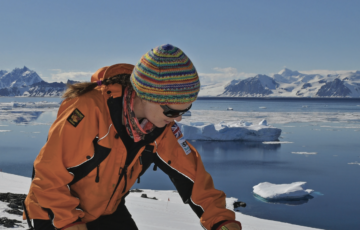
The 2022/23 Antarctic field season has ended, marking the conclusion of another successful year of scientific exploration in one of the world’s most remote and challenging environments. This field season, […]
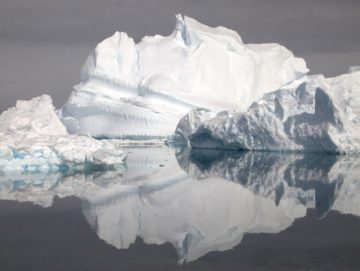
Scientists in East Antarctica drilling to find the Earth’s oldest ice have reached a key milestone after two months of fieldwork in sub-zero temperatures. The team is part of Beyond […]
Scientists return to East Antarctica this month (December) to locate the oldest ice on Earth. The team is part of an EU-funded research consortium from 10 European countries whose aim […]
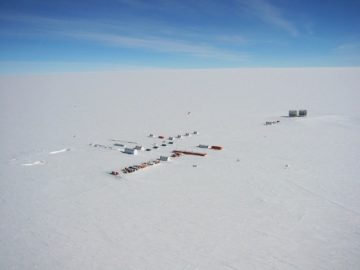
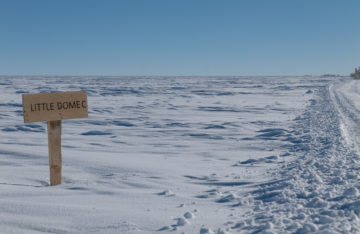
The first ice core drilling campaign of Beyond Epica-Oldest Ice has been successfully completed at the remote Little Dome C site in Antarctica – one of the most extreme places […]
The first campaign to drill Antarctica’s oldest ice starts this month (November). Beyond EPICA-Oldest Ice aims to drill an ice core to collect a record of past climate spanning 1.5 million years
A network of international researchers launches a European collaboration this week ( 14 October 2021). This collaboration will train a new generation of scientists to understand how past climate changes […]
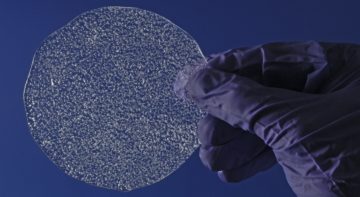
Immersive science-art ice core research exhibition to be displayed at Glasgow Science Centre during COP26

New research has revealed that climate changes associated with past episodes of abrupt warming in Greenland occurred synchronously across a region extending from the Arctic to the Southern Hemisphere subtropics. […]
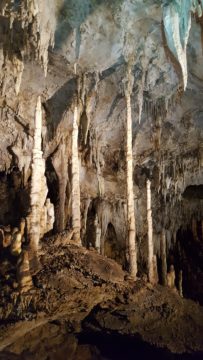
As the world continues to work around lockdown, the EGU General Assembly 2020 will take place this week (4-8 May) online. The annual EGU (European Geosciences Union) meeting, which usually […]
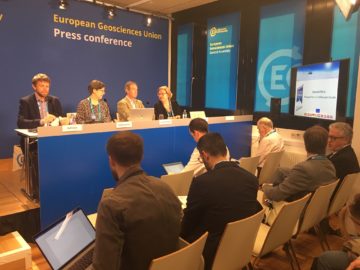
This week a team of European researchers announces its plans for an ambitious mission to find the oldest ice on Earth (9 April 2019). Antarctica’s ice has the potential to […]
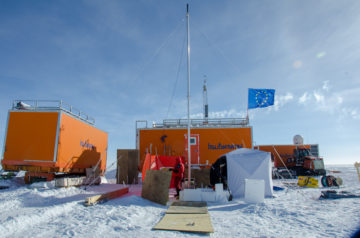
As spring returns to the southern hemisphere British Antarctic Survey (BAS) has started another research season which will take them over land, sea and ice in search of answers to […]
First phase of project to collect 1.5 million years of climate data in Antarctica A team of European scientists heads to East Antarctica this month to locate the oldest ice […]

UK national facility and capability