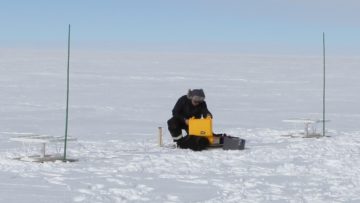
Cracking Antarctica’s Iceberg Code
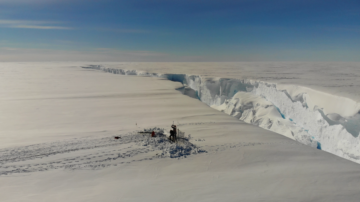
RIFT-TIP is investigating iceberg calving on the Brunt Ice Shelf. It uses field monitoring, lab testing, and modelling to predict when icebergs will form.

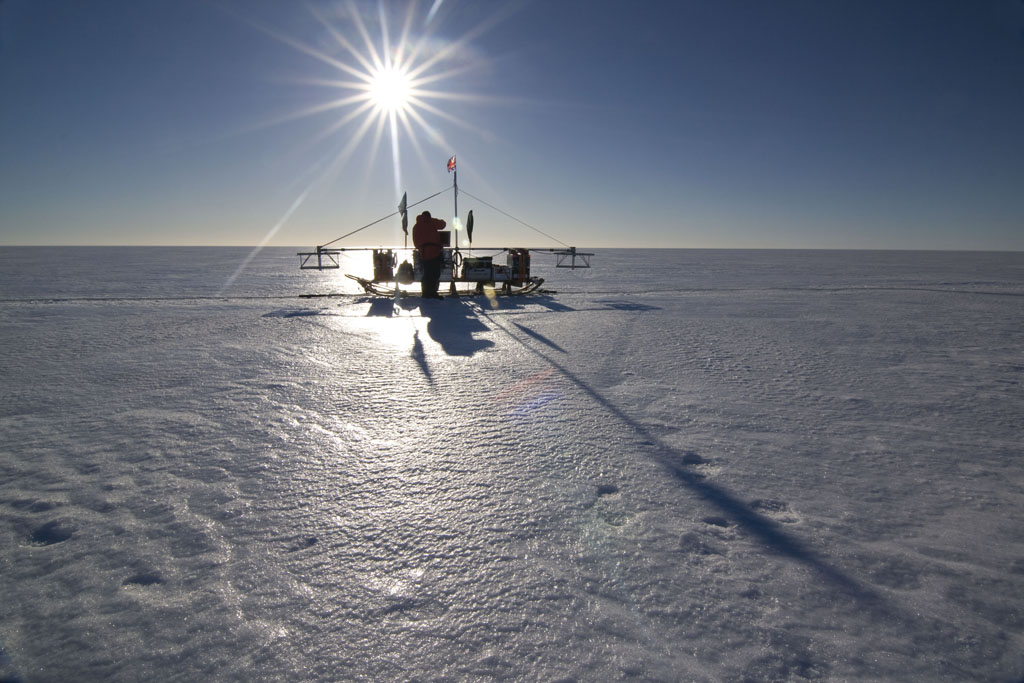
Research teams use phase-sensitive radars for determining ice shelf basal melt rates. Data is used to enhance climate models.
The ApRES instruments yield time series of ice shelf thickness change at precisions of ~1 mm. Measurements taken over a 10-day period will generate information about derived melt rate of a few cm per annum or better. The is used improve the performance of ocean models.
ApRES phase-sensitive radar is a low-power, light-weight instrument developed in a collaboration between BAS and University College London. It is a 200-400 MHz FMCW radar, with a 1-second chirp, run by controller: housed within its characteristic yellow box the radar and a 100 AH battery is buried in a shallow hole. The radar’s transmit aerial and receive aerial are spaced 5 meters each side of the yellow box and are also buried. Each system will record for a nominal 12 months and has the ability to process and send, via satellite link, melt-rate data.
RIFT-TIP is investigating iceberg calving on the Brunt Ice Shelf. It uses field monitoring, lab testing, and modelling to predict when icebergs will form.
The International Thwaites Glacier Collaboration unites global scientists to study Antarctica’s most vulnerable glacier, predict sea-level rise, and inform climate action worldwide.
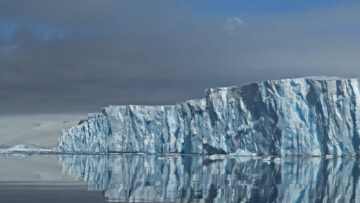
British Antarctic Survey is monitoring glaciological changes on the Brunt Ice Shelf, home to Halley Research Station.
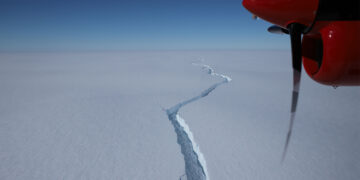
This project investigated the stability of Antarctica’s Filchner Ice Shelf to produce sea-level projections using hot water drilling, ocean measurements beneath the ice shelf, sediment coring, radar surveys and autonomous submersibles.
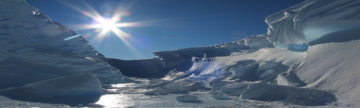
MELT is an ice-based project that will use autonomous sensors to monitor the ice column and ocean beneath the ice shelf in the critical area of the grounding line (the point where the glacier goes afloat to become ice shelf).
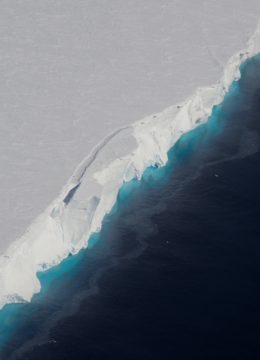
A study of two alternative methods for reconstructing ancient temperatures has given climate researchers a better understanding of how cold it was in Antarctica during the last Ice Age, around […]