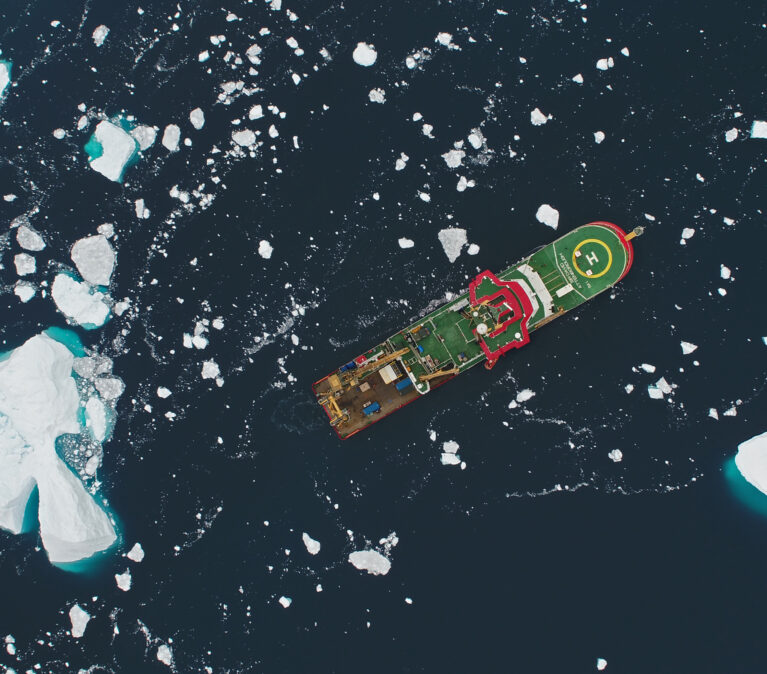
British Antarctic Survey (BAS) has a proud history of shipborne research. For decades, our ships have explored the polar oceans and supported world-class science. From the early MV John Biscoe to today’s RRS Sir David Attenborough, these ships are more than transport — they are floating laboratories.
Access to Earth’s most remote places
RRS Sir David Attenborough gives scientists access to some of the most remote places on Earth. It carries scientists, engineers and advanced equipment to study the ocean, marine ice, seafloor and atmosphere.
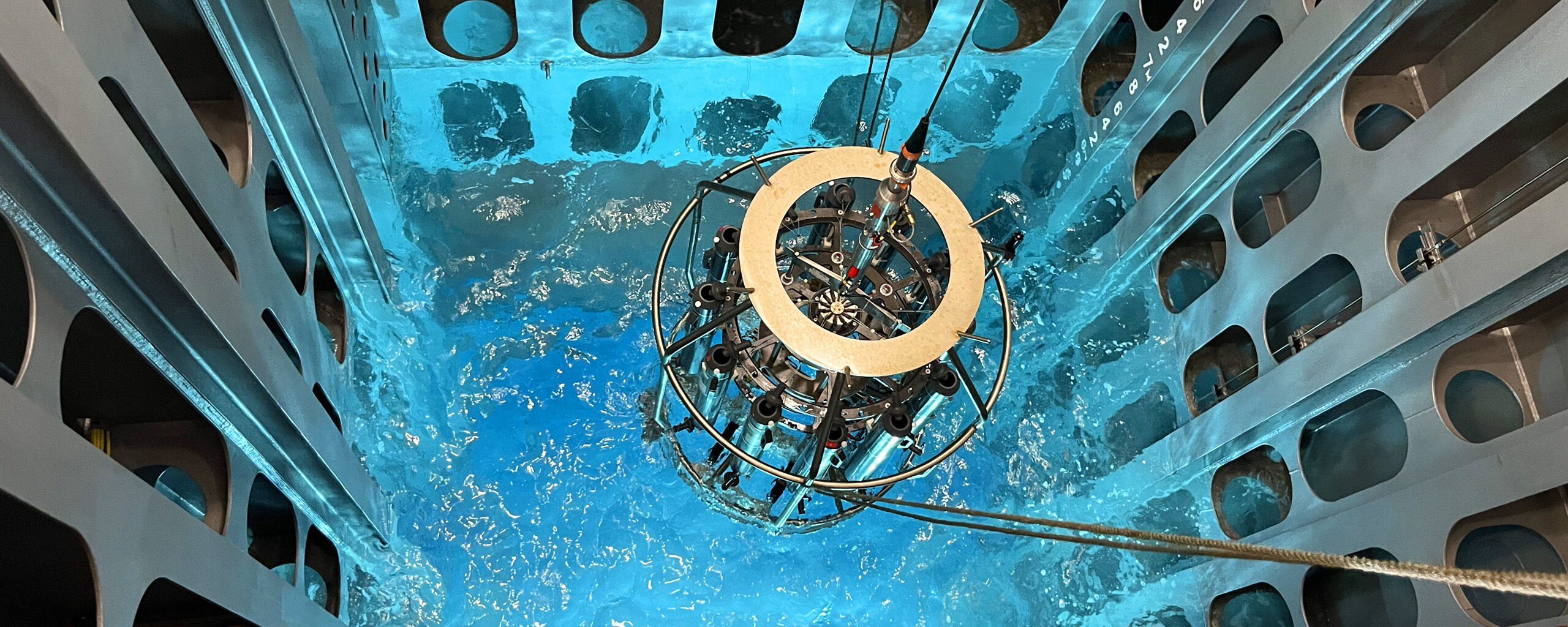
Our onboard facilities include laboratories, a moon-pool for safe equipment deployments and a multitude of sensors.
Our ships often work alongside ocean robots, like autonomous underwater vehicles (AUVs), remotely operated vehicles (ROVs). Together, they provide a complete picture of how polar systems are changing. It’s a powerful way to observe Earth’s climate, ecosystems and ocean dynamics.
Major projects
Major research projects are utilising the ship’s state of the art capabilities to undertake science to understand the Southern Ocean. Although this region makes up just one-fifth of the world’s oceans, it absorbs most of the ocean’s heat and nearly half its atmospheric carbon dioxide (CO₂). Studying it is key to understanding the global climate.
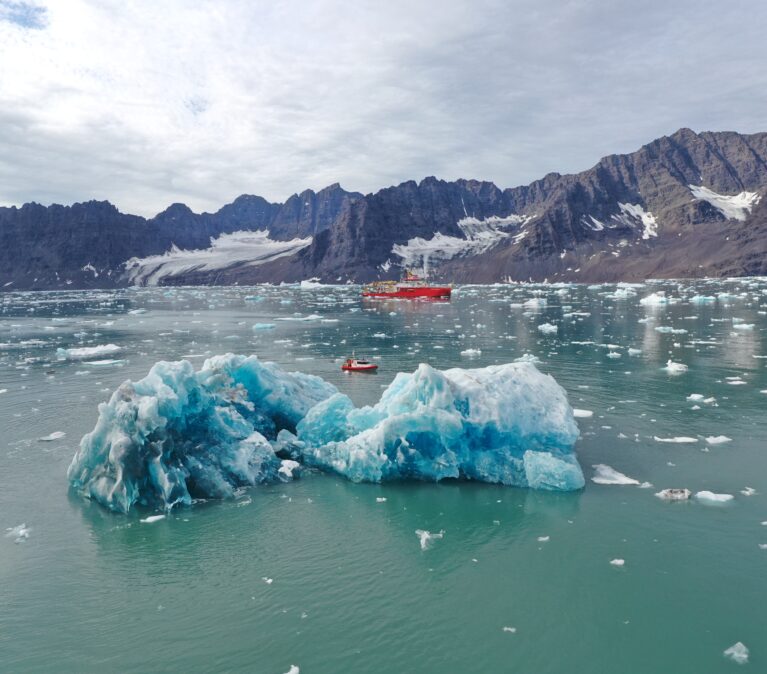
Understanding Greenland’s changing ice
GIANT is a pioneering science project that will test the potential for early warning of a critical climate tipping point.
Biogeochemical processes in polar ecosystems
BIOPOLE studies how climate change is affecting the release of nutrients from the polar regions, and their redistribution around the world’s oceans.