
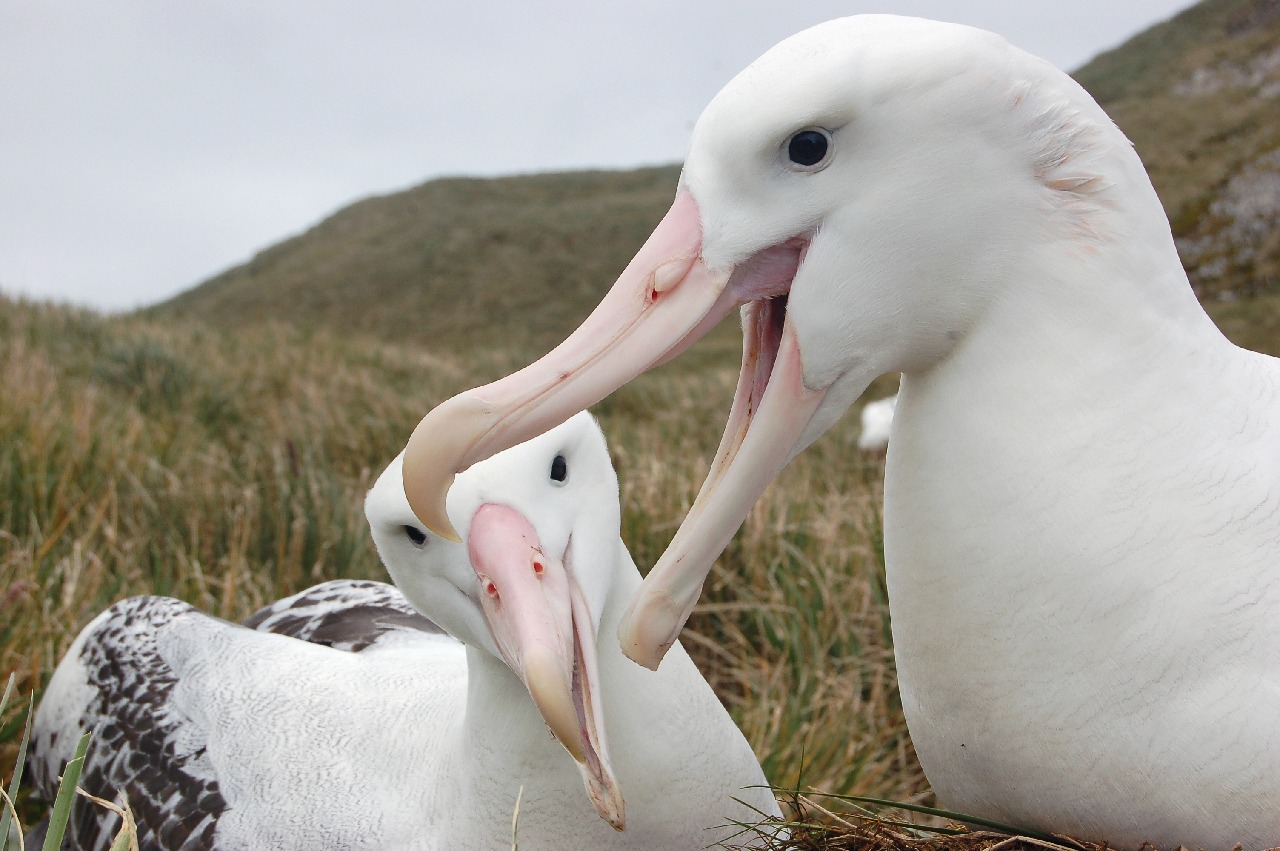
Layers of ancient bird poo preserved in the peatlands of the sub-Antarctic island of Bird Island have given scientists a window into 8,000 years of seabird history. They found that bird numbers rose and fell with changes in climate, offering new clues about how future climate change could impact seabird populations.
A new study published this week in The Proceedings of the National Academy of Sciences (PNAS), led by the Swedish University of Agricultural Sciences and the University of Bern in collaboration with the British Antarctic Survey, has reconstructed how seabird populations on Bird Island, South Georgia have risen and fallen over millennia in response to natural shifts in climate.
An accidental discovery
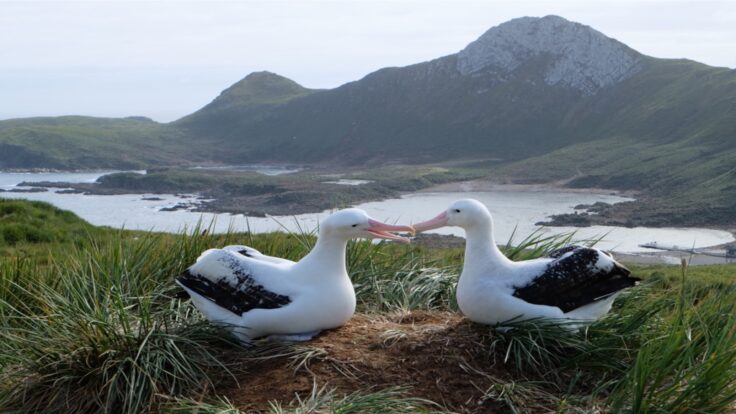
Bird Island is one of the most important seabird breeding sites on Earth, home to vast colonies of wandering albatrosses, petrels and penguins. But it was the island’s peatlands – boggy, organic deposits that have been building up for thousands of years – that turned out to hold a remarkable archive of seabird history.
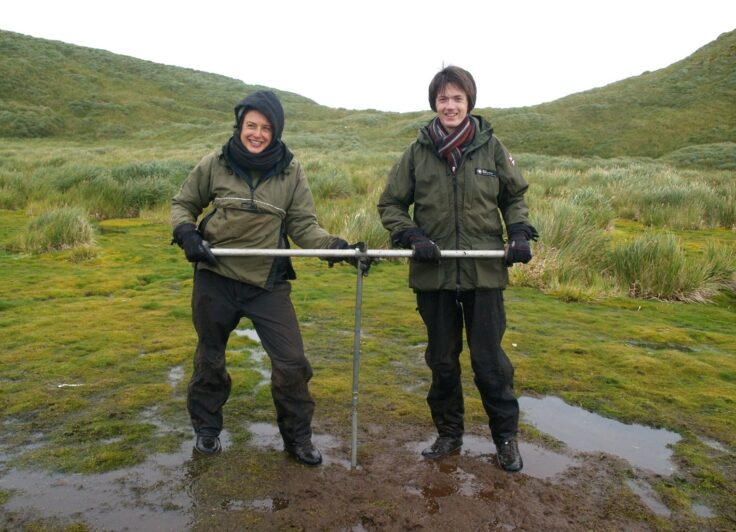
Scientists were collecting peat cores to reconstruct the past wind speeds of the Southern Hemisphere westerly winds – the powerful band of wind that circles Antarctica and drives much of the Southern Ocean’s behaviour – to improve predictions of how this might change in the future as our climate continues to warm. While analysing the geochemistry of the cores, which can be used as a proxy for historic wind speeds, they discovered a unexpected archive of seabird history.
When seabirds nest on the island’s slopes, their guano (or poo) washes down into the valley peatlands below. Because seabirds are top predators, mercury from the fish they eat accumulates in their bodies and passes into their poo. That mercury becomes trapped in successive layers of peat, creating a chemical record of how many birds were nesting above.
By analysing the amount and different isotopes of mercury at different depths of peat cores, the researchers were able to reconstruct seabird population changes continuously across thousands of years.
One of the study’s most striking findings emerged from the deeper layers of the peat cores. The record revealed that the first seabird colonies established themselves on Bird Island between 6,800 and 6,100 years ago – more than 1,000 years before other sub-Antarctic islands.
Dr Stephen Roberts, a geologist at British Antarctic Survey, and co-author on the paper, said said:
“Discovering these mercury signatures in the peat cores was a really unexpected, and pleasant surprise. And then, it was incredible to see this connection between historic winds and seabird populations. As well as telling us about how past changes in the wind influence seabird populations, it really helps our understanding of how populations might change in the future where winds are expected to increase across the Southern Ocean.”
The wind connection
Since the first seabird colonies formed, the researchers identified five major phases of population expansion. All five coincided with periods when the Southern Hemisphere westerly winds were less intense.
This connection between wind strength and seabird abundance has implications for the future. The ‘Westerlies’ have been intensifying in recent decades, driven by climate change. If weaker winds historically allowed seabird populations to thrive, the strengthening of those winds today could contribute to the dramatic declines researchers are seeing in seabird numbers.
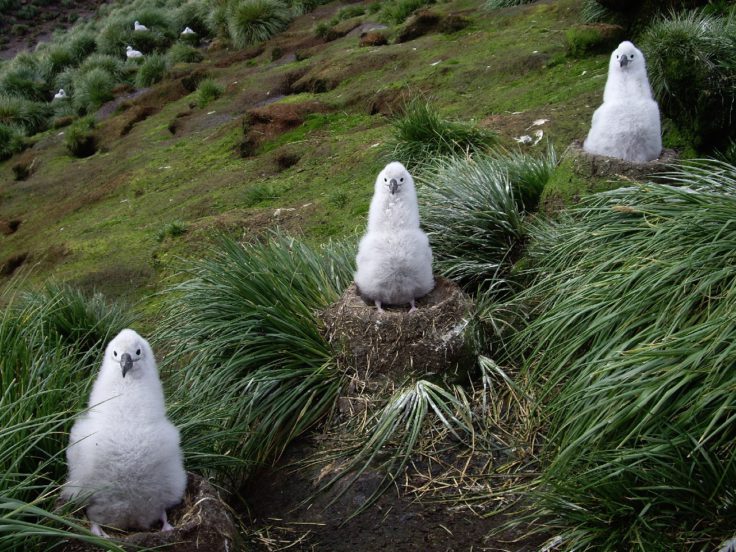
Stronger winds result in higher energy use for seabirds; it can reduce the length of feeding trips, the amount of food they provide their chicks and, ultimately, breeding success. Stronger winds bring with them a greater risk of crash landings, flooded nests and thermal exposure. For species that nest on open ground, powerful gusts can blow chicks, and even adults, off their nests.
Breeding success improves when winds are lower. Calmer conditions allow sea-ice to extend further across the Southern Ocean, increasing the amount of prey at the sea-ice edge for seabirds.
A warning for our oceans
Seabird populations have declined by up to 70% since the 1950s, driven by human activity (such as fishing) and climate change. However, the consequences of this extend beyond the fate of individual bird colonies. Seabirds are a barometer of ocean health, but also play a key role in sustaining it. Penguins, albatrosses and petrels breed in huge numbers across the Southern Ocean; their guano recycles vital nutrients and some estimates suggest these nutrients fuel up to 75% of productivity in ecosystems across the wider global ocean.
A sustained decline in seabird populations would likely ripple through the entire marine food web with consequences for fisheries, ocean carbon cycling and the health of ecosystems billions of people depend on.
Southern Ocean seabird population shifts over the Holocene revealed by peat sequestration of mercury from guano by Chuxian Li et al. is published in PNAS. DOI: 10.1073/pnas.2533681123