
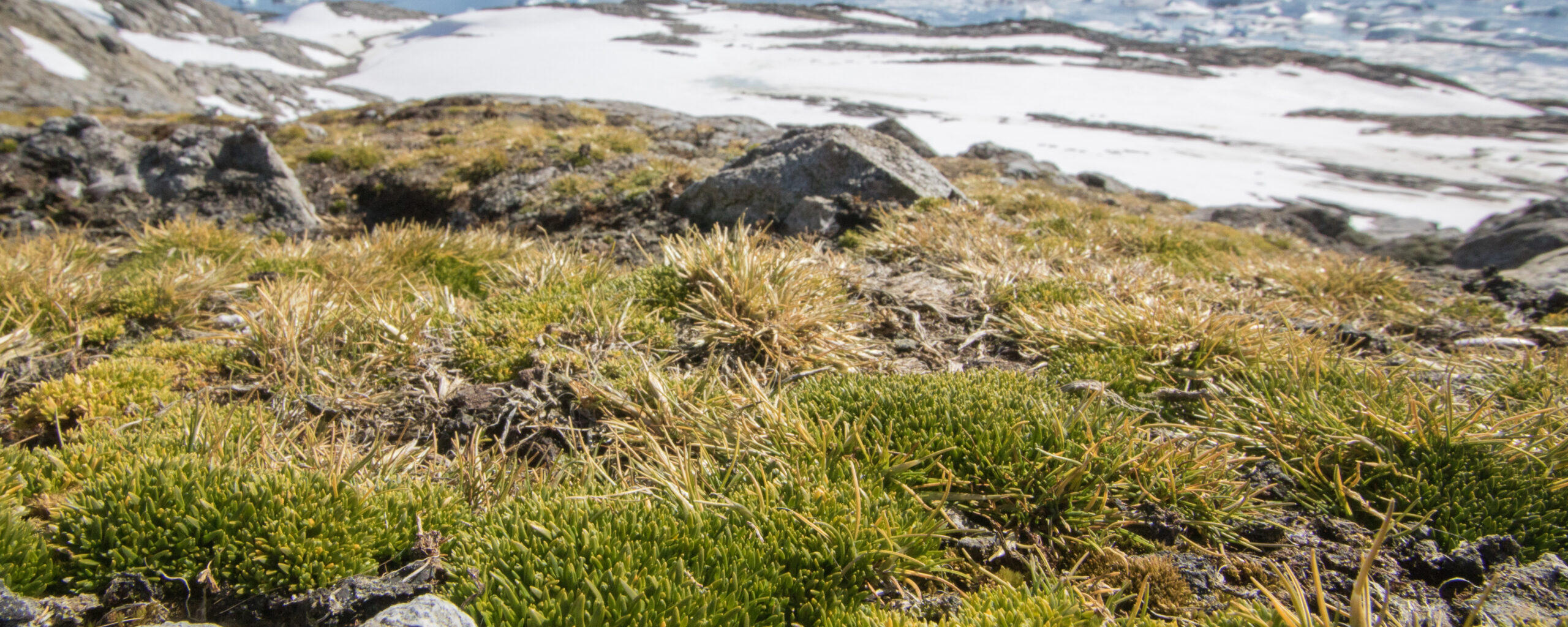
New research warns of growing threat from fungi to fragile Antarctic plant ecosystems – but cutting emissions could prevent the worst outcomes.
Scientists have warned that climate change could nearly double the variety and abundance of disease-causing fungi in Antarctic soils by 2100, posing a threat to the continent’s fragile plant life.
Today, only about 0.4% of Antarctica’s surface is free of snow and ice. This small area supports two species of flowering plants, and a variety of mosses, liverworts and lichens – plants which are well-adapted to survive in the cold. As Antarctica warms and more soil is exposed, plant communities are expected to expand into new areas. However, these findings bring into question whether Antarctica’s fragile plant life will be able to thrive in warmer conditions.
The findings, published today in Global Change Biology, are based on an analysis of fungal DNA from soils collected along a 1,900 km transect spanning southern Chile, the maritime Antarctic and the Antarctic Peninsula. The researchers discovered that increasing air temperatures are linked to a greater abundance and diversity of soil-dwelling fungi that cause plant disease.
These fungi – called pathogenic fungi – are micro-organisms that live in all soils, causing disease in plants by taking over their tissues, absorbing nutrients and destroying cell walls. Currently, low Antarctic air temperatures restrict their numbers but, as our climate warms, they are shifting closer and closer to the poles and increasing in number.
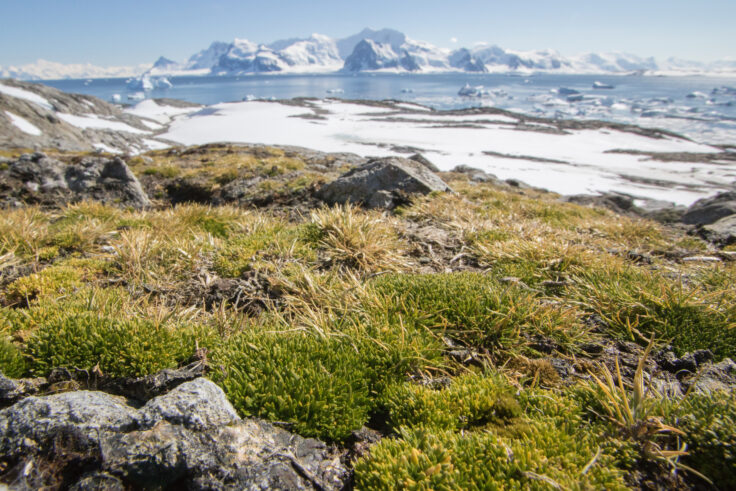
A team of researchers led by British Antarctic Survey took more than 50 samples of the barren soils that are characteristic of the region. They used DNA metabarcoding – a technique which can identify multiple species from tiny fragments of DNA from samples of soil, water or air, for example – to build a detailed picture of the fungal communities living in the soils. They then looked at three different future climate scenarios and predicted how these communities might change by the end of the century.
Under higher-emission scenarios, mean annual air temperatures across Chile and Antarctica could rise between 4-5 degrees Celsius over the next 70 years. If this happens, the richness and abundance of these disease-causing fungi are predicted to almost double in southern Maritime Antarctic soils. However, under the lower-emission scenario – which is broadly in line with international targets to limit global warming – the projected changes to the climate had negligible impacts on the pathogenic fungal communities.
While plants may be able to colonise newly exposed soils under warmer conditions, they are also more likely to encounter harmful fungi which may suppress their growth and limit their spread.
Lead author Kevin Newsham, a terrestrial biologist at British Antarctic Survey, said:
“As warming temperatures melt ice and expose more of Antarctica’s soil, plant communities are predicted to expand and colonise new areas, slowly turning parts of the white continent green. However, our findings here suggest that their growth could be hampered by the increasing number of disease-causing fungi that they will encounter as the continent’s climate changes.
The risks are increased by the ease with which novel fungal pathogens can cause disease once introduced to a new environment. The introduction of even a single new species of pathogen to Antarctic soils – whether through human activity such as scientific operations and tourism, or through natural dispersal by wind – could have significant impacts on the region’s plant life. Dr Newsham added:
“We have examples from other parts of the world where pathogens have reached new environments, and decimated plant populations. For example, a pathogen that infects roots transformed native Australian Eucalyptus forest into savannah grassland, and across Europe, ash dieback is destroying populations of ash trees.”
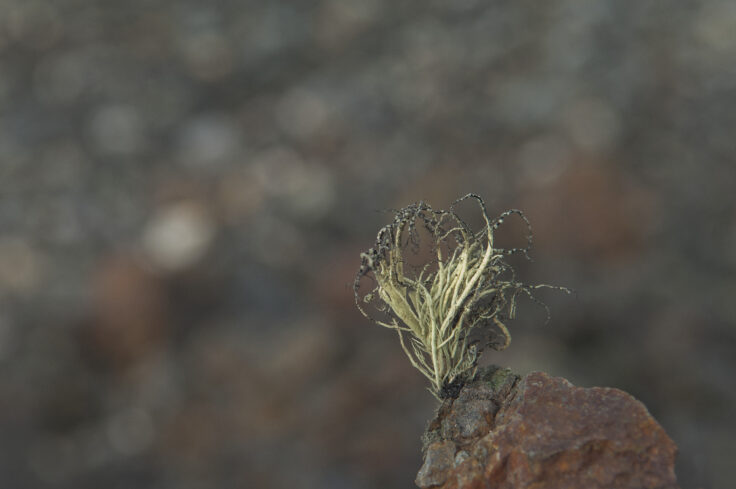
The study also highlights potential, but smaller, risks to animals. One pathogen – called Beauveria – which poses a threat to invertebrates, the most abundant and diverse terrestrial animals in Antarctica, was also found to increase in warmer soils.
However, the picture is not entirely uniform. The study also found that some pathogens respond differently to increases in precipitation as well as temperature, with higher precipitation reducing the abundance of some pathogens – and particularly those causing disease in animals.
Will Goodall-Copestake, a researcher at the Royal Botanic Garden Edinburgh, and an author on the paper said:
“Although air temperature has been linked to increasing diversity of soil fungi causing plant diseases on other continents, our study closes an important knowledge gap by identifying which fungi harmful to plants are likely to become more prevalent on the Antarctic Peninsula as the region’s climate changes and plant communities expand into its soils.”
The research was funded by a joint NERC–CONICYT award and the Danish National Research Foundation. It was carried out in collaboration with researchers from the Royal Botanic Garden Edinburgh, the Natural History Museum of Denmark, Universidad de Talca in Chile, and the Swiss Federal Research Institute WSL.
Climate change projected to double the richness and abundance of soilborne phytopathogenic fungi in Southern Maritime Antarctica by Newsham, K. K et al. is published in Global Change Biology: https://doi.org/10.1111/gcb.70885