
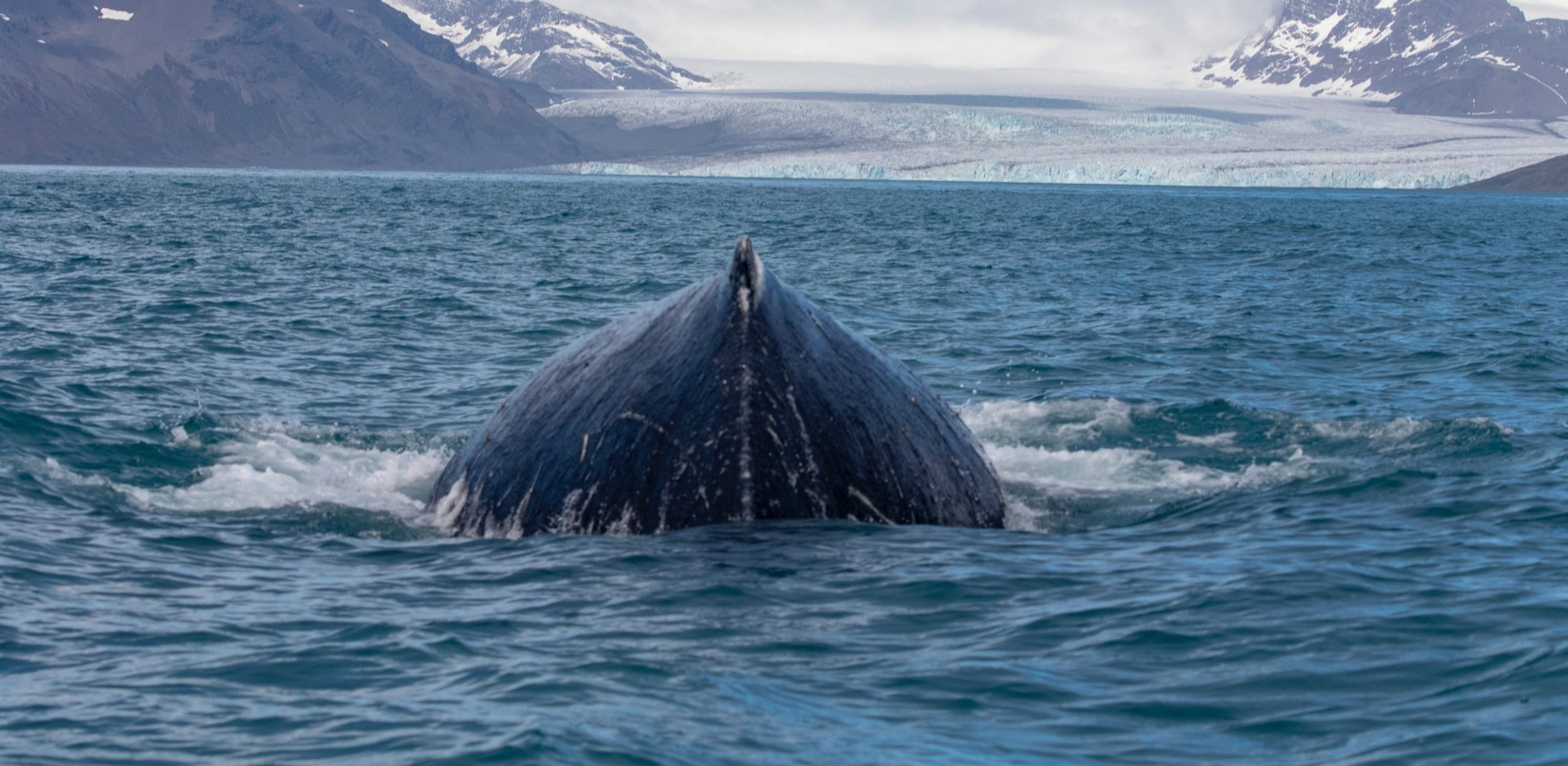
Welcome to the resource page for expedition staff, passengers, and anyone interested in contributing to whale research and conservation in South Georgia.
The Wild Water Whales project studies how baleen whale populations are recovering after the intense whaling of the 20th century.
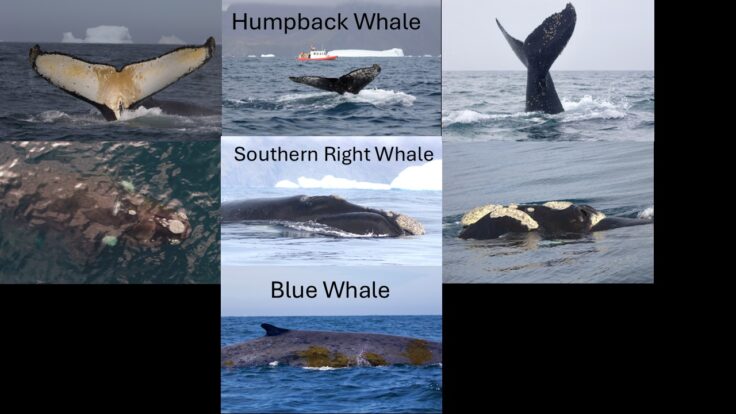
Baleen whales, including humpback, fin, blue, and southern right whales, filter feed on krill and other small prey rather than having teeth. We have several programmes running, including sustained monitoring of whales in South Georgia.
Every whale has a story
Every whale seen in South Georgia has a story that spans oceans and decades. Because of this, every photo or sighting you share becomes part of that recovery story and helps scientists track how these populations are doing.
We know expedition staff have so many demands on their time while at sea. These resources are designed to make it easy to find information and share your sightings when you’re visiting South Georgia.
How you can help
Sharing your whale photos and sightings is simple and makes a real difference. Here’s where to contribute:
- happywhale – Upload your whale photos to help identify individual whales and track their movements across oceans
- ORCA OceanWatchers – Record your whale sightings to contribute to long-term monitoring data
- Whale Photo-Identification Guide – South Georgia – Learn how to take the best photos for identification
Why your sightings matter
Scientists can’t be everywhere at once, but visitors to South Georgia can be. Your photos help researchers:
- identify individual whales and track them over time
- understand which species are using South Georgia waters
- monitor population recovery since the whaling era
- map whale movements between feeding grounds
Whether you spot one whale or fifty, your contribution adds valuable data to our understanding of these remarkable animals.
Learn more
Find out about the South Georgia Sustainable Use Marine Protected Area and the work being done to protect whale habitat.
Acknowledgments
We are very grateful to the Government of South Georgia and the South Sandwich Islands for their significant support.
This work is supported by Darwin Plus, the Blue Belt Programme, the South Georgia Heritage Trust, and Friends of South Georgia Island.