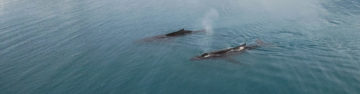
Whales of South Georgia Be Part of the Story
The Wild Water Whales project studies the recovery of baleen whale populations. Every shared photo or sighting becomes part of the recovery story.
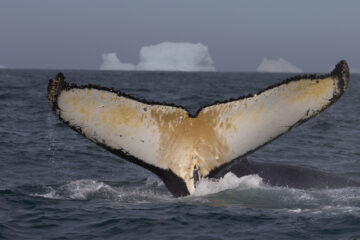

Slesser, Henry W. Kershaw, Joanna L. Kennedy, Amy S. Weir, Caroline R. Martin, Stephanie. Carroll, Emma L. Baker, C. Scott. Bassoi, Manuela. Buss, Danielle L. ORCID record for Buss, Danielle L.. Collins, Martin ORCID record for Collins, Martin. Jackson, Jennifer A. ORCID record for Jackson, Jennifer A.. (2026) Sex ratio, pregnancy status and blubber testosterone concentrations of humpback whales (Megaptera novaeangliae) on foraging grounds in the Southwestern Atlantic.
Morley, Simon A. ORCID record for Morley, Simon A.. Campanella, Fabio. Young, Emma F. ORCID record for Young, Emma F.. Baylis, Alastair M. M. Barnes, David K. A. ORCID record for Barnes, David K. A.. Bell, James B. Bennison, Ashley ORCID record for Bennison, Ashley. Collins, Martin A. ORCID record for Collins, Martin A.. Glass, Trevor. Martin, Stephanie M. Whomersley, Paul. Schofield, Andy. (2025) Dramatic ENSO related Southwestern Atlantic ecosystem shifts.
Morley, S., Campanella, F., Baylis, A., Barnes, D., Bell, J., Bennison, A., Collins, M., Glass, T., Martin, S., Whomersley, P., Young, E., & Schofield, A. (2024). Fisheries acoustic data, whale and bird data from two transits from the Falkland Islands to Tristan da Cunha during March 2018 (RRS James Clark Ross) and March 2019 (RRS Discovery) (Version 1.0) [Data set]. NERC EDS UK Polar Data Centre. https://doi.org/10.5285/db06c590-4f6d-4a8a-9b8c-ce45204103c1
The Wild Water Whales project studies the recovery of baleen whale populations. Every shared photo or sighting becomes part of the recovery story.
This project is creating a long-term framework for monitoring whale numbers and behaviour.
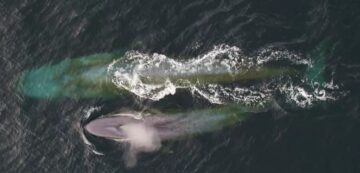
South Georgia’s Lost Giants is part of the British Antarctic Survey’s “Wild Water Whales” project studying the recovery of whales from historical exploitation in South Georgia.
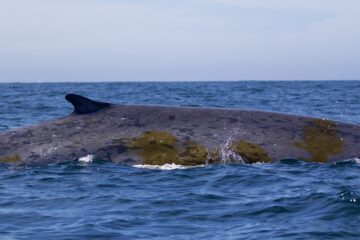
Hungry Humpbacks studied how humpback whales, the largest predators of krill in the region, fed at South Georgia.
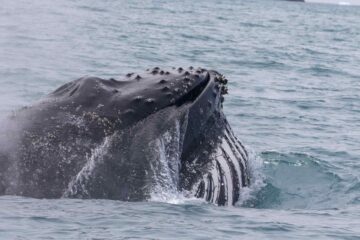
Bird Island is one of two year-round stations on South Georgia, conducting valuable bird and seal studies along with opportunistic whale sightings. Project Partner and Bird Island Station Science […]

Join us for the Darwin Plus, South Georgia Heritage Trust-Friends of South Georgia Island-supported Hungry Humpbacks Project Wrap-up workshop on September 24, 2026! This session will bring together researchers, conservationists, […]
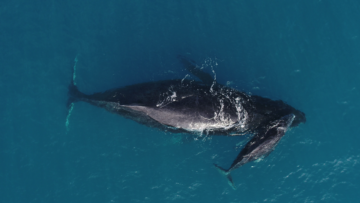
During the final weekend of June, King Edward Point marine biologists Camille De Pasquale and Rhiannon Nicol worked alongside the captain and crew of the South Georgia Government fisheries […]
The past few months have brought some incredible whale sightings around the island, and we’re excited to share the latest updates with you. Zoological Field Assistants (ZFAs) Katherine Thomas and […]
George Day has been compiling and analysing all the Bird Island whale observations since 1979. During that time, eight species of whales were seen with southern right whales having the most sightings followed by humpback whales and then minke whales.
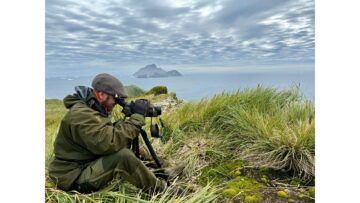
In January, we finally deployed two of the acoustic moorings in Cumberland Bay. This was after almost a year and a half in delays mainly due to large icebergs in the area.
scientists are focusing on two major projects: one on whales and their consumption of krill (a shrimp-like creature that’s abundant in the Southern Ocean), and another on populations of bottom-dwelling fish.