
Water tracers in the UKESM


The project adds water tracers, including stable isotopes, to the UK Earth system model (UKESM2). These tracers follow water through the model’s hydrological cycle.
Stable water isotopes provide long-term records of climate change. Ice core measurements can reveal temperature changes over glacial-interglacial cycles.
Including isotopes in climate models helps establish relationships between isotopic concentrations and climate variables. It also allows evaluation of past climate simulations and improves understanding of the hydrological cycle.
The model development project adds code to UKESM2 which will allow users to run with water tracers and isotopes. This will allow studies into climate and hydrology:
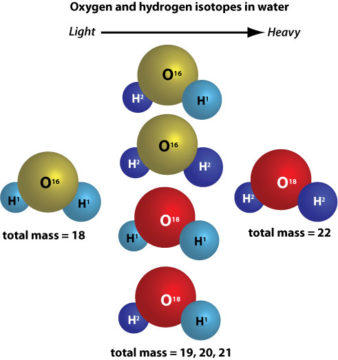
Stable isotope properties: water molecules contain hydrogen and oxygen. Isotopic variations alter molecular mass from 18 to 22, providing a record that does not decay over time.
Credit: Lesleigh Anderson and Jeremy Havens, USGS
The project aims to:
Track water and water isotopes through the atmosphere, land, ocean and sea ice model components
Investigate precipitation sources and how they might change
Evaluate palaeoclimate simulations against ice core data
The project is led by BAS as part of its National Capability programme (SURFEIT and PRESCIENT), with collaboration with the Met Office plus the SWAIS-2C, ECO-ICE and EU P2F projects. The work started under the EU-TIPES project.
Update on progress:
Water tracers in the UKESM

IDP Science Leader IMP 3
BAS Science Strategy Executive Group, Ice Dynamics and Palaeoclimate team

Scientist - Other
External collaborators:
Jeff Ridley – Met Office