Science Leader IMP 2

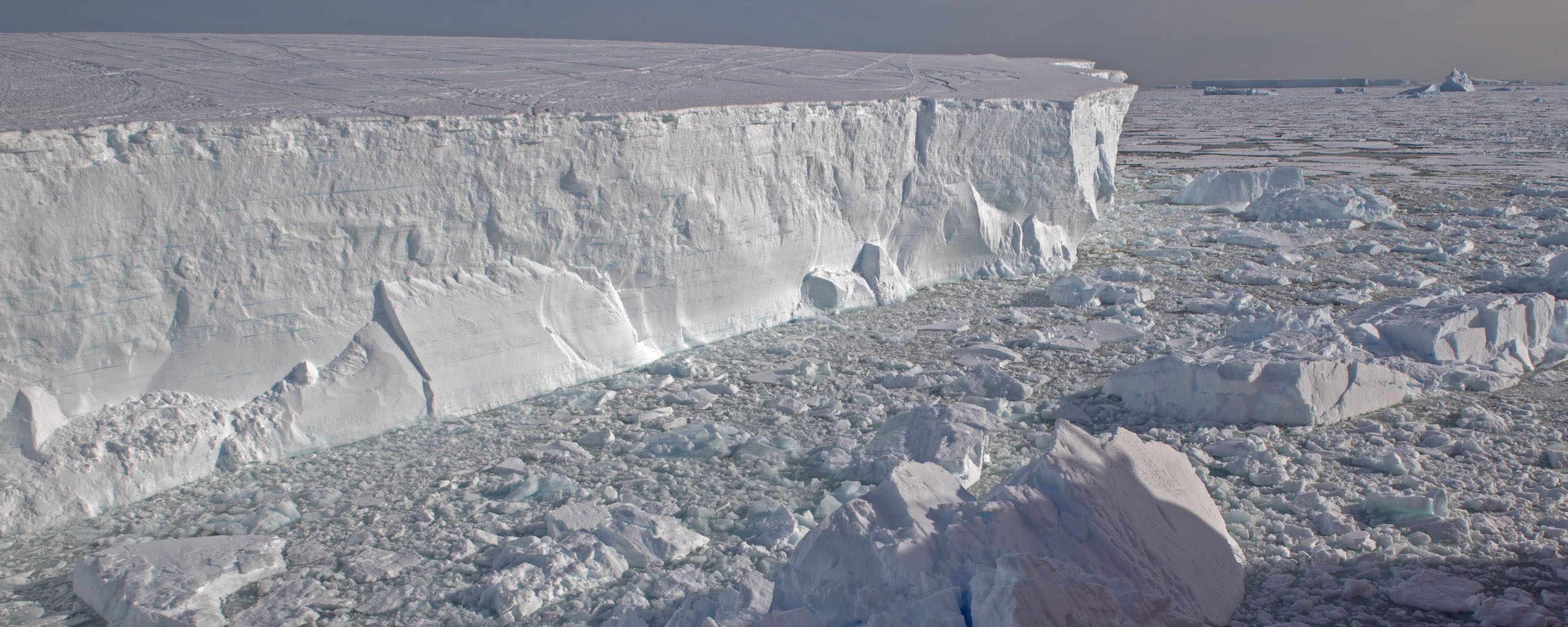
The project studies how glacier calving generates internal tsunamis, within polar oceans.
Researchers will investigate how these waves mix heat, nutrients and carbon and affect marine productivity.
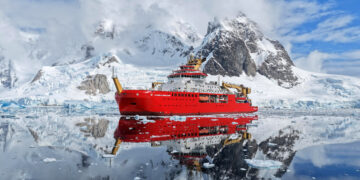
From RRS Sir David Attenborough and Rothera Research Station, researchers will provide the first systematic observations of this process. They’ll use a variety of platforms from sensors on the seabed right up to satellites, and link their observations to climate models.
POLOMINTS helps us to:
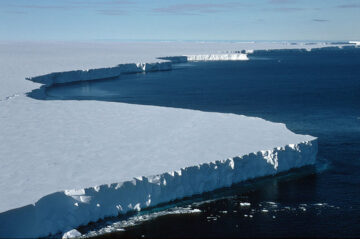
When marine-terminating glaciers, glaciers that flow into the ocean, as opposed to land – calve into the sea, they create large waves under the ocean surface called internal tsunamis. When these break, the resulting mixing brings up nutrients and heat from the ocean depths into the surface waters.
Calving events of various sizes are well known, but the effect of the internal waves and mixing that they cause isn’t included in ocean or climate models.
The project brings together glaciologists, oceanographers, climate modellers and marine biogeochemists. They combine field observations, experiments and computer modelling.
The Polar Ocean Mixing by Internal Tsunamis (POLOMINTS) project is funded by a £3.7m Natural Environment Research Council grant.
Science Leader IMP 2
Ocean Climate Scientist
Observational Oceanographer

Independent Research Fellow

Ocean and Biophysical Modeller

Physical Oceanographer
RaTS Project Manager
Programme Support Manager
An international research team, led by British Antarctic Survey (BAS), has been awarded £3.7M to advance a ground-breaking study on how underwater tsunamis are triggered by glacier calving around Antarctica.
Our state-of-the-art polar science ship provides scientists access to remote and challenging marine environments across the Antarctic and Arctic.
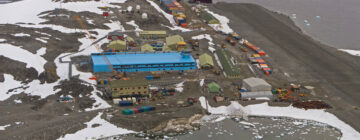
The largest British Antarctic facility is a centre for biological research and a hub for supporting deep-field science.