Science Leader/Polar Oeans

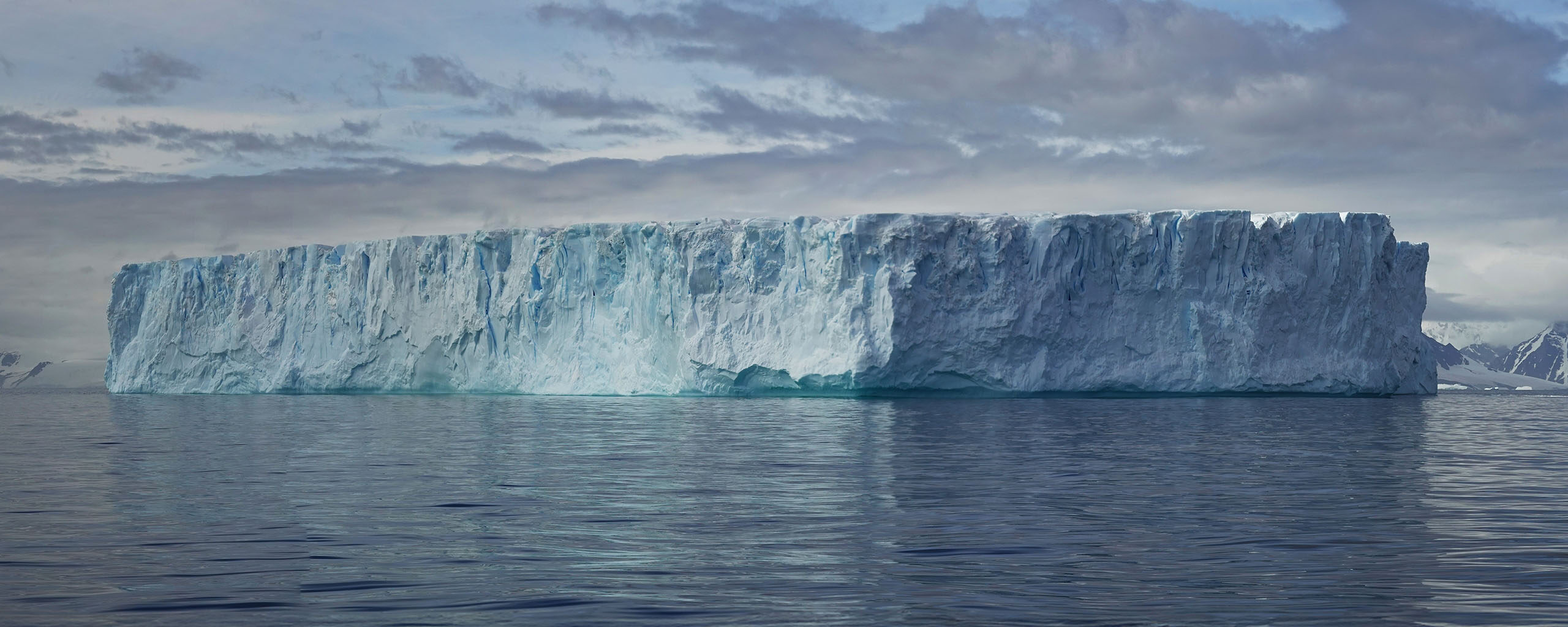
This knowledge gap creates the biggest uncertainty in forecasts of global sea-level rise.
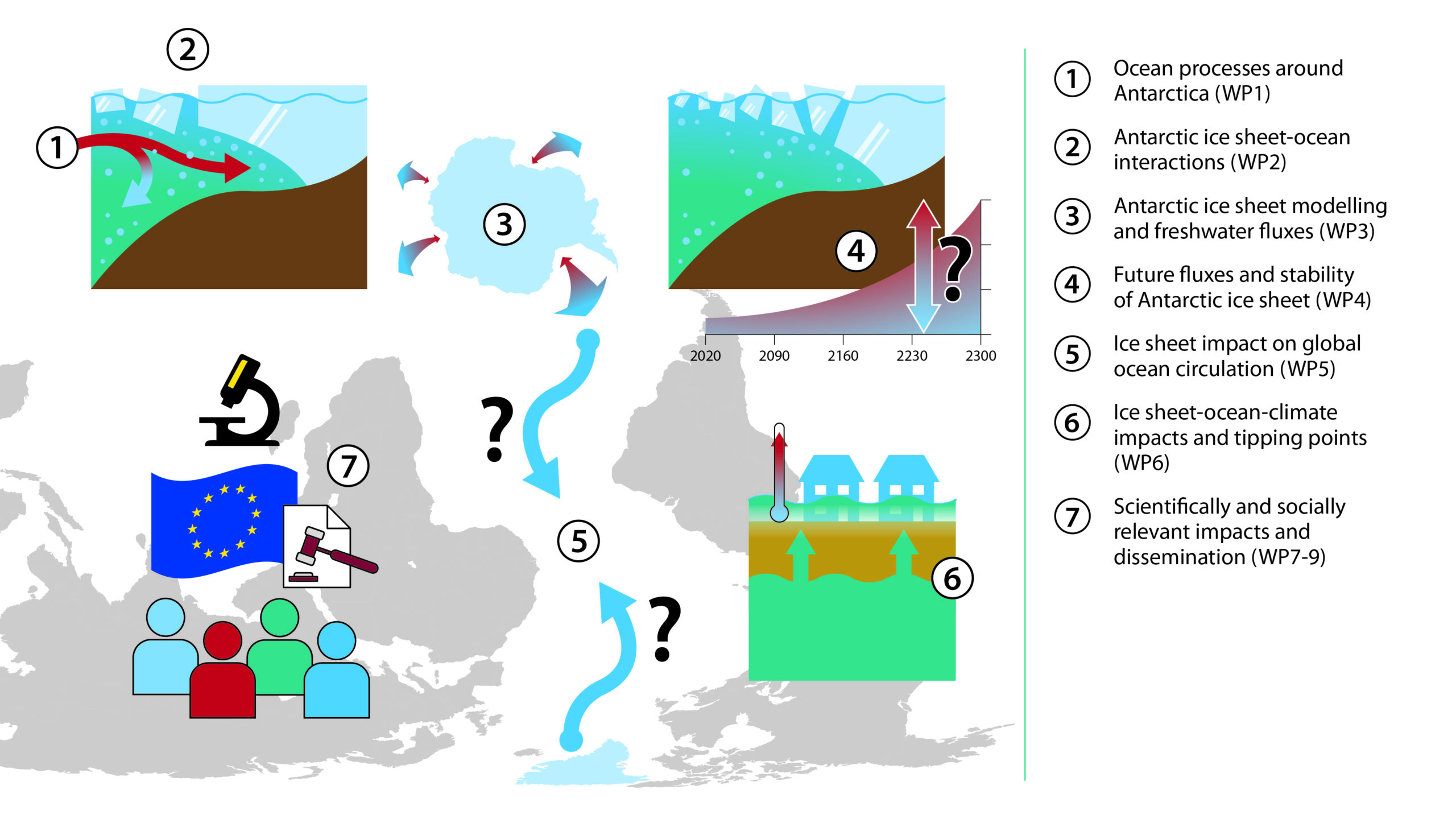
OCEAN:ICE is filling these gaps. The project combines field observations, satellite data, and advanced computer models to predict future changes more accurately.
The research focuses on how Antarctica’s ice sheet and the Southern Ocean affect global climate. It also examines Greenland’s ice sheet.
These systems influence three critical things: sea level, deep ocean circulation, and long-term climate patterns. (Deep ocean circulation includes the Atlantic Meridional Overturning Circulation, a major current system that helps regulate Earth’s climate.)
OCEAN:ICE aims to reduce uncertainty in climate and sea-level predictions from now through 2300 and beyond.
Uncertainty about rising sea levels is a major global concern. It makes it difficult for communities and governments to plan effectively, increasing the risk of devastating economic, social, and environmental impacts.
OCEAN:ICE helps us to:
Understand how ocean heat reaches the Antarctic Ice Sheet and causes melting – warm ocean currents flowing beneath ice shelves are the primary driver of ice loss, but the processes controlling this heat delivery remain poorly understood
Improve knowledge of how melting affects sea level and ocean circulation – accelerating ice loss is already contributing to sea-level rise, and increased freshwater entering the ocean could dramatically alter global ocean currents
Assess how freshwater from ice sheets changes the storage of heat, carbon, oxygen, and nutrients in the deep ocean – these changes can persist for decades to centuries, affecting Earth’s climate system long into the future
Identify potential tipping points in the Earth system and the risks they pose to people and ecosystems – rapid ice sheet collapse or major circulation changes like the weakening of the Atlantic Meridional Overturning Circulation could trigger cascading effects across the planet
Recent ice loss from Antarctica has accelerated, making this research increasingly urgent. By combining new observational data with improved models, OCEAN:ICE will produce the most comprehensive assessment yet of how ice sheet changes will impact our climate and coasts in the coming centuries.
OCEAN:ICE brings together 19 research centres from across Europe and the UK, along with international partners from the US and Ukraine.
The team includes ice sheet modellers, oceanographers, climate scientists, and policy experts.
The project involves six associated partners located in UK:


Disclaimer: Funded by the European Union. Views and opinions expressed are however those of the authors only and do not necessarily reflect those of the European Union or European Research Executive Agency (REA). Neither the European Union nor the granting authority can be held responsible for them.
Specific OCEAN ICE objectives are to:
O1: Reduce the spatial and knowledge gaps in ocean observations around Antarctica, particularly relating to ice sheet-ocean interaction and deep water formation and export. This will assess the oceanic controls on heat and freshwater delivery to and from ‘cold’ (e.g. Weddell Sea) as well as ‘warm’ (Amundsen Sea) sites of ice sheet-ocean interaction around Antarctica, and the processes that control mixing, water mass formation and export over the continental shelves and subpolar basins.
O2: Improve critical ice sheet-ocean processes in numerical models, using historical observations and new data sets obtained in the project. Particularly under warm and cold ice shelves and around grounded icebergs, including vertical/horizontal mixing, ocean heat delivery, iceberg interactions with sea-ice and bathymetry and basal melt. Implement these improvements in coupled ice sheet-ocean and ice sheet-climate models.
O3: Improve representation of AIS dynamics and integrate this knowledge into ice sheet and coupled ice sheet-climate models. By using new and existing datasets to improve ice sheet model initialisation and quantifying the uncertainty in present day freshwater fluxes from Antarctica due to climate variability, dynamical processes (calving, ice flow) and surface/basal mass balance (surface runoff, basal melt).
O4: Quantify AIS melt sensitivity to climate forcing and reduce the ‘deep uncertainty’ in freshwater flux and SLR projections to 2300. By combining newly developed coupled ice sheet-ocean models with innovative quantification of uncertainty and improved initialisation setups. This will produce projections of the contributions by basal meltwater, iceberg calving and surface runoff for a range of future climate scenarios, including tipping points.
O5: Assess how global ocean circulation is impacted by freshwater discharge from the northern and southern ice sheets. Map the pathways and variability of Antarctic Bottom Water as it spreads north. Assess how this and other freshwater input modifies climatically relevant ocean features such as North Atlantic Deep Water formation, the deep overturning circulation, the Antarctic Circumpolar Current (ACC) and AMOC up to millennial timescales.
O6: Assess the ocean impact on, and feedbacks between, key global climate metrics (e.g. SLR, global mean surface temperature) and polar ice sheet melt to 2300 and beyond. This will be achieved by combining the improved melt scenarios, initialisation and model parameterisations, notably the representation of icebergs and ice shelf processes, within coupled ice sheet-climate models. It will establish the impact and likelihood of ice sheet melt scenarios, including passing tipping points, and global consequences such as SRL and AMOC state change.
O7: Deliver free and open access to all data obtained in the project and contribute to international assessments (e.g. IPCC), climate model development, multi-national ocean observing initiatives (e.g. SOOS, All-Atlantic Ocean Research Alliance) and policymakers. Data consolidation and delivery will be achieved through close integration with SOOS, EMODnet and Copernicus data delivery services and will follow FAIR principles and be INSPIRE compliant. Direct partnership with SOOS, SAMOC, EPB, EU Polar Cluster, EU-Polarnet 2, and other European and international programmes, as well as the high-level involvement of investigators in international science coordination, climate assessment and policy bodies will maximise the reach and impact of OCEAN:ICE.

Science Leader/Polar Oeans

Ocean/Ice Scientist IMP 3

Observational Oceanographer
Shelf Seas Group Leader
Science Leader IMP 2

Post/Award Programme Manager

Ice Sheet Modelling

Physical Oceanographer

Oceanographer
Programme Support Officer
Physical Oceanographer

Ocean/Iceberg Modeller
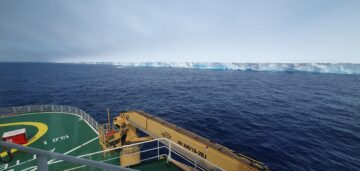
The world’s largest and oldest iceberg A23a has finally come to a standstill as it appears to have run aground near the sub-Antarctic Island of South Georgia.
2023