Impact Facilitator

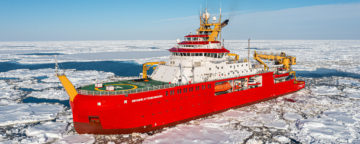
The project develops Artificial Intelligence (AI) tools to optimise Antarctic marine operations while maximising science output. A key focus is AI decision support for managing the BAS marine fleet. This includes the research ship RRS Sir David Attenborough and autonomous vehicles such as Boaty McBoatface.
The project also supports BAS efforts to combat climate change by reducing fuel use during polar research. It is an important step toward achieving net zero carbon by 2050.
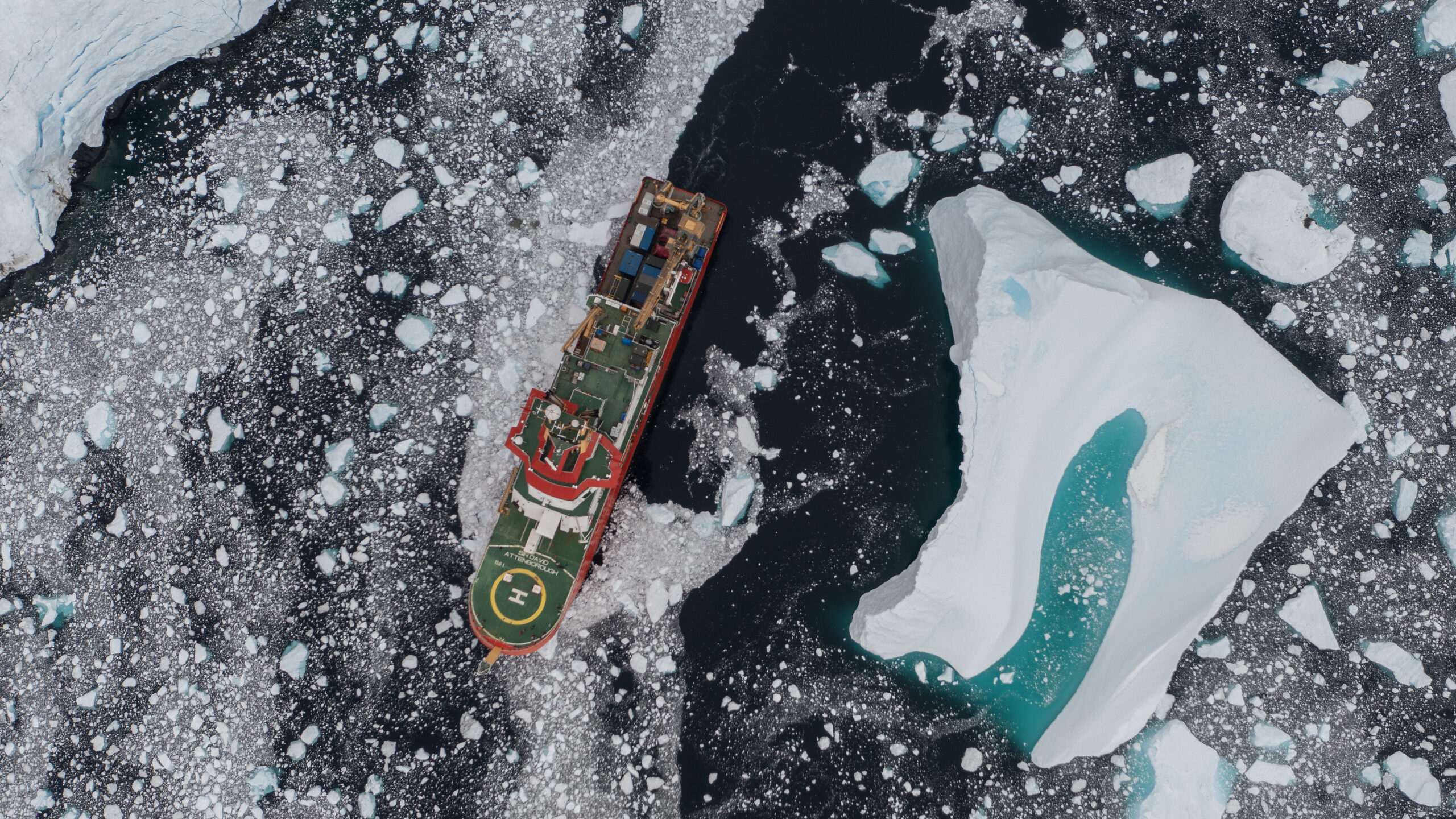
Polar research operations are logistically complex and fuel-intensive. Efficient planning reduces emissions, cuts costs, and increases the science delivered per mission.
AI-driven tools also help adapt to changing conditions at sea. This improves navigation safety, increases research return, and supports net zero carbon goals.
Logist combines several AI-based systems to optimise operations:
The project aims to:
Logist brings together experts in AI, marine operations, polar science, and environmental modelling. BAS works with international partners to ensure the tools developed support both operational efficiency and climate goals.
By processing the huge quantities of data available from satellite and in-situ observations, as well as forecasts and models, MeshiPhi allows Logist to create a detailed digital model of the environment.
One use of this model is to aid the safe and fuel-efficient navigation of polar vessels operating in the region, including the SDA and other UK research vessels. MeshiPhi makes use of all the relevant environmental data needed for polar operations, allowing us to work out how a vessel or vehicle will respond to different situations and scenarios. An everyday analogy would be, when traveling from London to Cambridge, one could travel on a motorbike, in a car or on a bus. Each vehicle has a different top speed, can be driven through some areas rather than others and its optimal route would depend on environmental factors such as the road surfaces, weather and traffic conditions.
MeshiPhi creates the digital environment that enables us to compute these different factors quickly and efficiently, allowing us to use this information for other decision-making tasks in Logist.
PolarRoute is an AI route planner that acts like a Google Maps for the polar oceans. It can take the environment model generated by MeshiPhi and plan the optimal route between a set of points for a given vessel in a given set of environmental conditions.
This will allow the navigation officers of any polar ship to automatically plan routes the ship can take while on passage and when conducting scientific research. Planning any route in polar waters is a complex task that involves a multitude of factors and decisions. PolarRoute can make such calculations in a matter of minutes and navigators can choose between a Carbon Saving Route, and the fastest route.
PolarRoute is currently being tested onboard the SDA and significant updates and results will be shared when available.
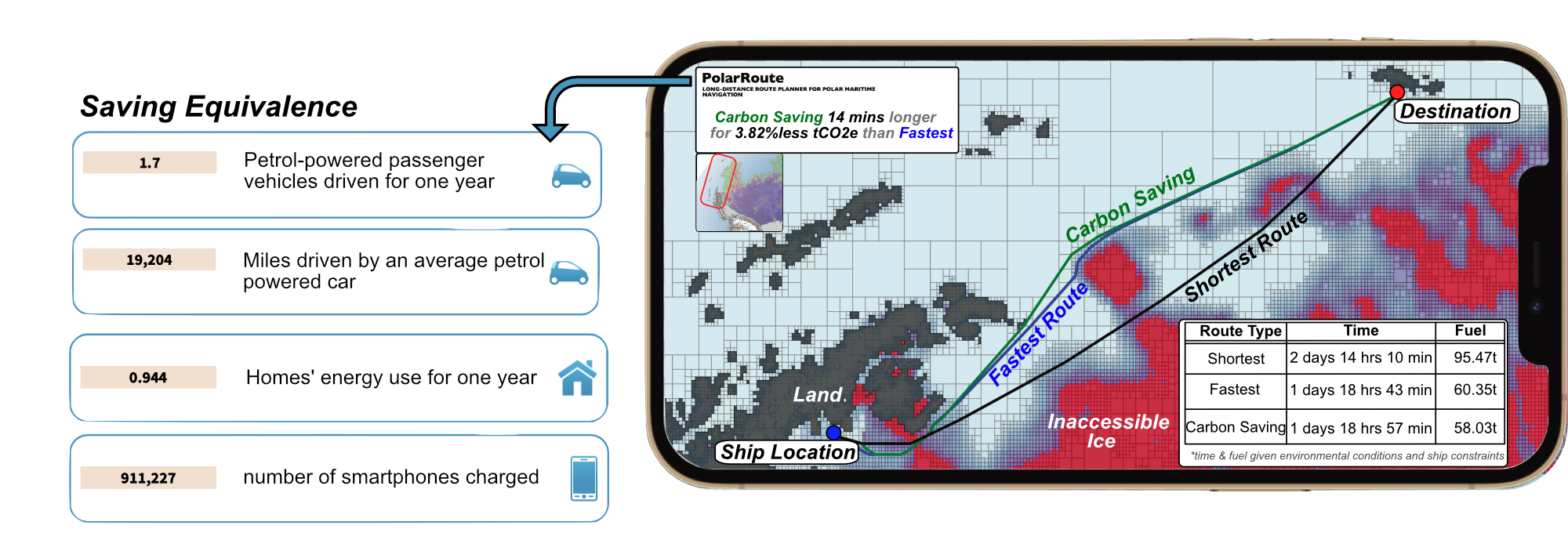
Figure 1: PolarRoute Example demonstrating route planning from a ship location to a destination either by the fastest or the carbon saving route. By taking the carbon saving route, which is 14 mins longer than the fastest route, you save 3.82% on carbon. This carbon saving is equivalent to: 1.7 times of a petrol-powered passenger vehicle driven for one year; 19,204 miles driven by an average petrol powered car; or, 0.94 a homes energy usage for one year.
We are developing the VOLT AI planner to automatically generate strategic plans for the NERC fleet of ships and autonomous vehicles. Such a planner can be compared to Amazon’s AI work to ensure its fleets of vehicles sort, pack and deliver packages efficiently.
The calculations required to plan an itinerary for our fleet are hugely complicated and take highly skilled human planners months to prepare. Logist can assist in this planning process, potentially reducing planning time to hours. However, the best laid plans can go awry and many of them may be out of date within hours of sailing and must be updated to account for changes at sea. An AI tool could allow plans to be rapidly updated to account for these changes in circumstance The uses of VOLT in this area are twofold.
VOLT will take account of all these constraints and assess the different possible scenarios and their associated costs. For example, it could consider the costs and benefits of using a fleet of autonomous battery powered vehicles or one larger vessel to complete the same tasks. In the future, moving towards autonomy and reducing the human footprint in the polar regions could more than halve the carbon cost of science.
While these AI generated plans will advise, rather than replace, human planning expertise, they will give us a better idea of where to go as we plan our future clean marine projects. VOLT is currently undergoing testing and refinement but should start to help deliver results by the beginning of 2025.
Video 1 : VOLT-Platforms marine-glider fleet planning example. In this video we provide a proof-of-concept for the planning of 150 marine gliders as a swarm of autonomous vehicles collecting opportunistic science (demonstrated by the green regions) before going on to do pre-planned science surveys at the locations B1,B2 and B3. This glider fleet is deployed from the ‘Base’ location before being picked up at the rendezvous location, ‘RDV’. The routes taken by the gliders are determined by PolarRoute and include environmental factors.
Impact Facilitator

AI Team Lead

AI Researcher in Optimisation and Planning

Research Software Engineer

Research Software Engineer
Reaching net zero, as a country or a business, requires new measures, technology and innovations. Digital twins are an example of this; they can be a powerful tool to drive innovation and efficiency.