Digital Twins of the Polar Regions
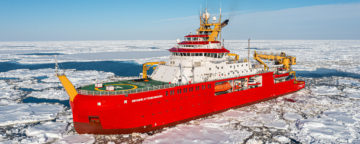
This project is developing digital twins of Antarctic and Arctic environments and resources. A digital twin makes it possible to test “what if” questions far more quickly than traditional computer models.

I am a Principal Research Scientist and Leader of the Artificial Intelligence Lab at the British Antarctic Survey. In this role, I lead the strategic development of world-leading AI designed to tackle some of the most urgent environmental challenges on Earth, starting at the front lines of climate change: the polar regions. Our work sits at the heart of the UKRI mission to build a more resilient and prosperous UK. By using AI to decode the complexities of the Arctic and Antarctic, we are pioneering high-tech innovations that have far-reaching impacts well beyond the ice. From protecting global biodiversity to predicting climate shifts that affect us all, our lab transforms complex data into the practical solutions and sustainable innovations that the UK and the world need to secure our future in a changing environment.
Building on this strategic foundation, I also head the Logist program—a flagship initiative dedicated to AI-driven, environmentally aware decision support. Supported by the Natural Environmental Research Council (NERC), Future Marine Research Infrastructure (FMRI), InnovateUK, and Government for Tech transfer research grants, Logist implements responsible AI tools to optimize complex marine operations. By streamlining our logistical footprint, the program serves as a key driver in our transition to net-zero research, ensuring the UK remains a global leader in sustainable polar exploration and scientific excellence.
Before joining the British Antarctic Survey, I spent two years as a postdoctoral fellow at Caltech, where I developed advanced machine learning models to analyze massive seismic datasets and improve earthquake detection. I hold a PhD in Geophysics from the University of Cambridge, focused on monitoring reservoir stability and natural hazards using satellite data, and a Master of Earth Sciences from the University of Oxford. My career has been dedicated to bridging the gap between complex data science and urgent real-world challenges, from monitoring active volcanoes in Iceland to forecasting environmental changes in our polar regions.
Jonathan D. Smith, Samuel Hall, George Coombs, James Byrne, Michael A. S. Thorne, J. Alexander Brearley, Derek Long, Michael Meredith, Maria Fox, (2022, in review), Autonomous Passage Planning for a Polar Vessel, arXiv, https://arxiv.org/abs/2209.02389
Hadrien Meyer, Jonathan D. Smith and Jean-Philippe Avouac (in press), An integrated framework for surface deformation modeling and induced seismicity forecasting due to reservoir operations
Jonathan D. Smith, Elías R. Heimisson, Stephen Bourne and Jean-Philippe Avouac (2022), Stress-based forecasting of induced seismicity with instantaneous earthquake failure functions: Applications to the Groningen Gas Reservoir, Earth and planetary science letters https://doi.org/10.1016/j.epsl.2022.117697
Elías R. Heimisson, Jonathan D. Smith, Jean-Philippe Avouac and Stephen Bourne (2022), Coulomb Threshold Rate-and-State Model for Fault Reactivation: Application to induced seismicity at Groningen, Geophysical Journal International, https://doi.org/10.1093/gji/ggab467
Bing Q. Li, Jonathan D. Smith, and Zachary E. Ross (2021), Basal nucleation of ascending swarms in Long Valley Caldera, Science Advances doi
Jonathan D. Smith, Zachary E. Ross, Kamyar Azizzadenesheli and Jack Muir (2021), HypoSVI: Hypocentral inversion with stein variational inference and physics informed neural networks, Geophysical Journal International, doi:10.1093/gji/ggab309, https://arxiv.org/abs/2101.03271
Jean-Philippe Avouac, Maxime Vrain, Taeho Kim, Jonathan D. Smith, Thomas Ader, Elías R. Heimisson, Zachary Ross, Tero Saarno (2020), A convolution model for earthquake forecasting derived from seismicity recorded during the ST1 geothermal project on Otaniemi campus, Finland, Proceedings World Geothermal Congress 2020
Jonathan D. Smith, Kamyar Azizzadenesheli and Zachary E. Ross (2020), EikoNet: Solving the Eikonal equation with Deep Neural Networks, IEEE Transactions on Geoscience and Remote Sensing, arxiv:https://arxiv.org/abs/2004.00361
Zachary E. Ross, Elizabeth S. Cochran, Daniel T. Trugman and Jonathan D. Smith (2020), 3D fault architecture controls the dynamism of earthquake swarms, Science, doi:0.1126/science.abb0779
Jonathan D. Smith, Robert S. White, Jean-Philippe Avouac, and Stephen Bourne (2020), Probabilistic earthquake locations for induced seismicity in the Groningen region, Geophysical Journal International, doi:10.1093/gji/ggaa179
Jonathan D. Smith, Jean-Philippe Avouac, Robert S. White, Alex Copley, Adriano Gualandi and Stephen Bourne (2019), Reconciling reservoir compaction and compressibility in the Groningen region, Journal of Geophysical Research, doi: 10.1029/2018JB016801
Rebecca K. Pearce, Almudena Sánchez de la Muela, Max Moorkamp, James Hammond, Thomas M Mitchell, José Cembrano, Jaime Araya Vargas, Philip G Meredith, Pablo Iturrieta, Nicólas Pérez-Estay, Neill Marshall, Gonzalo Yañez, Ashley Griffith, Carlos Marquardt, Jonathan D. Smith, Ashley Stanton-Yonge, Rocio Núñez (2019), Interaction between hydrothermal fluids and fault systems in the in the Southern Andes revealed by magnetotelluric and seismic data, Earth and Space Science Open Archive, doi: 10.1002/essoar.10501143.1
Keije Chen, Jonathan D. Smith, Jean-Philippe Avouac, Zhen Liu, Y. Tony Song and Adriano Gualandi (2019), Triggering of the Mw 7.2 Hawaii earthquake of May 4, 2018 by a dike intrusion, Geophysical Research Letters, doi:10.1029/2018GL081428
Thomas S. Hudson, Jonathan D. Smith, Alex M. Brisbourne and Robert S. White (2019), Automated detection of basal icequakes and discrimination from surface crevassing, Annals of Glaciology, doi:10.1017/aog.2019.18
This project is developing digital twins of Antarctic and Arctic environments and resources. A digital twin makes it possible to test “what if” questions far more quickly than traditional computer models.
IceNet is a deep learning system that forecasts Arctic sea ice. The system is trained on climate simulations and observational data. It outperforms state-of-the-art dynamical models, especially for extreme sea ice events.
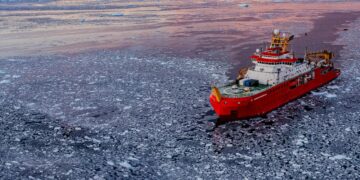
AMOP is developing Artificial Intelligence methods that aim to optimise the efficiency of Antarctic field operations, while maximising science delivery
Reaching net zero, as a country or a business, requires new measures, technology and innovations. Digital twins are an example of this; they can be a powerful tool to drive innovation and efficiency.