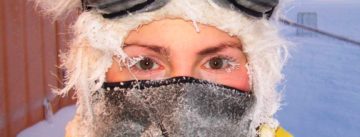
PRESCIENT
PRESCIENT supports long-term, strategically important measurements and capabilities for the wider science community.
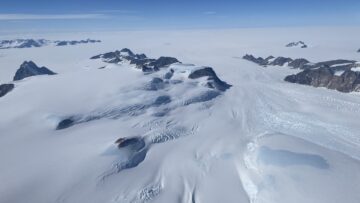

Dr Cecilia Liszka is a biological oceanographer with particular interests in Southern Ocean zooplankton ecology, the role of zooplankton in ecosystem processes and carbon cycling and the response of pelagic ecosystems to environmental change.
Cecilia conducted her PhD jointly between the British Antarctic Survey and University of East Anglia, where she investigated the role of zooplankton in active carbon flux in the Southern Ocean. She subsequently held a fixed term post-doctoral position at the University of East Anglia, working on the REMAIN project (REMineralisation of organic carbon by marine bActerIoplanktoN).
She currently holds a post-doctoral position in the Ecosystems team at the British Antarctic Survey where she is working on the zooplankton of the South Sandwich Islands.
Previously, she has also worked in the climate change sector managing multi-stakeholder projects and working closely with climate and energy policy development and delivery.
Qualifications
2018 NERC funded PhD in Biological Oceanography, British Antarctic Survey & University of East Anglia
Thesis: Zooplankton-mediated carbon flux in the Southern Ocean: influence of community structure, metabolism and behaviour
Supervisors: Professor Geraint Tarling, Dr Clara Manno, Dr Carol Robinson and Dr Gabriele Stowasser
Examiners: Professor Corinne le Quéré (UEA) and Dr Hauke Flores (AWI)
2014 MSc Environmental Sciences with Distinction, University of East Anglia, UK
Dissertation: Elucidating the physiological role of rhodopsin proton pumps in marine dinoflagellates
2005 MA Geography, University of Cambridge, UK
My interests in biological oceanography stem from the importance of plankton in the global climate system and carbon cycling, and the sensitivity of marine ecosystems to environmental changes. I am particularly interested in polar marine ecosystem research because of the vital role of polar oceans in current and future climate.
During my PhD I investigated the role of zooplankton on active carbon flux in the Southern Ocean, with particular focus on diel vertical migration, zooplankton community structure and faecal pellet export. For my MSc thesis I studied the physiological role of rhodopsin as a putative alternative ATP pathway in a temperate, and a bi-polar species of dinoflagellate.
My current research interests are on the zooplankton ecology of the waters around South Georgia and the South Sandwich Islands, and the environmental variables driving observed zooplankton distributions and abundances.
I retain ongoing interests in all of the above projects and would be open to discussing any potential collaborations.
Details of previous research and reports can be found on Research Gate and LinkedIn:
https://uk.linkedin.com/in/cecilialiszka
https://www.researchgate.net/profile/Cecilia_Liszka
Dornan, Tracey ORCID record for Dornan, Tracey. Smith, Abigail J.R. Bahlburg, Dominik. Cariou, Thibault. Christansen, Svenja. Demer, David A. Fernandes, Paul G. Haase, Stefanie. Hastie, Gordon. Hornsby, Rachael L. Isaksson, Natalie. Liszka, Cecilia M. ORCID record for Liszka, Cecilia M.. Sepp, Elor. Suter, Leonie. Thorvaldsen, Kjetil Gjeitsund. Westergerling, Taraneh. Wiezorek, Alina. (2026) Applications of active-acoustic and complementary technologies in marine ecosystem science.
van Walraven, Lodewijk ORCID record for van Walraven, Lodewijk. Scott, James. Pitois, Sophie ORCID record for Pitois, Sophie. Ribeiro, Joseph ORCID record for Ribeiro, Joseph. Close, Hayden. Pettigrew, James. Liszka, Cecilia M. ORCID record for Liszka, Cecilia M.. Fileman, Elaine. Hoekendijk, Jeroen. Hovenkamp, Pieter. Jak, Robbert. van Dalen, Joost ORCID record for van Dalen, Joost. van Oevelen, Dick. (2026) PlanktoShare: A large (50k+) and FAIR learning set for the Plankton Imager (Pi-10) for the Greater North Sea and NE Atlantic, based on a new flexible classification protocol [in review].
Tarling, Geraint A. ORCID record for Tarling, Geraint A.. Thorpe, Sally E. ORCID record for Thorpe, Sally E.. Henley, Sian F. Burson, Amanda ORCID record for Burson, Amanda. Liszka, Cecilia M. ORCID record for Liszka, Cecilia M.. Manno, Clara ORCID record for Manno, Clara. Lucas, Natasha S. ORCID record for Lucas, Natasha S.. Ward, Freyja. Hendry, Katharine R. ORCID record for Hendry, Katharine R.. Woodward, E. Malcolm S. Wootton, Marianne. Abrahamsen, E. Povl ORCID record for Abrahamsen, E. Povl. (2024) Collapse of a giant iceberg in a dynamic Southern Ocean marine ecosystem: in situ observations of A-68A at South Georgia.
Hill, Simeon L, ORCID record for Hill, Simeon L,. Atkinson, Angus. Arata, Javier. Belcher, Anna ORCID record for Belcher, Anna. Bengtson-Nash, Susan. Bernard, Kim S. Cleary, Alison ORCID record for Cleary, Alison. Conroy, John. Driscoll, Ryan. Fielding, Sophie ORCID record for Fielding, Sophie. Flores, Hauke. Forcada, Jaume ORCID record for Forcada, Jaume. Halfter, Svenja. Hinke, Jefferson. Hückstädt, Luis. Johnston, Nadine M. ORCID record for Johnston, Nadine M.. Kane, Mary. Kawaguchi, So. Krafft, Bjørn A. Krüger, Lucas. La, Hyoung Sul. Liszka, Cecilia ORCID record for Liszka, Cecilia. Meyer, Bettina. Murphy, Eugene ORCID record for Murphy, Eugene. Pakhomov, Evgeny. Perry, Frances. Piñones, Andrea. Polito, Michael J. Reid, Keith. Reiss, Christian. Rombola, Emilce. Saunders, Ryan A. ORCID record for Saunders, Ryan A.. Schmidt, Katrin. Sylvester, Zephryr. Takahashi, Akinori. Tarling, Geraint A. ORCID record for Tarling, Geraint A.. Trathan, Philip N. ORCID record for Trathan, Philip N.. Veytia, Devi. Watters, George. Xavier, José C. ORCID record for Xavier, José C.. Yang, Guang. (2024) Observing change in pelagic animals as sampling methods shift: the case of Antarctic krill.
Nousek-McGregor, Anna. Fisher, Ben. Baker, Chelsey A. ORCID record for Baker, Chelsey A.. Robinson, Carol. Damerell, Gillian. Liszka, Cecilia M. ORCID record for Liszka, Cecilia M.. Fielding, Sophie ORCID record for Fielding, Sophie. Muschitiello, Pilvi. (2023) Fair Winds and Following Seas Remotely: Modifying Perceptions of Fieldwork as a Requirement in Marine Science to Aid in Diversifying the Discipline.
Calderan, Susannah V. Dornan, Tracey ORCID record for Dornan, Tracey. Fielding, Sophie ORCID record for Fielding, Sophie. Irvine, Ryan. Jackson, Jennifer A. ORCID record for Jackson, Jennifer A.. Leaper, Russell. Liszka, Cecilia M. ORCID record for Liszka, Cecilia M.. Olson, Paula A. Collins, Martin A. ORCID record for Collins, Martin A.. (2023) Observations of southern right whales (Eubalaena australis) surface feeding on krill in austral winter at South Georgia.
Tarling, Geraint ORCID record for Tarling, Geraint. Abrahamsen, Povl ORCID record for Abrahamsen, Povl. Lucas, Natasha ORCID record for Lucas, Natasha. Brearley, Alexander ORCID record for Brearley, Alexander. Fleming, Andrew ORCID record for Fleming, Andrew. Shepherd, Andrew. Liszka, Cecilia ORCID record for Liszka, Cecilia. Manno, Clara ORCID record for Manno, Clara. Murphy, Eugene ORCID record for Murphy, Eugene. Meredith, Michael ORCID record for Meredith, Michael. Ratcliffe, Norman ORCID record for Ratcliffe, Norman. Braakmann-Folgmann, Anne. Gerrish, Laura ORCID record for Gerrish, Laura. (2022) The birth and death of ‘megaberg’ A68.
Johnston, Nadine M. ORCID record for Johnston, Nadine M.. Murphy, Eugene J. ORCID record for Murphy, Eugene J.. Atkinson, Angus. Constable, Andrew J. Cotté, Cédric. Cox, Martin. Daly, Kendra L. Driscoll, Ryan. Flores, Hauke. Halfter, Svenja. Henschke, Natasha. Hill, Simeon L. ORCID record for Hill, Simeon L.. Höfer, Juan. Hunt, Brian P. V. Kawaguchi, So. Lindsay, Dhugal. Liszka, Cecilia ORCID record for Liszka, Cecilia. Loeb, Valerie. Manno, Clara ORCID record for Manno, Clara. Meyer, Bettina. Pakhomov, Evgeny A. Pinkerton, Matthew H. Reiss, Christian S. Richerson, Kate. Smith, Walker O. Steinberg, Deborah K. Swadling, Kerrie M. Tarling, Geraint A. ORCID record for Tarling, Geraint A.. Thorpe, Sally E. ORCID record for Thorpe, Sally E.. Veytia, Devi. Ward, Peter. Weldrick, Christine K. Yang, Guang. (2022) Status, change, and futures of zooplankton in the Southern Ocean.
Collins, Martin A. ORCID record for Collins, Martin A.. Hart, T. Hogg, O.T. Hollyman, Philip R. ORCID record for Hollyman, Philip R.. Liszka, Cecilia M. ORCID record for Liszka, Cecilia M.. Stewart, Heather A. Trathan, Phil N. ORCID record for Trathan, Phil N.. (2022) South Sandwich Islands – An understudied isolated Southern Ocean archipelago: Editorial.
Liszka, Cecilia M. ORCID record for Liszka, Cecilia M.. Thorpe, Sally E. ORCID record for Thorpe, Sally E.. Wootton, Marianne. Fielding, Sophie ORCID record for Fielding, Sophie. Murphy, Eugene J. ORCID record for Murphy, Eugene J.. Tarling, Geraint A. ORCID record for Tarling, Geraint A.. (2022) Plankton and nekton community structure in the vicinity of the South Sandwich Islands (Southern Ocean) and the influence of environmental factors.
Liszka, Cecilia M. ORCID record for Liszka, Cecilia M.. Robinson, Carol. Manno, Clara ORCID record for Manno, Clara. Stowasser, Gabriele ORCID record for Stowasser, Gabriele. Tarling, Geraint A. ORCID record for Tarling, Geraint A.. (2021) Diel vertical migration of the Southern Ocean euphausiid, Euphausia triacantha, and its metabolic response to consequent short-term temperature changes.
Liszka, Cecilia ORCID record for Liszka, Cecilia. Manno, Clara ORCID record for Manno, Clara. Stowasser, Gabriele ORCID record for Stowasser, Gabriele. Robinson, Carol. Tarling, Geraint ORCID record for Tarling, Geraint. (2019) Mesozooplankton community composition controls faecal pellet flux and remineralisation depth in the Southern Ocean.
Liszka, Cecilia ORCID record for Liszka, Cecilia. (2019) Zooplankton-mediated carbon flux in the Southern Ocean: influence of community structure, metabolism and behaviour.
Stowasser, G., Fielding, S., & Tarling, G. (2026). The taxonomic composition, abundance and wet weight of macrozooplankton and micronekton captured by an RMT8 net during surveys of the Western Core Box (South Georgia), 2009-2019 (Version 1.0) [Data set]. NERC EDS UK Polar Data Centre. https://doi.org/10.5285/967411bd-0a07-49fd-ad52-2bec65781ce7
Atkinson, A., Pakhomov, E., Hill, S., Yang, G., Rombola, E., Ward, P., Reiss, C., Schmidt, K., Kasyan, V., Tarling, G., Liszka, C., Samchyshyna, L., Cavan, E., & ten Hoopen, P. (2026). KRILLBASE-larvae: a database of abundance of eggs and larval stages of Euphausia superba in the Southern Ocean spanning 1926-2024 (Version 1.0) [Data set]. NERC EDS UK Polar Data Centre. https://doi.org/10.5285/946546c8-b24f-422f-96e1-3bd872506c5f
Abrahamsen, P., Tarling, G., Firing, Y., King, B., Marzocchi, A., Burson, A., Hendry, K., Henley, S., Liszka, C., Manno, C., Ward, F., Woodward, M., Wootton, M., Brunetta, M., Song, Y., & Thorpe, S. (2024). Dissolved nutrient and particulate material concentrations and phytoplankton abundance and community composition from cruise JC211 to South Georgia, Southern Ocean, February 2021 (Version 1.0) [Data set]. NERC EDS UK Polar Data Centre. https://doi.org/10.5285/eef71670-f6dc-46f6-9143-7569599854e5
Liszka, C. (2021). Chlorophyll-a and phaeopigment-a from RRS Discovery Southern Ocean cruise DY098 to the Scotia Sea and South Sandwich Islands, during austral spring 2019 (Version 1.0) [Data set]. NERC EDS UK Polar Data Centre. https://doi.org/10.5285/723c136b-9cc3-4b3d-bde5-65840031e79b
Liszka, C. (2019). CTD fluorescence and faecal pellet data from the Ecosystems Western Core Box and Moorings cruise to the Scotia Sea, Southern Ocean (JR304) (Version 1.0) [Data set]. UK Polar Data Centre, British Antarctic Survey, Natural Environment Research Council, UK Research & Innovation. https://doi.org/10.5285/e2921d09-975c-4236-8acf-039d7462762e
PRESCIENT supports long-term, strategically important measurements and capabilities for the wider science community.
Zooplankton are a vital part of the Scotia Sea food web. The project aims to improve the way we manage and monitor the pelagic ecosystem around South Georgia.
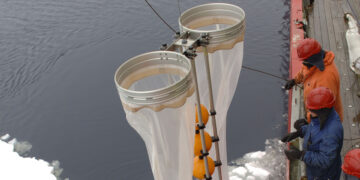
The winter krill project monitors Antarctic krill and predator overlap around South Georgia. Research informs conservation and ecosystem management.
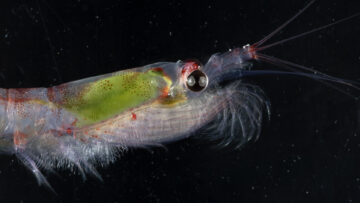
A series of events and activities to raise awareness of opportunities in UK Polar Science

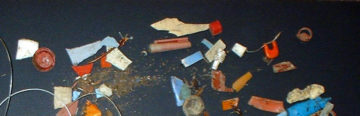
This project investigated plastic pollution across Arctic and Antarctic environments. Scientists collected water, ice, and sediment samples to quantify macro and microplastic pollution, track its sources, and assess its impact on polar wildlife.
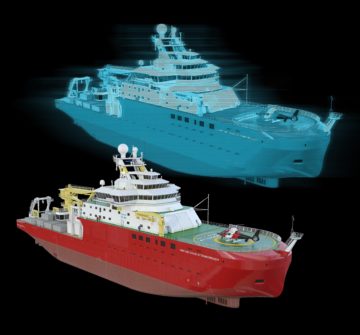
Join this engagement seminar to discuss digital twinning as a way to complement and enhance traditional marine science fieldwork.
The International Day of Women and Girls in Science is organised by UNESCO and UN-Women to promote full and equal access and participation in science for women and girls. The United […]