SAOZ
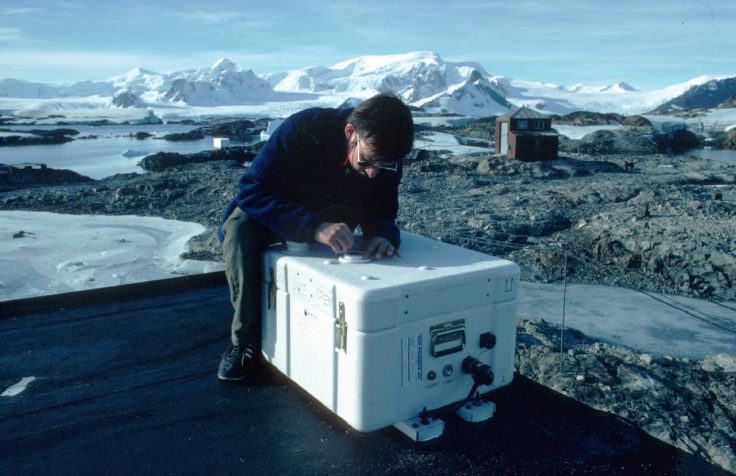
SAOZ measures sunlight scattered from the overhead sky in a way that allows us to calculate how much of the atmospheric gases ozone and nitrogen dioxide the light has passed through on its journey.

97 to 108 of 136 results
SAOZ measures sunlight scattered from the overhead sky in a way that allows us to calculate how much of the atmospheric gases ozone and nitrogen dioxide the light has passed through on its journey.
The instrument that led to the discovery of ozone depletion over Antarctica
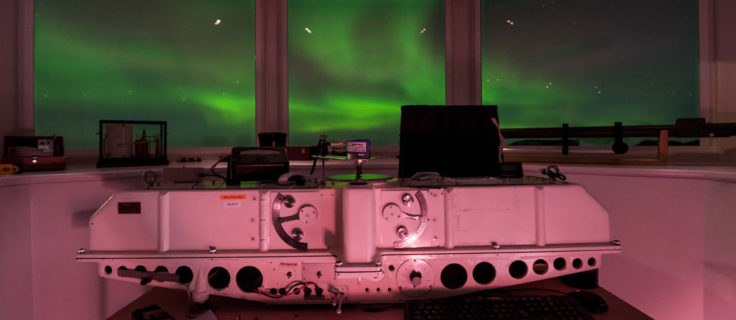
The microwave radiometer enables us to gain a better understanding of the chemistry and physics of the polar middle atmosphere, 35–90km above the ground, and how it affects climate.
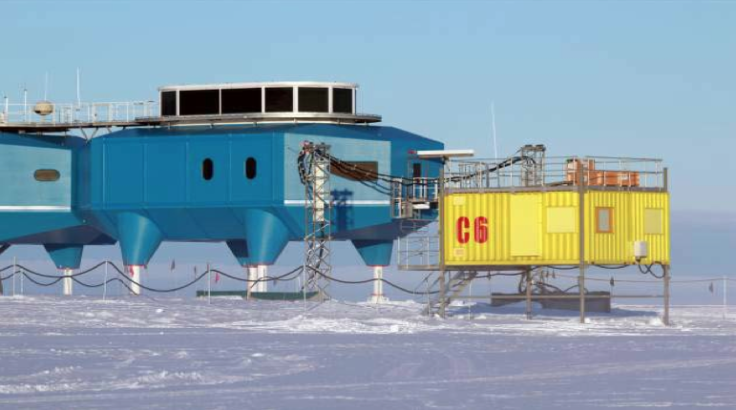
The riometer at Halley measures the radiowave noise at 30MHz coming from the Galaxy.
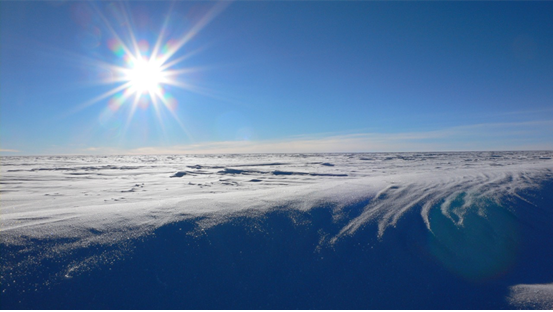
BAS operates a network of magnetometers across Antarctica that measure Earth’s magnetic field and space weather, from detecting aurora-generating waves to tracking radiation belt activity and mapping ionospheric currents that affect satellites.
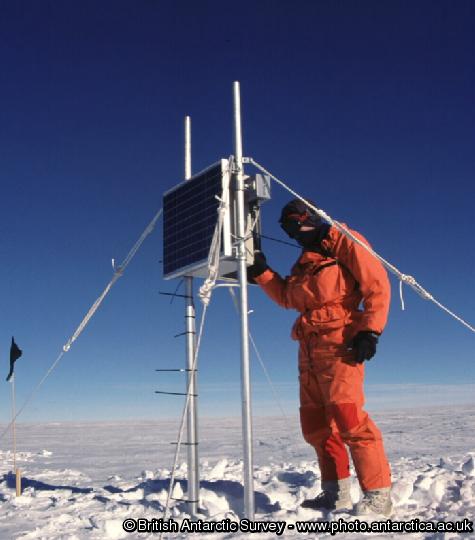
The AutoVLF system is a low-power independent instrument within the Electro-Magnetic Quiet Area (EMQA) at Halley Resarch Station.
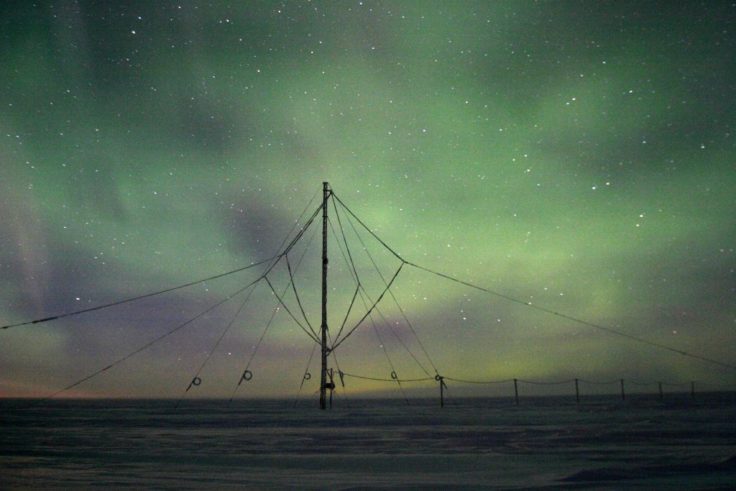
The Bomem has been operating at Halley periodically since 2002. It’s a spectrometer: an instrument that splits light into its component colours.
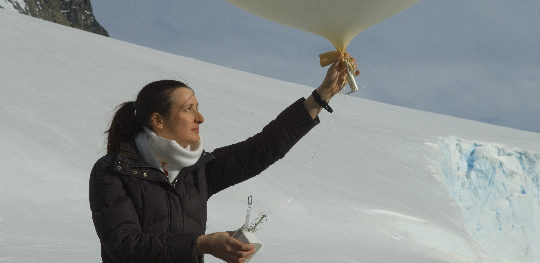
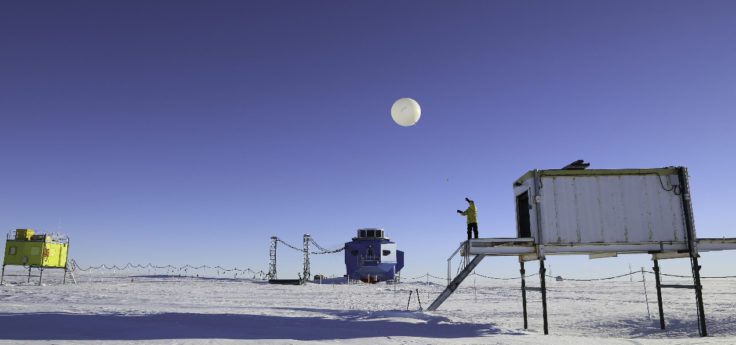
At Halley, balloon launches take place every day at 11am. A device called a radiosonde hangs beneath the helium-filled balloon and measures temperature, pressure and humidity. From GPS we can also calculate wind speed and direction.
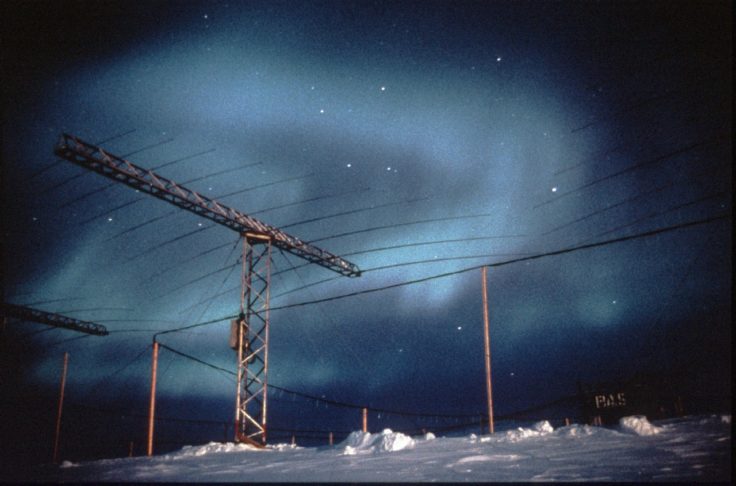
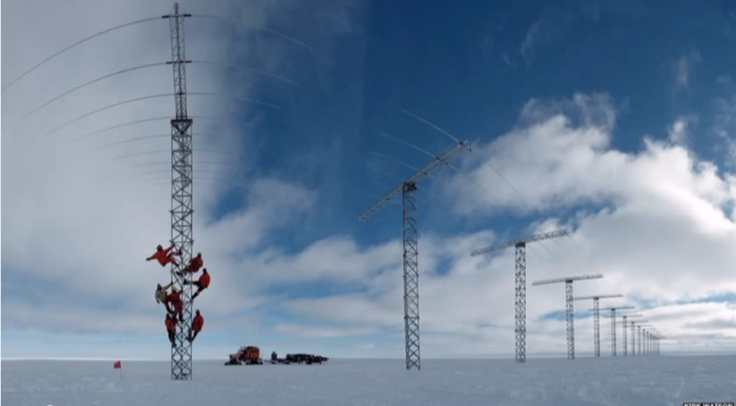
Studying winds, waves, and tides in the upper atmosphere across the polar regions.
Meteorological scientists at Halley have been measuring the weather in great detail and with ever more sophisticated gadgets since the station first opened.
Weather balloons at Rothera Research Station