Explore new polar maps online
A new map catalogue with access to a large collection of freely available polar maps is now available online.


37 to 48 of 952 results
A new map catalogue with access to a large collection of freely available polar maps is now available online.
The British Antarctic Survey’s (BAS) wintering team continues to make progress on our new science and operations facility, the Discovery Building at Rothera Research Station, Antarctica.
The Polar Museum at the Scott Polar Research Institute, University of Cambridge, has opened its new exhibition, Through Ice & Fire.
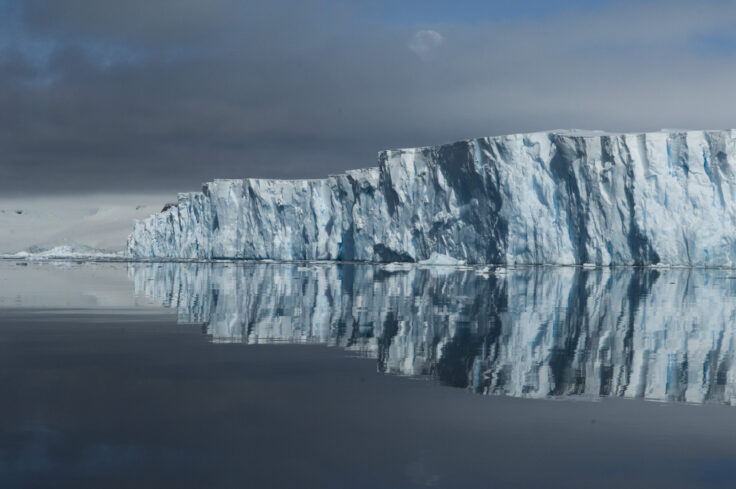
Well-publicised geoengineering ideas are highly unlikely to help the polar regions and could harm ecosystems, communities, international relations, and our chances of reaching net zero by 2050. This is according to a new assessment, published in the journal Frontiers in Science today (9 September 2025).
The remains of an Antarctic researcher have been discovered by a Polish team among rocks exposed by a receding glacier in Antarctica.
The Mapping and Geographic Information Centre (MAGIC) at the British Antarctic Survey have produced new maps of the topography (physical features) and geology of Alexander Island in Antarctica.
With the end of the 2024/25 Antarctic construction season, the British Antarctic Survey’s (BAS) wintering team settles in at Rothera Research Station.
A team of scientists, including those from the British Antarctic Survey (BAS), have uncovered the hidden remains of a vast ancient coastal plain beneath East Antarctica—an important discovery that could refine forecasts of future global sea level rise.
A new study in collaboration with BAS scientists reveals for the first time that zooplankton migration contributes significantly to carbon storage in the Southern Ocean – a process currently overlooked in climate models.
A team from British Antarctic Survey (BAS) is attending this year’s Antarctic Treaty Consultative Meeting (ATCM), a diplomatic forum to discuss the governance and environmental protection of Antarctica.
A new study challenges recent claims about dramatic “greening” in Antarctica and how this conflicts with decades of field-based ecological knowledge.
Antarctica could see a doubling of extreme weather events – such as atmospheric rivers – by 2100, with implications for future sea level rise.