
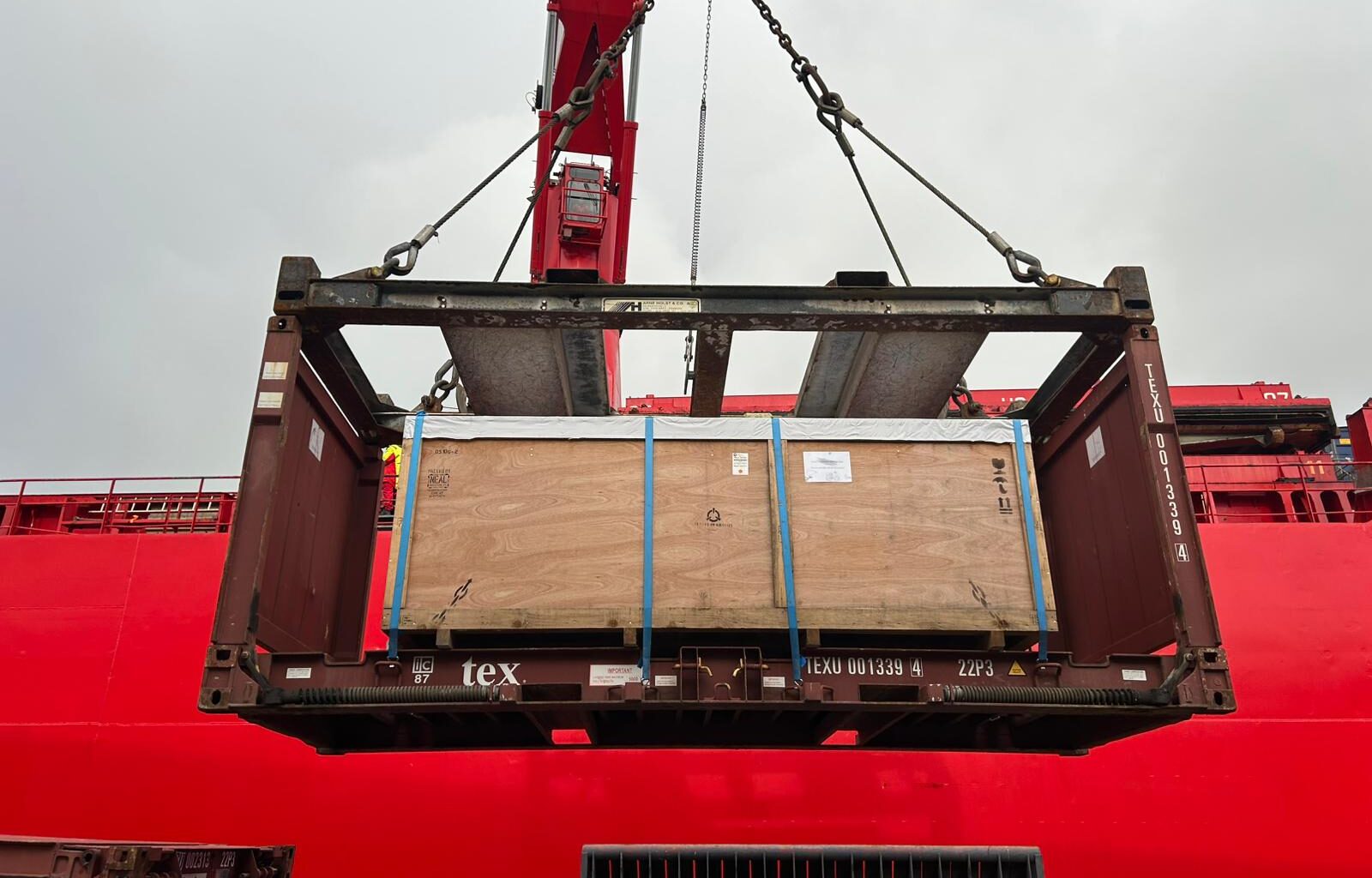
The British Antarctic Survey (BAS) has joined forces with the Norwegian Polar Institute (NPI) and Germany’s Alfred Wegener Institute (AWI) to share an ice-capable vessel that will resupply three Antarctic research stations for the next ten years.
The Silver Mary will visit Halley VI station every other season, along with Norway’s Troll station and Germany’s Neumayer station. The partnership builds on the successful UK-German partnership that resupplied Halley in 2023-24. The first call to Halley VI under the new agreement is planned for January 2026.
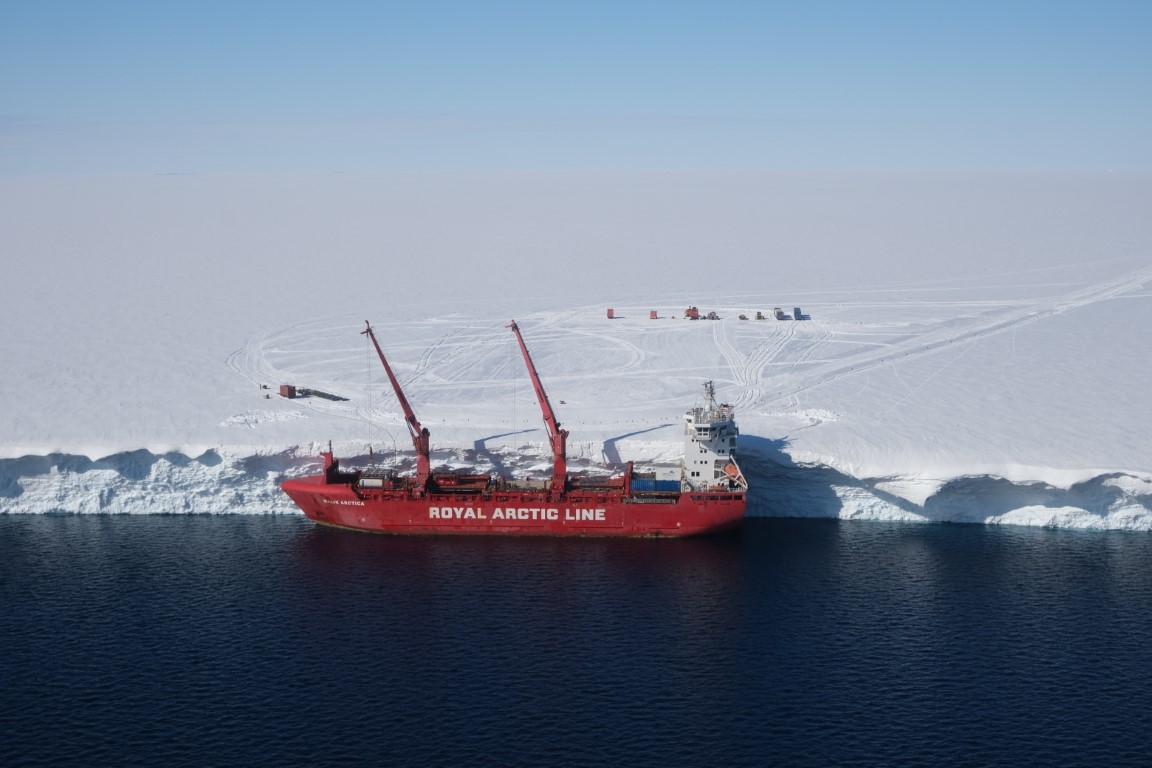
The Malik Arctica provides relief in 2023-24 at Halley station, Antarctica. Credit: Will Wycherley, BAS.
Oliver Darke, Director of Polar Operations, Engineering and Infrastructure at British Antarctic Survey said, “This partnership is a powerful example of the value created through international collaboration in Antarctica. By combining logistics and sharing skills, we reduce costs, cut our environmental impact and strengthen the vital exchange of best practice between Antarctic operators. We can deliver more critical science and make Antarctica a safer place by working together.”
Smarter logistics
NPI will operate annual voyages south, with BAS typically joining every other season and sharing voyage costs. The arrangement gives BAS flexibility to increase calls when needed to support additional science projects at Halley VI station and achieves significantly better value than chartering vessels independently.
The new logistics model also creates valuable capacity for the BAS-operated RRS Sir David Attenborough by removing the need for a dedicated, time-intensive, ship call to Halley, creating 40-60 days of ship time that can be dedicated to UK Research and Innovation (UKRI)-funded research cruises and science delivery elsewhere. UKRI funding for BAS is uniquely vital because Antarctica provides irreplaceable scientific data on global climate and environmental systems that cannot be obtained anywhere else on Earth.
Sustainability
Using one shared vessel instead of multiple national expeditions cuts the carbon footprint of Antarctic logistics. This season, all three National Antarctic Programmes are sharing the cost of the vessel, further reducing the environmental impact of the voyage. As part of a continuous drive towards “net zero” operational carbon emissions, the UK Natural Environment Research Council (NERC), part of UKRI, provided funding for BAS to procure low carbon sustainable fuel for the Silver Mary. This funding means that over 40% of the entire voyage will be done using sustainable fuel.
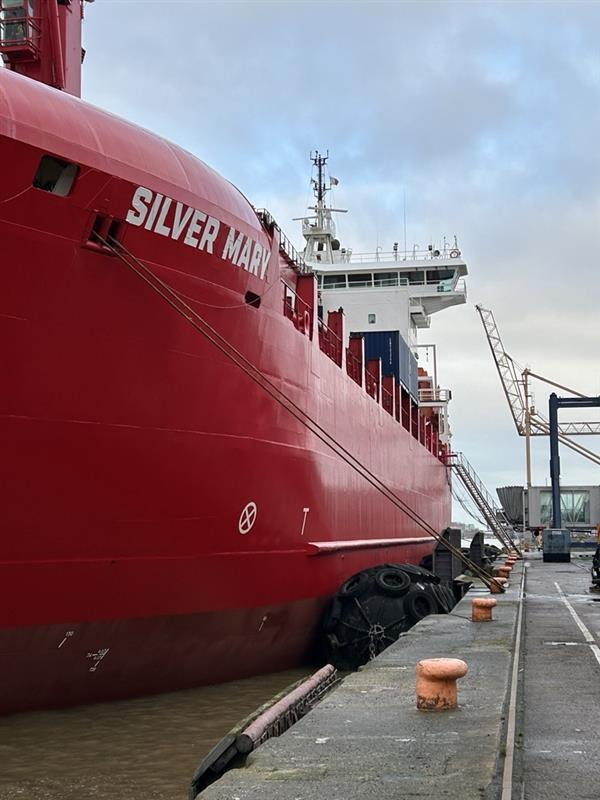
The Silver Mary ship. Credit: Simon Lancaster, BAS
Sharing expertise across borders
The collaboration extends beyond vessel sharing. Teams have exchanged knowledge on station resupply, logistics management and risk assessment, essential for safely working in the harsh Antarctic environment. BAS glaciologists are working with the NPI operations team on imagery analysis of the Fimbul Ice Shelf, where supplies are offloaded for Troll station. Both Troll and Neumayer stations are already regularly used as stopover points for Halley teams travelling to the station by air during poor weather.
For staff at Halley VI, ship resupply marks a return to normal operations. The station relied on resupply by ship until ice shelf fissures prevented access between 2019 and 2023. Following the significant calving of the Brunt Ice Shelf in 2023, ship access is once again possible. The team successfully worked with an AWI chartered vessel, the Malik Arctica, for resupply in the 2023-24 season, and this new ten-year partnership will further deepen relationships between the polar operators.
Building on a history of collaboration
This partnership continues BAS’ long history of international collaboration – for both science and logistics. For example, from the UK-US International Thwaites Glacier Collaboration to the FISS partnership with Germany, Antarctic partnerships enable scientific activity across larger geographic areas.
BAS, NPI and AWI are brought together by COMNAP, the Council of Managers of National Antarctic Programmes, an international association, formed in 1988, which facilitates support to Antarctic operations amongst the governmental National Antarctic Programmes.