The Sustainable Flag Project

The Sustainable Flag Project

Start date
1 October, 2022
End date
1 October, 2032

New article: Environmental degradation and loss of polyester marker flags are major sources of localized plastic pollution in the Antarctic

Diagram

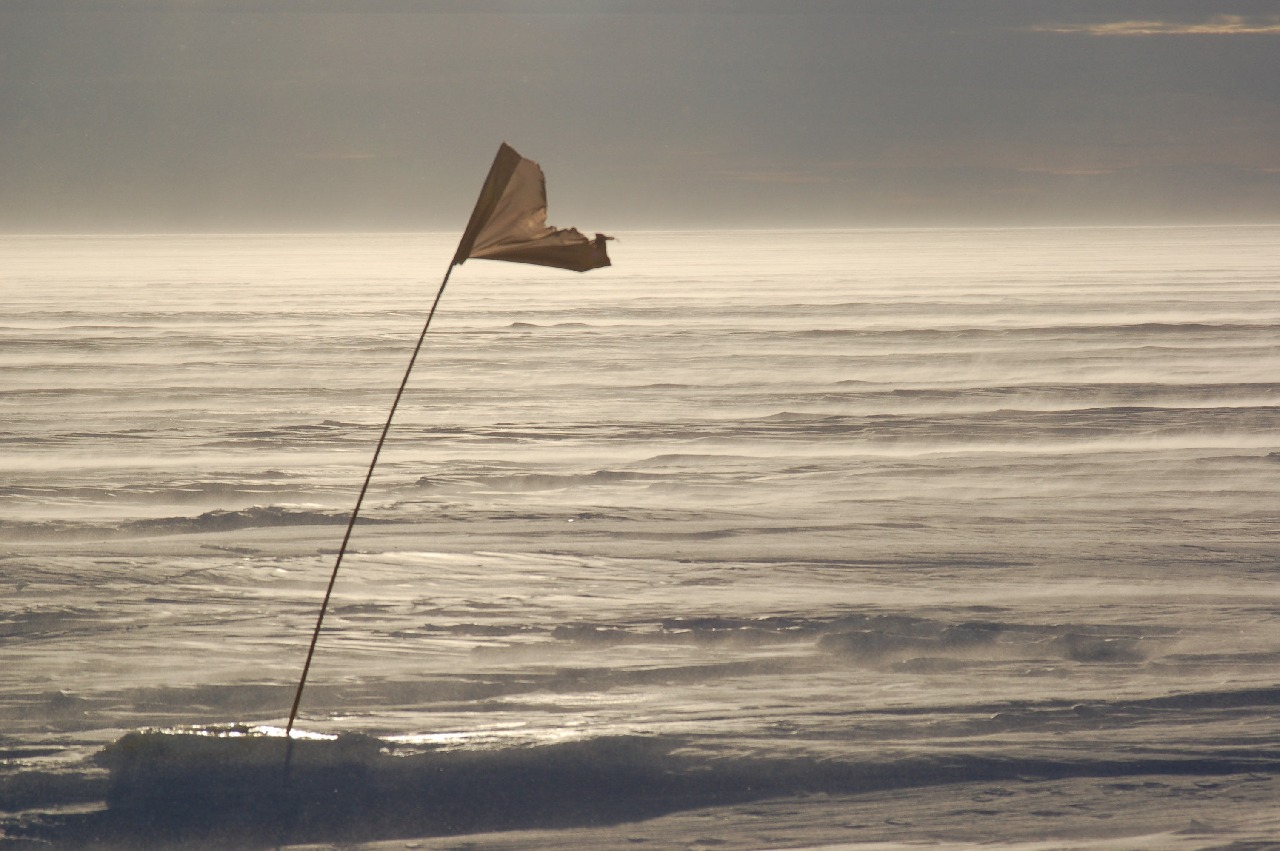
Flags which are crucial in denoting safe travel, visual aids to relocate deep field scientific instruments and marking station equipment are constantly shedding polyester Microplastics across Antarctica. This is particularly concerning at a coastal research station such as Rothera.  It is not uncommon to encounter the erosion of polyester flags around station which can be replaced by field guides up to three times a year.

The field department have estimate the use of 400 flags on station with ~ 1,000 flags deployed into the field each year. We have conducted a preliminary trial by testing different material types (cotton canvas and Ventile) at select sites around Rothera. The tested material types are used for field tents and as tarpaulin for skidoos.


Key results from the study:

On average, each standard polyester flag lost 25.5% of its weight, equating to the release of 8.3 g of plastic into the environment; however, hemming the flag reduced this loss to 13.3% .

Ventile was almost as durable as unhemmed polyester (26.9%) ,whereas cotton canvas was the least durable (44.1% loss).

Switching from standard polyester to Ventile flags would prevent the annual release of > 8.3 kg of plastic into the environment around Rothera Research Station, and potentially ~300 kg across all Antarctic operator activities.

This is a conservative estimate compared to a potential additional 800 kg of plastic that could be lost to the environment due a high proportion of deployed flags not being recovered.


The full manuscript containing results from the field trials can be accessed here:

https://doi.org/10.1017/S0954102025000112


Icon, map

Nadia Frontier

Nadia Frontier

Marine Biologist

Jo Cole

Jo Cole

Rothera Science Co-ordinator and Meteorologist

Kevin Hughes

Kevin Hughes

Environ. Research and Monitoring

Environment Office team