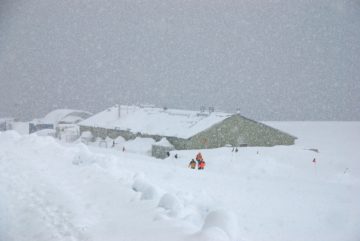
Environ Research and Monitoring

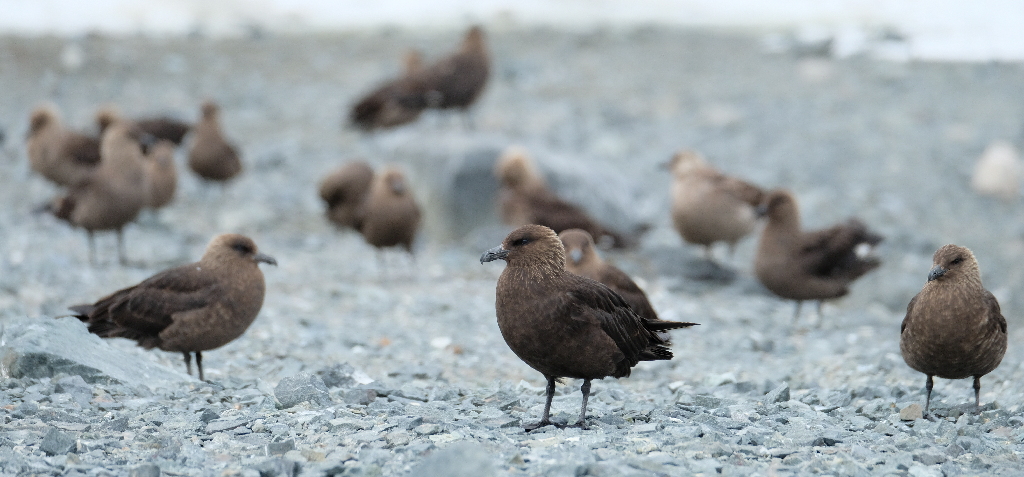
The small population of south polar skuas at Rothera Point (up to 25 pairs) has been studied since the late 1990s.
The work began to check whether activities around the research station were affecting the birds. Over time, the data has also revealed changes linked to prey availability at sea and to shifts in sea-ice cover.
Between 1999 and 2005, scientists monitored the population size and breeding success (measured as chicks fledged per pair).
From 2006 onwards, more detailed breeding data was collected. These include:
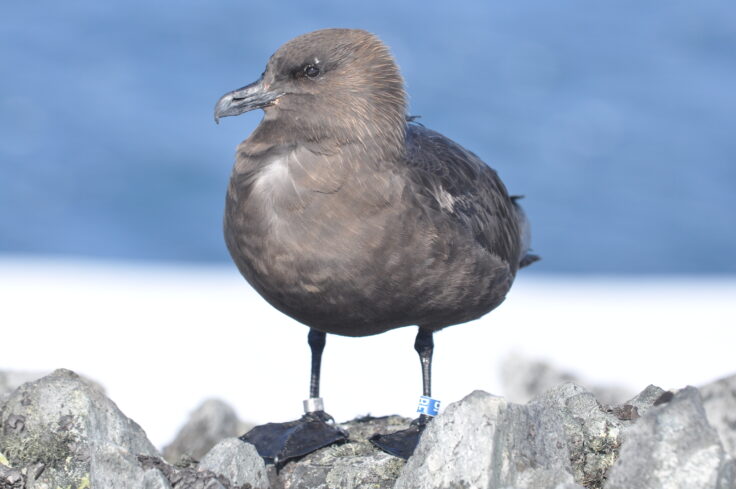
Ringed south polar skua (Credit: Richard Phillips)
Since the 2007 to 2008 season, colour-ringed adults have also been tracked. These resightings provide estimates of adult survival, breeding frequency, and divorce rates. They also help build breeding histories for individual birds and show the effects of changing mates.
Monitoring chick growth rates also occurs on nearby Anchorage Island, which is used as a control site.
Long-term monitoring of skuas helps scientists understand how local wildlife responds to environmental changes. Skuas are top predators, so their breeding success and survival reflect wider ecosystem conditions.
By collecting detailed breeding data, scientists can track the health of the population over time. These records also show how sea-ice changes and food availability affect the birds.
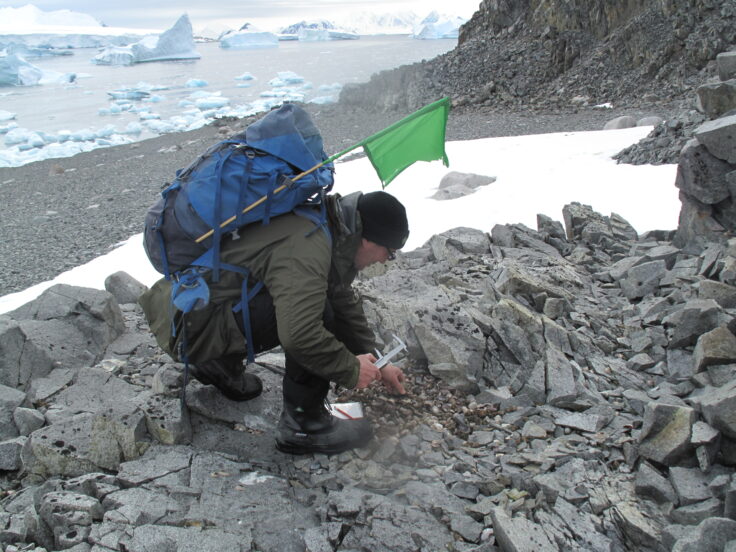
Measuring skua eggs at Rothera
The project aims to:
BAS scientists monitor the skuas each year at Rothera Point. Field teams collect breeding data, monitor ringed adults, and survey the Anchorage Island population.
The project aims to:
Environ Research and Monitoring
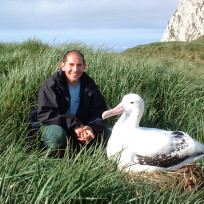
Seabird Ecologist Deputy Science Leader IMP 3
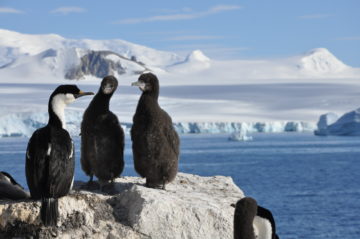
Results of a new study on Antarctic seabirds shows a larger percentage of their populations inhabit important nesting sites around Ryder Bay, close to British Antarctic Survey’s Rothera Station than […]
The largest British Antarctic facility is a centre for biological research and a hub for supporting deep-field science.
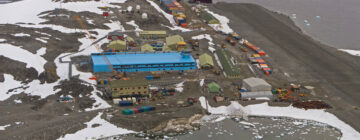
Supporting near-shore marine biology