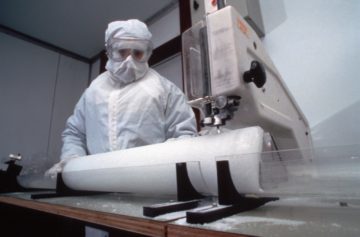
Palaeoclimatolgist IMP3

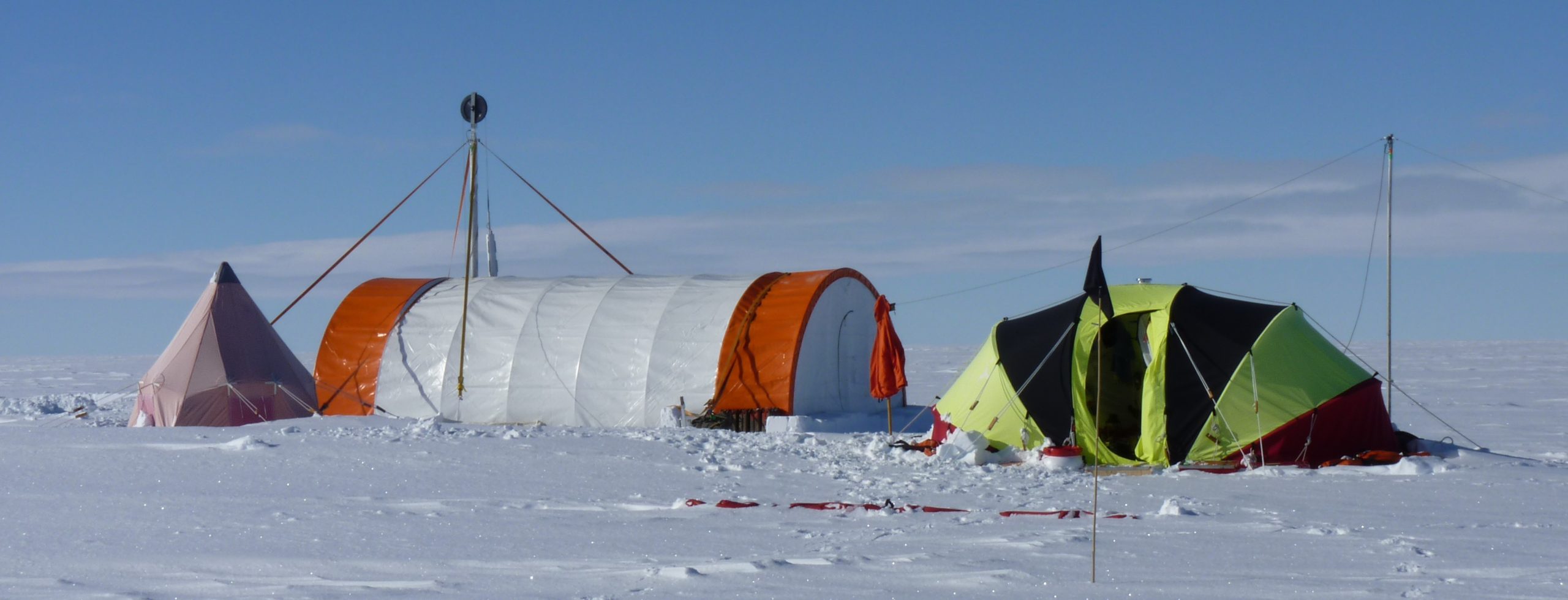
SIWHA investigates how westerly winds and sea ice have influenced CO2 uptake and release in the Southern Ocean.
The project involves drilling an ice core spanning ice core spanning recent centuries in the Antarctic Peninsula. Analyses combine traditional and novel ice core proxies to study past climate and atmospheric CO2.
Westerly winds and sea ice play a key role in regulating Southern Ocean CO2 exchange. Understanding their past variability helps reveal natural climate patterns and long-term carbon cycling.
This knowledge improves predictions of how Antarctic processes may influence global climate under future warming.
SIWHA uses ice core and climate analyses to study decadal to millennial-scale processes:
The project aims to:
SIWHA is a Natural Environment Research Council (NERC)-funded project led by BAS scientists, supported by ice core specialists and international climate research collaborators.
The Southern Ocean currently absorbs over 40% of the anthropogenic carbon dioxide (CO2) and 75% of the anthropogenic heat from the atmosphere. However, the Southern Ocean can also release CO2. The extent to which the ocean will act as a source or sink of anthropogenic CO2 in the future is unknown. This constitutes one of the biggest uncertainties facing society today. The SIWHA project will be a breakthrough in our understanding of CO2 exchange in the Southern Ocean. Determining how westerly winds and sea ice have influenced the uptake or release of CO2 at decadal to millennial timescales.
Project plan and deliverables:
Conduct geophysical surveys (November 2024) to identify the most suitable site for deep drilling. Measure bed topography, englacial stratigraphy, ice rheology, and ice-flow fields. Directly measure past ice deformation during burial to constrain the ice core age-scale. Use the BAS electromechanical deep drill to reach bedrock ~800 m (2025/2026).
Marine diatoms are unicellular algae with siliceous cell walls. Diatoms are uplifted from the sea-surface microlayer and transported by winds over the ice sheet. The diatom abundance measured in an ice core is dependent on the strength of the winds. We will use this diatom abundance as a proxy to reconstruct past wind strength and atmospheric circulation. We will also use traditional wind proxies, including dust and continental ions.
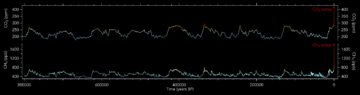
The new high snow accumulation ice core will provide the first complete record of greenhouse gases (carbon dioxide and methane) spanning the entire Holocene (>11,000 years). The analysis will be completed in the newly developed UK Relic Air Extraction and Gas Analysis System (UK RArE-GAS) laboratories at BAS. The bubble close-off at this site is very rapid. Providing a unique opportunity to measure gas records that overlap with the instrumental data.
Palaeoclimatolgist IMP3

Ice Core Drilling Engineer
Ice Chemistry Lab Manager
Ice Core Scientist

Ice Core Drilling Engineer

Post Doctoral Researcher
Ice Stream Modelling

Royal Society Fellowship
Specialist ice core facility to measure concentration and isotopic composition of greenhouse gases
UK national facility and capability