Zooplankton Ecologist

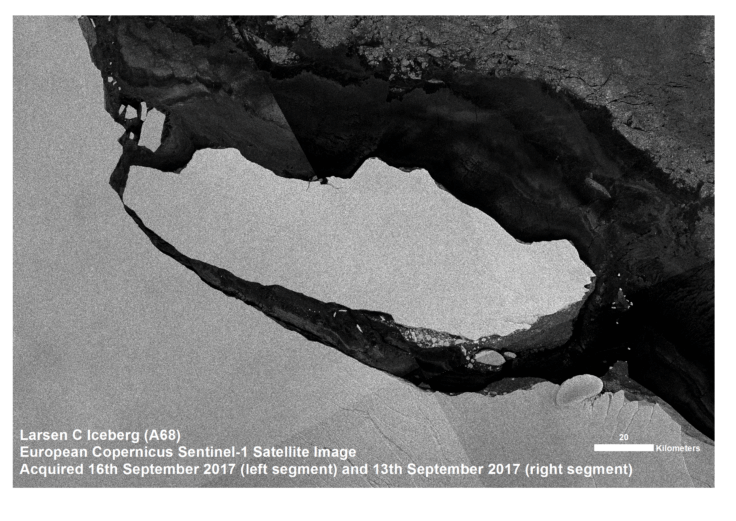
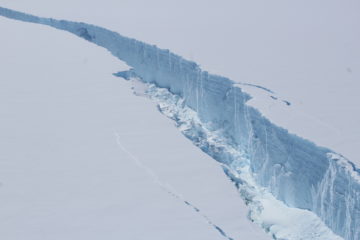
The Larsen-C Benthos project planned to study benthic biodiversity on the seabed exposed by the 2017 calving of the Larsen-C Ice Shelf. On 12 July 2017, iceberg A68 broke away, creating 5,800 km² of seabed newly exposed to the open ocean. Much of this area had likely been under ice for centuries, possibly since the last interglacial period.
The project tested the idea that under-ice benthic communities are similar to nutrient-poor deep-sea ecosystems. The team planned to study life and habitats under the former Larsen-C Ice Shelf in the western Weddell Sea.
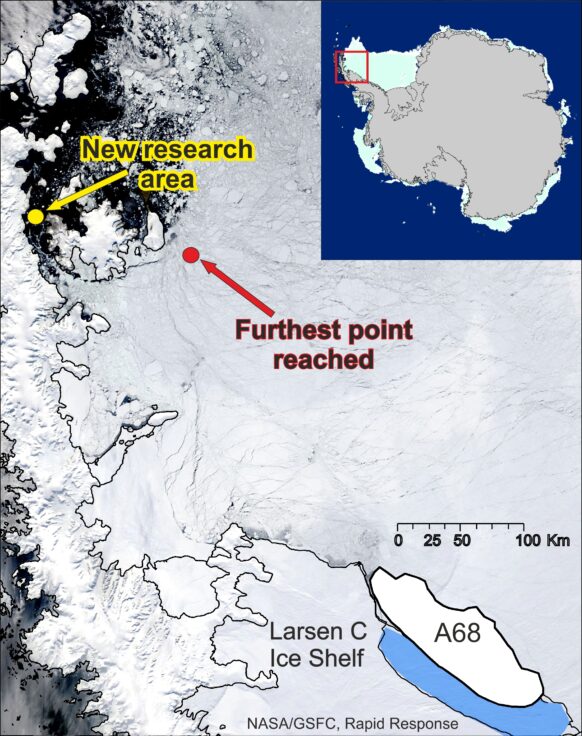
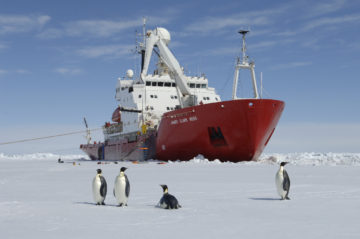
Heavy sea ice prevented the team from reaching Larsen C. Progress slowed to 8 km in 24 hours, and they still had over 400 km to go. Safety was prioritised, so the team switched to a ‘Plan B.’
They moved north to previously unsampled areas, including the Prince Gustav Channel of which the southern end had been a former part of the Larsen A Ice Shelf, which had collapsed in 1995.
Dr Katrin Linse, from British Antarctic Survey who led the team said:
“We knew that getting through the sea ice to reach Larsen C would be difficult. Naturally, we were disappointed not to get there but safety must come first.
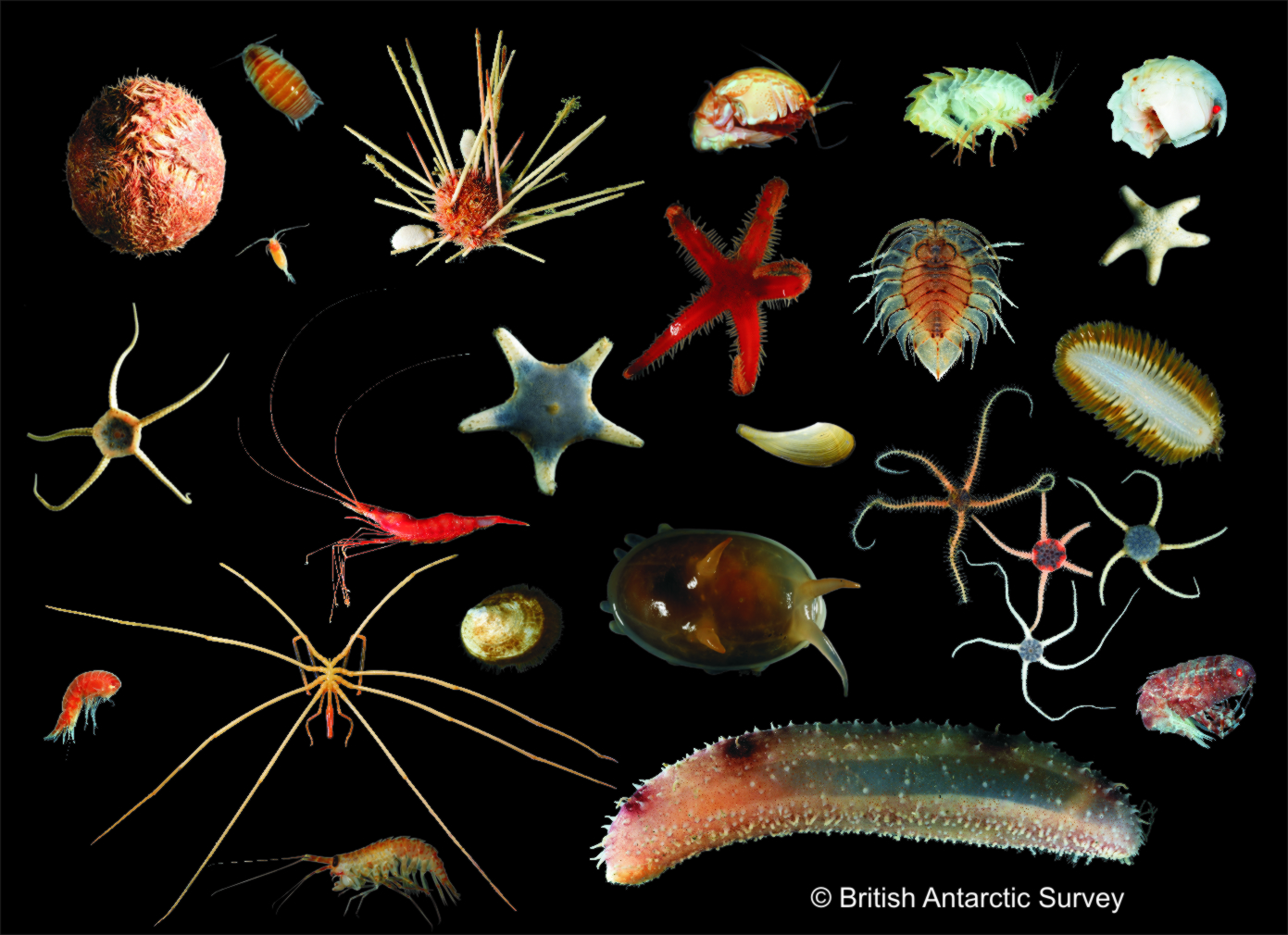
In the Prince Gustav Channel, the team sampled down to 1,250 metres, deeper than planned at Larsen C, and discovered many exciting seafloor animals.
The project provided the first scientific data on previously ice-covered seafloor in the western Weddell Sea. Sampling in new areas revealed benthic communities that had not been studied before.
In September 2017, CCAMLR designated the newly exposed marine area as a Stage 1 Special Area for Scientific Study. This protected it from commercial activities for an initial two-year period, likely to extend to ten years.
The project aimed to:
The project was led by BAS scientists and funded by a Natural Environment Research Council (NERC) Urgency Grant (NE/R012296/1).
The core team included scientists from:
Participants came from six countries and nine institutes in total.
Our governing hypothesis was:
“Until the calving of the Larsen-C iceberg, A68, the benthic fauna on the seabed beneath ice shelf has likely comprised oligotrophic assemblages resembling deep-sea Weddell Sea assemblages. The calving of A68, and the exposure of the seabed it covered to open-marine and sea-ice conditions will initiate a rapid colonisation by new species that will transform the benthic ecosystem significantly within 3-5 years.”
To test our hypothesis and document the faunal baseline under Larsen-C, we will deploy trawls (epibenthic sledge (EBS), Agassiz trawl (AGT), bongo net (BN)), mega-corer (MUC), towed camera systems (SUCS & DWCS), CTD, and single and multi-beam echosounders at each station. As the seabed under A68 is uncharted, areas around the proposed stations will be surveyed by swath bathymetry to map seafloor topography. With our holistic sampling approach we will collect information on the assemblage structure, biodiversity and abundance of the in-, epi-, and suprabenthic meio-, macro- and megafauna. This will provide a baseline for assessing ecosystem function with samples of potential food sources such as phyto- and zooplankton as well as organic matter in the sediments and comprise a suite of biological, sedimentological and biogeochemical parameters.
To test our hypothesis and document the faunal baseline under Larsen-C, we deployed trawls (epibenthic sledge (EBS), Agassiz trawl (AGT), bongo net (BN)), mega-corer (MUC), towed camera systems (SUCS & DWCS), CTD, and single and multi-beam echosounders at each station. As the seabed under A68 was uncharted, areas around the proposed stations were surveyed by swath bathymetry to map seafloor topography. With our holistic sampling approach we collected information on the assemblage structure, biodiversity and abundance of the in-, epi-, and suprabenthic meio-, macro- and megafauna. This provided a baseline for assessing ecosystem function with samples of potential food sources such as phyto- and zooplankton as well as organic matter in the sediments and comprised a suite of biological, sedimentological and biogeochemical parameters.
Our key objectives and tasks were:
Zooplankton Ecologist
Head of MAGIC

Marine Biogeographer
Marine Biogeographer
Senior Biodiversity Biologist
Sedimentologist
RaTS Project Manager

Palaeobiologist
Mechanical Engineer
Mechanical Engineer
Co-Investigators
Adrian Glover – Natural History Museum
Alan Jamieson – Newcastle University
Will Reid – Newcastle University
Ursula Witte – University of Aberdeen
Project Partners
Jon Copley – University of Southampton
Dieter Piepenburg – Alfred Wegener Institute
External collaborators
Angelika Brandt – Senckenberg Institute
Ann Vanreusel – University of Ghent
Anni Makela – University of Aberdeen
Luisa Federwisch – Alfred Wegener Institute
Melanie Mackenzie – Museum Victoria
Simon Dreutter – Alfred Wegener Institute
Thomas Dahlgren – University of Gothenburg and Uni Research
Mechanical engineer Carwyn Davies, from British Antarctic Survey’s Antarctic Marine Engineering (AME) is working onboard the RRS James Clark Ross with our science team to investigate Larsen C Benthos. Find […]
Dr Mel Mackenzie, a Collection Manager of Marine Invertebrates at Museums Victoria in Melbourne, is living and working on board the BAS research ship RRS James Clark Ross for the […]
British Antarctic Survey (BAS) palaeobiologist Dr Rowan Whittle is a member of the Larsen C Benthos research cruise onboard the RRS James Clark Ross. Rowan’s primary role is to assist […]
ANTARCTICA – 13 March 2023. British Antarctic Survey (BAS) has released the first aerial pictures of the massive A81 iceberg that calved from the Brunt Ice Shelf in late January. […]
Please join us in congratulating Dr Huw Griffiths, Marine Biogeographer at British Antarctic Survey, who has been awarded the Scientific Committee on Antarctic Research (SCAR) Medal for Education and Communication. […]
Heavy sea ice conditions have thwarted a science mission from reaching the Larsen C Ice Shelf in Antarctica from which a large iceberg broke off in July 2017. A team […]
A team of scientists, led by British Antarctic Survey (BAS), heads to Antarctica this week (14 February) to investigate a mysterious marine ecosystem that’s been hidden beneath an Antarctic ice […]
A team of scientists, led by British Antarctic Survey (BAS), is planning an urgent mission to investigate a mysterious marine ecosystem that’s been hidden beneath an Antarctic ice shelf for […]
An international agreement is now in place to give special protection to the area of ocean left exposed when one of the largest icebergs ever recorded broke free from the […]
After months of ‘hanging by a thread’ a vast iceberg the size of Norfolk has finally broken off Antarctica’s Larsen C Ice Shelf. Around 30 metres of this 190m thick […]
The data collected by this expedition will be used to produce official reports and will be made publicly available through the official SCAR biodiversity data portal – biodiversity.aq.