Marine Geophysicist

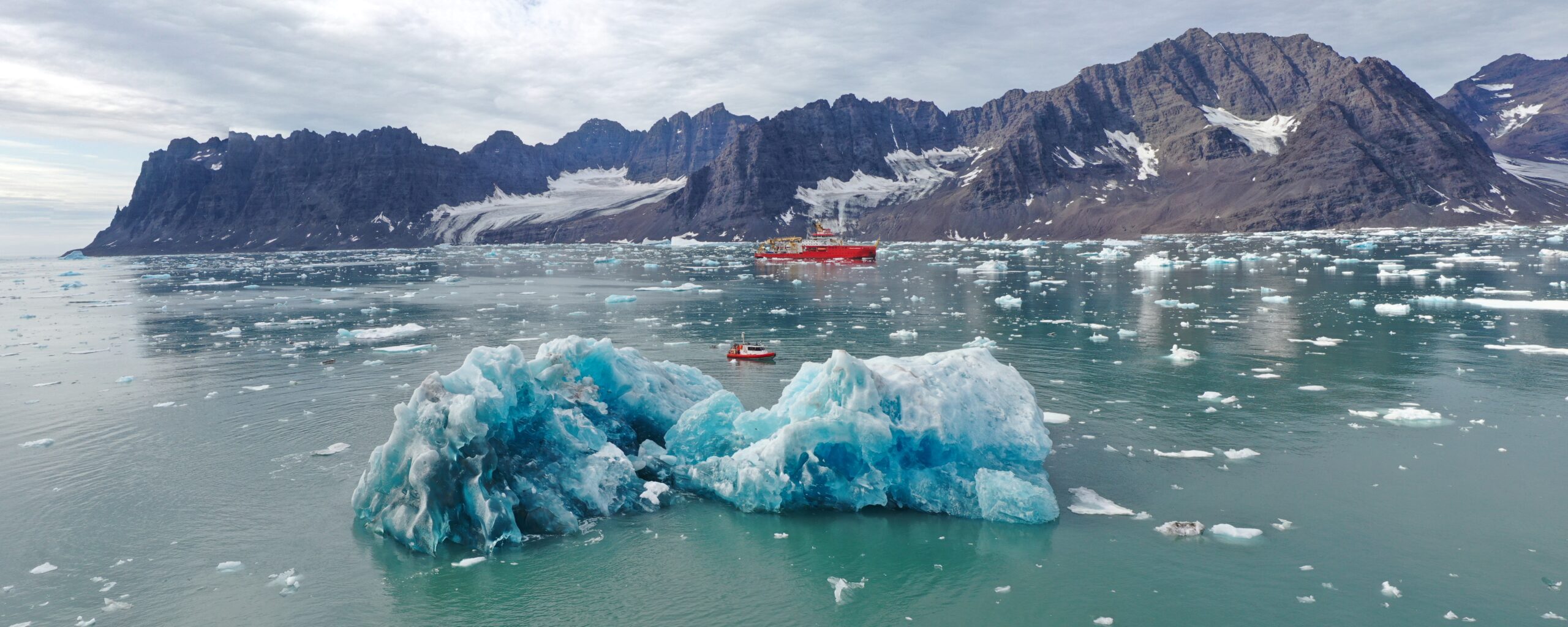
GIANT explores how the warming ocean is affecting Greenland’s huge ice sheet, and what this means for our future climate.
Led by British Antarctic Survey, GIANT focuses on the giant glaciers that flow into Greenland’s fjords. When these glaciers melt, fracture and collapse into the ocean, they release vast amounts of freshwater into the North Atlantic.
The team uses marine robots, drones, and satellites to map the ice. Scientists will use this data to build improved computer models. These models predict the future of Greenland’s glaciers, and advance the global models used to forecast climate change.
Greenland is losing ice six times faster than it did 30 years ago. The resulting flow of freshwater into the North Atlantic could disrupt and alter major ocean currents. Those changes may shift weather and climate patterns in Europe and threaten marine life.
The current generation of computer models of the Earth’s climate don’t fully capture how Greenland’s glaciers ‘feel’ the ocean. They often treat the glacier fronts as static, missing how ocean melting and iceberg calving interact with each other.
By understanding these processes, scientists can build better climate models and spot early signs of tipping points. These are moments when change becomes sudden and irreversible.
GIANT’s findings will help policymakers, scientists and communities to minimise ice loss and prepare for a changing world. The team will also pioneer the development of an AI-driven early warning system for changes to glacier and ocean current stability.
GIANT will run two major field campaigns in 2026 and 2027. The team will study two contrasting glaciers that represent different types of ice loss.
In southeast Greenland, they will target glaciers around Kangerlussuaq. Here, the ice is grounded on bedrock. Tall vertical walls meet the ocean directly. In northwest Greenland, they will study Petermann Glacier. This glacier has a floating ice shelf—a thick sheet of ice that extends far out over the ocean.
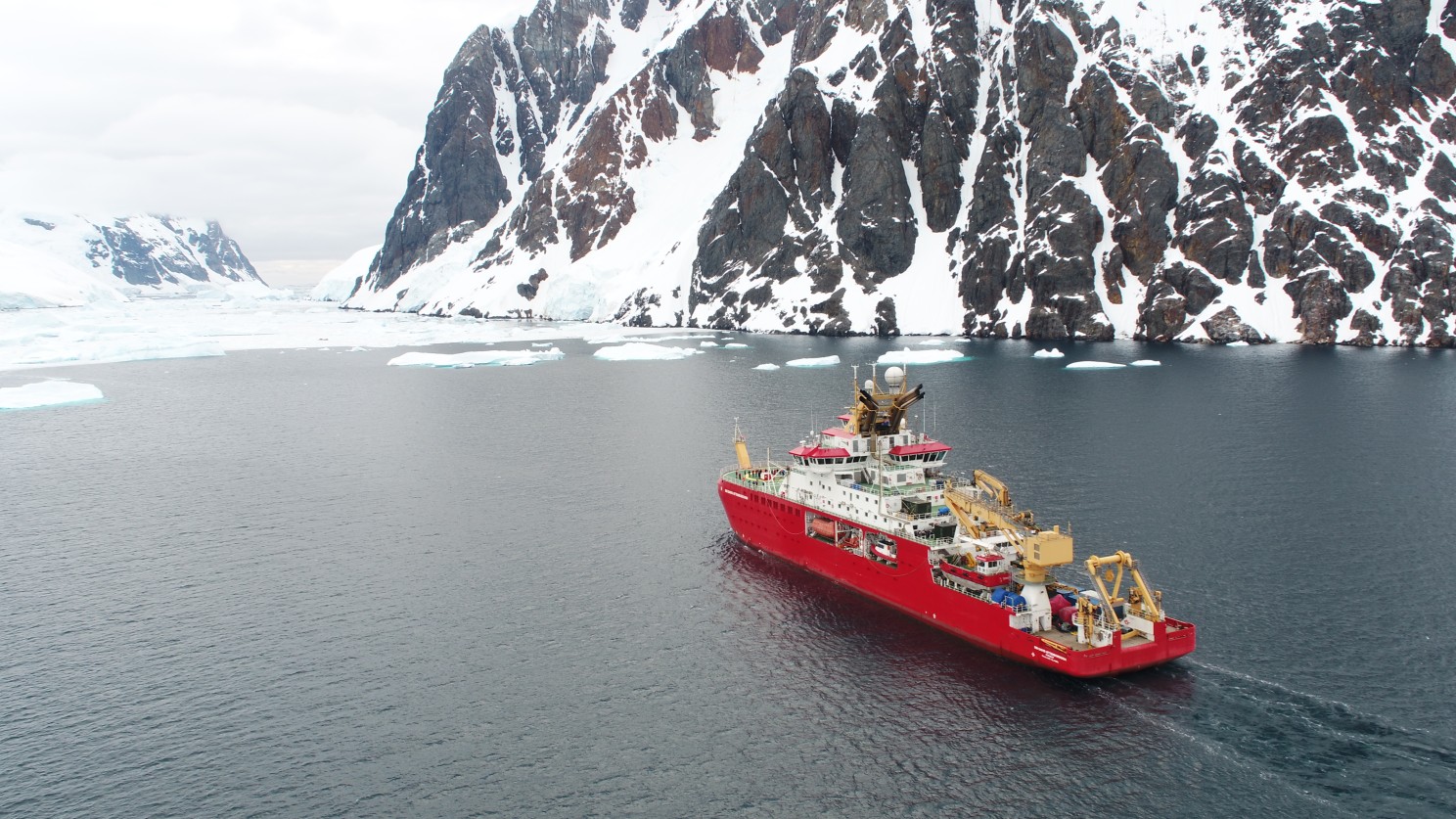
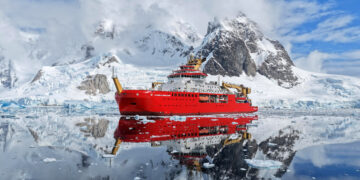
The polar research ship RRS Sir David Attenborough
The team will use the research ship RRS Sir David Attenborough as its flagship platform. From the ship, they will deploy fleets of autonomous vehicles. These will measure everything from ocean water temperature to glacier movement.
The team will:
Gather high-resolution underwater observations of glacier melting using robotic submarines
Study how turbulent upwelling plumes of meltwater pull warm ocean water towards the ice
Capture satellite and drone imagery to track glacier thinning, fracture and calving in real time
In parallel, half of the team will focus on building next-generation simulation tools to predict the future of Greenland glaciers. These tools will advance the UK Earth System Model, which is the main UK model used to forecast future climate change.
Kelly Hogan, Marine Geophysicist, British Antarctic Survey says:
“We’re in a moment where our tools have finally caught up with our questions. With autonomous vehicles, advanced sensors, and powerful modelling — boosted by AI — we can explore glacier-ocean interactions in ways that were unimaginable just a few years ago.”
The project aims to:
GIANT is led by BAS and funded by the UK’s Advanced Research and Invention Agency (ARIA).
It brings together UK and international experts in glaciers, oceans, robotics, and climate science from organisations including:
The project aims to:
Marine Geophysicist

Ocean/Ice Scientist IMP 3
Shelf Seas Group Leader
Physical Oceanographer

Ice Sheet Modelling

Ice Sheet Modeller
Lifetime of Halley Glaciologist
Aerogroup Gravity

Radioglaciolgist
Ice Dynamics and Palaeoclimate team, Palaeo Environments, Ice Sheets and Climate Change team
An international team of scientists is heading to Greenland this summer for a two-month expedition to discover how quickly the ice sheet’s rapidly melting glaciers are pushing the Atlantic Ocean towards a critical climate tipping point.
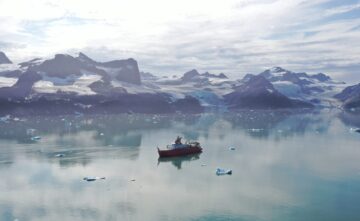
Our state-of-the-art polar science ship provides scientists access to remote and challenging marine environments across the Antarctic and Arctic.