
Atmospheric and Glaciochemist DSL

CRiceS stands for ‘climate relevant interactions and feedbacks: the key role of sea ice and snow in the polar and global climate system’.
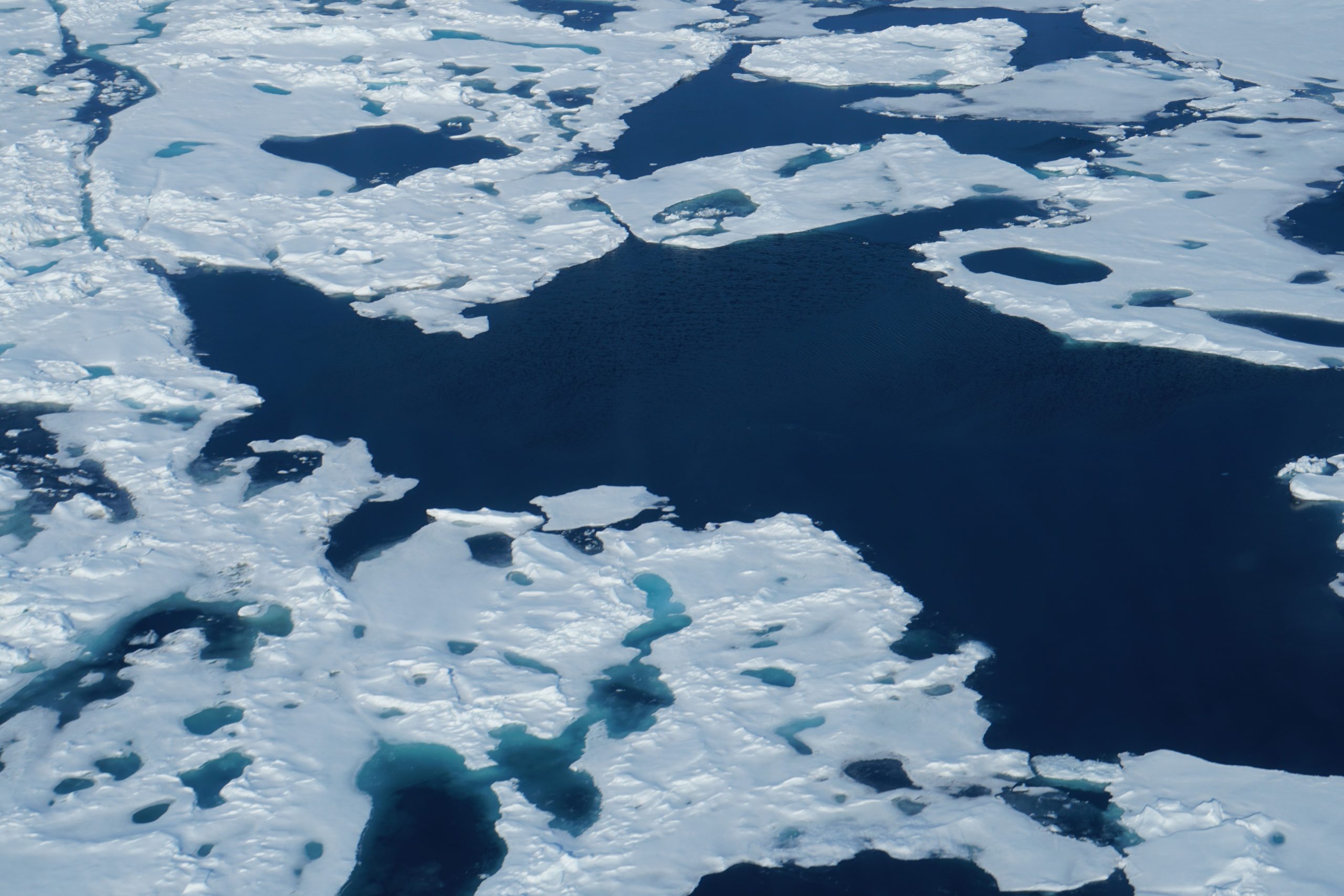
The project studies how polar sea ice and snow interact with the oceans and atmosphere. These interactions influence the global climate system and affect lives, livelihoods, and human activities such as shipping, resource extraction, and hunting.
CRiceS investigates the rapid decline of sea ice and its links to physical and chemical changes in polar oceans and the atmosphere. CRiceS uses new and emerging in-situ measurements and satellite observations to improve understanding of these processes.
By combining observations with climate and Earth System Models (ESMs), CRiceS improves descriptions of:
Current climate models struggle to capture the full complexity of polar processes. This limits predictions of feedbacks, teleconnections, and global impacts. CRiceS addresses these gaps by quantifying the chemical, biogeochemical, and physical processes controlling polar ice and snow systems.
Improved understanding helps:
CRiceS brings together 22 leading institutes across Europe and the globe. The team includes world-class experts in polar observations, climate modelling, and environmental science.
BAS contributes in particular to work packages WP1 and WP2 whose objectives and more detailed description are given below
O1) Translate knowledge across scales from observed OIA processes (e.g. microscopic properties of sea ice, aerosols/clouds, etc.) to controlling climate scale processes within models that describe the coupled ocean-ice/snow-atmosphere system (WP1-2).
We will use state-of-the-art observations to study how the changing polar oceans and sea ice (including its snow cover) control the polar aerosol and cloud lifecycles. We will use Arctic and Antarctic/Southern Ocean data from campaign- based, long-term, and autonomous observing platforms, data infrastructures, and satellite remote-sensing, including emerging data sets, to improve our understanding of processes that govern: ocean and ice emissions that influence primary and secondary aerosols (including from biogeochemical activity); new particle formation; aerosol size distributions; aerosol aging and growth; cloud droplet activation; how aerosols influence cloud abundance and cloud phase and secondary ice production. We focus on processes including seasonal spatio-temporal variability and the direct relationship between sea ice and its snow cover, biogeochemistry, and aerosols/ clouds. The dependence of cloud phase on aerosol properties, atmospheric state parameters, and sea ice will be quantified. The most advanced statistical techniques, new applications of machine learning and data mining techniques will be applied to explore the underlying processes and make recommendations for improved model representations of polar aerosols and clouds.
O2) Advance descriptions of the OIA system in numerical models (WP2) in order to produce more robust projections and to quantify teleconnections, polar – non-polar interactions, feedbacks and impacts (WP3-4).
The latest available data and recommendations from the above task are used to develop novel and improved model descriptions of polar emissions of aerosols and aerosol precursors, aerosol aging, and aerosol-cloud interactions within regional models (WRF-Chem and Enviro-HIRLAM) and global models (UKCA, EC-Earth, and NorESM2). Improved descriptions of polar aerosol and aerosol precursor emissions will be implemented and evaluated for both polar regions. We consider two things (1) sea ice emissions: This includes new and improved descriptions of how emissions depend on sea ice state (lead fraction, age, snow on sea ice) and the occurrence of blowing snow; (2) open ocean emissions: Open ocean polar emissions will be implemented/improved including sea-spray aerosols and aerosol precursors (e.g. iodine and oxidized organics). Further, the processes that determine aerosol growth, and the role of aerosols as cloud condensation nuclei (CCN) and/or ice nuclei (INP) will be refined. To improve the representation of polar cloud formation, current state-of-the-art aerosol activation and heterogeneous freezing parameterizations will be improved. The sensitivity of aerosol-cloud parameterizations to model resolution will be evaluated with specific attention to vertical resolution and the role of capturing the stability of the shallow polar boundary layer on fate and processing of aerosol/ aerosol precursor and cloud formation. Regional models will be used in a downscaling chain to very high resolutions (< 5 km) to test how sea ice heterogeneity (lead fraction, age, and sea ice snow cover including snow salinity) impacts primary aerosol emissions and secondary aerosol formation at cloud resolving model scales. The suite of models will address the role of aerosols and their impact on polar clouds, precipitation, as well as on cloud albedo.
Atmospheric and Glaciochemist DSL
Publications:
Lapere, Rémy, Thomas, Jennie L., Marelle, Louis, Ekman, Annica M. L., Frey, Markus M. , Lund, Marianne Tronstad, Makkonen, Risto, Ranjithkumar, Ananth, Salter, Matthew E., Samset, Bjørn Hallvard, Schulz, Michael, Sogacheva, Larisa, Yang, Xin , Zieger, Paul. (2023) The representation of sea salt aerosols and their role in polar climate within CMIP6. Journal of Geophysical Research: Atmospheres, 128. 36 pp.